
Reclined Bound Angle Pose
Supta Baddha Konasana
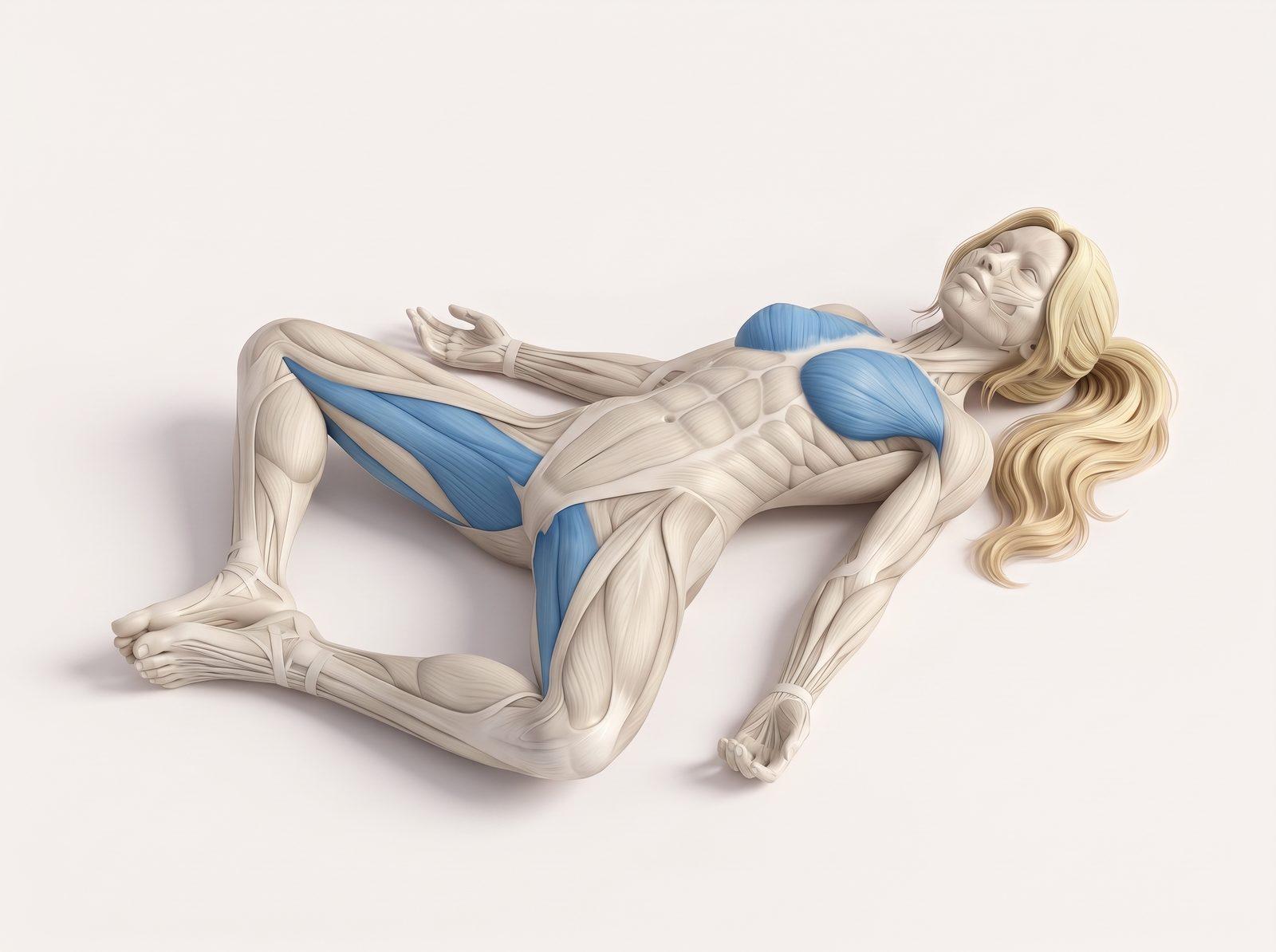
Stretching: Inner thighs and groin, Chest
Full muscle breakdown ↓About This Pose
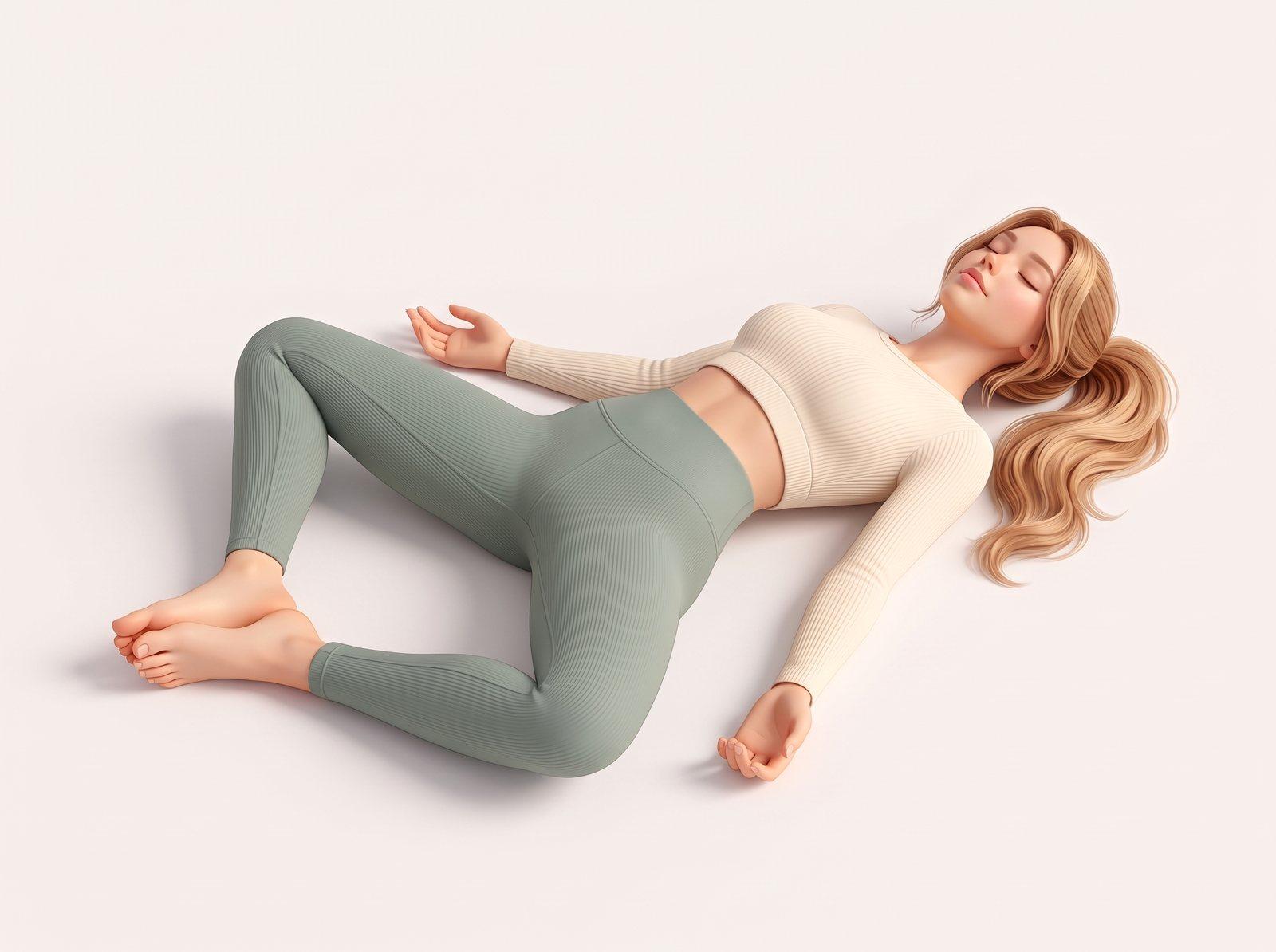
Reclined Bound Angle (Supta Baddha Konasana) is considered one of the most restorative postures in yoga, combining hip opening with deep relaxation. With the soles of the feet together and knees falling outward while lying on the back, this pose passively opens the inner thighs and groin. Supported with props, it can be held for extended periods, making it invaluable for stress relief, restorative sequences, and meditation.
Muscles Worked in Reclined Bound Angle Pose
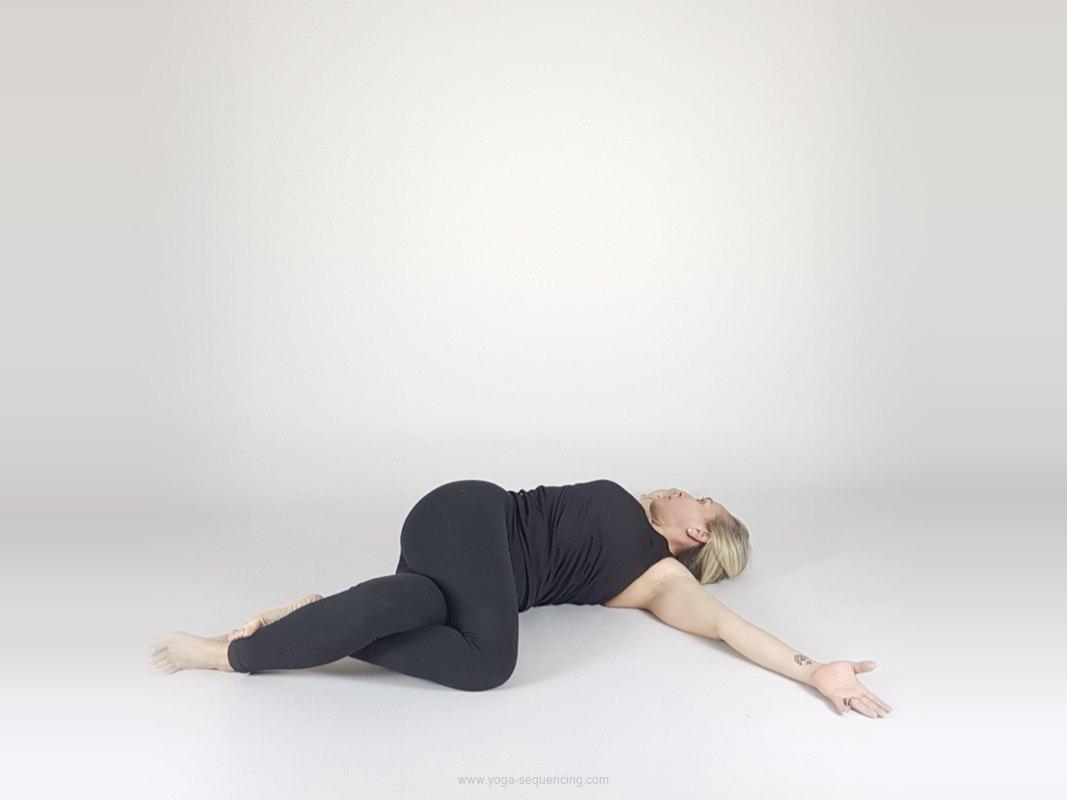
The photo shows Reclined Bound Angle Pose (Supta Baddha Konasana): lying on the back with the soles of the feet together, the knees falling open and the arms resting out to the sides, palms up. It is a restorative pose: the inner thighs and groin get a passive stretch.
Working
This is a resting pose; the floor holds you up.
Stretching
- Inner thighs and groin (adductors, gracilis, pectineus)
- Chest (pectoralis major, arms open)
Variations and joint actions
- Blocks under the knees: Supporting the thighs stops the stretch from pulling on the groin or lower back.
- Bolster under the spine: Lying on a bolster lifts the chest and makes it a deeper rest.
- Hips flexion, abduction and external rotation
- Knees flexion, falling open
- Spine neutral, resting on the floor
- Shoulders abduction, arms resting out to the sides
Roles are qualitative — this section does not measure how hard any muscle works. References: Leslie Kaminoff & Amy Matthews, Yoga Anatomy (Human Kinetics); Ray Long, The Key Muscles of Yoga (Bandha Yoga).
Step-by-Step Instructions
- 1
Lie on your back
- 2
Bring soles of feet together
- 3
Let knees fall open
- 4
Place arms by sides or overhead
- 5
Close eyes
- 6
Breathe deeply and relax
Alignment Cues
- Deep relaxed breathing
- Let knees be heavy
- Soften inner thighs
- Release all effort
Benefits
- Opens hips passively
- Promotes deep relaxation
- Releases inner thigh tension
- Supports reproductive health
- Calms nervous system
- Ideal for meditation
Modifications
- Use bolsters under thighs
- Support knees with blocks
Variations
- Arms overhead
- With chest bolster
Cautions & Contraindications
Cautions
- Support knees with blocks
- Avoid lower back arching
Avoid this pose if you have:
- Hip injury
- Groin strain
Quick Facts
Primary Focus
hipsSecondary Focus
Suggested Hold
120 seconds
Tags
Equipment
Related Poses
Sequences with this pose
Teacher-written sequences that use Reclined Bound Angle Pose.
A yin sequence that respects 70% — not 100%
75 min · 14 poses · all-levels
A restorative sequence where the props do every bit of the work
75 min · 7 poses · all-levels
Gentle Yoga Sequence
45 min · 17 poses · beginner