FLOW Yoga Sequence BuilderFLOW Yoga Sequence Builder
75 min · all-levels

A restorative sequence where the props do every bit of the work

A 75-minute restorative yoga class template with full prop layering for each shape, drawn from Judith Lasater's teaching. Print or remix in the FLOW builder.

Share
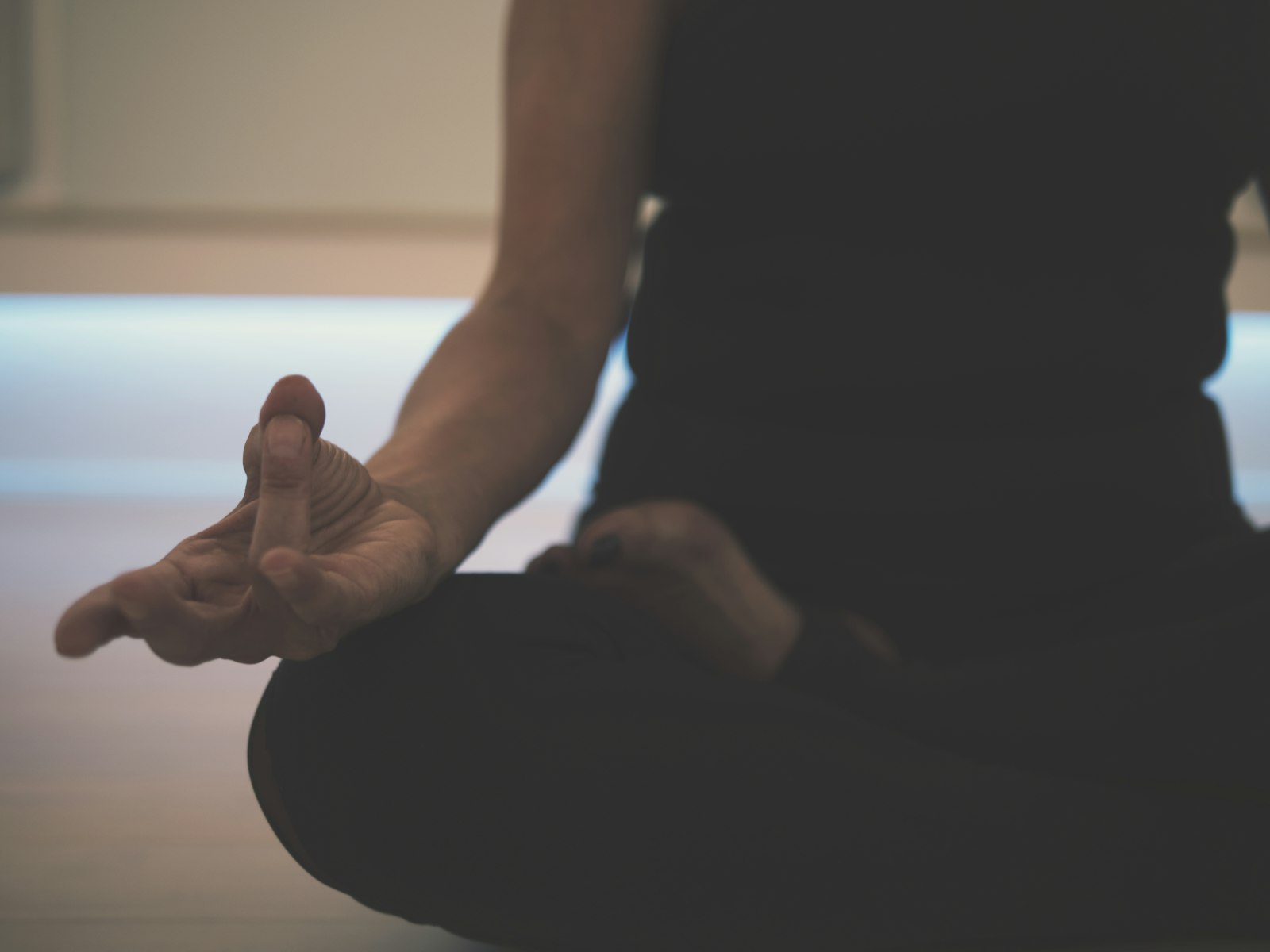
Supported restorative pose with blankets and bolster

Restorative as a named style traces back to B.K.S. Iyengar's recovery work in Pune in the 1970s and was formalised as a Western teaching format by Judith Hanson Lasater, who studied with Iyengar and named restorative yoga in her 1995 book Relax and Renew. The premise is narrow: build a shape with so many props that the body has no work left to do, then leave the student there for long enough that the parasympathetic nervous system takes over. Six to eight postures in 75 minutes. Nothing more.

The load-bearing principle is prop layering. A restorative pose is not a yin pose with extra bolsters. It is a structural construction — each prop placed for a specific reason, in a specific order, so that the spine is fully supported and the muscles can completely release. In a properly built supported child's pose, the student should feel as if they could fall asleep in the shape; if any muscle group is still engaged to maintain the position, the prop set-up has failed.

This template is what I teach when the room needs rest more than work. It is not gentle yoga. Gentle yoga still asks for muscular engagement; restorative does not. If your students arrive looking for a workout, they are in the wrong room and you should be honest about that in the first minute. The students this format serves — exhausted parents, people in caregiving roles, anyone in burnout, postpartum mothers cleared for movement — will recognise themselves and stay.

Who this sequence is for

Studio classes labeled restorative, deep rest, gentle, or "yoga for sleep." Students in burnout, postpartum mothers, people in cancer treatment cleared for movement by their oncology team, anyone recovering from a high-stress life event, and prenatal students at every stage (with the side-lying modifications standard for second and third trimester). Skip restorative as a "warm-up" for vinyasa — the formats serve opposite nervous-system goals and pairing them confuses both. Skip also for students who are coming in specifically to work out; signpost them clearly to a flow class.

How to teach (or practice) it

Set up the room before students arrive. Each station should have, at minimum: one bolster, three folded blankets, two blocks, an eye pillow, a strap. If your studio doesn't stock that, bring it. Restorative without enough props is just lying on the floor in awkward shapes, and students can do that at home.

The load-bearing instruction is the prop demo. Walk through each shape before students enter it: where the bolster goes, which blanket goes under the head, why the block sits where it does. A 5-minute prop demo at the start of class saves you from re-cueing the set-up six times during the holds. Once they're in the shape, you should be able to go quiet.

Hold times are long: 10 minutes is standard, 15 acceptable for experienced rooms. That means you only get five or six postures into a 75-minute class, and the last 15 minutes should be reserved for savasana with full prop support (bolster under the knees, blanket over the body, eye pillow). Cue transitions slowly — students will be deeply parasympathetic and any abrupt movement will jolt them out of it. The pose isn't the work in restorative; the transition between poses is.

The Sequence

7 poses · 75 min

  1. 1
    Constructive rest, arriving
    5 min

    Feet on the floor wider than the mat, knees leaning in.

  2. 2
    Supported child's pose
    Salamba Balasana
    10 min (5 min each side for the head)

    Bolster between the thighs, blanket folded for the head, turn the head halfway through.

  3. 3
    Supported reclined bound angle
    Salamba Supta Baddha Konasana
    12 min

    Bolster long under the spine, blocks under each outer thigh, blanket roll under the knees.

  4. 4
    Supported bridge with block
    Salamba Setu Bandha
    8 min

    Block on the lowest height under the sacrum, not the lower back. Adjust before settling.

  5. 5
    Supported side-lying
    8 min each side

    Bolster between the knees, second bolster hugged in front, blanket under the head — prenatal-safe.

  6. 6
    Supported legs-up-the-wall
    Viparita Karani
    12 min

    Bolster under the hips against the wall, blanket over the body, eye pillow on.

  7. 7
    Supported savasana
    Salamba Savasana
    15 min

    Bolster under the knees, folded blanket under the head, blanket draped over the whole body, eye pillow.

Coaching notes

Judith Lasater's framework, which I borrow from heavily: the teacher's job is to build the shape, not to inspire it. Restorative does not need themes, intentions, or readings. It needs precise prop placement and silence. New teachers, trained in vinyasa rooms, fill the silence with poetic cueing and accidentally pull students out of the rest state they came for.

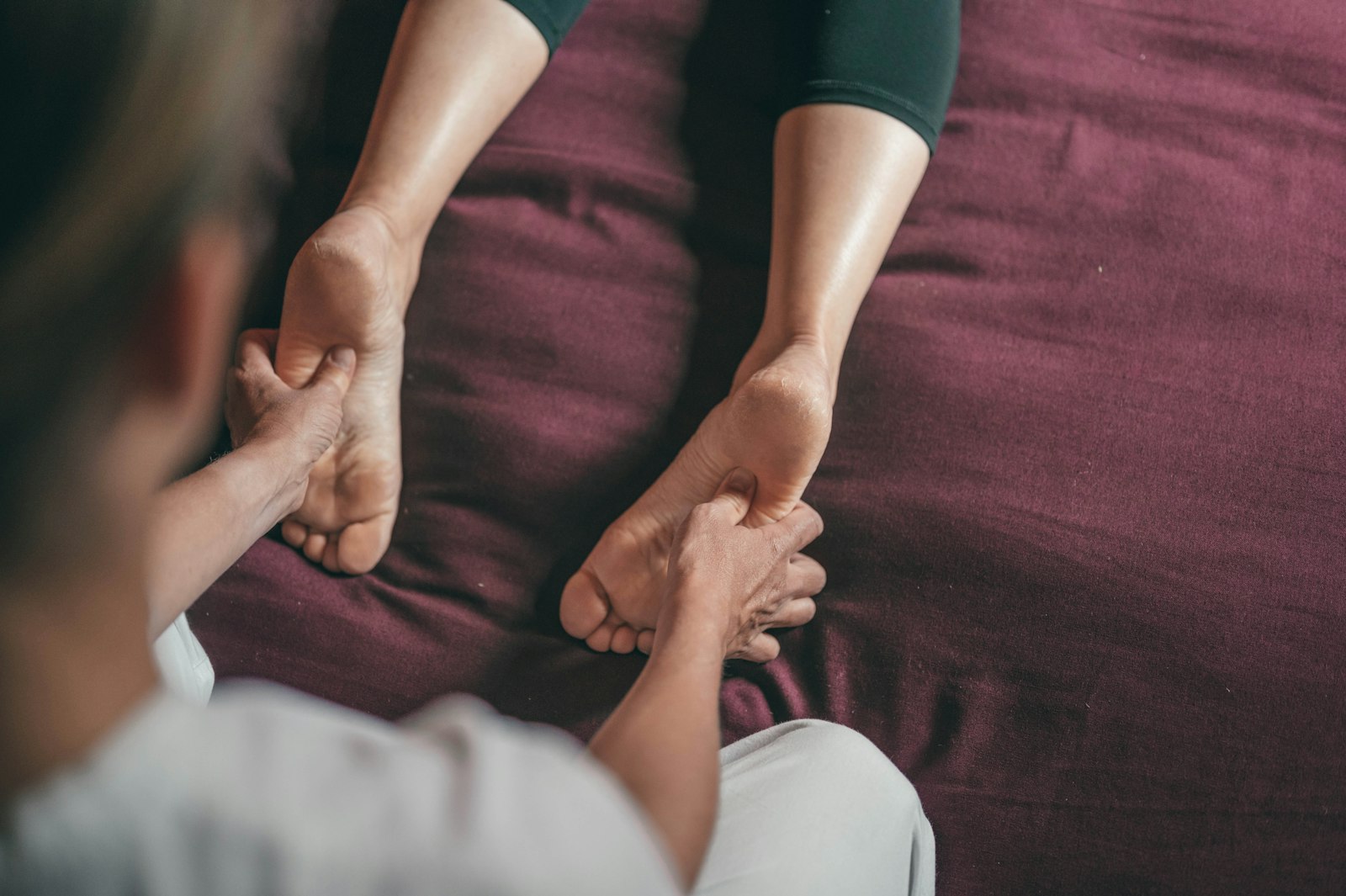
Watch the breath. If a student in a "restful" shape is breathing fast or sighing repeatedly, the prop set-up is wrong — usually the chest is too closed, the head too low, or the lumbar unsupported. Adjust the props, not the student. Touch only with consent and only when re-cueing the prop set-up verbally has failed.

Temperature matters more than in any other format. Cover every student with a blanket at the start, not the end. Core temperature drops noticeably during 10-minute holds in stillness, and a chilled student cannot rest.

Finally: do not stack closed twists, supported backbends, and inversions in the same class. Pick a nervous-system direction (typically down-regulation) and stay with it. The class that includes everything is the class that resolves nothing.

FAQ

What's the difference between restorative and yin yoga?+

Yin asks for mild stretch sensation on connective tissue at roughly 70% of the student's range. Restorative asks for zero stretch — the props are built up until the body has no work to do at all. Yin is a stretch format; restorative is a rest format. The poses can look similar and the nervous-system intention is opposite.

How many poses should a restorative class include?+

Five to seven, plus a long savasana. Holds run 8-15 minutes. A 75-minute class typically has time for six supported shapes and a 15-minute savasana, no more. If you find yourself trying to fit eight poses in, you are teaching gentle yoga, not restorative.

What props do I actually need to teach restorative?+

Per student: one bolster, three blankets, two blocks, one eye pillow, one strap. Anything less and you cannot build supported child's pose or reclined bound angle properly. If your studio is under-stocked, it is reasonable to bring your own props or to cap class size at the number of full prop kits available.

Is restorative yoga safe in pregnancy?+

Yes, with side-lying modifications past the first trimester. The standard supine shapes (supported bound angle, savasana on the back) get replaced with supported side-lying. Most prenatal-trained restorative teachers will also skip the deeper supported backbends. When in doubt, consult a prenatal yoga specialist.

Can I teach restorative as a warm-up to a flow class?+

No. The two formats serve opposite nervous-system goals — restorative down-regulates, vinyasa up-regulates — and pairing them inside one class confuses both. If you want a slow start to a flow, teach a long pranayama opener instead. Save full restorative for its own class slot.

FLOW Yoga Sequence Builder

Build your own style sequence in minutes

Drag-and-drop in the FLOW builder. Set per-pose duration, side, and notes. Save, share, and export to PDF. Free to start; Pro from $5/mo billed yearly with a 3-day trial.