Reclined Side Seat on One Arm (Low)
Vasisthasana Preparation (Seated)

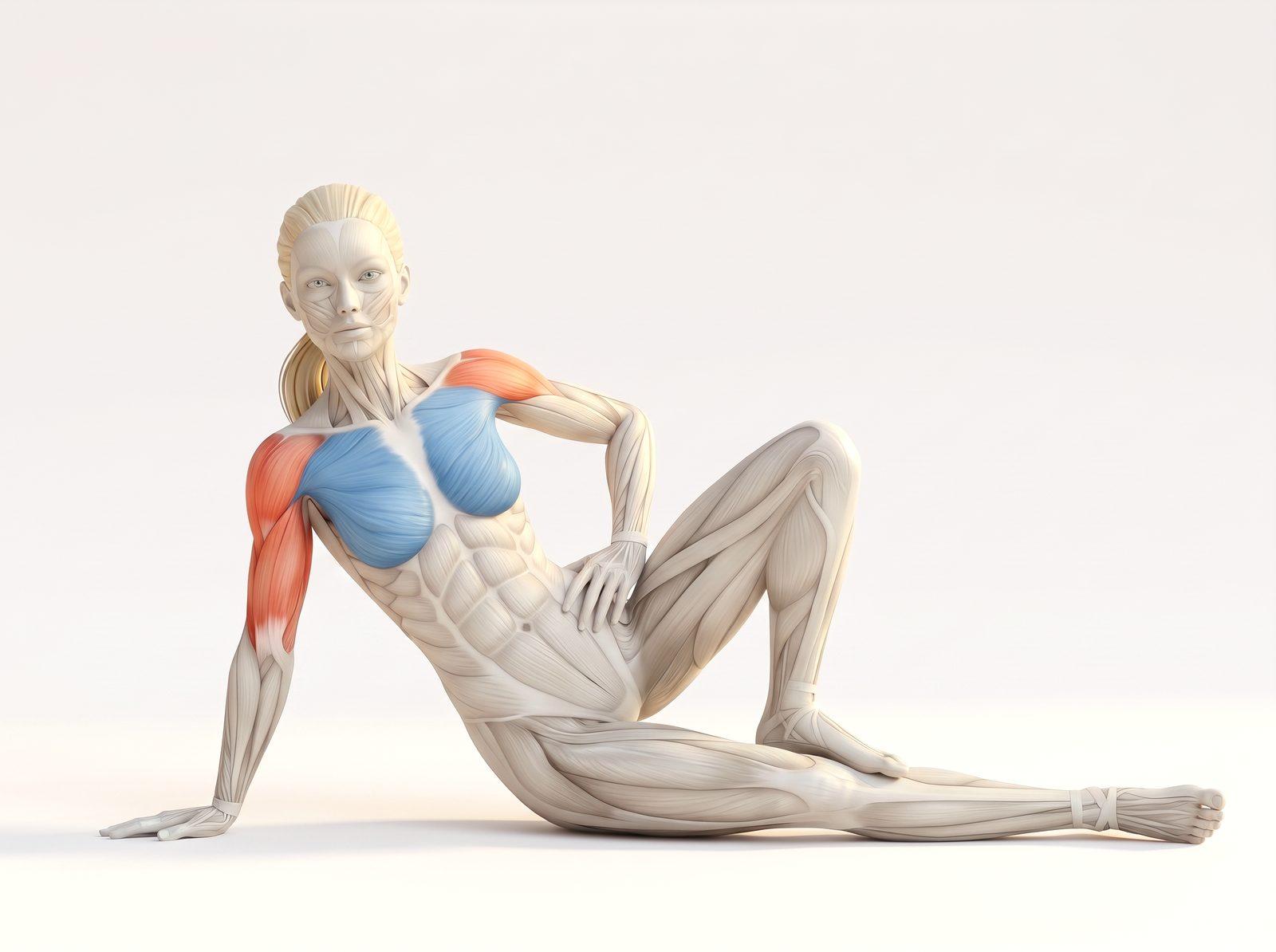
Working: Supporting-arm triceps, Supporting shoulder, Back muscles
Stretching: Chest, Front of the supporting shoulder
Full muscle breakdown ↓About This Pose
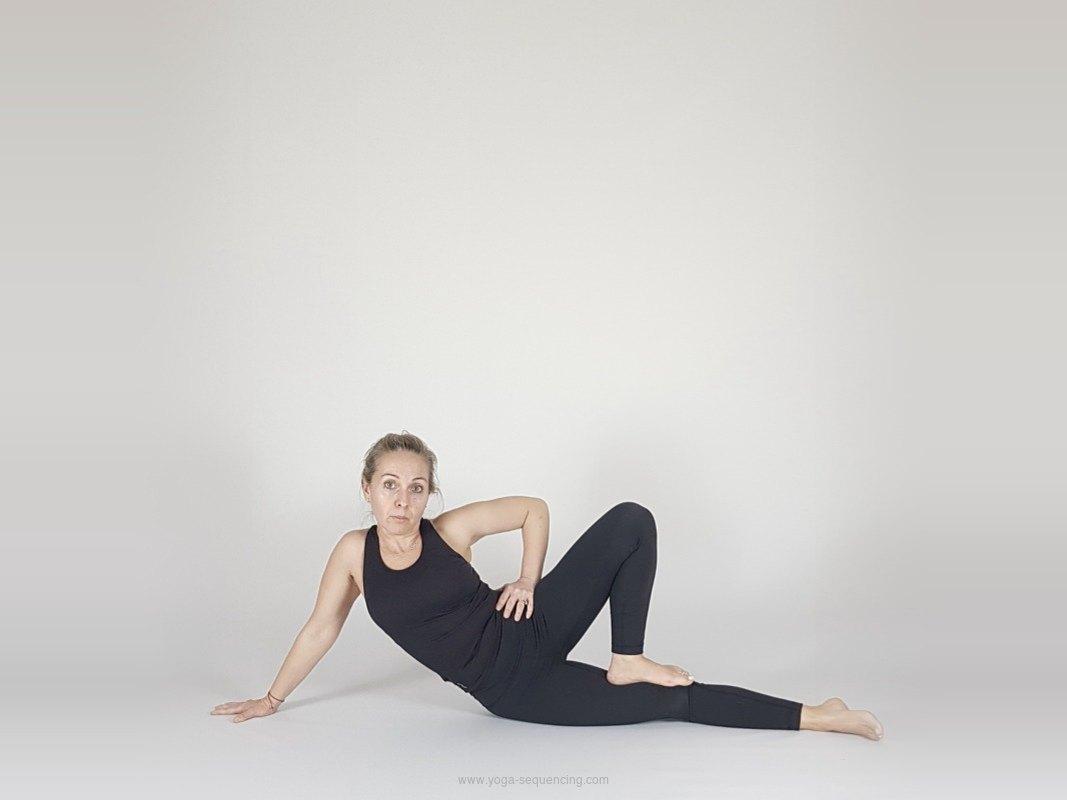
This lower version of the Reclined Side Seat keeps the hip close to the floor while you lean back on one straight arm. The bottom leg stays long, the top foot plants in front of it, and the free hand rests on the hip. Sitting lower puts less load on the supporting wrist and shoulder, so it is a gentle introduction to bearing weight on one arm and a restful pause between floor poses.
Muscles Worked in Reclined Side Seat on One Arm (Low)
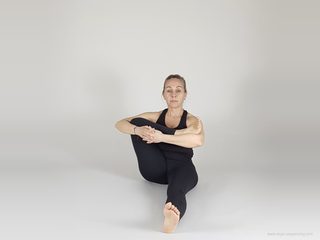
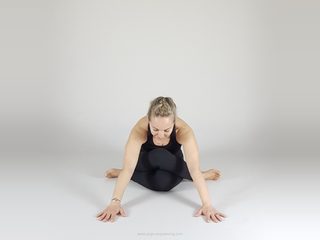
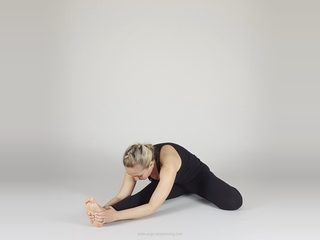
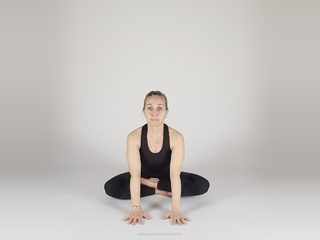
The photo shows the same reclined seat as Side-Lying Supported, mirrored: sitting with one leg straight and the other knee bent, leaning back on one straight arm with the free hand on the hip and the chest lifted. Any backbend is slight; the supporting arm does the work and the chest and front shoulder open.
Working
- Supporting-arm triceps (triceps brachii)
- Supporting shoulder (deltoids)
- Back muscles (erector spinae, lifting the chest)
Stretching
- Chest (pectoralis major)
- Front of the supporting shoulder (anterior deltoid)
Also holding you steady: your rotator cuff and core.
Variations and joint actions
- Hips lifted: Pressing through the bent-leg foot to lift the hips deepens the backbend toward Wild Thing.
- Forearm down: Leaning on the forearm suits sensitive wrists.
- Supporting shoulder extension, hand on the floor behind
- Supporting elbow extension
- Bent-leg hip and knee flexion, foot planted
- Straight-leg hip and knee extension
- Spine slight extension, chest lifted
Roles are qualitative — this section does not measure how hard any muscle works. References: Leslie Kaminoff & Amy Matthews, Yoga Anatomy (Human Kinetics); Ray Long, The Key Muscles of Yoga (Bandha Yoga).
Step-by-Step Instructions
- 1
Sit on the right hip with the right leg long
- 2
Bend the left knee and plant the left foot in front of the right leg
- 3
Place the right hand on the floor behind you
- 4
Lean back onto the straight right arm, keeping the hip low
- 5
Rest the left hand on the left hip
- 6
Let the chest open
- 7
Hold for 5 breaths, then switch sides
Alignment Cues
- Hip close to the floor
- Supporting shoulder lifted away from the ear
- Chest open
- Top foot grounded
Benefits
- Gentle weight-bearing for the shoulder and wrist
- Opens the chest
- Prepares for side plank
- Restful transition
- Accessible for most students
Modifications
- Lower onto the forearm
- Keep both knees bent
- Hand on a block
Variations
- Reclined Side Seat on One Arm
- Side Plank
- Modified Side Plank
Cautions & Contraindications
Cautions
- Keep the supporting elbow soft
- Press the floor away so the shoulder does not sink
- Change sides if the wrist tires
Avoid this pose if you have:
- Wrist injury
- Shoulder injury on the supporting side
Quick Facts
Breath Cue
Breathe into the open side of the chest; keep the supporting shoulder steady.
Primary Focus
spineSecondary Focus
Suggested Hold
30 seconds
Tags
Equipment