Side-Lying Knee Bend
Supta Padangusthasana Prep
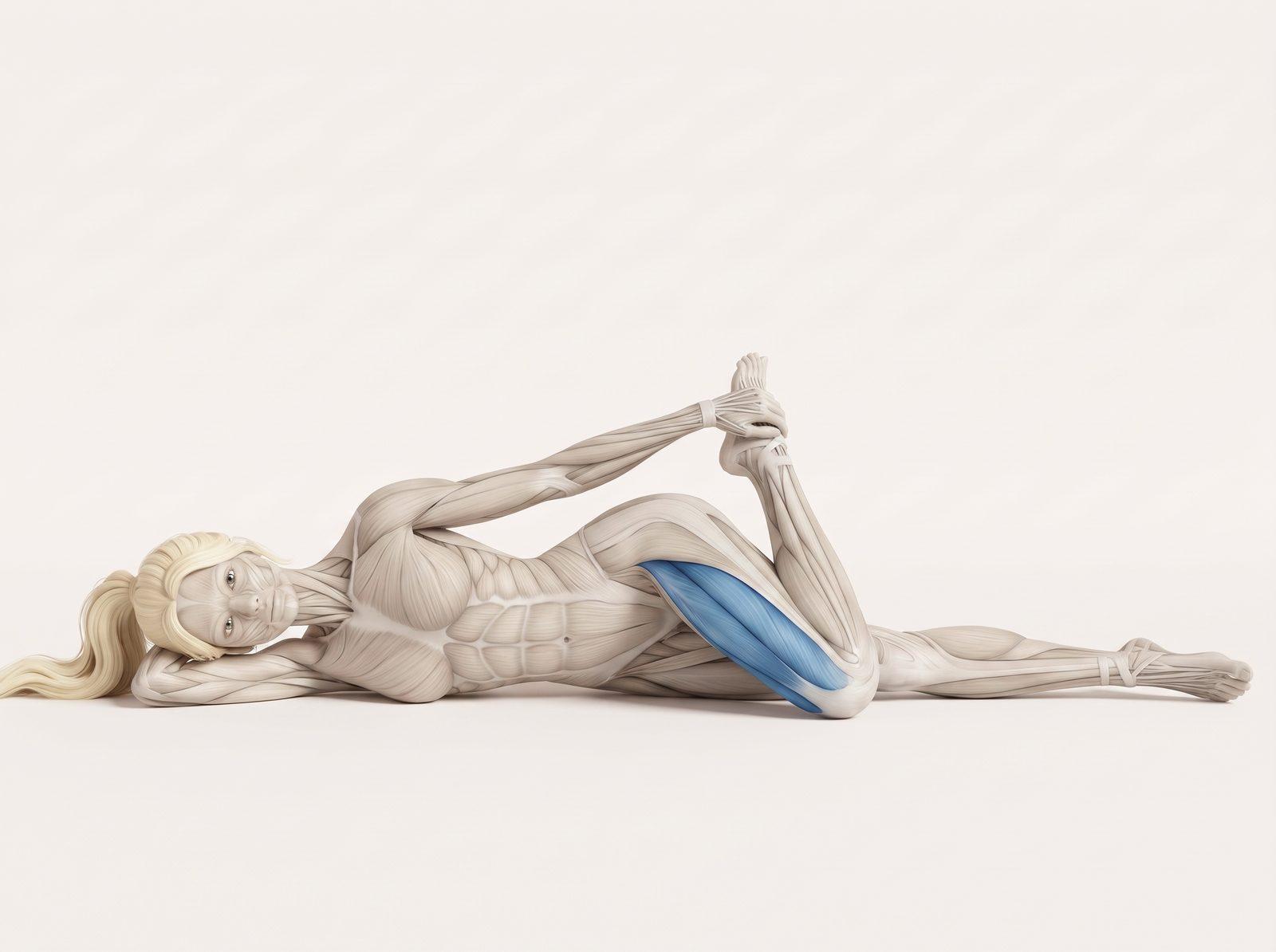
Stretching: Top-leg outer hip
Full muscle breakdown ↓About This Pose
Side Lying Knee Bend provides a gentle stretch for the quadriceps and hip flexors while in a supported side-lying position. By bending the top knee and drawing the heel toward the buttock, practitioners can release tension in the front of the thigh without the intensity of standing quad stretches. The position allows for relaxation into the stretch.
Muscles Worked in Side-Lying Knee Bend
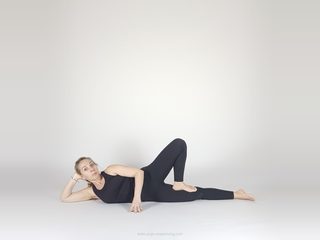
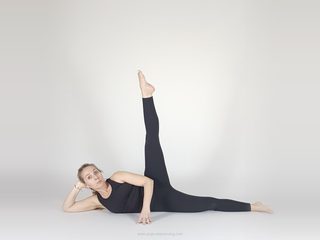
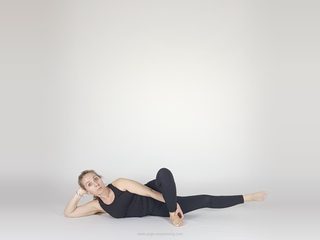
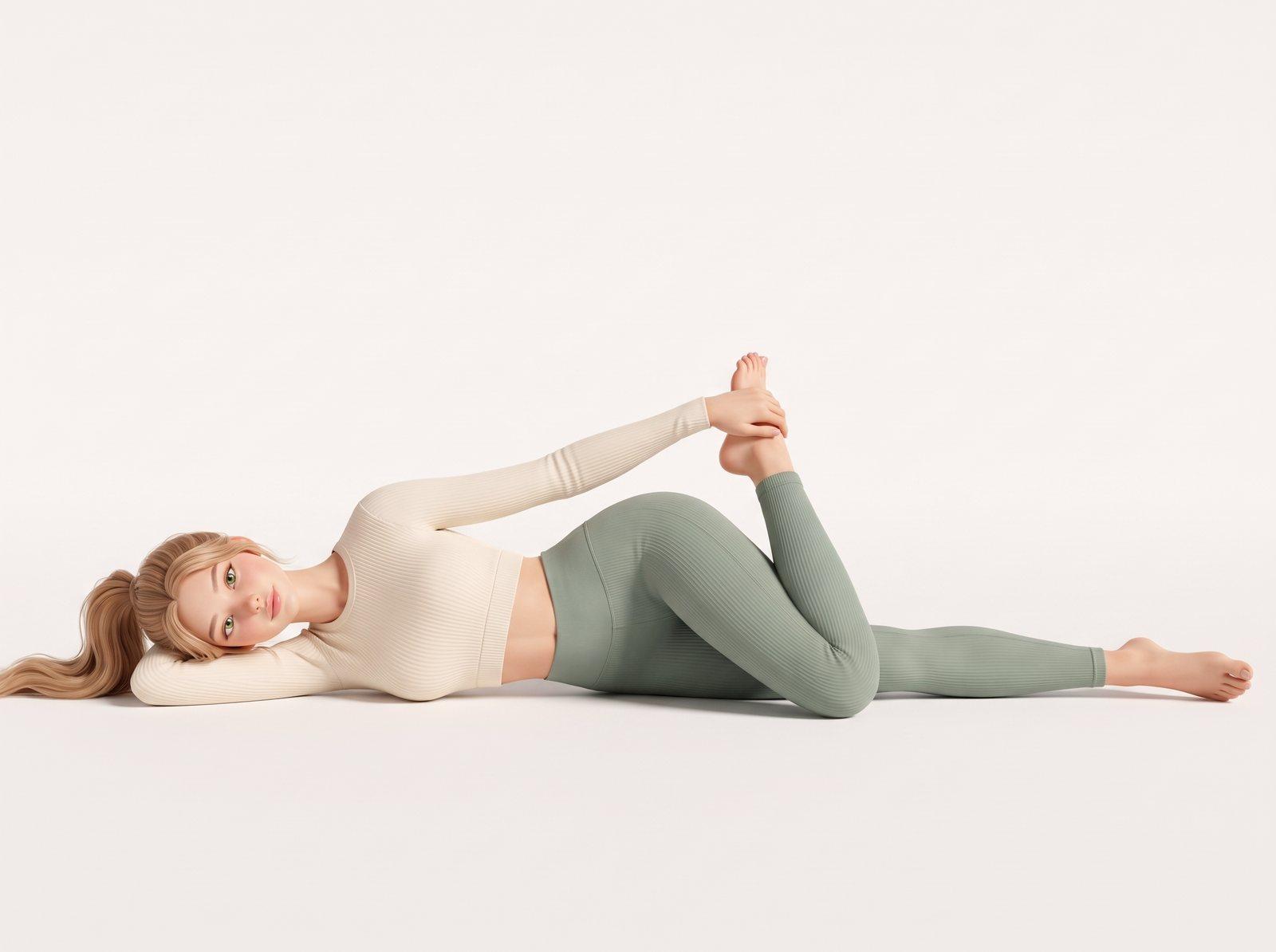
Side-Lying Knee Bend in the photo lies on one side with the head resting on the bottom arm and the bottom leg long; the top knee bends forward to rest in front of the body while the top hand holds that foot and draws it up. It is a gentle position that eases the top-leg outer hip with almost no muscle work.
Working
Hardly any muscle work; the floor supports the body and the hand holds the foot.
Stretching
- Top-leg outer hip (piriformis, deep hip rotators, gluteus medius)
Also holding you steady: your sides of the waist, which stop the body rolling and core.
Variations and joint actions
- Foot behind: Drawing the top heel back toward the buttock instead turns it into a side-lying quadriceps stretch.
- Pillow under the head: A pillow or block keeps the neck level instead of resting on the arm.
- Top hip flexion and adduction, knee resting in front
- Top knee flexion, foot held up by the hand
- Bottom leg hip and knee extension
- Top shoulder flexion, arm reaching to the foot
- Bottom shoulder flexion, head resting on the arm
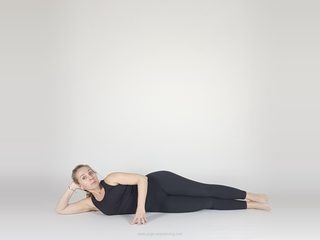
- Spine neutral, lying on the side
Roles are qualitative — this section does not measure how hard any muscle works. References: Leslie Kaminoff & Amy Matthews, Yoga Anatomy (Human Kinetics); Ray Long, The Key Muscles of Yoga (Bandha Yoga).
Step-by-Step Instructions
- 1
Lie on one side
- 2
Bend top knee
- 3
Hold foot or ankle behind
- 4
Draw heel toward glute
- 5
Keep hips stacked
- 6
Breathe into stretch
Alignment Cues
- Move slowly and gently
- Stay relaxed throughout
- Keep spine neutral
- Breathe deeply into hip
Benefits
- Stretches quadriceps gently
- Releases hip flexors
- Supported and relaxed
- Less intense than standing
- Opens front body
- Accessible for all
Modifications
- Use block to support knee
- Use strap
Variations
- Deeper quad stretch
- With backbend
Cautions & Contraindications
Cautions
- Avoid pulling knee forcefully
- Keep hips stacked
Avoid this pose if you have:
- Hip injury
- Lower back pain
Quick Facts
Primary Focus
hipsSecondary Focus
Suggested Hold
30 seconds
Tags
Equipment