
Extended Side Angle
Utthita Parsvakonasana
About This Pose
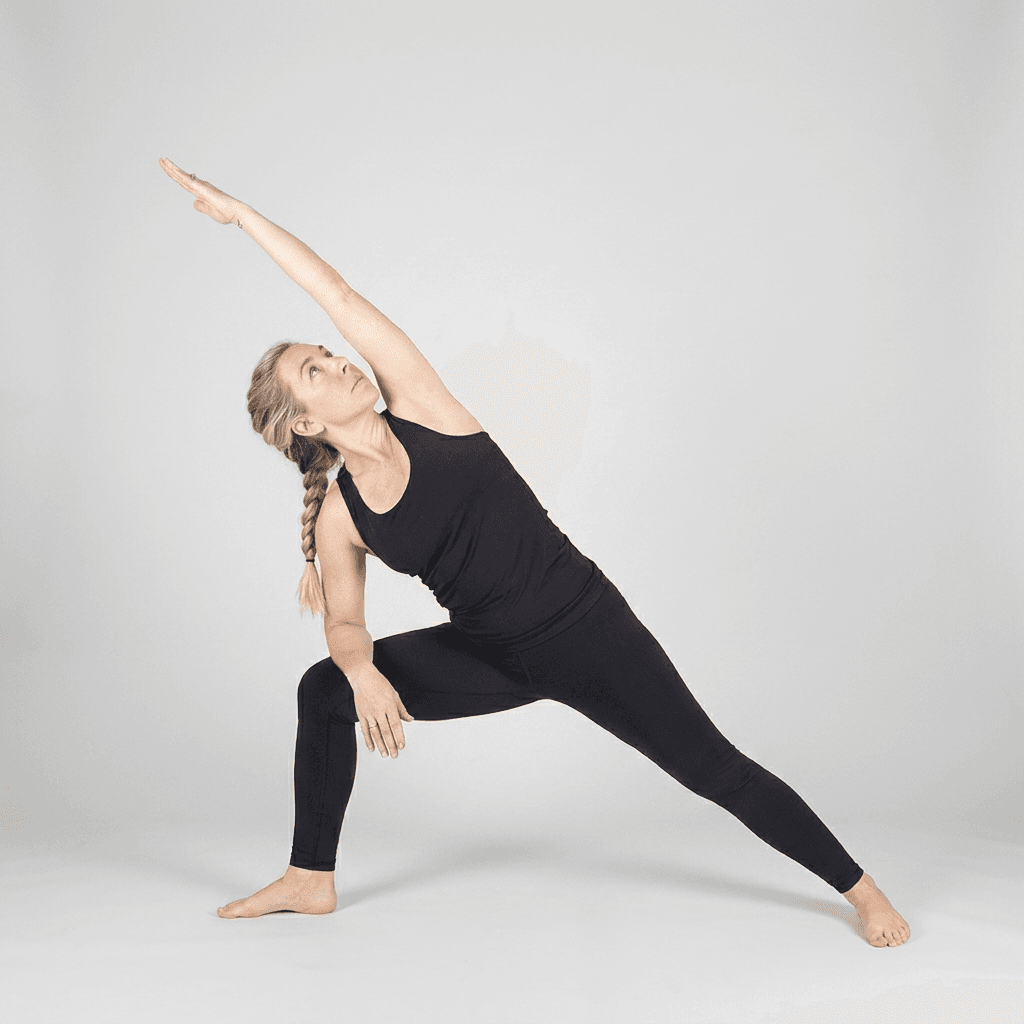
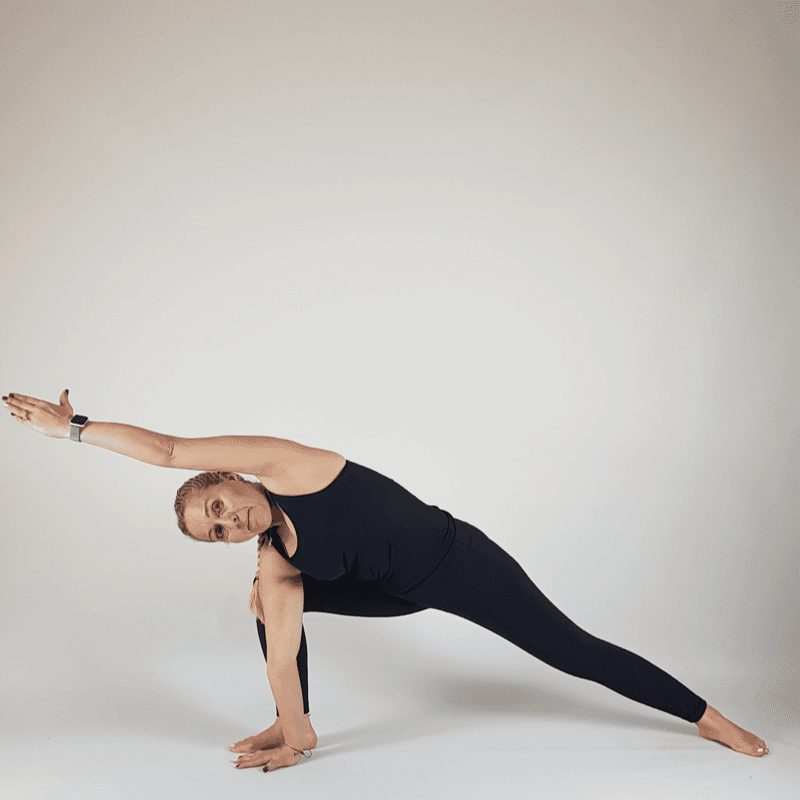
Extended Side Angle (Utthita Parsvakonasana) is a strong, expansive standing pose that lengthens the entire side body from the back heel to the top hand. The front knee bends to 90 degrees while the back leg stays straight and powerful; the torso leans over the front thigh and the bottom hand reaches to a block or the floor as the top arm sweeps overhead. The pose builds heat and stamina, opens the hips and chest, and stretches the waist, groin, and shoulders. It flows naturally out of Warrior II and anchors many standing sequences.
Step-by-Step Instructions
- 1
Begin in Warrior II with the right knee bent
- 2
Lower the right forearm to the right thigh
- 3
Or reach the right hand to a block or the floor
- 4
Place the hand outside the right foot
- 5
Extend the left arm over the ear
- 6
Create one line from the back heel to the fingertips
- 7
Roll the chest open toward the ceiling
- 8
Press the back foot firmly down
- 9
Gaze up under the top arm
- 10
Hold 5 to 8 breaths, then switch sides
Alignment Cues
- Front knee stacked over the ankle
- Back leg straight, outer edge grounded
- One long line from heel to top hand
- Chest rotating open, not collapsing down
- Bottom hand light, core supporting the torso
Benefits
- Strengthens the legs, knees, and ankles
- Opens the hips, groin, and chest
- Lengthens the entire side body
- Builds stamina and heat
- Stretches the shoulders and waist
- Improves stability
Modifications
- Rest the forearm on the thigh
- Use a block under the bottom hand
- Keep the gaze forward for the neck
Variations
- Bind the top arm under the front thigh
- Enter from Warrior II
- Transition to Half Moon
Cautions & Contraindications
Cautions
- Keep the front knee over the ankle
- Do not dump weight into the bottom hand
- Keep the back leg strong and straight
Avoid this pose if you have:
- Knee injury
- Neck problems (limit head turn)
- High or low blood pressure
Quick Facts
Primary Focus
hipsSecondary Focus
Suggested Hold
45 seconds
Tags
Equipment
Related Poses
Sequences with this pose
Teacher-written sequences that use Extended Side Angle.
A Yoga Sequence That Treats Your Knees Like the Hinges They Are
30 min · 14 poses · all-levels
A vinyasa flow you can actually teach on Tuesday night
60 min · 15 poses · intermediate
A hatha sequence built around the holds, not the transitions
75 min · 18 poses · all-levels
Ashtanga Yoga Primary Series Sequence
90 min · 16 poses · advanced