Extended Hand-to-Big-Toe Pose
Utthita Hasta Padangusthasana
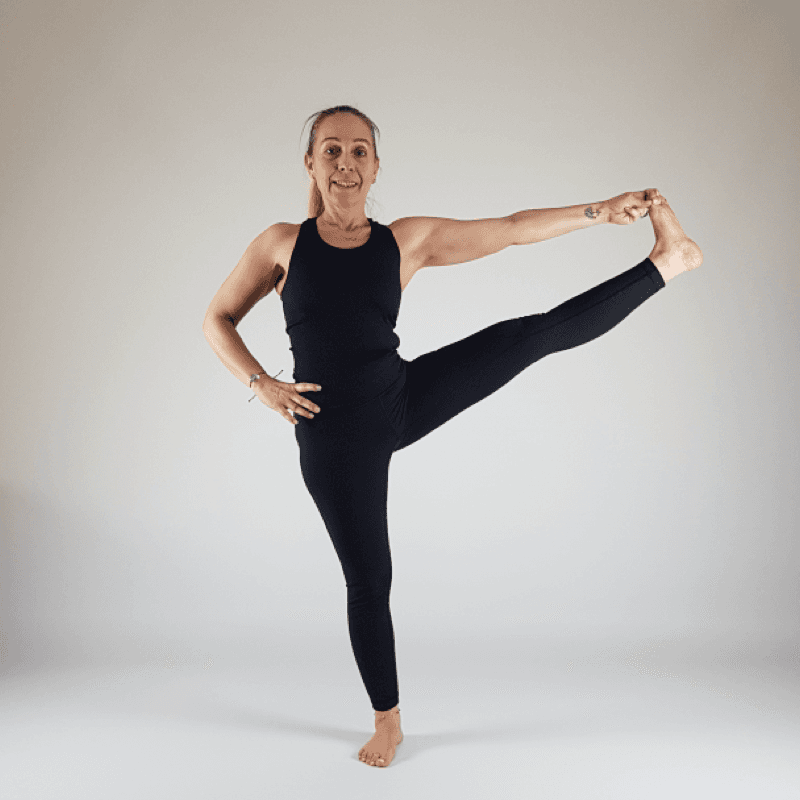
About This Pose
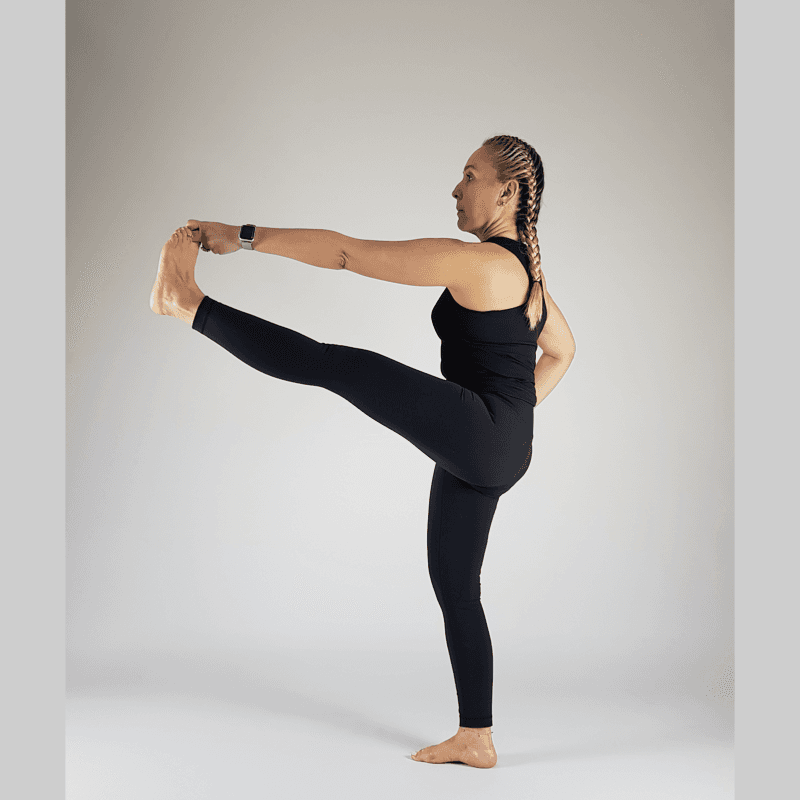
Extended Hand-to-Big-Toe Pose (Utthita Hasta Padangusthasana) is one of yoga's most iconic standing balances, combining hamstring flexibility with single-leg stability. The Sanskrit name translates to "extended hand to big toe pose," describing the action of grasping the toe while standing. This pose appears in the Ashtanga Primary Series and has become a staple in many yoga traditions. It requires patience, consistent practice, and the willingness to use props when needed. The pose teaches practitioners to find steadiness amid challenge, developing both physical strength and mental resilience. Regular practice improves not only flexibility and balance but also cultivates the focused awareness that defines mindful movement.
Step-by-Step Instructions
- 1
Begin in Mountain Pose (Tadasana) with feet together
- 2
Shift your weight onto the left foot, grounding firmly
- 3
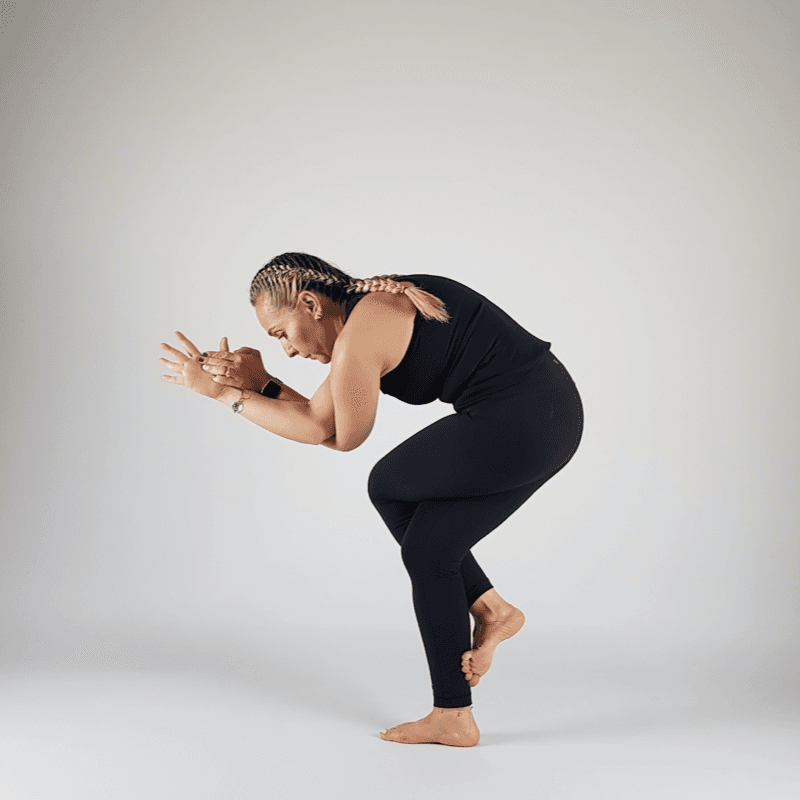
Lift the right knee toward your chest
- 4
Hook the right big toe with the first two fingers and thumb
- 5
Place the left hand on the left hip
- 6
On an inhale, extend the right leg forward
- 7
Straighten the leg as much as flexibility allows
- 8
Keep the spine tall and chest lifted
- 9
Fix your gaze on a steady point ahead
- 10
Hold for 5-8 breaths
- 11
Release with control and switch sides
Alignment Cues
- Ground through all four corners of the standing foot
- Keep the standing leg engaged but not locked
- Maintain level hips—avoid lifting the extended hip
- Keep the spine vertical, not leaning back
- Flex the extended foot and reach through the heel
- Draw the shoulder of the holding arm down
- Engage the core for stability
Benefits
- Deeply stretches hamstrings, calves, and inner thighs
- Strengthens the standing leg, ankle, and foot
- Improves balance and proprioception
- Builds core stability and engagement
- Develops mental focus and concentration
- Opens the hips and improves hip flexor strength
- Enhances body awareness and coordination
- Builds patience and determination through practice
Modifications
- Use a yoga strap around the foot
- Keep the knee bent while holding
- Practice with back against a wall
- Hold the shin or knee instead of the toe
Variations
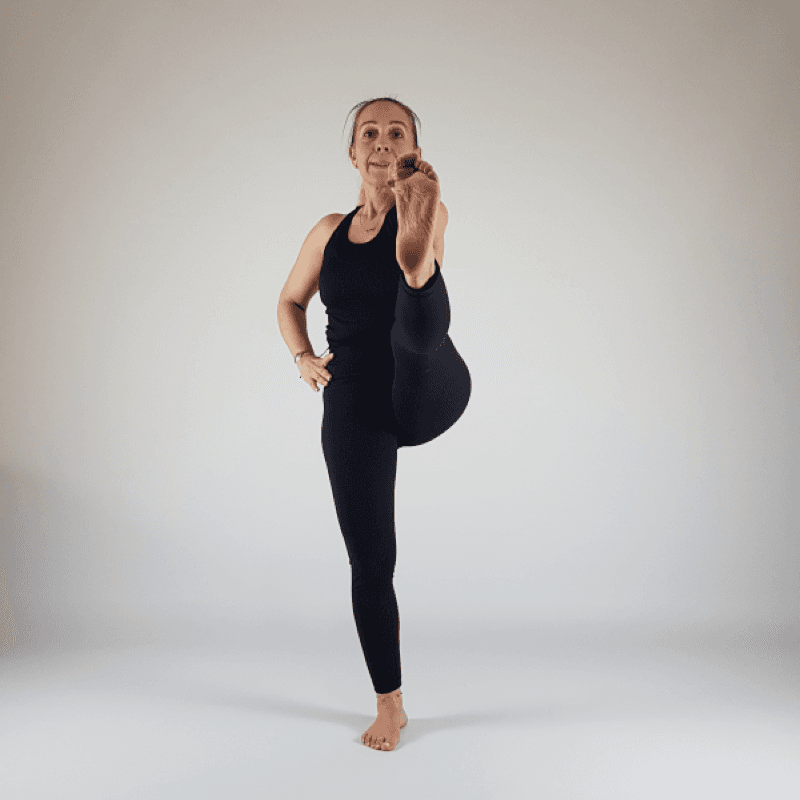
- Take the leg out to the side (Variation B)
- Add a twist toward the extended leg
- Release the toe and hold the leg unsupported
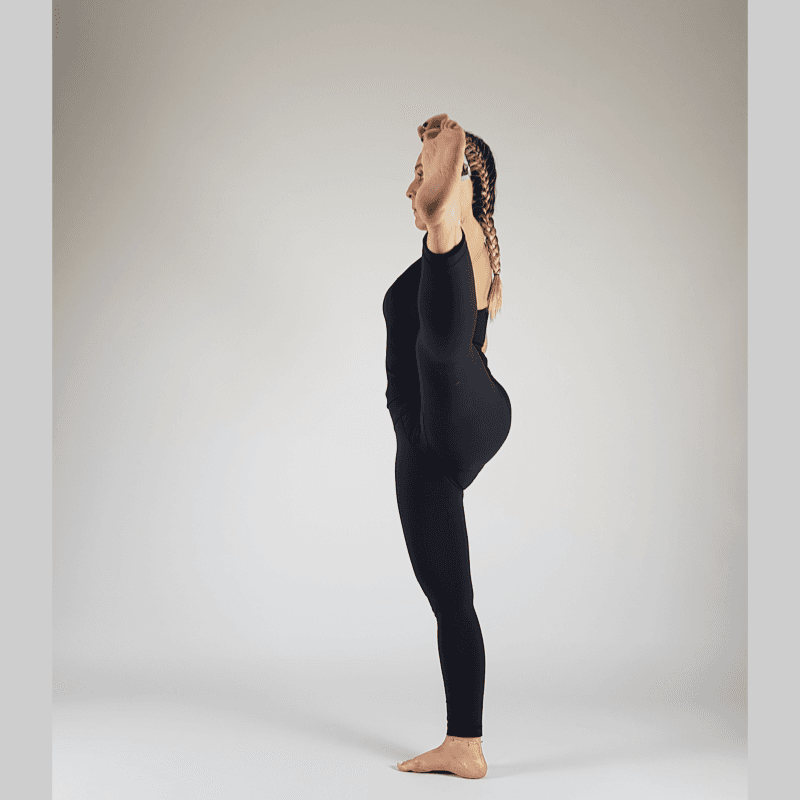
- Work toward vertical leg position
Cautions & Contraindications
Cautions
- Use a strap if you cannot reach the toe
- Keep the standing knee soft—never lock it
- Prioritize spinal alignment over leg height
- Progress gradually over time
- Keep breathing steady throughout
Avoid this pose if you have:
- Acute hamstring or groin injuries
- Ankle instability in the standing leg
- Severe lower back pain
- Balance disorders without support
- Pregnancy in later stages
Quick Facts
Primary Focus
hamstringsSecondary Focus
Suggested Hold
30 seconds
Tags
Equipment