FLOW Yoga Sequence BuilderFLOW Yoga Sequence Builder
30 min · all-levels

A Yoga Sequence That Treats Your Knees Like the Hinges They Are

A knee-friendly yoga sequence with no deep lunges, no hero pose, no full lotus — built for runners, hikers, and anyone with crunchy patellas.

Share
Yoga student kneeling on a folded blanket for knee support

The knee is a hinge, not a ball-and-socket. It bends and straightens. It rotates a tiny bit at end-range, but if it's rotating in the middle of its range under load, you are torturing your meniscus. Most yoga classes do not respect this. Crescent lunge with a wobbly front knee, virasana on the floor with no prop, full lotus pushed past hip mobility — these are the poses that send students to my office with referrals from their orthopaedist.

This sequence has none of them. Every standing pose is set up so the front knee tracks directly over the second toe with no torque. Every kneeling pose has a blanket under the patella. There is no virasana (hero pose), no full lotus, no half-pigeon with the back leg straight and the front knee twisted. I'd rather lose those poses than lose a meniscus.

What you'll get instead: strong quads and glutes that take load off the joint, mobile hips and ankles so the knee stops compensating for stiffness above and below it, and isometric strength work that builds capacity around the patella without the impact of jumping. Plan on 30 minutes. If you're inside the first six weeks after ACL or meniscus surgery, do not start here — work with a PT. After that, this is a fair re-entry point if your surgeon clears you for body-weight loading.

Who this sequence is for

Runners with patellofemoral pain ("runner's knee"), hikers whose knees ache going downhill, anyone with mild osteoarthritis or chondromalacia, students returning from meniscus tears past the rehab phase, and people who have been avoiding yoga because every class assumes their knees fold to the floor. Not appropriate inside the first six weeks post-surgery, or with an active ACL/MCL tear, locked knee, or significant effusion (swelling) — see your PT first. If one knee is markedly weaker or unstable than the other, work unilaterally and respect that asymmetry.

How to teach (or practice) it

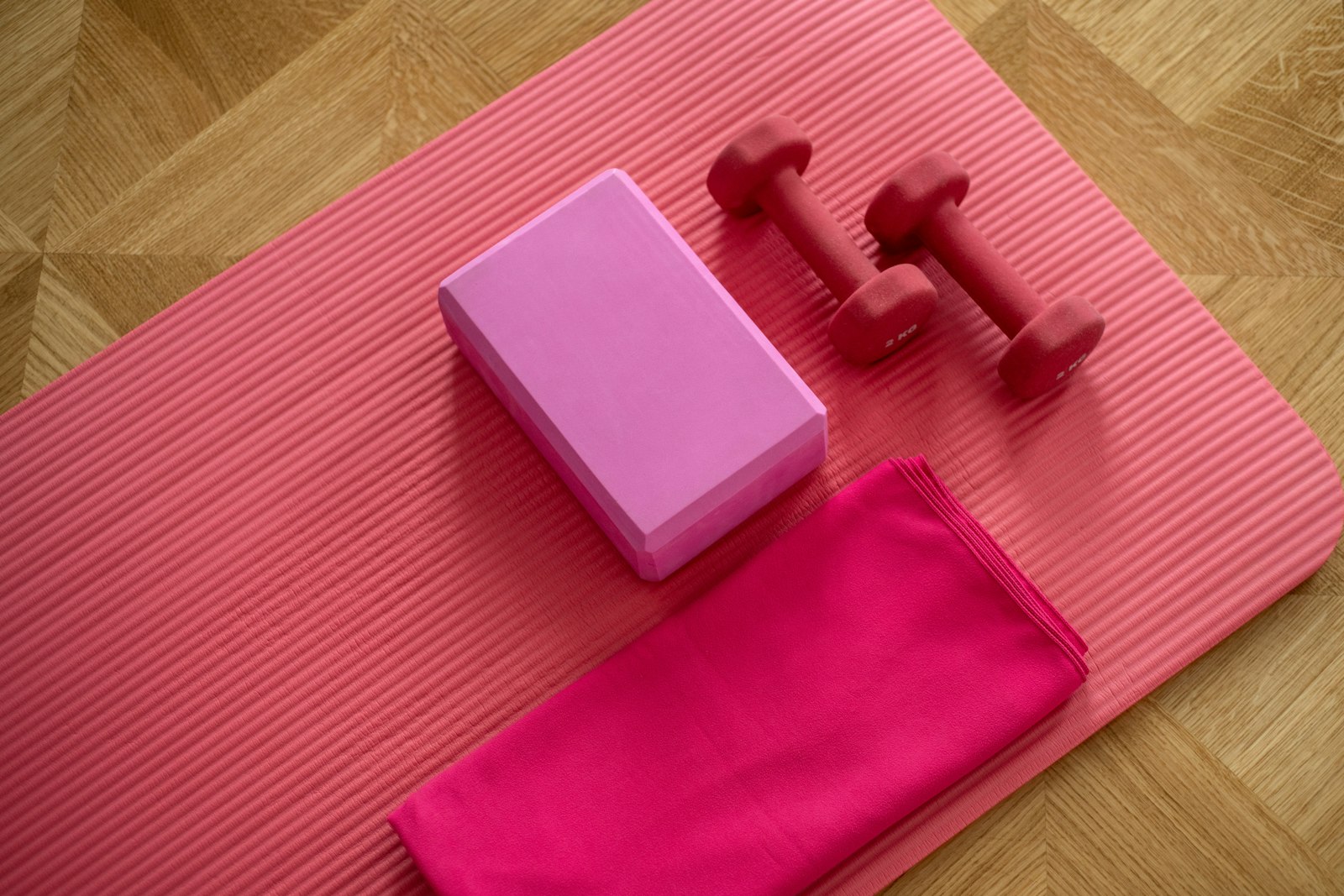
Use this as a complete 30-minute session, two or three times a week. It also works as the standing-pose block inside a longer class — just keep the props nearby. The non-negotiables: a folded blanket for every kneeling moment, a block within reach for every standing pose so students can shorten their stance if the knee complains, and a wall close enough to use for balance.

Cue tracking constantly. Every time the front knee bends in a lunge or warrior, the cue is "front knee over the middle of the foot, second-toe alignment." Have students glance down once to verify, then return their gaze forward. The other big cue: in any pose where the back knee is on the floor, the patella sits on the blanket, not on the floor or off the edge. The patella has minimal padding — direct contact with a mat is painful and over time genuinely damaging to the cartilage.

Hold the strength poses (chair, warrior II, half-squat) for shorter rounds: 20 seconds, three rounds, rather than 60 seconds once. The knee tolerates volume better than duration in early rehab. Between rounds, students walk in place or shake out the legs — never lock the knees standing still, which is how people faint and which loads the joint passively.

The Sequence

13 poses · 30 min

  1. 1
    Constructive Rest
    Salamba Savasana
    2 min

    Knees bent, feet flat. Let the knees rest with no load before we ask anything of them.

  2. 2
    Supine Figure-Four
    5 breaths each side

    Replaces pigeon. Same glute stretch, zero knee torque.

  3. 3
    Glute Bridge
    Setu Bandhasana
    8 reps

    Press through the heels, not the toes. Strong glutes protect the knees.

  4. 4
    Cat-Cow on Blanket
    Marjaryasana–Bitilasana
    6 cycles

    Patella on the blanket, not on the mat. Knees hip-width.

  5. 5
    Bird Dog
    5 reps each side

    Builds the gluteus medius — the muscle that prevents knee valgus.

  6. 6
    Wall Chair Pose
    Utkatasana
    20 sec, 3 rounds

    Back against the wall, thighs parallel to the floor only if knees stay quiet. Shins vertical.

  7. 7
    Warrior II
    Virabhadrasana II
    5 breaths each side

    Front knee tracks over the middle of the foot. Shorten the stance if the knee dives in.

  8. 8
    Triangle Pose
    Trikonasana
    5 breaths each side

    Micro-bend the front knee. Locked knees pinch the meniscus at end-range.

  9. 9
    Low Lunge with Blanket
    Anjaneyasana
    5 breaths each side

    Back patella on a folded blanket. Front knee directly over the front ankle.

  10. 10
    Half Squat at Wall
    15 sec, 2 rounds

    Wall behind you for confidence. Knees track over toes, hips reach back.

  11. 11
    Standing Forward Fold with Bent Knees
    Uttanasana
    8 breaths

    Knees softly bent — straight knees here load the meniscus and pull on the hamstring attachments.

  12. 12
    Reclined Hamstring Stretch with Strap
    Supta Padangusthasana
    8 breaths each side

    Tight hamstrings pull the pelvis posteriorly and load the knee. This is the long-game fix.

  13. 13
    Savasana
    5 min

    Bolster under the knees to fully unload the joint.

Coaching notes

Watch for valgus collapse — the knee diving toward the midline in lunges and squats. Cue "press the big toe mound and the heel down equally" and "spread the toes wide." If the arch collapses, the knee follows. The fix is foot strength, not a knee correction.

For chair pose, the shins stay vertical or close to it. The further the knees travel forward past the toes, the more compressive force on the patellofemoral joint. Sit the hips back like you're reaching for a chair behind you — this is literally where the pose gets its name. Knees over ankles, not over toes.

In any pose where the back knee is down (low lunge, half hanumanasana, gate pose), the patella sits on a folded blanket — minimum two layers. The medial joint line (inner knee) should not pinch. If it does in low lunge, widen the stance. The cervical spine is irrelevant to knee mechanics, but watch shoulder tension — students grip their shoulders when their knees hurt, and that pattern leaks back into their breath. Cue soft jaw and dropped shoulders before each hold.

Skip half-pigeon entirely. The back leg straight with the front knee at 90 degrees produces medial knee strain in most bodies. Substitute supine figure-four, which gives the same hip stretch with zero knee load.

FAQ

Can I do this after knee replacement surgery?+

Not until your surgeon and PT clear you for body-weight loading — usually 8-12 weeks post-op for a partial replacement, longer for total replacement. When you do return, skip chair pose and the half squat for the first month and focus on the supine work, bridges, and bird dog.

Why no pigeon pose?+

Half pigeon places the front knee at 90 degrees with the back leg straight, which loads the medial joint line and the meniscus in a vulnerable position. Supine figure-four gives the same gluteus stretch with the knee unloaded. There is no version of pigeon worth the risk for a cranky knee.

My knees crack and pop during chair pose. Is that bad?+

Painless crepitus (the cracking sound) is generally benign — gas bubbles, tendon glide. Painful crepitus or grinding that comes with swelling afterward is not. If it hurts during or after, regress to wall chair with a smaller bend and check with a sports-med doctor.

How is this different from a generic gentle yoga class?+

Gentle classes typically still include virasana (hero pose), pigeon, and deep lunges. This sequence removes the specific shapes that load the knee at vulnerable angles, and replaces them with strength work that builds quad and glute capacity. Gentle is not the same as knee-safe.

Can I do this daily?+

Yes — the loads here are low enough for daily practice if you are pain-free during and after. If you have any swelling 24 hours after the session, you went too hard somewhere; back off to every other day and shorten the holds.

FLOW Yoga Sequence Builder

Build your own body focus sequence in minutes

Drag-and-drop in the FLOW builder. Set per-pose duration, side, and notes. Save, share, and export to PDF. Free to start; Pro from $5/mo billed yearly with a 3-day trial.