
Table of Contents
Introduction
Wall yoga has become one of the most popular ways to practice at home—and for good reason. A wall is the most underrated yoga prop you already own. It provides support for balance, feedback for alignment, and gentle traction for deeper, safer stretches. If you have ever felt too stiff, too tired, or too unsteady for a regular flow, wall yoga for beginners is the perfect entry point.
This guide covers 10 wall yoga poses, a complete 20-minute wall yoga routine at home, the best wall yoga stretches for the back, and a clear answer to the question everyone is asking: wall yoga vs wall Pilates. No flexibility, strength, or special equipment required—just a clear patch of wall.
Want to save your routine? Build and store your wall yoga sequence free in FLOW's sequence builder.
What Is Wall Yoga?
Wall yoga is simply yoga practiced with a wall as a prop. Instead of balancing in mid-air or straining to reach the floor, you use the wall to:
These yoga poses using a wall are gentle enough for seniors and beginners, yet useful for experienced practitioners who want cleaner alignment.
Benefits of Wall Yoga
Why has wall yoga taken off? A few reasons:
Wall Yoga vs Wall Pilates
The trending question: wall yoga vs wall Pilates—what is the difference?
| Wall Yoga | Wall Pilates | |
|---|---|---|
| Pace | Slow, held poses | Repetitive, controlled movements |
| Breath | Long, meditative breathing | Coordinated with each rep |
| Best for | Stress relief, mobility, recovery | Toning, stability, strength |
They are complementary, not competing. Many people do wall yoga on recovery days and wall Pilates on strength days. If your goal is calm, mobility, and back relief, start with wall yoga.
Build this sequence on your phone
The same 420+ pose library and drag-and-drop builder, free on iPhone, iPad and Android.
10 Wall Yoga Poses for Beginners
Here are 10 beginner-friendly wall yoga poses. Hold each for 5–10 slow breaths unless noted.
1. Wall Mountain Pose
Stand with your back to the wall, heels a few inches away, and lightly press your hips, upper back, and head toward the wall. Feel a tall, neutral spine—your alignment baseline.
2. Wall Forward Fold
Stand facing away, hinge at the hips, and walk your hands down the wall behind you (or fold forward freely) with the wall guiding a flat back. Gentle on the hamstrings.
3. Wall Downward Dog (Half Dog)
Place your hands flat on the wall at hip height, walk back, and let your chest sink between your arms for an easy Downward Dog variation that is kind to wrists and shoulders.
4. Wall Plank
Hands on the wall, walk your feet back, and hold a standing plank. A beginner-friendly way to build core and shoulder strength without floor pressure.
5. Wall Chair Pose
Slide your back down the wall until your thighs are parallel to the floor, knees over ankles. The wall takes the strain off the lower back while your legs do the work.
6. Wall Tree Pose
Stand beside the wall and use it for balance as you lift into Tree Pose. Perfect for building confidence in standing balances.
7. Wall Lunge / Low Lunge Stretch
Place the back foot toes-up against the wall in a low lunge to deepen the hip-flexor stretch with support.
8. Wall Bridge
Lie down with feet pressing into the wall, knees bent, and lift into Bridge Pose, using wall pressure to stabilize and open the chest.
9. Wall Seated Forward Fold
Sit facing the wall, feet flat against it, and fold forward over straight legs—the wall keeps the legs honest in a seated forward fold.
10. Legs-Up-the-Wall (Viparita Karani)
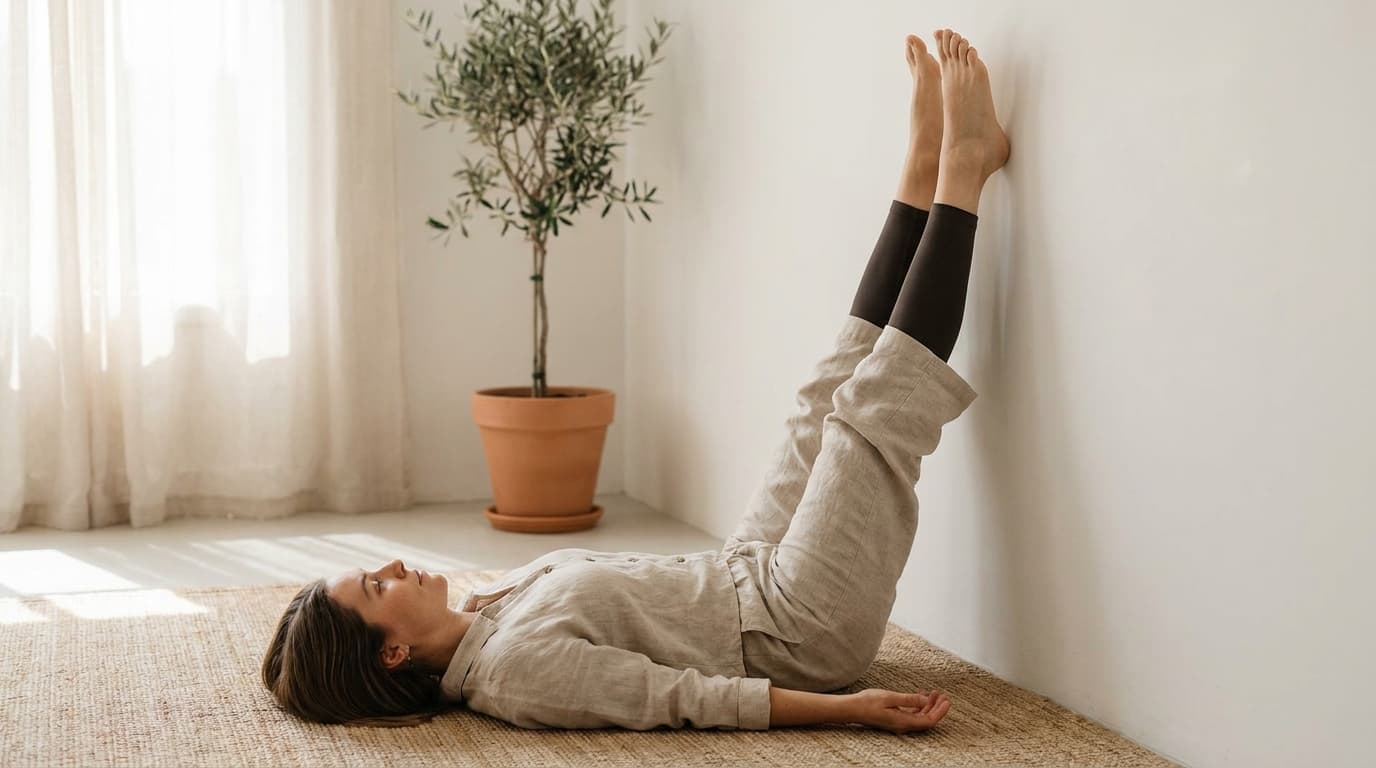
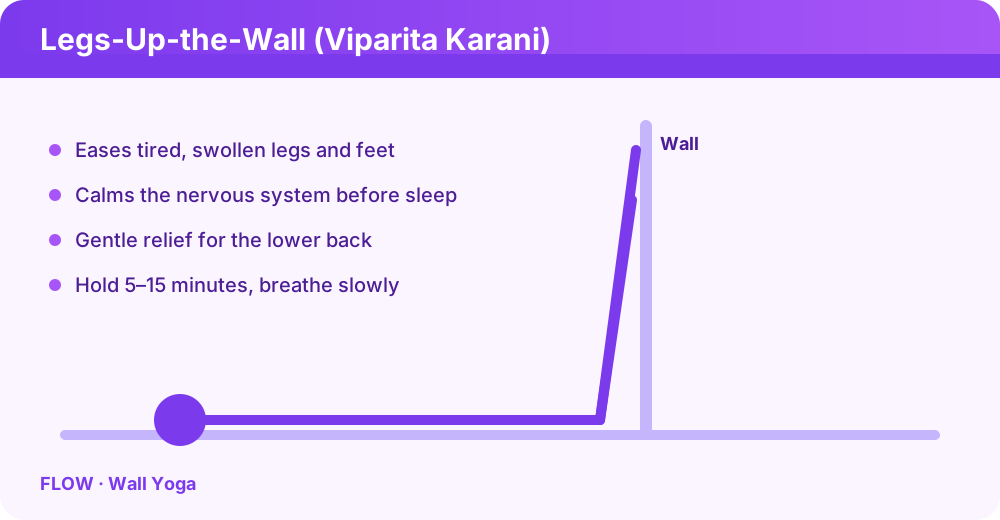
Lie on your back and rest your legs straight up the wall. This is the crown jewel of wall yoga—the legs up the wall pose benefits include eased swelling, lower-back relief, and deep nervous-system calm. Hold 5–15 minutes.
A 20-Minute Wall Yoga Routine at Home
Follow this wall yoga routine at home for a complete, balanced practice:
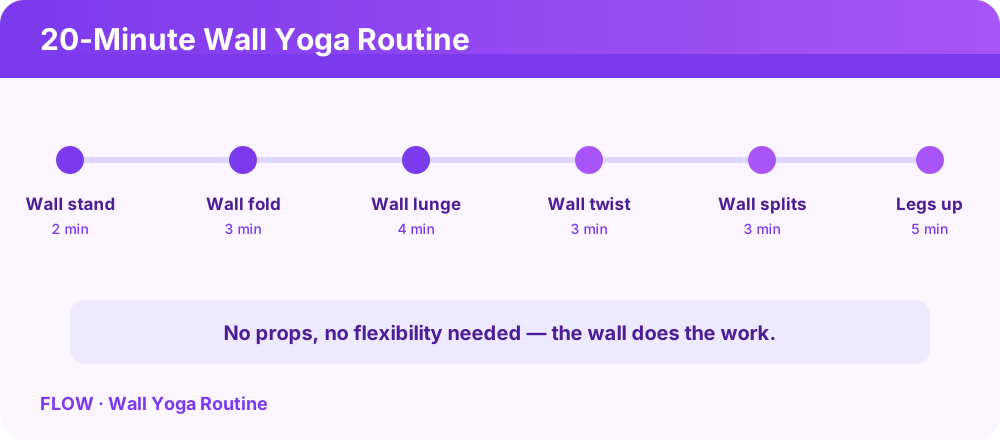
Repeat the loop for a longer session, or stop after Legs-Up-the-Wall before bed for a calming wind-down. Pairs beautifully with our restorative yoga sequence for better sleep.
Wall Yoga Stretches for the Back
For wall yoga stretches for the back and wall yoga for back pain, focus on traction and gentle decompression:
Move slowly, never force, and skip any pose that increases pain. If you have a diagnosed back condition, our guide to yoga flows for lower back pain covers safe modifications, and you should clear new movement with your clinician first.
Build Your Own Wall Yoga Sequence
Once you know the poses, designing your own wall yoga sequence is simple:
Use FLOW's drag-and-drop builder to arrange your wall poses, set hold times, add cues, and save a shareable link. Browse the full pose library for variations, or remix a ready-made yoga sequence. For more flexibility-focused ideas, see our yoga sequence for flexibility.
Ready to practice? Open the free sequence builder →
Frequently Asked Questions
Frequently Asked Questions (7)
What is wall yoga?
Wall yoga is yoga practiced using a wall as a prop. The wall supports balance poses, creates traction that lengthens the spine, and lets you hold restorative shapes longer. It makes challenging poses accessible for beginners and improves alignment for experienced practitioners. No equipment beyond a clear wall is needed.
Is wall yoga good for beginners?
Yes. Wall yoga is one of the best entry points for beginners because the wall provides support and feedback. It removes the fear of falling in balance poses and lets stiff bodies stretch safely. Start with the 10 wall yoga poses and the 20-minute routine in this guide.
What is the difference between wall yoga and wall Pilates?
Wall yoga focuses on flexibility, breath, relaxation, and alignment using slow, held poses. Wall Pilates focuses on core strength and muscle tone using controlled, repetitive movements. They complement each other: many people do wall yoga on recovery days and wall Pilates on strength days.
What are the benefits of legs up the wall pose?
Legs-Up-the-Wall (Viparita Karani) eases tired and swollen legs, gently relieves the lower back, improves circulation, and calms the nervous system to help with stress and sleep. Hold it for 5 to 15 minutes with slow breathing. It is one of the most relaxing poses in any wall yoga routine.
Can wall yoga help with back pain?
Wall yoga can help relieve general back tension through traction and gentle decompression—poses like Legs-Up-the-Wall, Wall Half Dog, and Wall Forward Fold are especially useful. Move slowly and avoid any pose that increases pain. If you have a diagnosed back condition, check with your clinician before starting.
How long should a wall yoga routine be?
A balanced wall yoga routine at home takes about 20 minutes: a few minutes of alignment and warm-up, several supported strength and stretch poses, and a longer hold in Legs-Up-the-Wall to finish. You can shorten it to 10 minutes for a quick wind-down or repeat the loop for a longer session.
Do I need any equipment for wall yoga?
No. All you need is a clear patch of wall and enough floor space to lie down. A yoga mat adds comfort, and a folded blanket can support the hips in Legs-Up-the-Wall, but neither is required. That accessibility is exactly why wall yoga is so popular for home practice.