
Tree Pose
Vrksasana
About This Pose
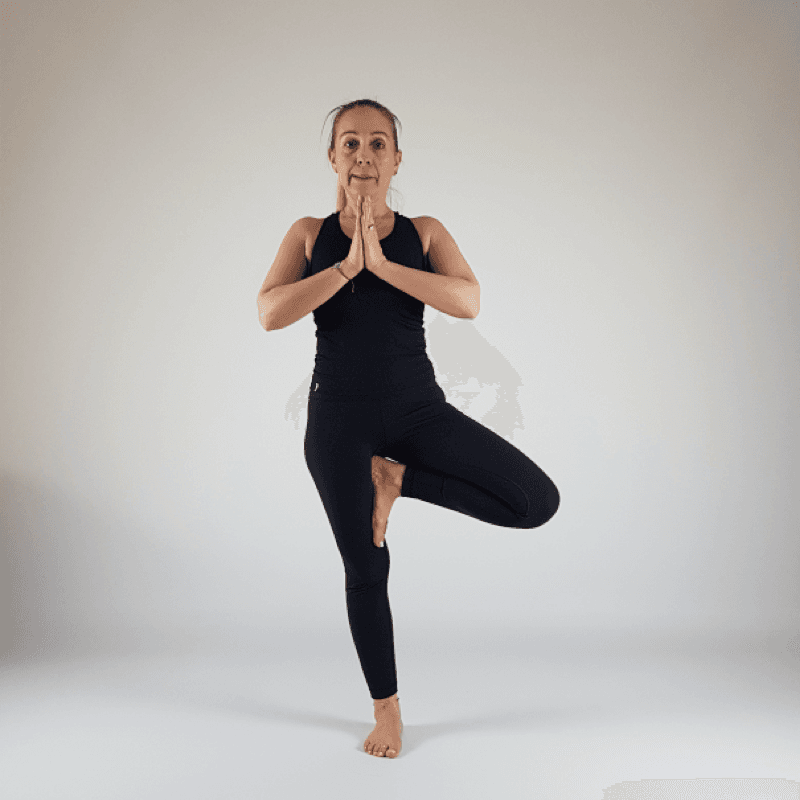
Tree Pose (Vrksasana) is one of the most recognizable and beloved yoga postures, representing the grace and stability of a tree rooted firmly in the earth while reaching toward the sky. The Sanskrit name comes from "Vrksa" meaning tree. This foundational balance pose appears in many yoga traditions and is often one of the first balancing postures students learn. Despite its apparent simplicity, Tree Pose offers profound benefits—it develops concentration, strengthens the standing leg, opens the hips, and cultivates a sense of grounding and calm. The pose teaches us to be both rooted and expansive, strong yet flexible, focused yet relaxed. Like a tree that sways in the wind but doesn't fall, practitioners learn to find steadiness amid life's challenges. Tree Pose is accessible to beginners while still offering depth for advanced practitioners through variations and longer holds.
Step-by-Step Instructions
- 1
Begin in Mountain Pose (Tadasana), feet together, weight evenly distributed
- 2
Shift your weight onto your left foot, grounding through all four corners
- 3
Bend your right knee and bring the sole of your right foot to your left inner thigh, calf, or ankle
- 4
Never place the foot directly against the knee joint
- 5
Press the foot and inner leg into each other for stability
- 6
Bring your hands to prayer position at your heart (Anjali Mudra)
- 7
Find a fixed point to gaze at (drishti) to help maintain balance
- 8
Once stable, you can extend the arms overhead like branches
- 9
Keep the standing leg strong, hip points facing forward
- 10
Hold for 5-10 breaths, breathing smoothly and evenly
- 11
Release the foot slowly and return to Mountain Pose
- 12
Repeat on the second side
Alignment Cues
- Root down firmly through the standing foot, spreading the toes
- Keep the pelvis neutral—avoid letting the hip of the lifted leg push out
- Engage the standing leg's quadriceps without locking the knee
- Lengthen the spine and reach the crown of the head toward the ceiling
- Draw the shoulders down away from the ears
- Press the foot and thigh equally into each other
- Keep both hip points facing forward
Benefits
- Improves balance, focus, and concentration significantly
- Strengthens the thighs, calves, ankles, and spine
- Opens the hips and groin, improving hip joint flexibility
- Builds stability in the standing leg and ankle
- Helps reduce flat feet and relieves sciatica symptoms
- Calms the mind and relieves stress and anxiety
- Improves posture and body awareness
- Develops neuromuscular coordination
- Can help lower blood pressure when practiced regularly
Modifications
- Place the foot lower on the calf or at the ankle with toes on the floor
- Practice with your back against a wall for support
- Keep hands at heart center instead of reaching overhead
- Hold onto a chair back or wall with one hand for balance
- Practice with eyes open; close eyes only when very stable
Variations
- Arms overhead with palms together or shoulder-width apart
- Swaying Tree: Gently sway the arms overhead like branches in wind
- Tree Pose with side bend: Reach arms overhead and lean to one side
- Eyes closed: Challenge balance by closing the eyes
- Tree Pose in Half Lotus: Place foot at opposite hip crease
Cautions & Contraindications
Cautions
- Never place the lifted foot directly on the knee—keep it above or below
- Start with a lower foot position and progress gradually
- Use a wall or chair for support if balance is challenging
- Keep the standing knee soft with a micro-bend
- If you lose balance, simply reset and try again—wobbling is part of the practice
Avoid this pose if you have:
- Acute knee injuries or pain in the standing leg
- Recent hip replacement or acute hip injury
- Severe vertigo or balance disorders
- Very low blood pressure (may cause dizziness)
- Insomnia or migraine (practice with caution)
- High blood pressure (avoid arms overhead variation)
Quick Facts
Primary Focus
hipsSecondary Focus
Suggested Hold
30 seconds
Tags
Equipment
Related Poses
Sequences with this pose
Teacher-written sequences that use Tree Pose.
A vinyasa flow you can actually teach on Tuesday night
60 min · 15 poses · intermediate
A hatha sequence built around the holds, not the transitions
75 min · 18 poses · all-levels
Beginner Yoga Sequence
30 min · 13 poses · beginner