Two mats, one decision
Teachers agonise over this pairing more than any other, and the reason is that both mats are genuinely excellent at opposite things. This is not a case where one is better and the other is marketing.
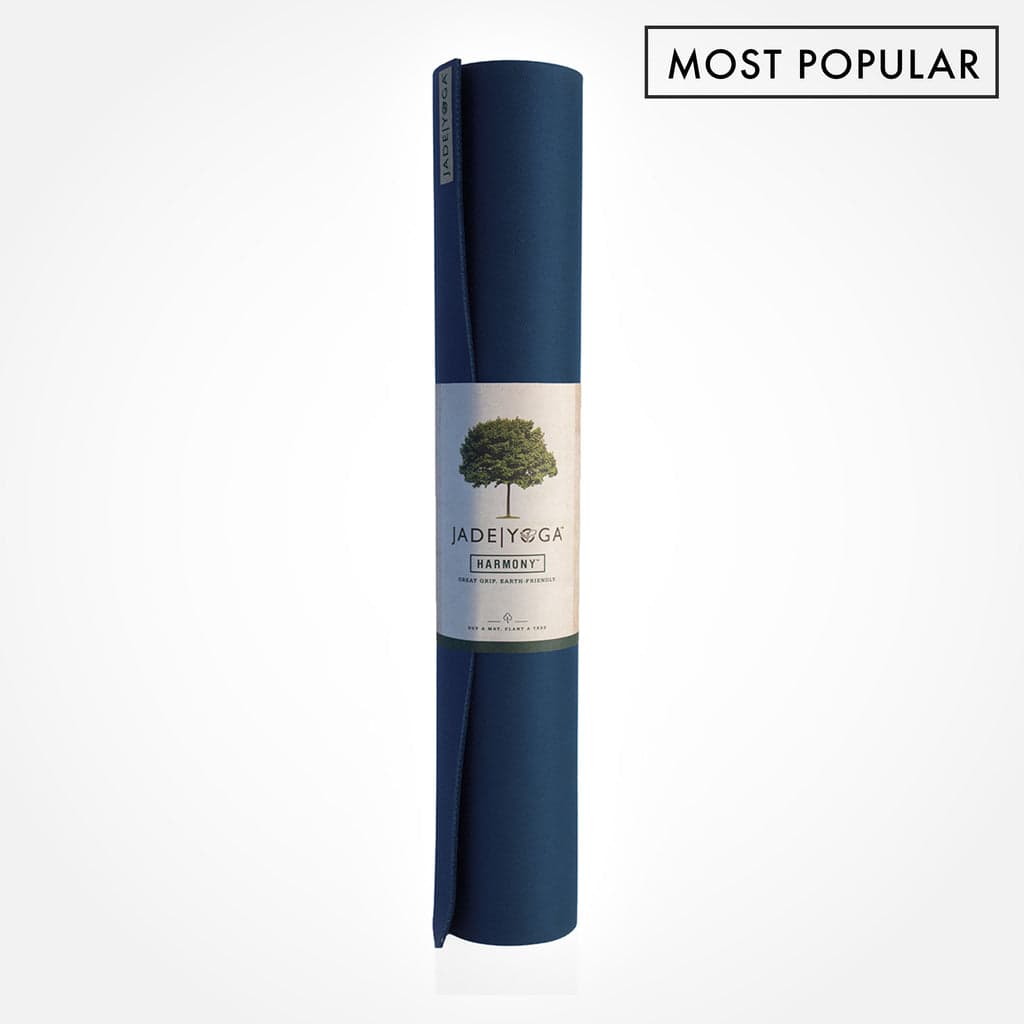
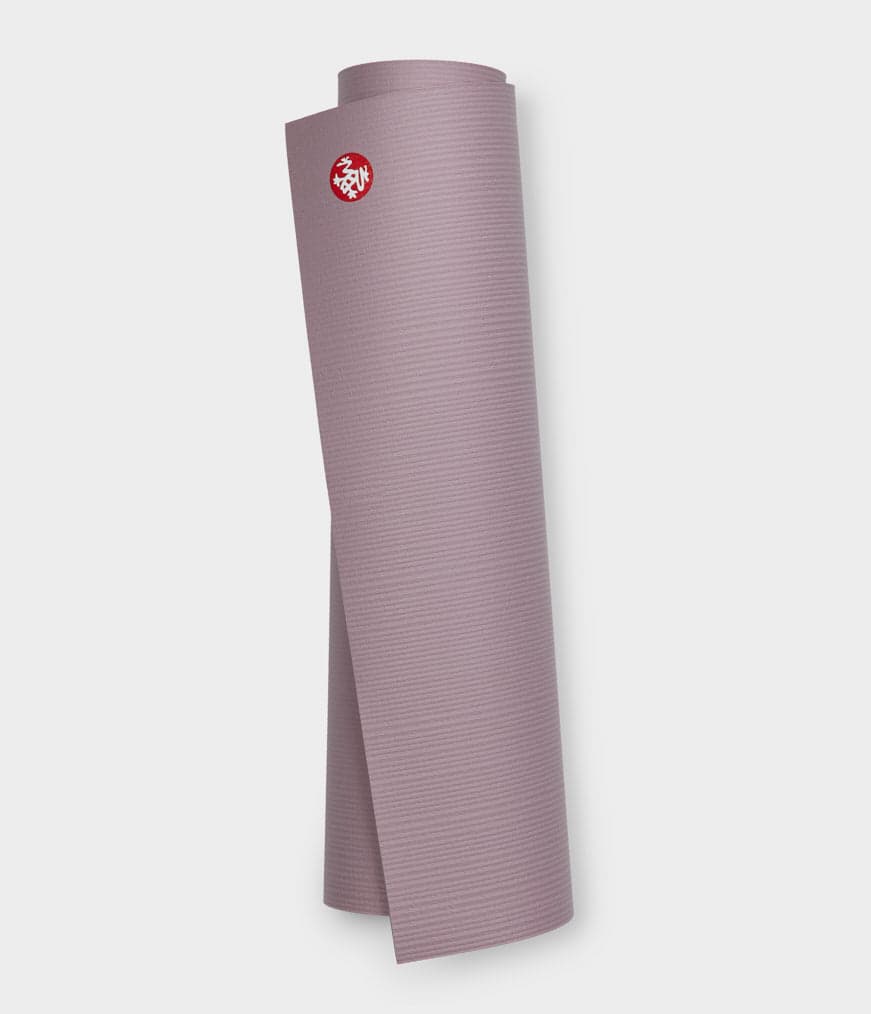
The Jade Harmony is open-cell natural rubber. Its surface is slightly porous, so sweat soaks in rather than pooling on top, and the grip gets stronger as you get wetter. The Manduka PRO is closed-cell PVC: dense, sealed, impermeable. Sweat sits on the surface and the mat gets slippery, but nothing ever soaks in, so the mat never degrades.
Every other difference between them — lifespan, cleaning, break-in, price per year — follows from that single material decision.
Grip
The Jade wins, decisively, and it wins more the harder the class gets.
What makes it unusual is that it needs no break-in at all. Roll it out and it holds. The Manduka, by contrast, arrives genuinely slick — a lot of people assume they have been sent a faulty mat. It needs the sea-salt treatment: coarse salt spread across the surface, scrubbed in, left overnight, brushed off. One evening of work and the mat becomes grippy for the rest of its life.
Even broken in, though, the Manduka will not match the Jade once you are properly sweating. In a heated room most Manduka owners end up laying a towel over the mat, which works, but means paying premium money for a mat and then practising on a towel.
Longevity
The Manduka wins, and the margin is years rather than months.
A Manduka PRO bought in 2019 and taught on several times a week is still at full thickness. There is no compression under the knees, no thinning at the hands, nothing. The lifetime warranty is not marketing; the mats simply do not wear out.
The Jade lasts around three years of daily use. The same open cells that give it grip are what wear away — the surface gradually sheds and the mat thins. That is not a defect, it is the mechanism working. You are renting grip, and the rent is a new mat every few years.
The maths
The Jade is cheaper to buy and more expensive to own.
At $80–100 replaced every three years, it costs roughly $30 a year. At $120–140 kept for ten, the Manduka costs about $13. Over a decade of daily practice you will buy three Jades and one Manduka, and spend more than twice as much doing it.
That calculation only applies if you can use the Manduka. In a hot room you cannot, and the comparison is then between a Jade and a Manduka plus a towel, which closes the gap considerably.
Cleaning
A closed-cell mat wipes down and is done. Sweat never enters it, so there is nothing to grow in it.
An open-cell mat absorbs what it grips, and that includes everything on your hands and feet. The Jade needs genuine cleaning — a proper mat wash, properly dried, regularly — and it will start to smell if it does not get it. Factor that in honestly: it is a weekly chore for years, not a one-off.
Which one
If you practise hot, or you are someone who sweats heavily in any room, buy the Jade. The Manduka cannot do that job and no amount of break-in changes it.
If you practise daily in a normal studio or at home, buy the Manduka, break it in with salt the day it arrives, and stop thinking about mats. It will outlast the practice you currently have.
If you are a teacher, you probably want both eventually — the Manduka under you for the hours you spend demonstrating, and the Jade for the heated classes. That is not an upsell; it is just what ends up in most teachers' cars.
A note on the third option
If you came here from the Manduka versus Liforme comparison, the Liforme sits between these two: polyurethane over rubber, grip close to the Jade, lifespan closer to the Manduka, and the highest price of the three. It is a reasonable way to avoid choosing — at a cost.