
Downward Facing Dog
Adho Mukha Svanasana
About This Pose
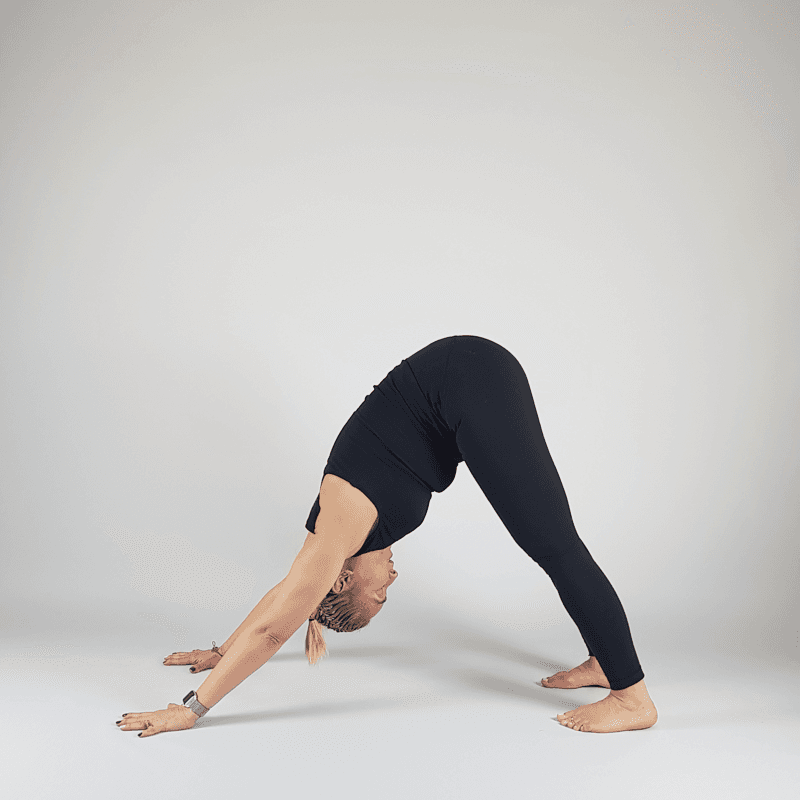
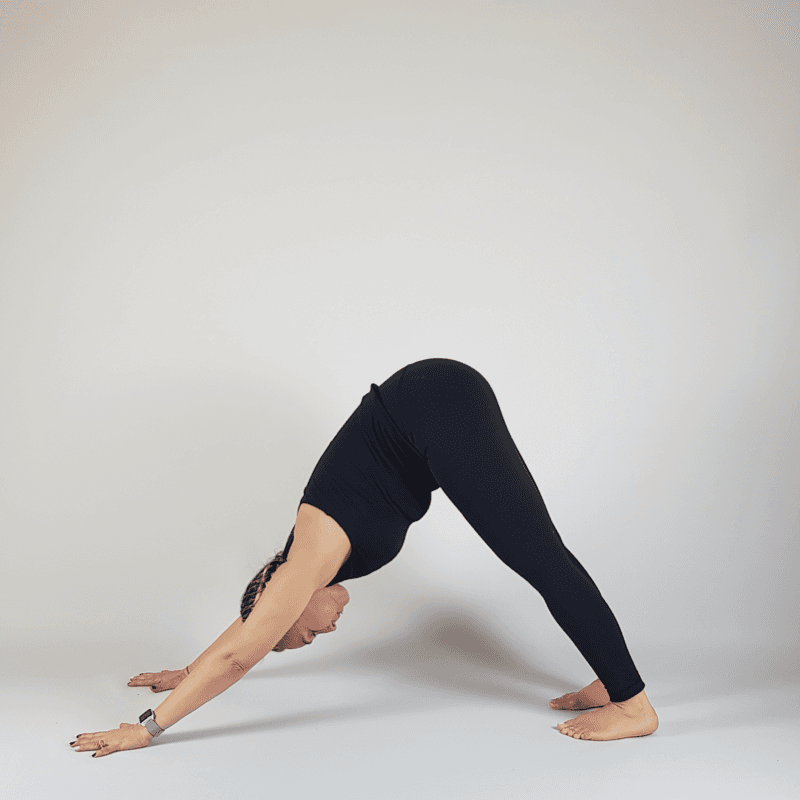
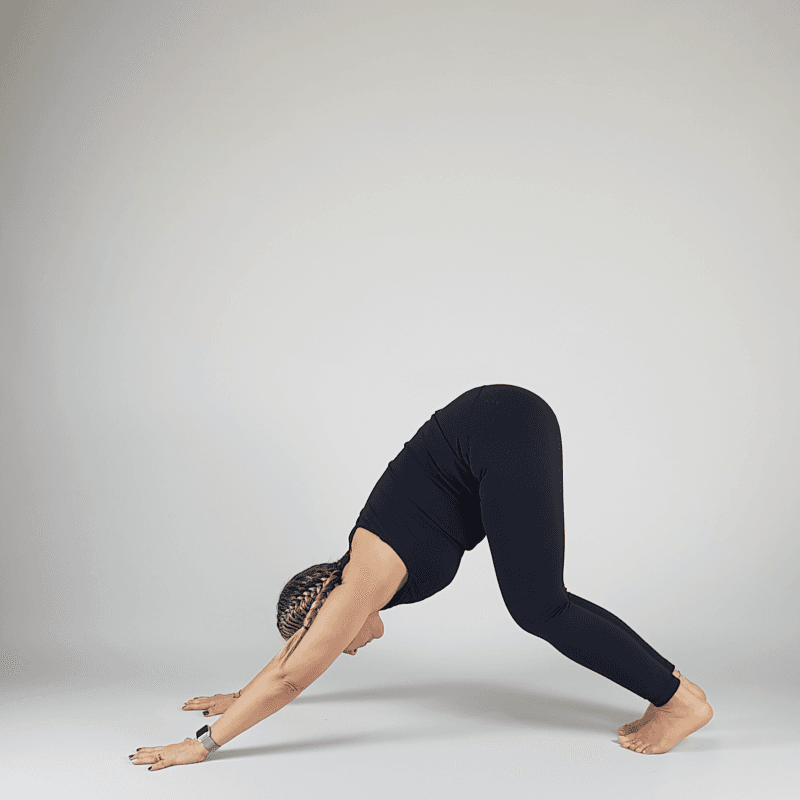
Downward Facing Dog (Adho Mukha Svanasana) is perhaps the most recognized yoga pose worldwide, serving as a cornerstone of most yoga practices. The Sanskrit name translates to "downward facing dog pose," mimicking the stretch dogs do naturally. This pose functions as a mild inversion, with the heart above the head, bringing the calming benefits of inversions without the intensity. It stretches the entire posterior chain—calves, hamstrings, and spine—while strengthening the arms, shoulders, and core. Down Dog serves multiple purposes in a yoga practice: as a resting pose between more demanding postures, as a transition pose in Sun Salutations, and as a strengthening pose in its own right. Mastering proper alignment in this foundational pose creates a blueprint for safe practice throughout yoga.
Step-by-Step Instructions
- 1
Begin on hands and knees in tabletop position
- 2
Place hands shoulder-width apart, spread fingers wide
- 3
Tuck the toes under and lift the knees off the ground
- 4
Push the hips up and back, straightening the legs
- 5
Create an inverted V-shape with your body
- 6
Press firmly through the entire hand, especially the finger pads
- 7
Rotate the upper arms outward to broaden the shoulders
- 8
Let the head hang naturally between the arms
- 9
Draw the shoulder blades down the back
- 10
Reach the heels toward the ground (they don't need to touch)
- 11
Hold for 5-10 breaths or longer
Alignment Cues
- Hands shoulder-width apart, fingers spread wide
- Feet hip-width apart, toes pointing forward
- Weight distributed evenly between hands and feet
- Arms straight but not locked at the elbows
- Spine long and straight—avoid rounding
- Hips reaching up and back as the highest point
- Head and neck relaxed, gaze toward the navel or thighs
Benefits
- Stretches hamstrings, calves, and Achilles tendons
- Strengthens arms, shoulders, and upper back
- Elongates and decompresses the spine
- Builds core stability
- Calms the nervous system as a mild inversion
- Improves digestion and blood circulation
- Relieves headache, fatigue, and back pain
- Energizes the body while calming the mind
Modifications
- Bend the knees generously to focus on spine length
- Practice Puppy Pose if full Down Dog is too intense
- Use yoga wedges under the heels
- Place hands on blocks to reduce wrist pressure
Variations
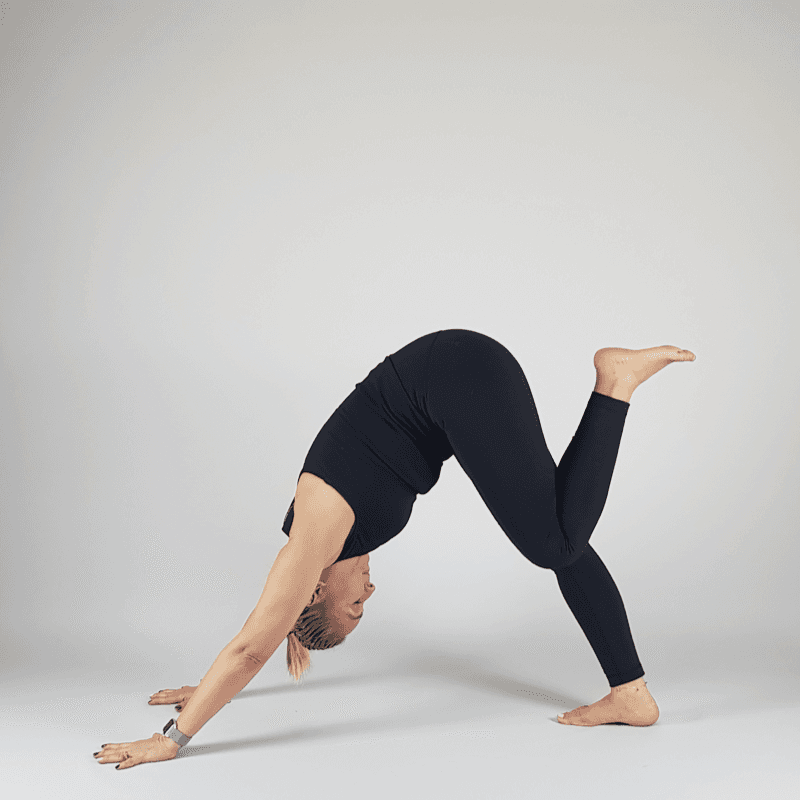
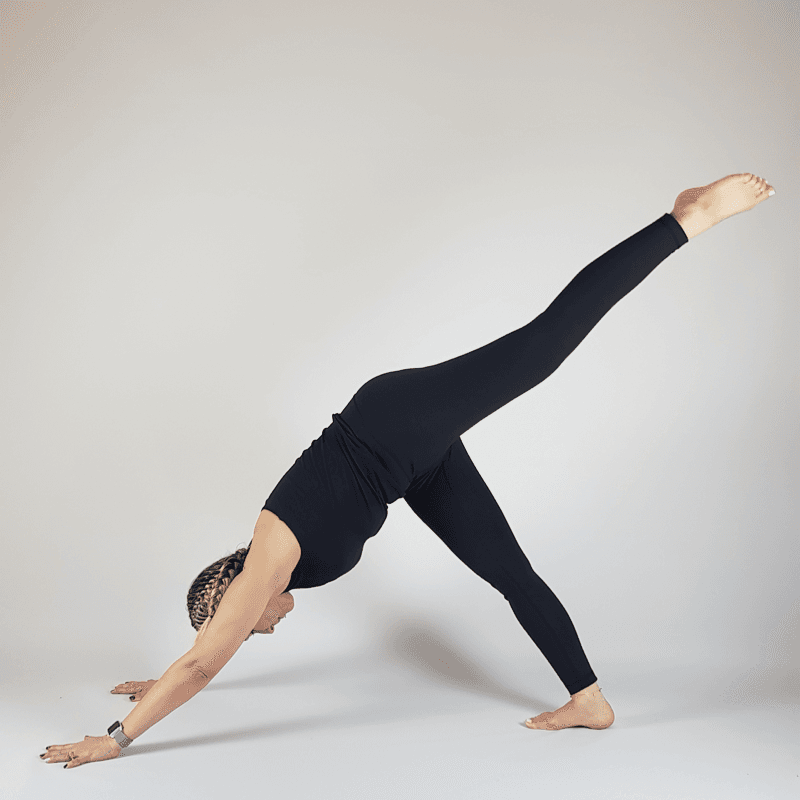
- Three-Legged Dog: lift one leg toward ceiling
- Twisted Down Dog: reach one hand to opposite ankle
- Walking the Dog: alternate bending knees
- Dolphin Pose: forearms on the ground
Cautions & Contraindications
Cautions
- Bend the knees if hamstrings are tight
- Don't lock the elbows—keep a micro-bend
- Avoid if you have uncontrolled high blood pressure
- Keep the neck relaxed—don't strain to look forward
- Distribute weight evenly between hands and feet
Avoid this pose if you have:
- Carpal tunnel syndrome (modify with forearms down)
- Late-term pregnancy
- Acute eye conditions (glaucoma, detached retina)
- Uncontrolled high blood pressure
- Recent or chronic shoulder injury
- Severe wrist pain
Quick Facts
Primary Focus
hamstringsSecondary Focus
Suggested Hold
30 seconds
Tags
Equipment
Related Poses
Sequences with this pose
Teacher-written sequences that use Downward Facing Dog.
A Yoga Sequence for Shoulder Tension That Reaches the Real Knots
35 min · 12 poses · all-levels
A Yoga Sequence for Tight Hamstrings That Lengthens Without Forcing
40 min · 11 poses · all-levels
A vinyasa flow you can actually teach on Tuesday night
60 min · 15 poses · intermediate
A hatha sequence built around the holds, not the transitions
75 min · 18 poses · all-levels