
Supine Spinal Twist
Supta Matsyendrasana
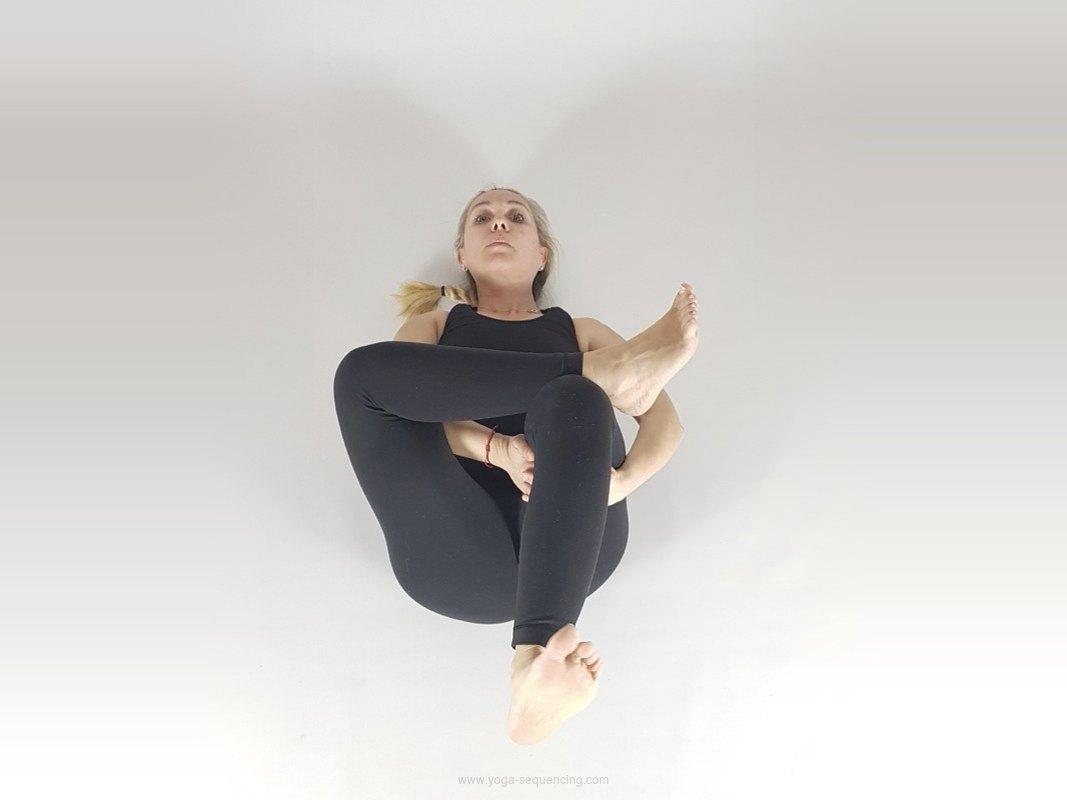
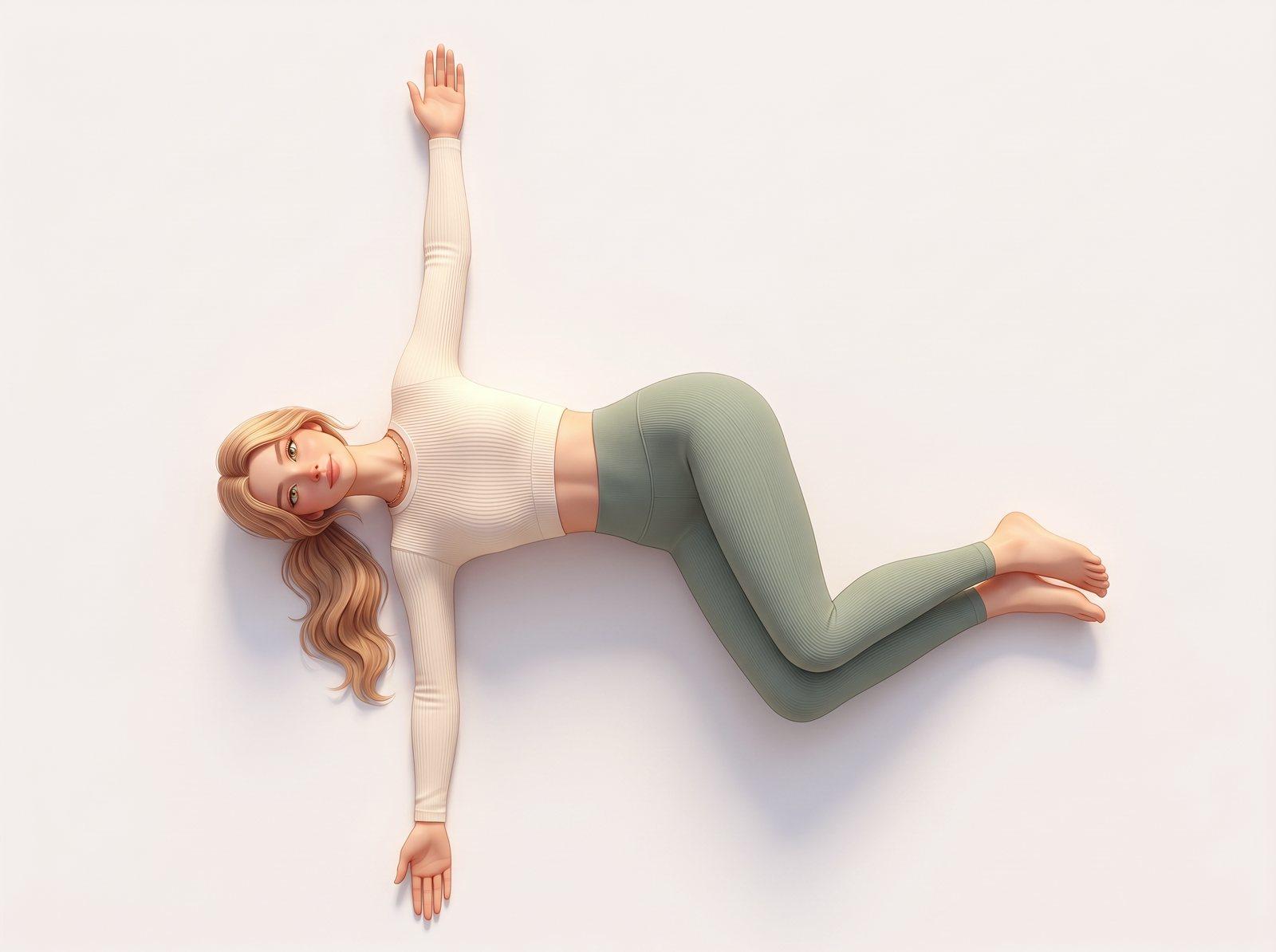
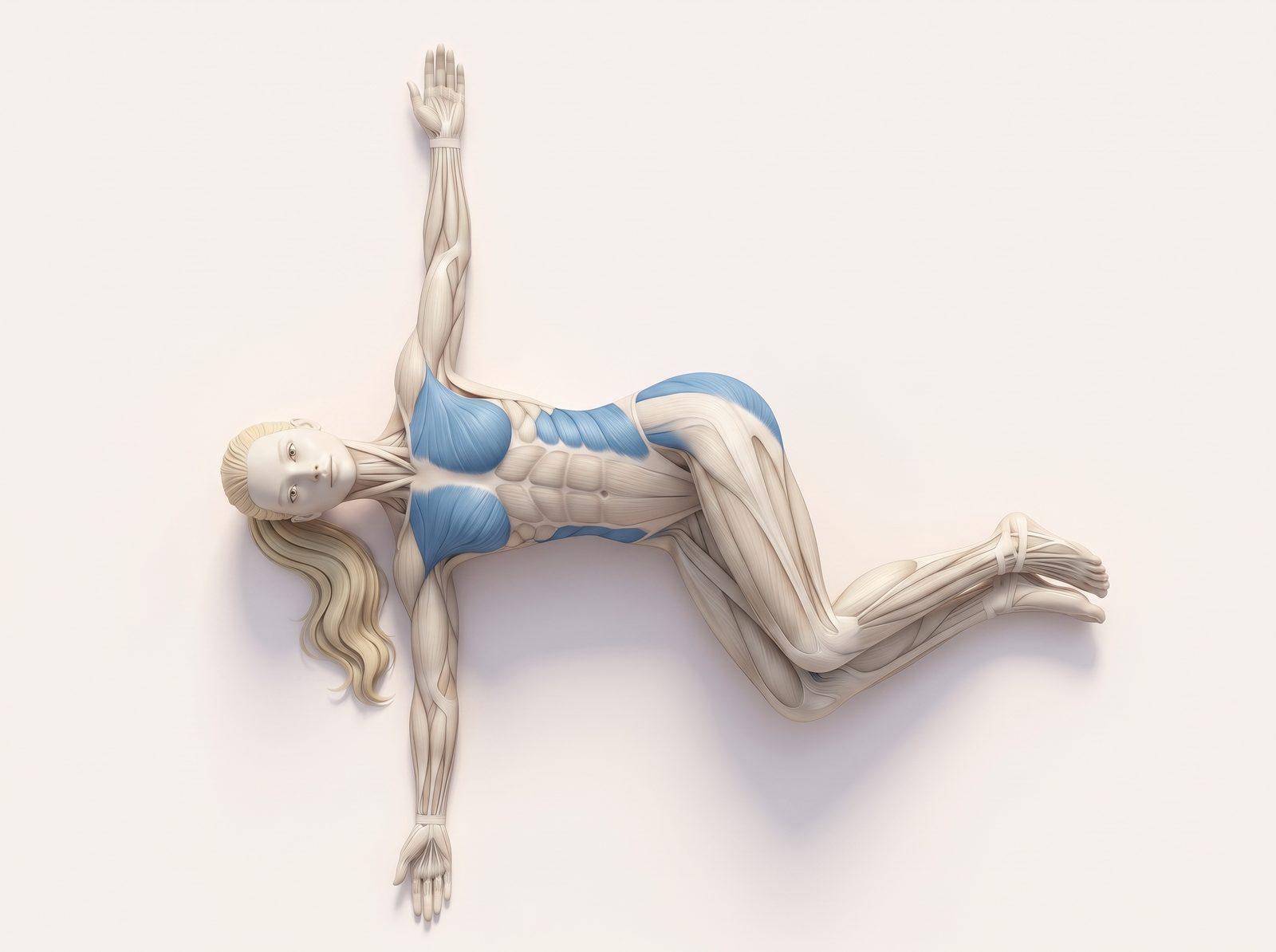
Stretching: Top-side waist, Top-side back muscles, Top-leg outer hip, Chest
Full muscle breakdown ↓About This Pose
Reclined Spinal Twist (Supta Matsyendrasana) is a restorative supine twist that gently releases tension throughout the spine while promoting deep relaxation. This accessible pose massages the abdominal organs, aids digestion, and helps relieve lower back discomfort. The grounding quality of lying on the floor combined with the gentle rotation creates a profoundly calming effect on the nervous system, making it ideal for winding down a practice or preparing for Savasana.
Muscles Worked in Supine Spinal Twist
Supine Spinal Twist in the photo lies on the back with the arms open wide in a T, palms up, and both knees bent and stacked, lowered to one side while the shoulders stay on the floor. It stretches the top-side waist, the top-side back muscles and the top-leg outer hip, with the chest opening on the floor.
Working
A passive twist: the floor holds the legs and shoulders, so no muscle has to work.
Stretching
- Top-side waist (obliques)
- Top-side back muscles (erector spinae, quadratus lumborum)
- Top-leg outer hip (gluteus medius, gluteus maximus)
- Chest (pectoralis major)
Variations and joint actions
- Gaze away from the knees: Turning the head away from the knees adds a gentle neck rotation.
- Block under the knees: Resting the knees on a block or bolster keeps the opposite shoulder on the floor.
- Spine axial rotation, knees to one side
- Hips flexion and rotation, legs stacked
- Knees flexion
- Shoulders abduction, about 90°, arms in a T, palms up
- Neck neutral, face up
Roles are qualitative — this section does not measure how hard any muscle works. References: Leslie Kaminoff & Amy Matthews, Yoga Anatomy (Human Kinetics); Ray Long, The Key Muscles of Yoga (Bandha Yoga).
Step-by-Step Instructions
- 1
Lie on back
- 2
Bend both knees
- 3
Drop knees to one side
- 4
Extend arms out
- 5
Turn head opposite to knees
- 6
Breathe and relax
Alignment Cues
- Deep relaxed breathing
- Let knees be heavy
- Keep both shoulders down
- Soften belly
Benefits
- Releases spinal tension and improves mobility
- Massages abdominal organs and aids digestion
- Stretches chest, shoulders, and outer hips
- Calms the nervous system and reduces stress
- Helps relieve lower back discomfort
- Promotes deep relaxation and better sleep
Modifications
- Use bolster between knees
- Support top knee
Variations
- Straight bottom leg
- Eagle legs
Cautions & Contraindications
Cautions
- Keep shoulders grounded
- Avoid forcing twist
Avoid this pose if you have:
- Spinal injury
Quick Facts
Primary Focus
spineSecondary Focus
Suggested Hold
60 seconds
Tags
Equipment
Related Poses
Sequences with this pose
Teacher-written sequences that use Supine Spinal Twist.
A Yoga Sequence for Lower Back Relief You Can Trust to Teach
40 min · 12 poses · beginner
Build a Core That Holds You Up, Not One That Just Looks Tight
35 min · 13 poses · intermediate
Release a Stiff Neck and Upper Back Without Wrecking Your Cervical Spine
25 min · 10 poses · all-levels
A vinyasa flow you can actually teach on Tuesday night
60 min · 15 poses · intermediate