Headstand Leg Lowering
Urdhva Dandasana
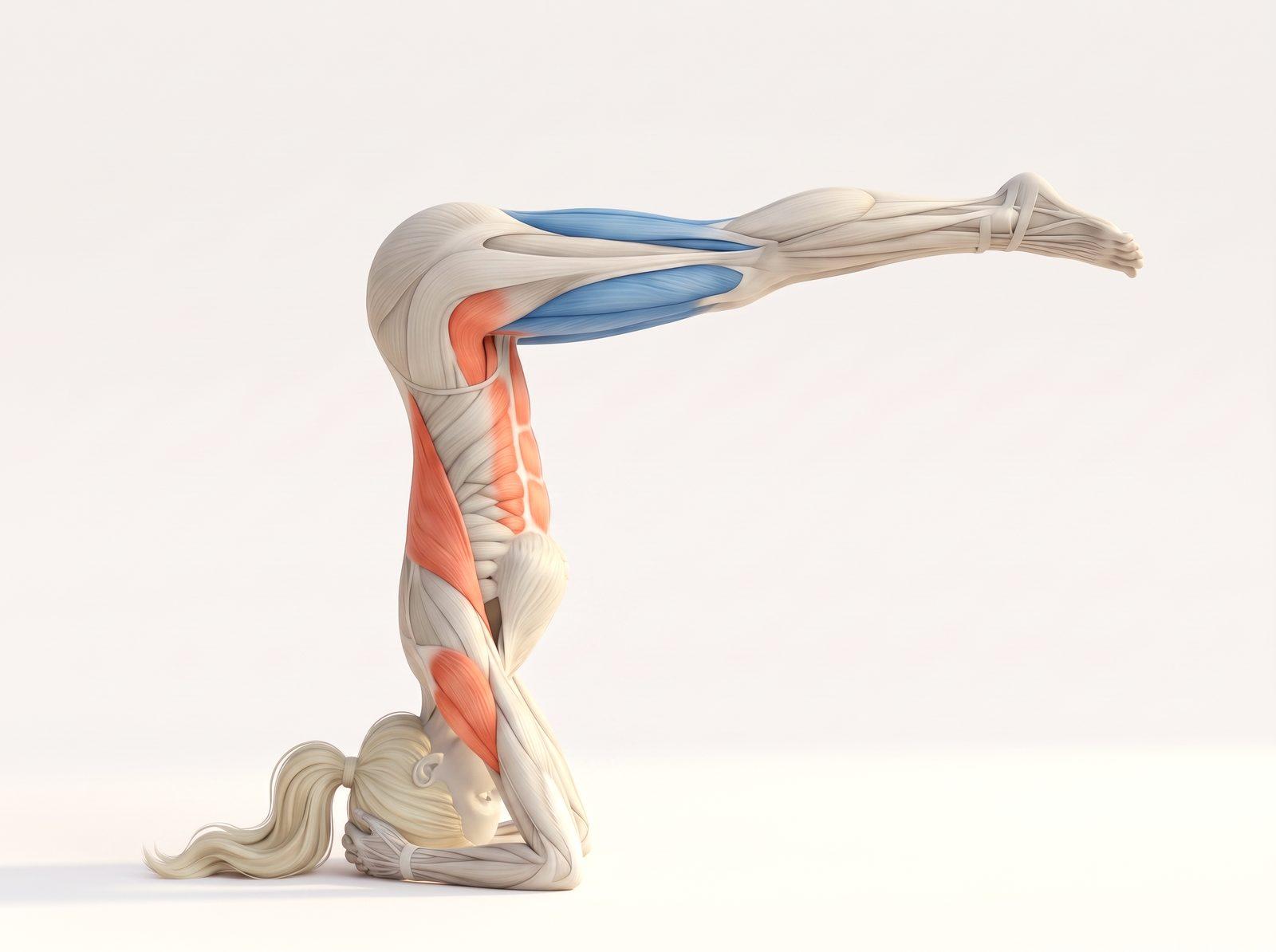
Working: Shoulders, Upper back, Abdominals, Back muscles, Hip flexors
Stretching: Hamstrings
Full muscle breakdown ↓About This Pose
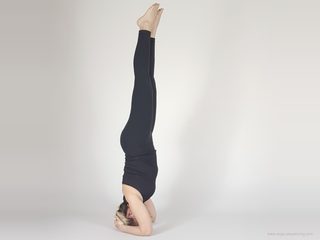
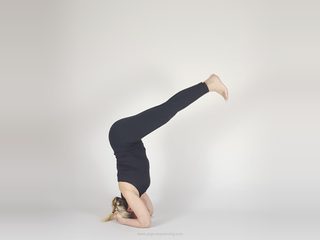
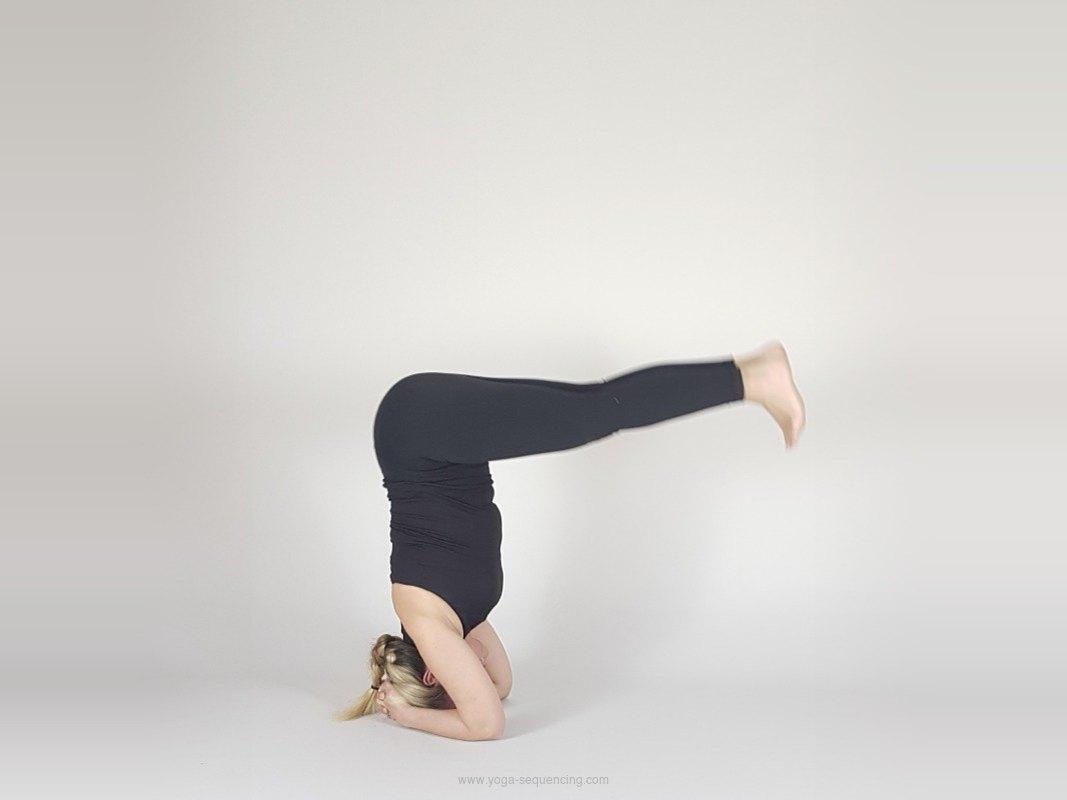
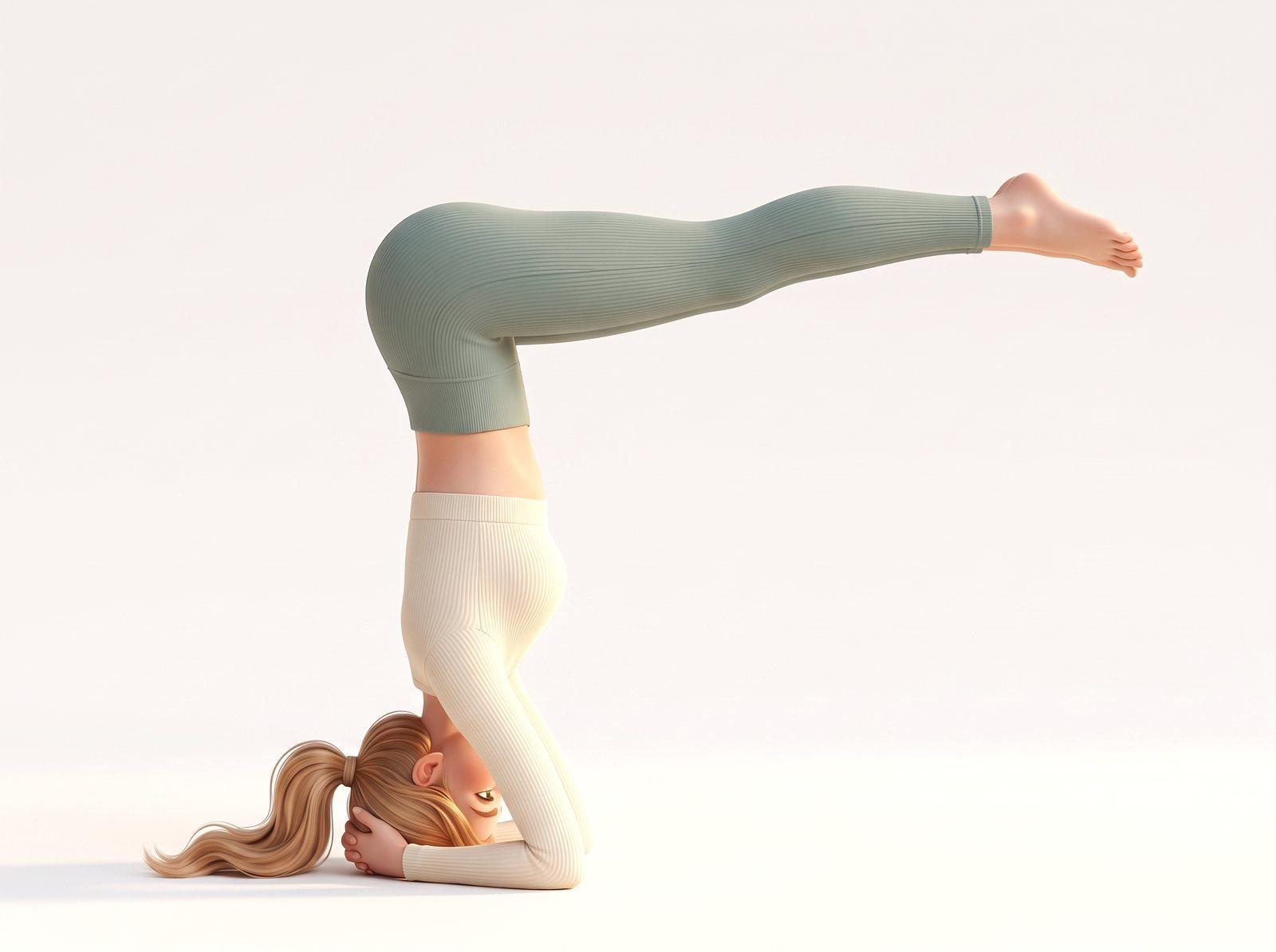
Headstand Leg Lowering (Urdhva Dandasana) starts in Supported Headstand and lowers both straight legs until they are roughly parallel to the floor, while the hips stay stacked over the shoulders. The legs act as a long lever, so the core, shoulders and back have to work hard to keep the body from tipping. It is used to build the control needed to press up into headstand and to come down slowly. Practice it only once you hold a steady full headstand.
Muscles Worked in Headstand Leg Lowering
The photo shows Headstand Leg Lowering (Urdhva Dandasana): in Supported Headstand on the forearms with the hands clasped around the head, the hips stay stacked over the shoulders while both straight legs lower to about parallel with the floor. The shoulders, upper back and core hold the inversion and the back muscles stop the legs from pulling you over.
Working
- Shoulders (deltoids)
- Upper back (rhomboids, trapezius)
- Abdominals (rectus abdominis, transversus abdominis)
- Back muscles (erector spinae, along the whole spine)
- Hip flexors (iliopsoas, rectus femoris)
Stretching
- Hamstrings (biceps femoris, semitendinosus, semimembranosus)
Also holding you steady: your rotator cuff, inner thighs, Serratus anterior and neck muscles, which keep the neck long.
Variations and joint actions
- Lower halfway: Lowering the legs only part of the way shortens the lever while you build strength.
- Bent knees: Bending the knees as the legs lower makes the move much lighter.
- Shoulders full flexion, forearms pressing into the floor
- Elbows flexion, hands clasped around the back of the head
- Spine vertical and long, torso upside down
- Hips flexion to about 90°, legs horizontal
- Knees extension
Roles are qualitative — this section does not measure how hard any muscle works. References: Leslie Kaminoff & Amy Matthews, Yoga Anatomy (Human Kinetics); Ray Long, The Key Muscles of Yoga (Bandha Yoga).
Step-by-Step Instructions
- 1
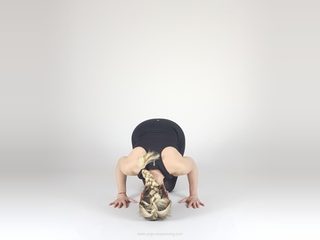
Set up the forearms with fingers interlaced and the crown of the head on the mat
- 2
Lift into a steady Supported Headstand
- 3
Engage the core and press the forearms down
- 4
Keep the legs together and straight
- 5
Hinge at the hips to lower the legs toward parallel
- 6
Pause, then lift the legs back to vertical with control
- 7
Repeat 2-3 times, come down, and rest in Child's Pose
Alignment Cues
- Forearms press, shoulders lift away from the ears
- Hips stay over the shoulders
- Legs together and active
- Neck long, no collapse
Benefits
- Builds deep core and hip flexor strength
- Strengthens the shoulders and upper back
- Teaches control for entering and leaving headstand
- Stretches the hamstrings
- Improves body awareness upside down
Modifications
- Lower the legs only a little
- Practice against a wall
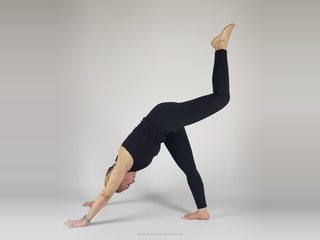
- Bend the knees (Headstand Tuck) as you lower
Variations
- Headstand L-Shape against a wall
- Headstand Tuck
- Supported Headstand (Salamba Sirsasana)
Cautions & Contraindications
Cautions
- Keep most of the weight in the forearms, not the head
- Lower the legs only as far as the hips stay over the shoulders
- Come down at once if the neck feels compressed
Avoid this pose if you have:
- Neck or cervical spine injury
- Uncontrolled high blood pressure
- Glaucoma or detached retina
- Pregnancy (unless very experienced)
- Menstruation, if practicing a tradition that avoids inversions then
Quick Facts
Breath Cue
Breathe steadily through the nose; exhale as the legs lower, inhale as they lift.
Primary Focus
hipsSecondary Focus
Suggested Hold
60 seconds
Tags
Equipment