Three-Legged Downward Dog Hip Open
Tri Pada Adho Mukha Svanasana
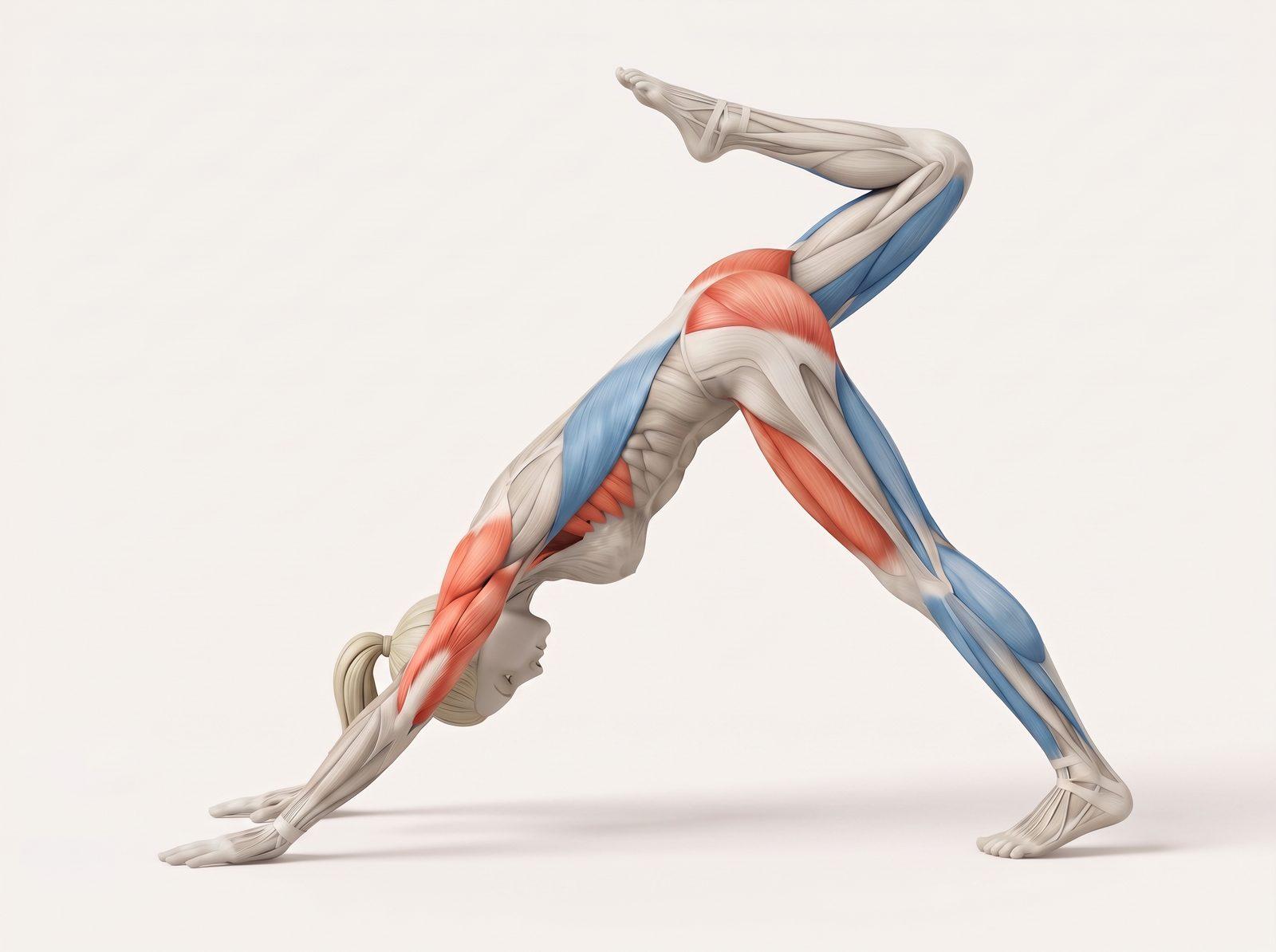
Working: Shoulders, Triceps, Lifted-leg glutes, Lifted-leg hamstrings, Standing-leg quadriceps
Stretching: Standing-leg hamstrings, Standing-leg calf, Lats, Lifted-leg hip flexors
Full muscle breakdown ↓About This Pose
Three-Legged Downward Dog Hip Open combines the strength-building benefits of Down Dog Split with a deep external hip rotation. By bending the lifted knee and opening the hip toward the ceiling, practitioners access the hip flexors, outer hip, and lower back in a dynamic, weight-bearing position. This variation is commonly used in Vinyasa flows to warm up the hips before poses like Pigeon or to add variety and depth to sun salutations. The open hip position creates a spiraling energy through the spine while maintaining the grounding benefits of the inversion. It teaches practitioners to find stability in asymmetrical positions and prepares the body for more demanding hip openers.
Muscles Worked in Three-Legged Downward Dog Hip Open
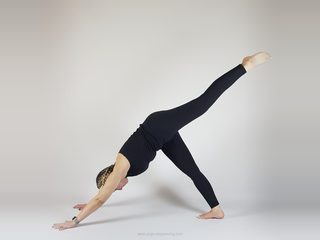
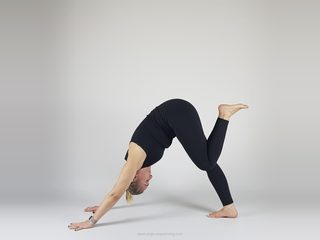
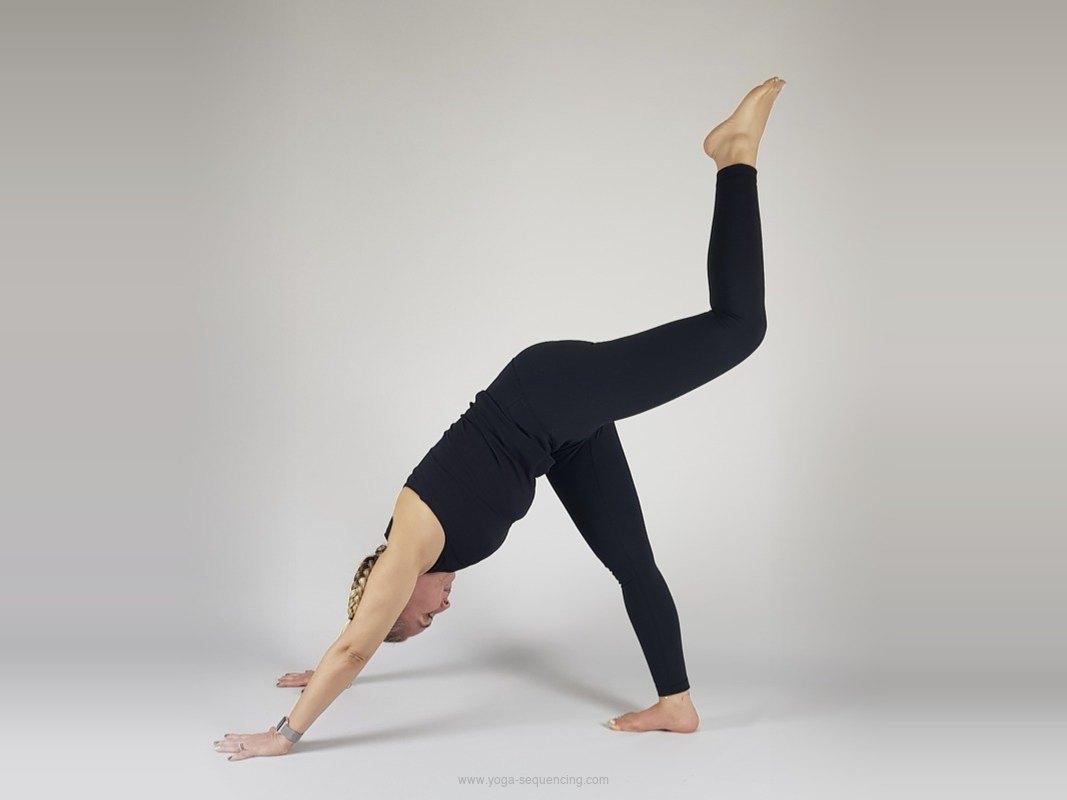
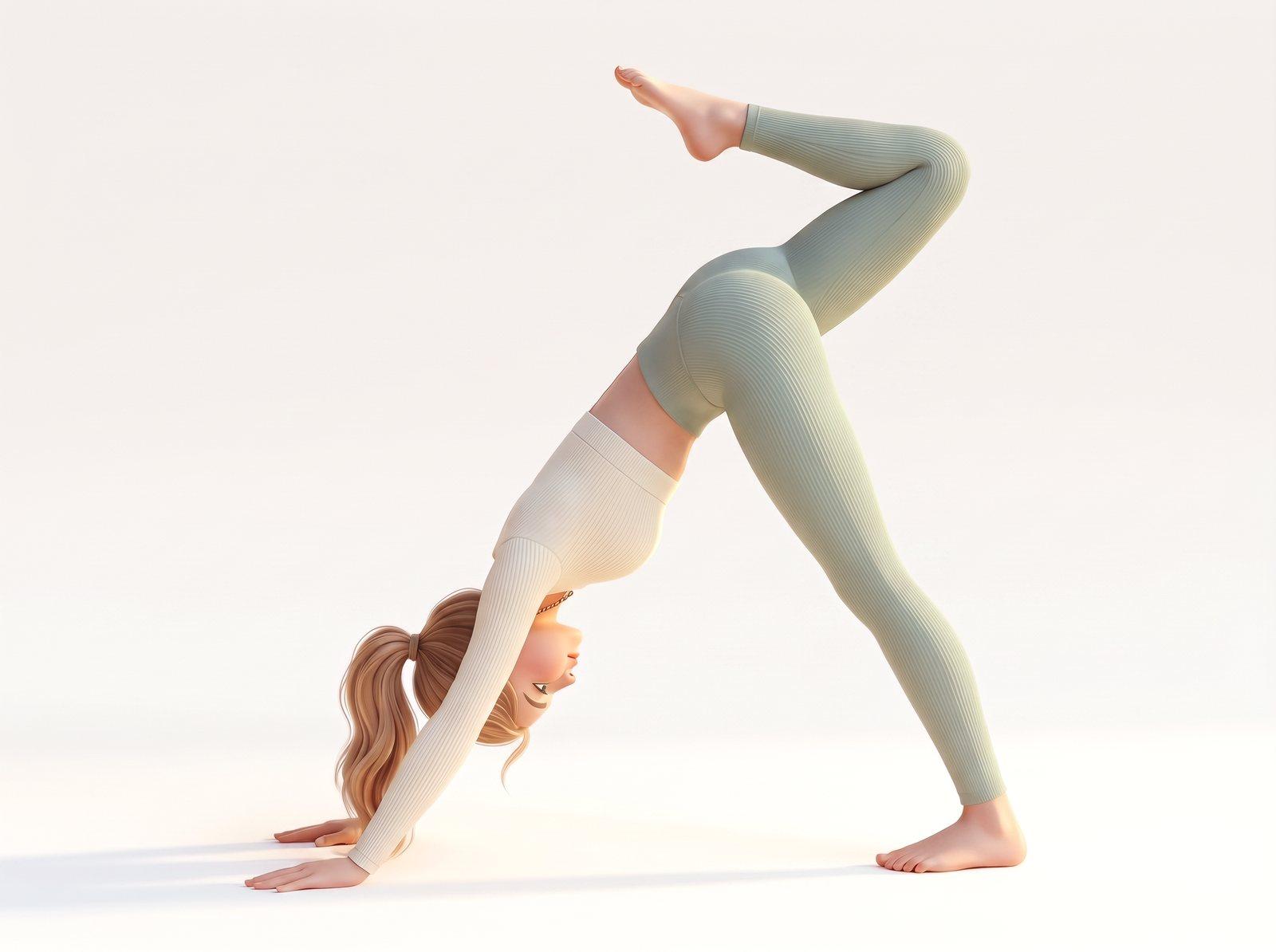
Three-Legged Downward Dog Hip Open in the photo holds Downward Dog with one leg lifted high, the knee bent and the hip opened so the foot reaches toward the opposite side. The shoulders, triceps and the lifted-leg glutes and hamstrings work, while the standing-leg hamstrings and calf, the lats and the lifted-leg hip flexors stretch.
Working
- Shoulders (deltoids)
- Triceps (triceps brachii)
- Lifted-leg glutes (gluteus maximus, gluteus medius)
- Lifted-leg hamstrings (biceps femoris, semitendinosus, semimembranosus, bending the knee)
- Standing-leg quadriceps (quadriceps femoris)
Stretching
- Standing-leg hamstrings (biceps femoris, semitendinosus, semimembranosus)
- Standing-leg calf (gastrocnemius, soleus)
- Lats (latissimus dorsi)
- Lifted-leg hip flexors (iliopsoas, rectus femoris)
Also holding you steady: your serratus anterior, rotator cuff and obliques, which keep the hips from tipping too far.
Variations and joint actions
- Square hips: Keeping the lifted leg straight and the hips level is plain Three-Legged Dog, a stronger hamstring and glute hold.
- Standing heel lifted: Lifting the standing heel eases a tight calf and keeps the back long.
- Shoulders full flexion
- Elbows extension
- Wrists extension
- Standing hip flexion
- Standing knee extension
- Standing ankle dorsiflexion
- Lifted hip extension, abduction and external rotation
- Lifted knee flexion
- Spine slight rotation and lateral flexion as the hip opens
Roles are qualitative — this section does not measure how hard any muscle works. References: Leslie Kaminoff & Amy Matthews, Yoga Anatomy (Human Kinetics); Ray Long, The Key Muscles of Yoga (Bandha Yoga).
Step-by-Step Instructions
- 1
Begin in Downward Facing Dog
- 2
Lift the right leg toward the ceiling
- 3
Bend the right knee, bringing heel toward glute
- 4
Rotate the right hip open toward the ceiling
- 5
Stack the right hip over the left
- 6
Let the right knee point toward the right side
- 7
Keep pressing firmly through both hands
- 8
Maintain length in the spine
- 9
Keep the left heel reaching toward the floor
- 10
Hold for 5 breaths
- 11
Square the hips and lower the leg
- 12
Repeat on the other side
Alignment Cues
- Hands shoulder-width apart, pressing evenly
- Standing leg strong and engaged
- Spine long despite the hip opening
- Lifted knee bent at approximately 90 degrees
- Shoulder blades drawing down the back
- Core engaged to support the twist
- Neck relaxed, gaze between hands or toward standing foot
Benefits
- Opens the hip flexors and outer hip deeply
- Stretches the quadriceps of the lifted leg
- Strengthens arms, shoulders, and standing leg
- Creates a therapeutic twist through the spine
- Builds core stability in asymmetrical positions
- Prepares the body for deeper hip openers
- Increases spinal mobility and flexibility
- Energizes while creating openness
Modifications
- Keep the hip opening smaller initially
- Maintain square hips if the twist is too intense
- Bend the standing knee for tight hamstrings
- Practice against a wall for support
Variations
- Add ankle circles with the lifted foot
- Pulse the hip open and closed
- Flip the dog: thread the lifted leg through to Fallen Triangle
- Rock forward toward plank and back
Cautions & Contraindications
Cautions
- Keep both hands grounded evenly
- Avoid collapsing into the shoulders
- Maintain length in the spine despite the rotation
- Don't force the hip open—let it unfold naturally
- Keep the standing leg strong
Avoid this pose if you have:
- Wrist or shoulder injuries
- SI joint dysfunction
- Acute lower back pain
- Hip injuries
- Uncontrolled high blood pressure
Quick Facts
Primary Focus
hipsSecondary Focus
Suggested Hold
25 seconds
Tags