Headstand Straight Legs
Sirsasana
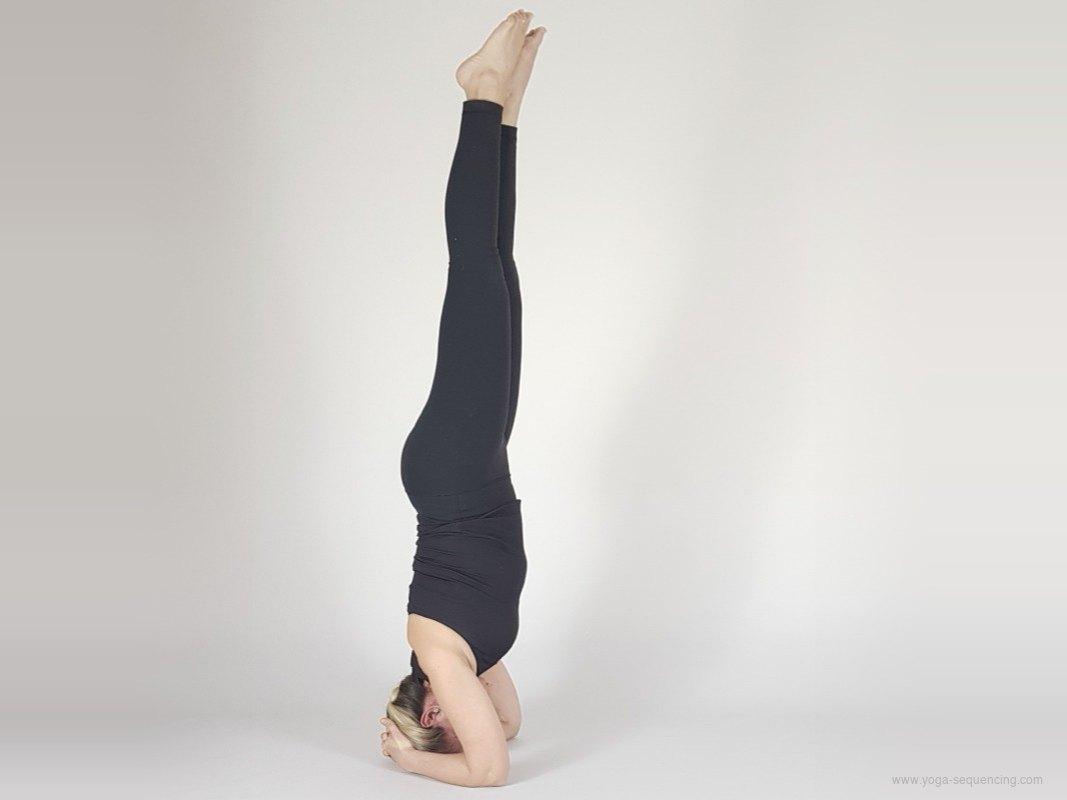
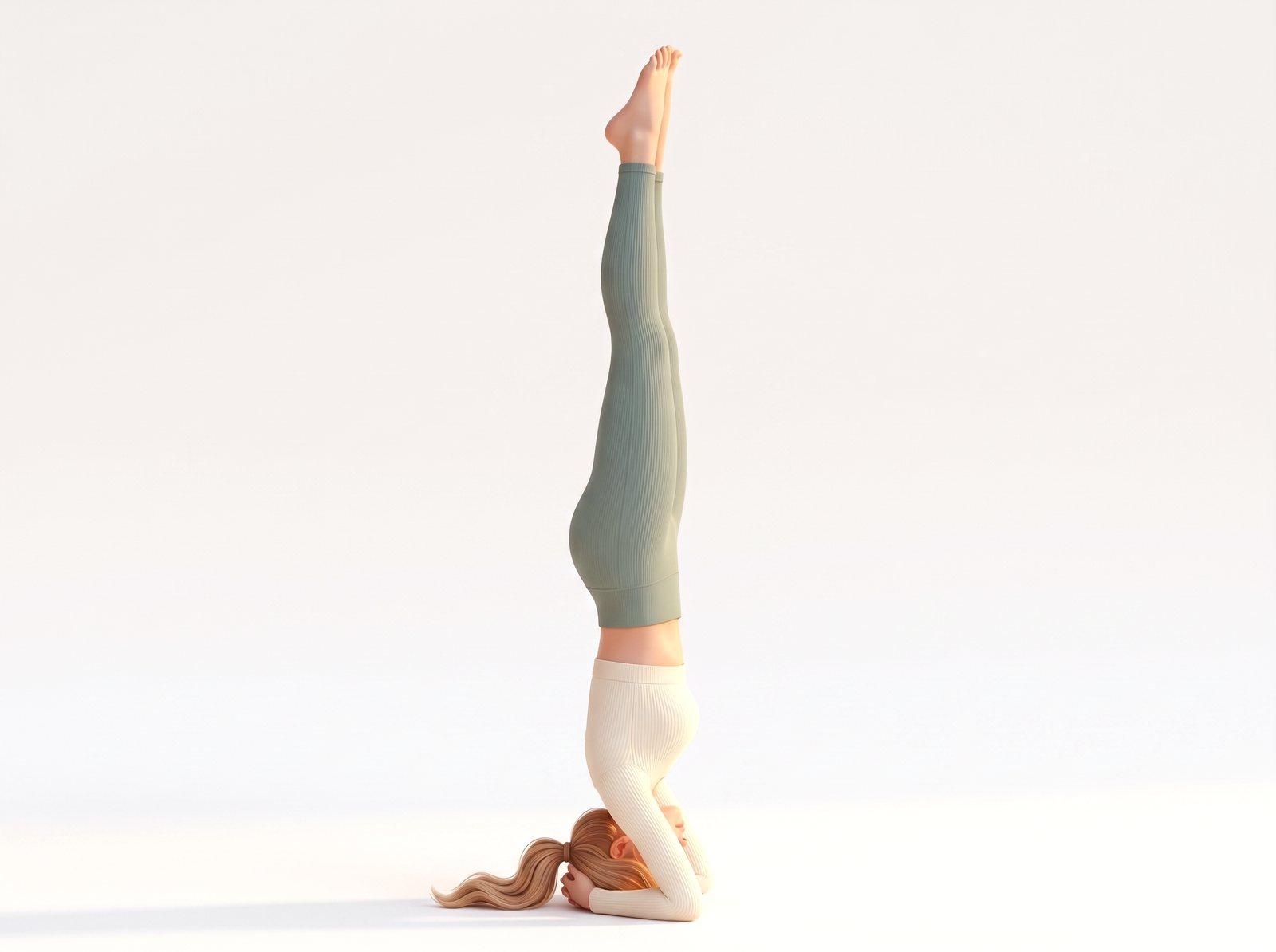
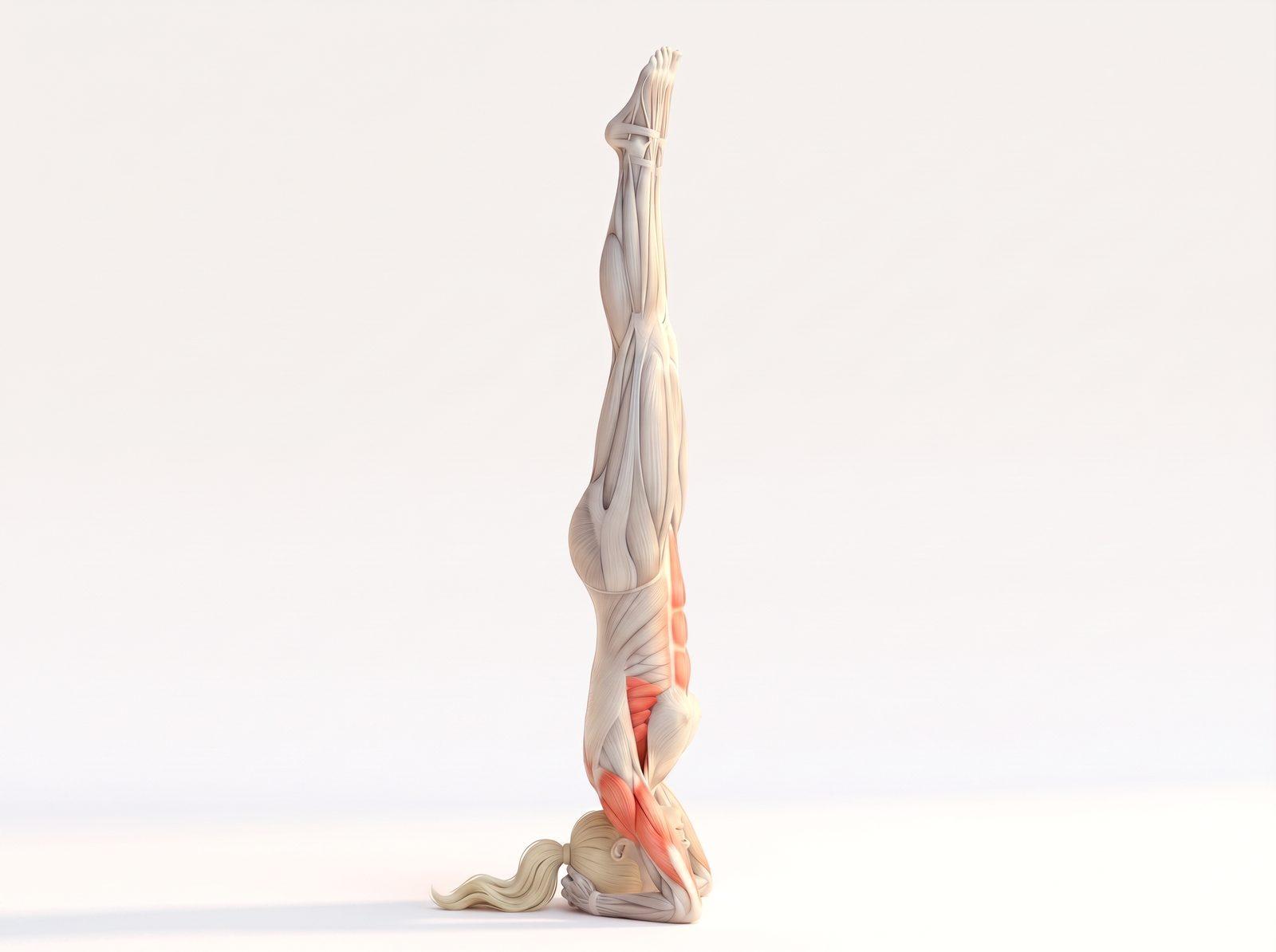
Working: Shoulders, Upper back, Serratus anterior, Triceps, Abdominals
Full muscle breakdown ↓About This Pose
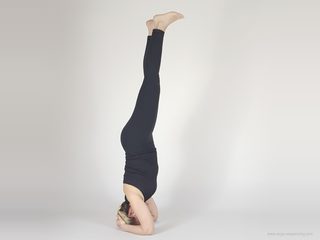
Headstand with Straight Legs (Sirsasana) is the complete classical expression of yoga's 'king of poses.' With legs extended straight and together pointing toward the ceiling, this pose represents the culmination of inversion practice. The straight-leg position requires perfect alignment, strong core engagement, and confident balance built through progressive practice.
Muscles Worked in Headstand Straight Legs
Supported Headstand (Salamba Sirsasana) balances upside down on the forearms and the crown of the head with the fingers interlaced behind the head and both legs straight up. The shoulders, upper back and core carry and steady the body so the neck takes as little load as possible. Build up to it with Dolphin Pose, keep the shoulders lifted away from the ears, and skip it with neck problems, high blood pressure or glaucoma.
Working
- Shoulders (deltoids)
- Upper back (trapezius, lifting the shoulders away from the floor)
- Serratus anterior
- Triceps (triceps brachii)
- Abdominals (rectus abdominis, transversus abdominis)
Stretching
Headstand is a strength and balance hold with no major stretch.
Also holding you steady: your the muscles along your spine, glutes and inner thighs, which keep the legs together and straight, rotator cuff and neck muscles, keeping the head and neck in line.
Variations and joint actions
- Dolphin Pose: The preparation: same forearm base with the head off the floor, so the shoulders learn to carry the load before the legs go up.
- At a wall: Practising with the back near a wall takes away the fear of falling; the shoulders should still do the work, not the wall.
- Legs Up the Wall: For a sensitive neck, high blood pressure or glaucoma, a supported half-inversion gives the legs-up feeling without loading the head.
- Shoulders full flexion, forearms on the floor
- Elbows flexion, fingers interlaced behind the head
- Neck neutral, crown of the head on the floor
- Spine neutral, vertical
- Hips and knees extension, legs together
- Ankles plantar flexion, feet pointed
Roles are qualitative — this section does not measure how hard any muscle works. References: Leslie Kaminoff & Amy Matthews, Yoga Anatomy (Human Kinetics); Ray Long, The Key Muscles of Yoga (Bandha Yoga).
Step-by-Step Instructions
- 1
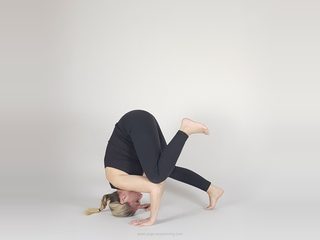
Set forearm and head foundation
- 2
Walk feet toward head
- 3
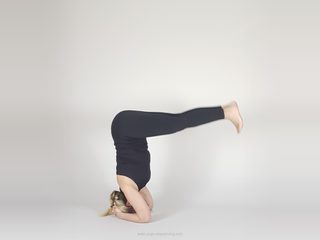
Lift hips over shoulders
- 4
Extend legs toward ceiling
- 5
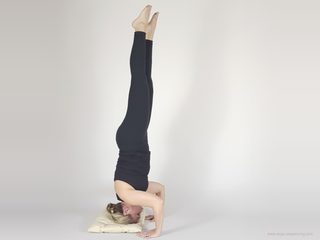
Stack body vertically
- 6
Hold with steady breath
Alignment Cues
- Press forearms firmly into mat
- Engage core continuously
- Stack hips over shoulders
- Reach through balls of feet
Benefits
- Classical full expression
- Demonstrates mastery
- Requires perfect alignment
- Builds ultimate confidence
- Reverses gravity effects
- Crown of inversion practice
Modifications
- Use wall support
- Use cushion under head
Variations
- Split legs
- Lotus legs
Cautions & Contraindications
Cautions
- Protect neck throughout
- Engage shoulders actively
Avoid this pose if you have:
- Neck injury
- High blood pressure
- Glaucoma
Quick Facts
Primary Focus
shouldersSecondary Focus
Suggested Hold
30 seconds
Tags
Equipment