
Child's Pose
Balasana
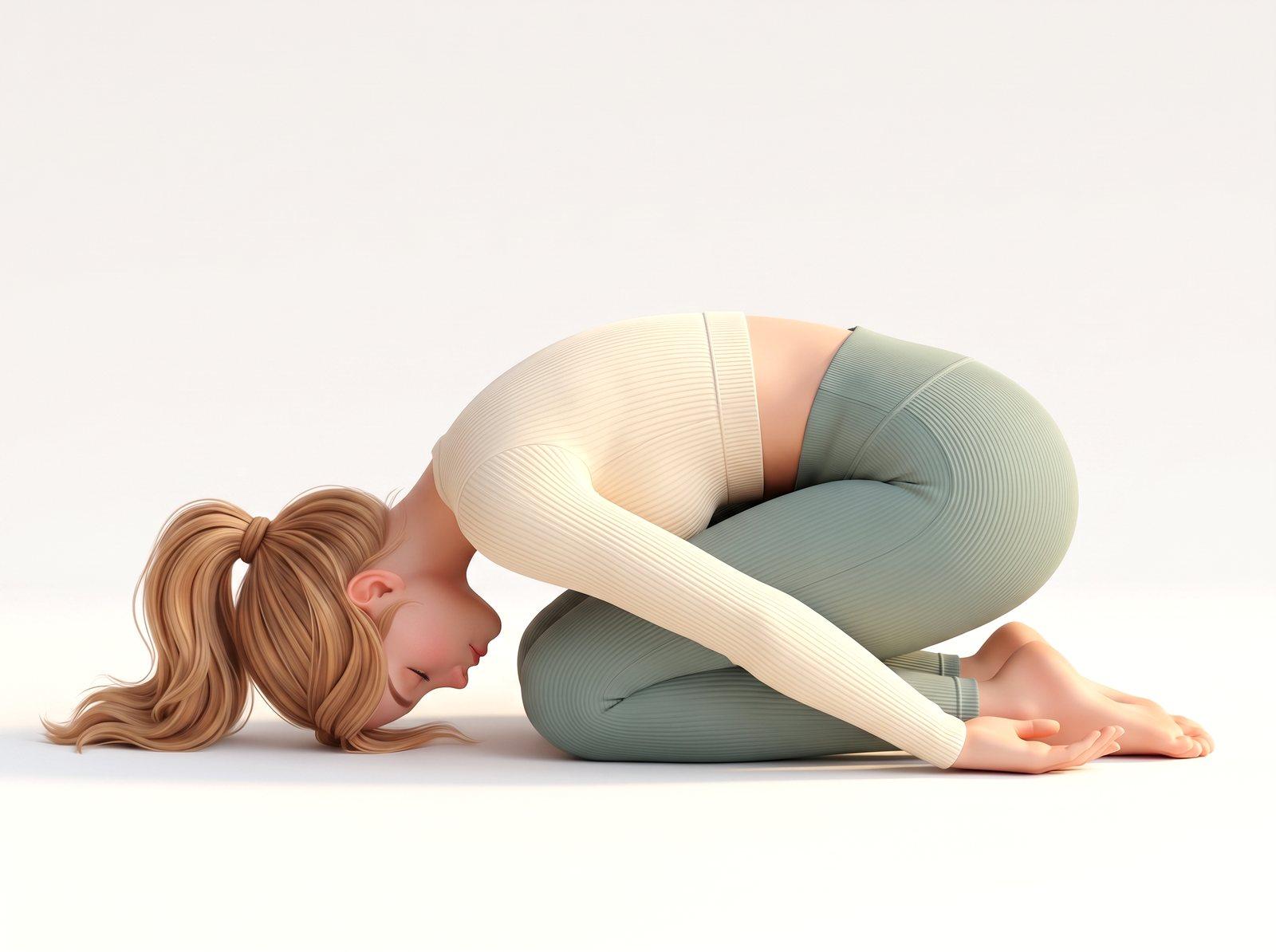
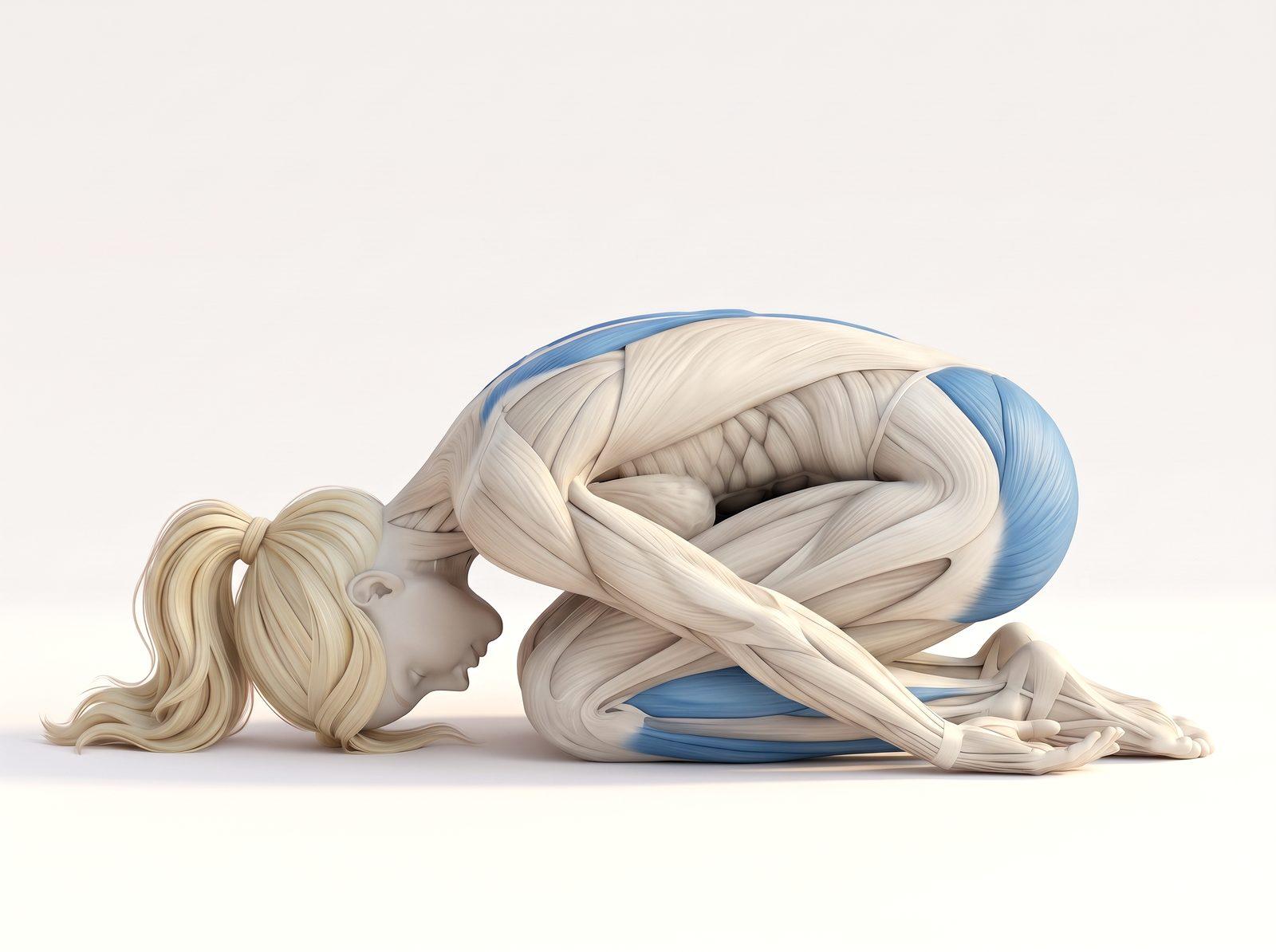
Stretching: Back muscles, Glutes, Fronts of the shins
Full muscle breakdown ↓About This Pose
Child's Pose (Balasana) is a restful, grounding posture that gently stretches the hips, thighs, and lower back while calming the mind. This foundational resting pose is essential in any yoga practice, offering a moment of surrender and introspection. The forward fold compresses the abdomen, which can aid digestion and relieve tension. Perfect for beginners and advanced practitioners alike, Child's Pose serves as a safe retreat during challenging sequences.
Muscles Worked in Child's Pose
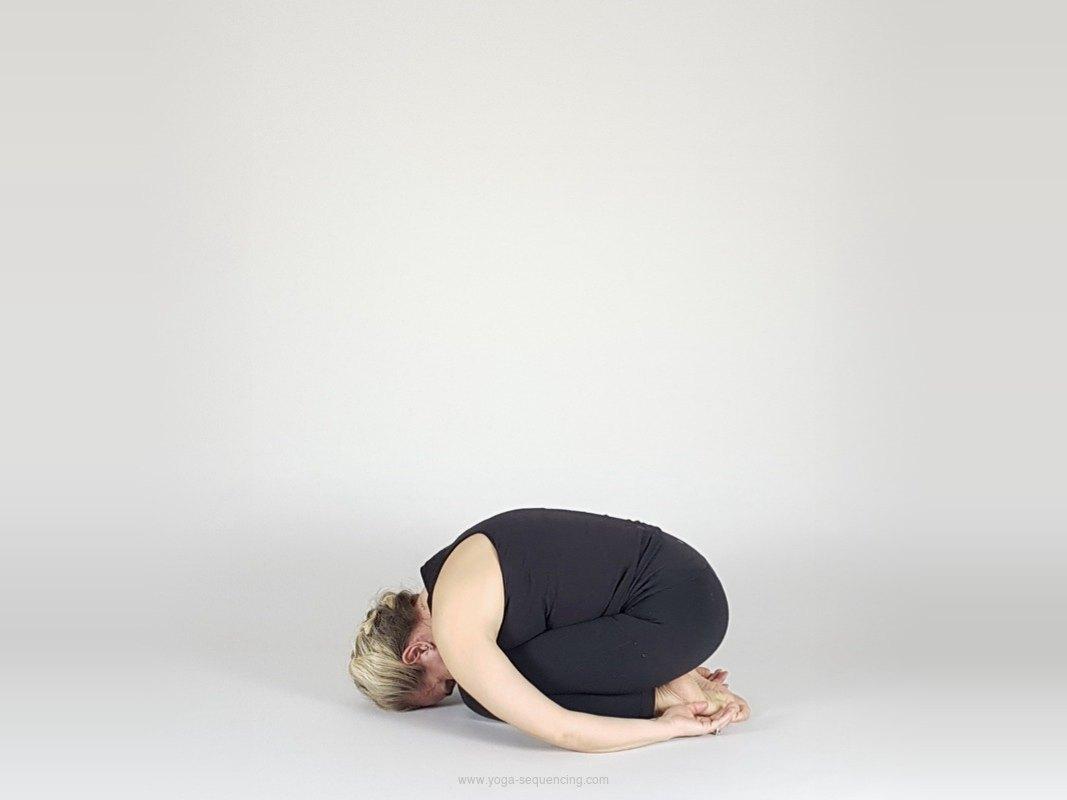
The photo shows Child's Pose (Balasana) with the knees together, the hips on the heels, the forehead on the floor and the arms resting back alongside the body, palms up. It is a rest: the back of the body and the fronts of the ankles get a soft stretch.
Working
This is a resting pose; the floor holds you up.
Stretching
- Back muscles (erector spinae)
- Glutes (gluteus maximus)
- Fronts of the shins (tibialis anterior)
Variations and joint actions
- Knees wide: Opening the knees makes room for the belly and stretches the inner thighs.
- Cushion under the hips: A blanket between the hips and heels helps if the hips do not reach the heels.
- Knees deep flexion
- Hips deep flexion, hips on the heels
- Ankles plantar flexion, tops of the feet on the floor
- Spine gentle flexion
- Shoulders extension, arms back beside the legs
Roles are qualitative — this section does not measure how hard any muscle works. References: Leslie Kaminoff & Amy Matthews, Yoga Anatomy (Human Kinetics); Ray Long, The Key Muscles of Yoga (Bandha Yoga).
Step-by-Step Instructions
- 1
Begin on all fours in a tabletop position with wrists under shoulders and knees under hips
- 2
Bring your big toes together and widen your knees to the edges of your mat
- 3
Exhale and lower your hips back toward your heels
- 4
Extend your arms forward on the mat or rest them alongside your body
- 5
Release your forehead to the mat and relax your entire body
- 6
Breathe deeply into your back body, feeling your ribcage expand with each inhale
- 7
Hold for 5-10 breaths or as long as needed for rest
Alignment Cues
- Keep your spine long and relaxed
- Allow your forehead to rest comfortably on the mat
- Soften your shoulders away from your ears
- Let your belly rest between your thighs
Benefits
- Gently stretches the hips, thighs, and ankles
- Releases tension in the back, shoulders, and chest
- Calms the mind and helps relieve stress and fatigue
- Encourages steady, conscious breathing
- Provides a safe resting position during practice
Modifications
- Bolster under chest
Variations
- Resting pose
Cautions & Contraindications
Cautions
- Soften shoulders
- Rest head
Avoid this pose if you have:
- Knee pain
Quick Facts
Primary Focus
spineSecondary Focus
Suggested Hold
60 seconds
Tags
Equipment
Related Poses
Sequences with this pose
Teacher-written sequences that use Child's Pose.
A Yoga Sequence for Lower Back Relief You Can Trust to Teach
40 min · 12 poses · beginner
A Yoga Sequence for Shoulder Tension That Reaches the Real Knots
35 min · 12 poses · all-levels
Release a Stiff Neck and Upper Back Without Wrecking Your Cervical Spine
25 min · 10 poses · all-levels
A Heart-Opening Sequence That Actually Opens the Chest (Not the Lower Back)
30 min · 12 poses · intermediate