Shoulder tension is almost never just a shoulder problem. When a student points to the upper trapezius and says 'right here, this is where it lives', I'm already looking at their thoracic spine. A stiff mid-back forces the scapulae to migrate up and forward to compensate, which is why students with desk jobs feel like their shoulders are clamped to their ears even after a hot shower and a massage. Open the thoracic spine, and the shoulders find their seat without being told.
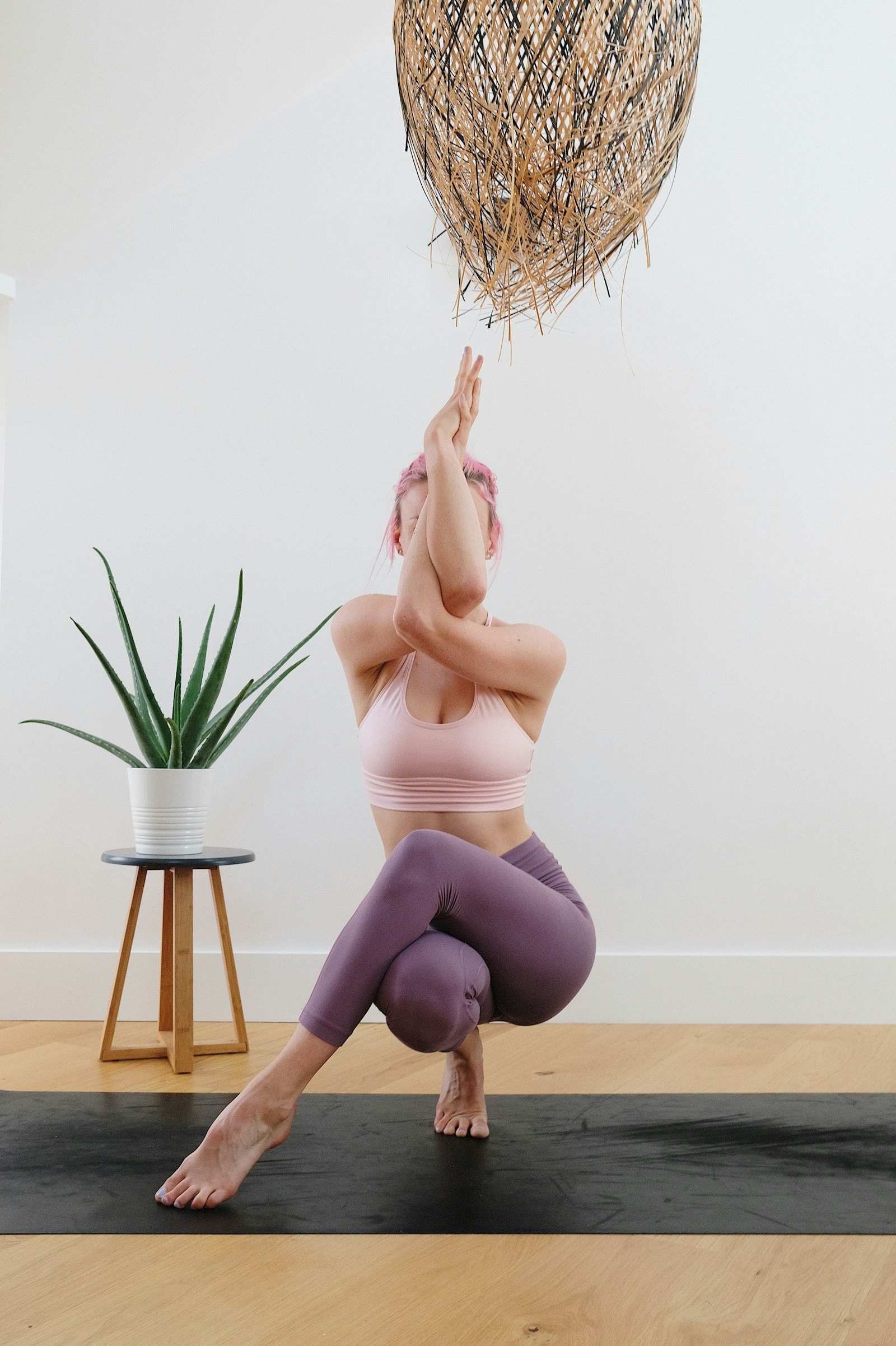
That's the architecture of this sequence. We don't lead with shoulder stretches. We lead with thoracic mobility — passive extension over a bolster, segmental work in cat-cow, side-lying book openings — and only then layer in scapular movement and rotator cuff length. By the time we get to eagle arms and gomukhasana, the shoulders have somewhere to go.
One opinion I hold: I almost never include full chaturanga in a shoulder-focused class. Even cued well it loads an already cranky joint at the worst angle. Knees-down chaturanga or a forearm plank gives the same proprioceptive benefit without the impingement risk. If a student needs strength work, I'd rather give them a wall press than a vinyasa transition.
Who this sequence is for
Desk workers, parents holding babies on one hip, drivers, anyone post-mastectomy or post shoulder surgery cleared for movement, and students with mild rotator cuff irritation who are out of acute pain.
Not appropriate without modification for: students with frozen shoulder in the acute inflammatory phase, recent rotator cuff repair under three months, and acute neck pain with radiating arm symptoms. Hypermobile students need this class but with cued co-contraction throughout — they have plenty of range, what they lack is scapular control.
How to teach (or practice) it
Teach this as a 35-minute focused class or pull the opening 15 minutes as a warm-up before any arm-balance practice. Props matter here more than in most classes: every student needs a strap, two blocks, and a bolster or rolled blanket. The strap rescues anyone whose hands won't meet behind the back in gomukhasana arms, which is roughly 80% of any adult class.
Cueing the shoulders is mostly cueing the scapulae. 'Drop the shoulders' is meaningless. 'Slide the bottom tips of the shoulder blades down toward the back pockets' is something a body can actually do. Specificity wins.
Pacing: hold thoracic openers longer than feels normal — 90 seconds to two minutes. Fascia in the upper back doesn't respond to short holds the way the hamstrings might. I keep the room a little warmer than usual for this class. Cold shoulders bind.
For modifications, the rule of thumb is: anything with the arms overhead can be done at half-height. Students with impingement won't reach 180 degrees of flexion, and forcing it is how the bursa gets angry. Let them stop at the range that's clean.