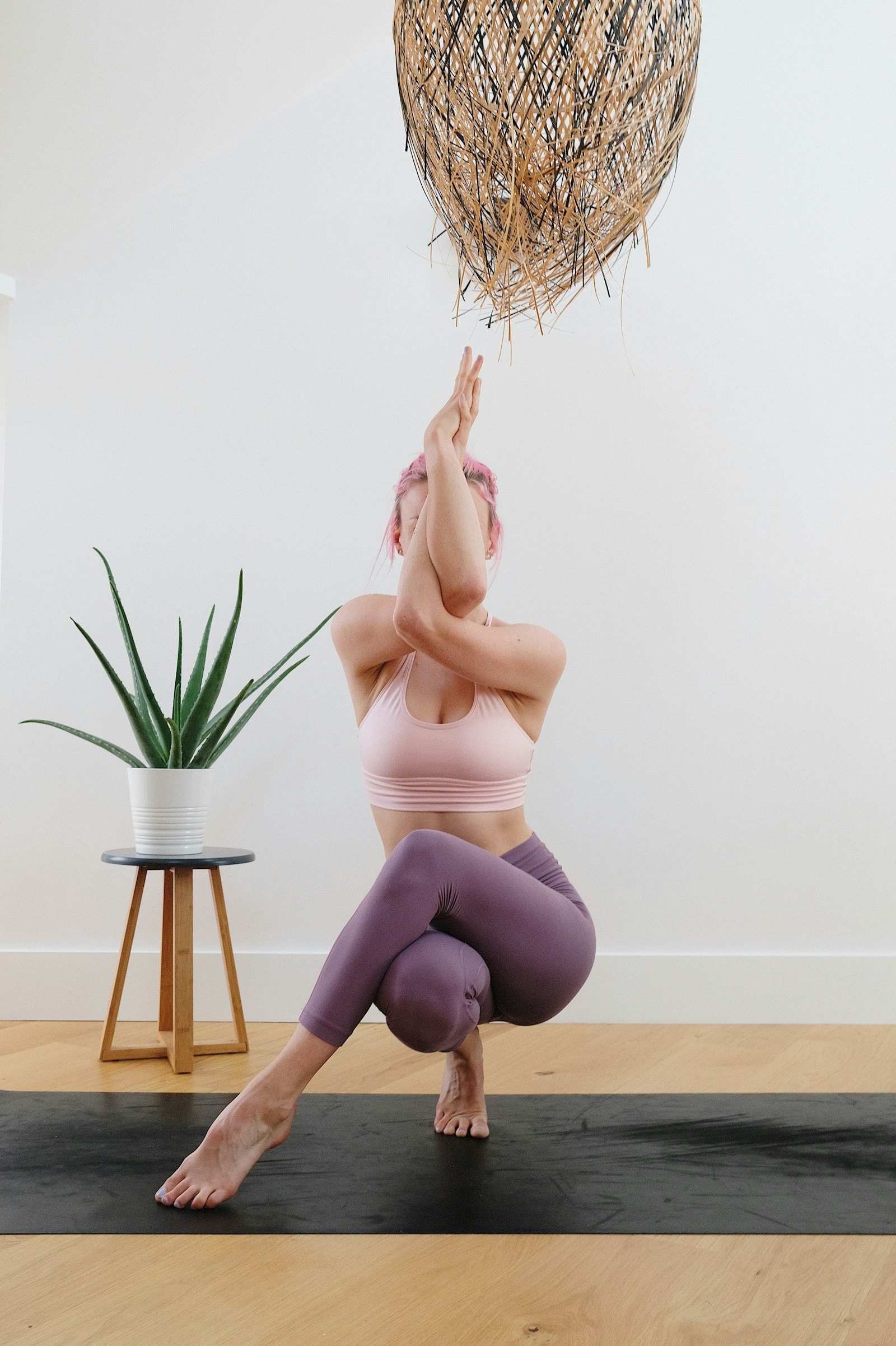
Most "heart opener" classes mistake backbending for chest opening. They are not the same thing. Backbending is spinal extension, which can happen anywhere along the spine — and in tight bodies, it happens almost entirely in the lumbar spine because that segment is already the most mobile. You leave class feeling open, but what actually moved was your already-mobile low back, while your pec minor and your thoracic spine — the stuck parts — stayed stuck. Then your low back is sore the next morning and you blame the practice.
This sequence routes the work where it actually needs to go. We start by lengthening the pec minor (which pulls the coracoid process forward and locks the scapula in protraction), then open pec major across its three fiber directions, then mobilise the thoracic spine in flexion and extension, and only after all of that do we approach backbends — and when we do, we cue thoracic extension specifically, with the front-lower ribs drawing toward the front hip points to protect the lumbar.
The pose that does the real work here is supported fish over a bolster. Five minutes there changes more about chest mobility than fifty wheel poses. Plan on 30 minutes total. If you have an acute disc issue, cardiac history, or are recovering from chest or shoulder surgery, the deep backbends are not appropriate; the propped passive work (supported fish, doorway pec stretch) is generally safe but check with your provider.
Who this sequence is for
Anyone with rounded shoulders from desk work, swimmers and cyclists who train heavy in spinal flexion, weightlifters with overdeveloped pecs and tight anterior shoulders, new parents whose babies live on their chests, and intermediate yogis who feel their backbends only in the low back. Skip the deep wheel-pose work if you have a cervical disc herniation, are in late pregnancy, have unmanaged high blood pressure, or have had recent abdominal surgery. The propped passive openers are gentle enough for most students with cardiac history once cleared by their physician.
How to teach (or practice) it
Teach this as a 30-minute stand-alone, or as the prep-and-peak block of a heart-themed 75-minute class. The order is non-negotiable: passive openers first (5-10 minutes), then thoracic mobility, then dynamic warming, then peak backbend, then a counter-pose, then rest. Going straight to wheel pose at minute three is how students hurt themselves.
For the supported fish pose, use a bolster running lengthwise along the spine, with the lower edge at the sacrum and the upper edge cradling the upper back. The head is supported on a folded blanket so the neck stays neutral — no head dangling, no chin jutting up. Arms out wide at a comfortable T or low-V. Five full minutes. This is where the fascia actually changes.
Cue every backbend the same way: lengthen the lumbar first (tailbone heavy toward the heels, front-lower ribs softening down), then extend through the thoracic. The cue students need is "lift the chest forward and up, not just up." Straight-up lifting forces the lumbar to hinge; forward-and-up extends through the thoracic spine.
After any backbend deeper than locust, take a gentle counter-pose — knees-to-chest or a passive child's pose. Do not jump straight into a deep forward fold; the paraspinals are still firing and yanking them into flexion can spasm them. Wait two minutes before any forward fold.