
Bird Dog
Parsva Balasana
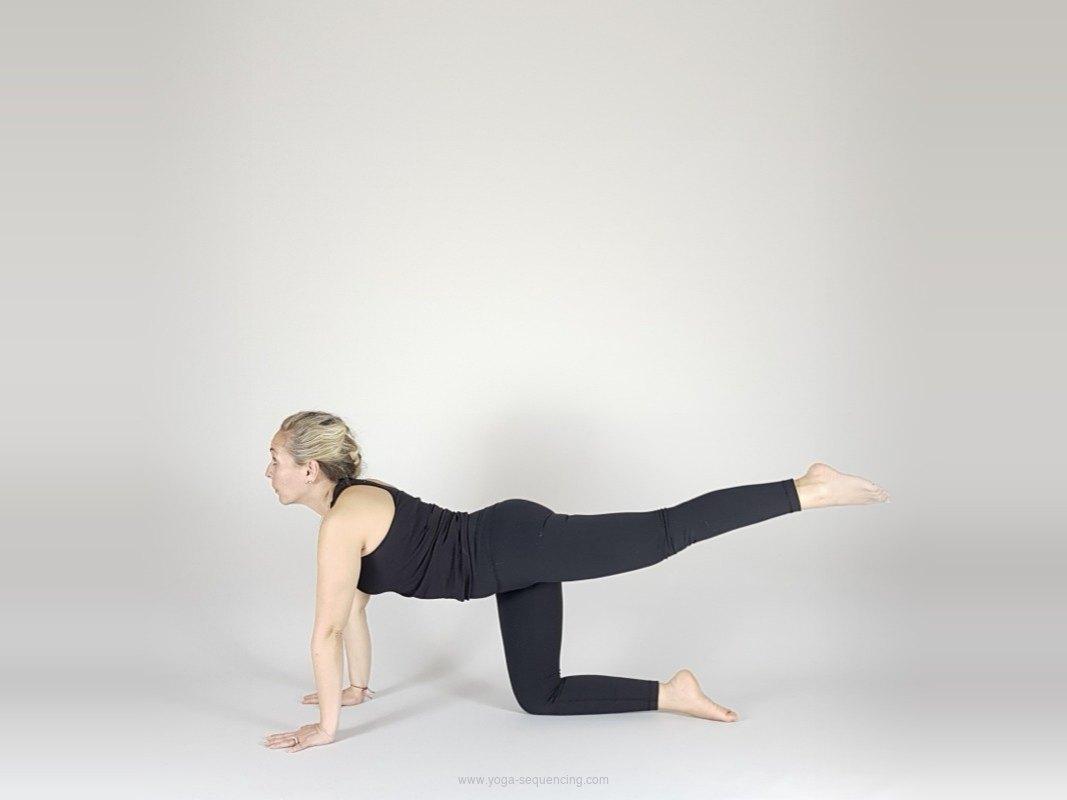
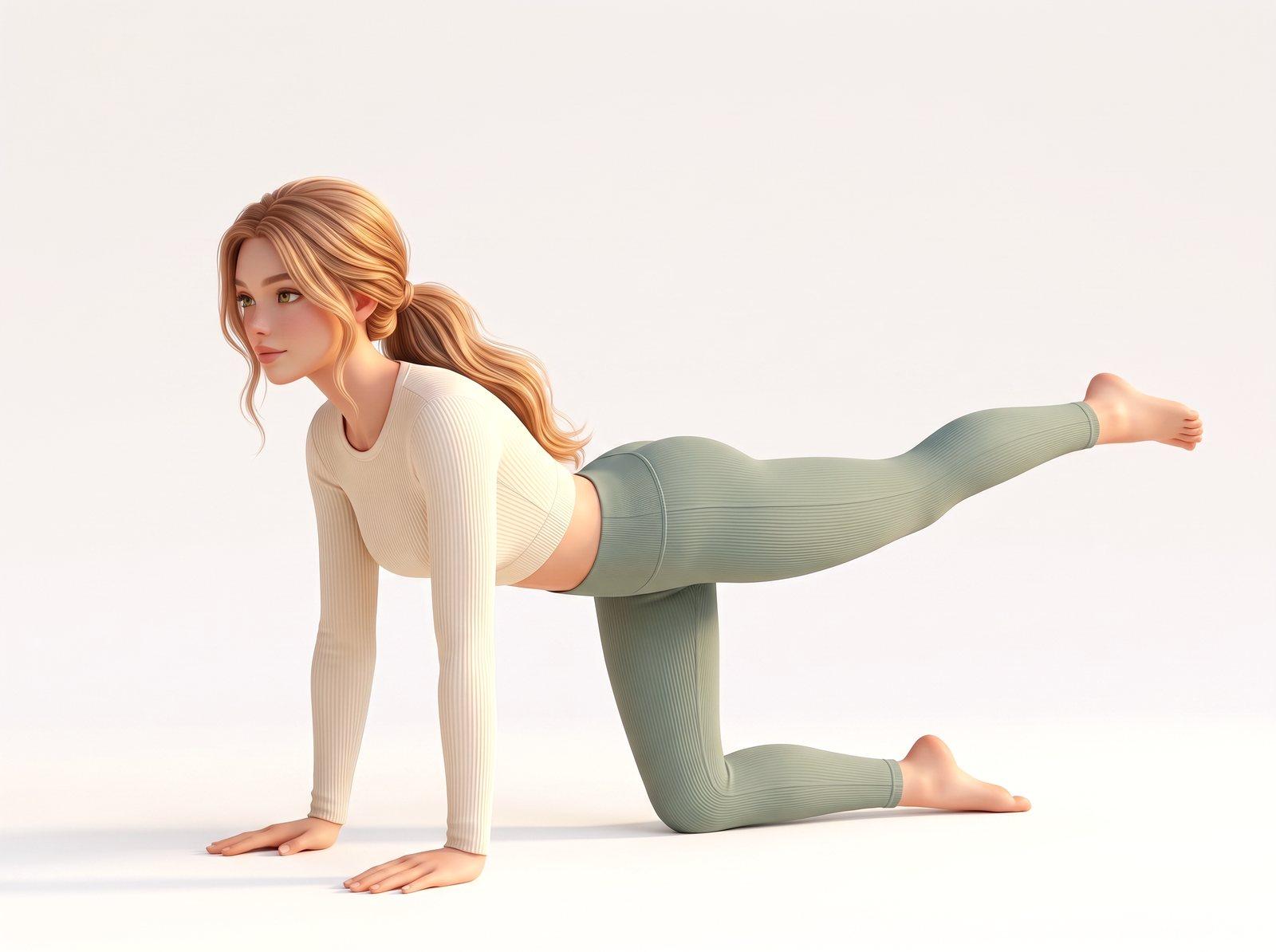
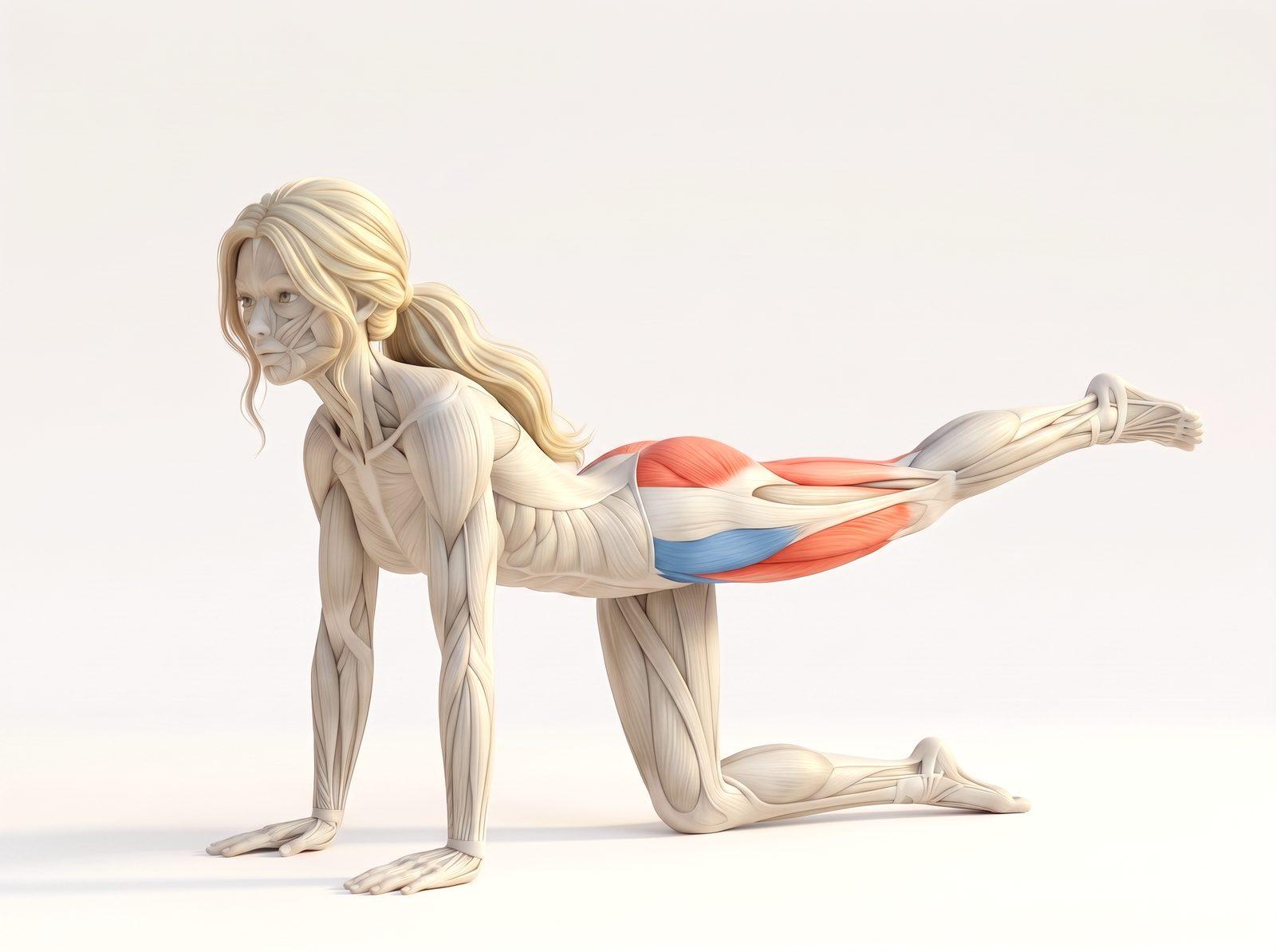
Working: Lifted-leg glutes, Lifted-leg hamstrings, Lifted-leg quadriceps
Stretching: Lifted-leg hip flexors
Full muscle breakdown ↓About This Pose
Bird Dog is a fundamental stability exercise that strengthens the core while challenging balance and coordination. By extending the opposite arm and leg from tabletop, this pose builds the deep stabilizing muscles of the spine and trains the body to maintain alignment during movement. It is essential for developing the foundation needed for more advanced balancing poses.
Muscles Worked in Bird Dog
The photo shows a tabletop kick-back: both hands and one knee on the floor, the other leg lifted straight back to hip height. The glutes and hamstrings of the lifted leg do the lifting while the core keeps the lower back from sagging.
Working
- Lifted-leg glutes (gluteus maximus)
- Lifted-leg hamstrings (biceps femoris, semitendinosus, semimembranosus)
- Lifted-leg quadriceps (quadriceps femoris, keeping the knee straight)
Stretching
- Lifted-leg hip flexors (iliopsoas)
Also holding you steady: your core, hip stabilisers (gluteus medius), Serratus anterior and forearm muscles, which steady the wrists.
Variations and joint actions
- Add the opposite arm: Reaching the opposite arm forward makes it the full Bird-Dog and asks more of the core.
- Toes on the floor: Sliding the leg back with the toes down is the gentler first step.
- Lifted hip extension, leg in line with the torso
- Lifted knee extension
- Grounded hip and knee flexion, about 90°
- Shoulders flexion, arms straight under the shoulders
- Spine neutral
Roles are qualitative — this section does not measure how hard any muscle works. References: Leslie Kaminoff & Amy Matthews, Yoga Anatomy (Human Kinetics); Ray Long, The Key Muscles of Yoga (Bandha Yoga).
Step-by-Step Instructions
- 1
Begin in tabletop position
- 2
Engage your core by drawing navel to spine
- 3
Extend your right arm forward, thumb up
- 4
Simultaneously extend your left leg back
- 5
Create one long line from fingertips to toes
- 6
Hold for 3-5 breaths
- 7
Return to tabletop and switch sides
Alignment Cues
- Keep hips square to the mat
- Reach through fingertips and heel
- Maintain neutral spine
- Engage the belly throughout
Benefits
- Strengthens the core and back muscles
- Improves balance and coordination
- Develops proprioception and body awareness
- Stabilizes the spine during movement
- Builds foundation for advanced poses
Modifications
- Keep toes on the floor while extending leg
- Extend arm only, keeping knees down
Variations
- Add elbow to knee crunch
Cautions & Contraindications
Cautions
- Keep hips level throughout
- Move slowly and with control
Avoid this pose if you have:
- Wrist pain
- Severe balance issues
Quick Facts
Primary Focus
coreSecondary Focus
Suggested Hold
30 seconds
Tags
Equipment
Related Poses
Sequences with this pose
Teacher-written sequences that use Bird Dog.
Build a Core That Holds You Up, Not One That Just Looks Tight
35 min · 13 poses · intermediate
A Yoga Sequence That Treats Your Knees Like the Hinges They Are
30 min · 14 poses · all-levels
Gentle Yoga Sequence
45 min · 17 poses · beginner