
Boat Pose
Navasana
About This Pose
Boat Pose (Navasana) is a foundational core-strengthening posture that builds abdominal strength, hip flexor engagement, and spinal stability. This seated balance challenges your core muscles to maintain a V-shape with your body while keeping the spine long and chest lifted. Regular practice develops the deep core strength necessary for advanced poses and improves overall posture and balance.
Muscles Worked in Boat Pose
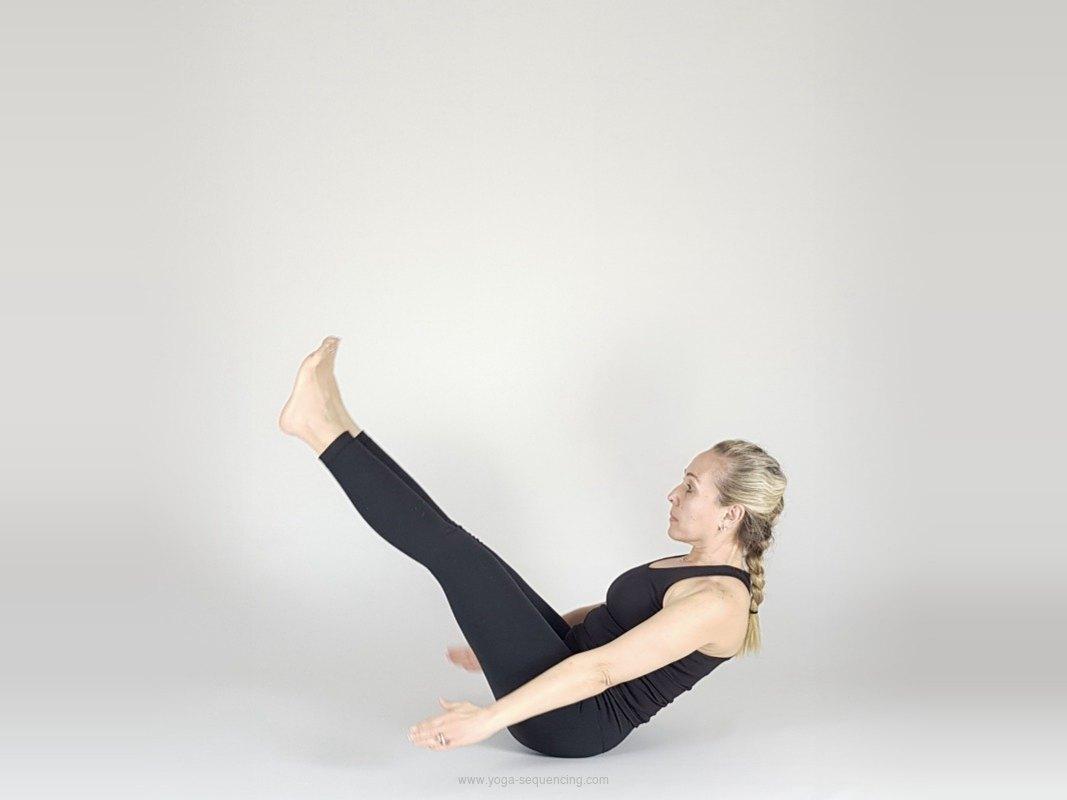
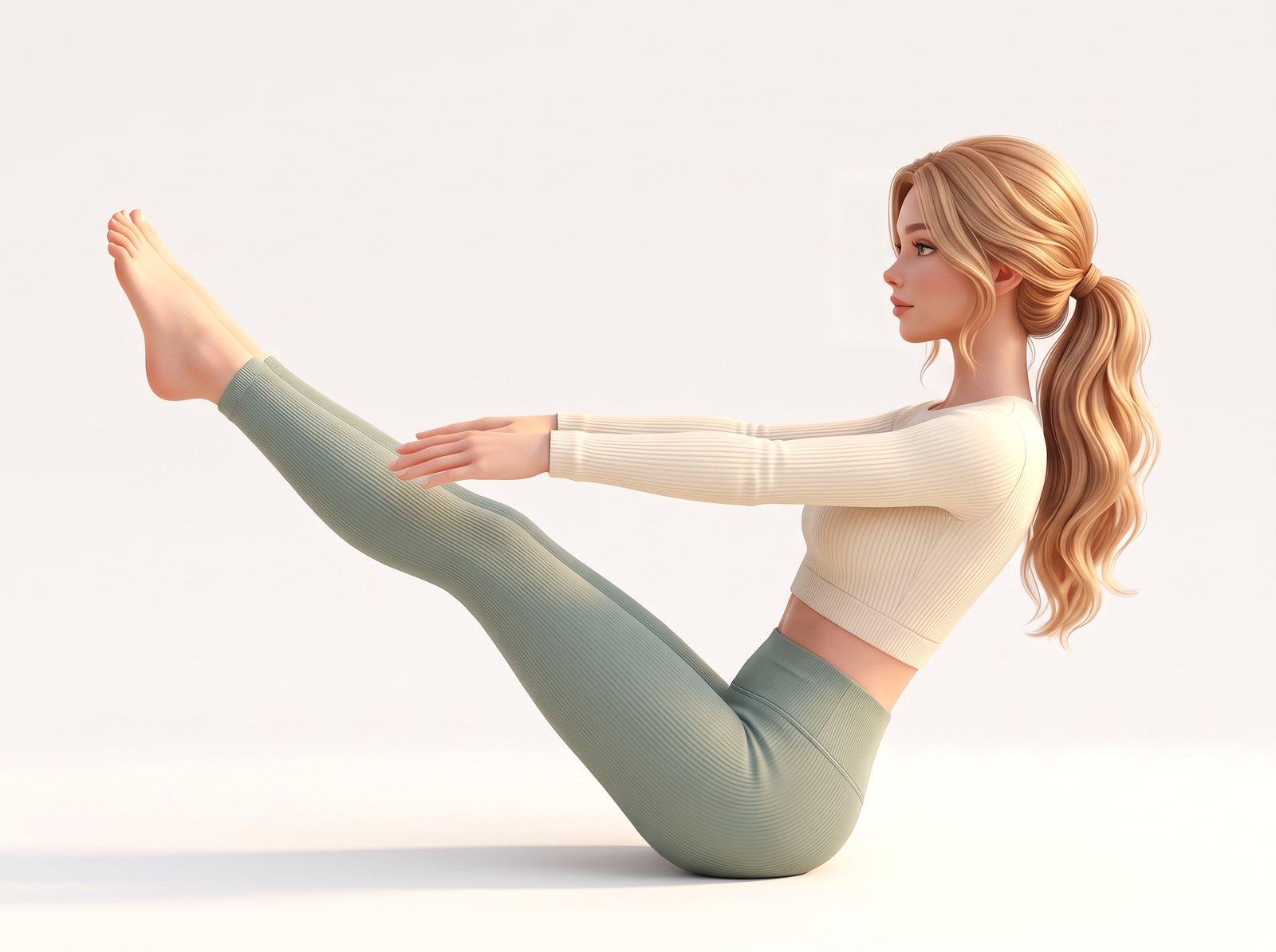
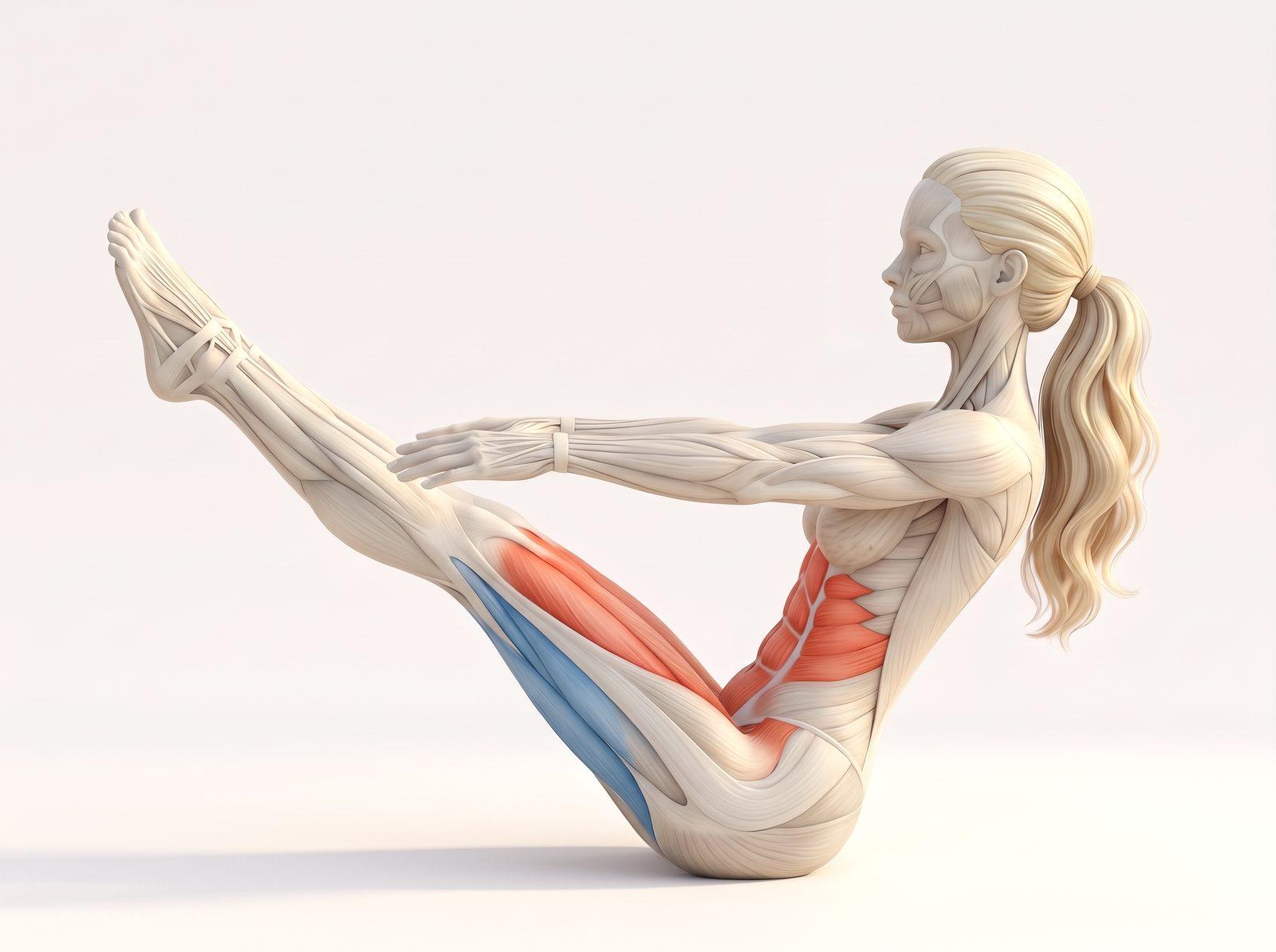
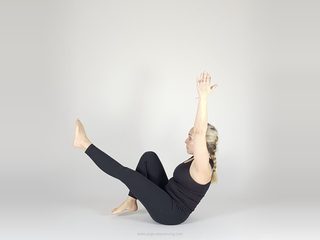
The photo shows Full Boat Pose (Paripurna Navasana): balancing on the sitting bones with straight legs raised high and the arms reaching forward parallel to the floor. The hip flexors and abdominals hold the V shape.
Working
- Hip flexors (iliopsoas, rectus femoris)
- Abdominals (rectus abdominis, transversus abdominis)
- Quadriceps (quadriceps femoris)
Stretching
- Hamstrings (biceps femoris, semitendinosus, semimembranosus)
Also holding you steady: your the muscles along your spine, inner thighs and Shoulders.
Variations and joint actions
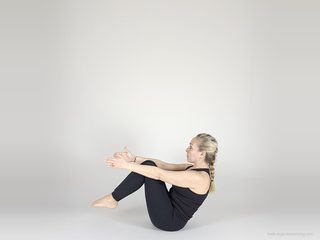
- Bent knees: Shins parallel to the floor shortens the lever and keeps the back long.
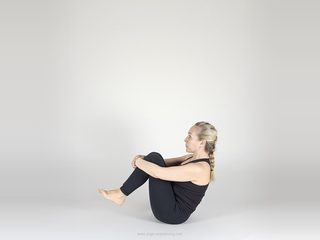
- Hands behind the thighs: Holding the backs of the thighs helps you keep the chest lifted.
- Hips deep flexion, body in a V
- Knees extension
- Spine long, chest lifted
- Shoulders flexion, arms parallel to the floor
Roles are qualitative — this section does not measure how hard any muscle works. References: Leslie Kaminoff & Amy Matthews, Yoga Anatomy (Human Kinetics); Ray Long, The Key Muscles of Yoga (Bandha Yoga).
Step-by-Step Instructions
- 1
Sit on the mat with knees bent and feet flat on the floor
- 2
Place your hands behind your thighs for support
- 3
Lean back slightly while keeping your spine straight and chest lifted
- 4
Lift your feet off the floor, bringing shins parallel to the ground
- 5
Extend your arms forward alongside your legs, palms facing each other
- 6
If comfortable, straighten your legs to form a V-shape with your body
- 7
Engage your core to maintain balance and hold for 5-10 breaths
Alignment Cues
- Keep the chest lifted and heart open
- Maintain length in the spine—avoid rounding the lower back
- Draw the navel toward the spine
- Gaze forward or slightly upward
Benefits
- Strengthens the deep core muscles including rectus abdominis and transverse abdominis
- Tones and strengthens the hip flexors and quadriceps
- Improves balance and concentration
- Builds spinal strength and improves posture
- Stimulates the kidneys, thyroid, and intestines
Modifications
- Keep knees bent
Variations
- Bent-knee boat
Cautions & Contraindications
Cautions
- Avoid rounding spine
- Do not strain neck
Avoid this pose if you have:
- Lower back pain
- Hip flexor strain
Quick Facts
Primary Focus
coreSecondary Focus
Suggested Hold
30 seconds
Tags
Equipment
Related Poses
Sequences with this pose
Teacher-written sequences that use Boat Pose.
Build a Core That Holds You Up, Not One That Just Looks Tight
35 min · 13 poses · intermediate
Ashtanga Yoga Primary Series Sequence
90 min · 16 poses · advanced
Power Yoga Sequence
60 min · 17 poses · intermediate
Intermediate Yoga Sequence
50 min · 16 poses · intermediate