Extended Bird Dog
Utthita Parsva Balasana
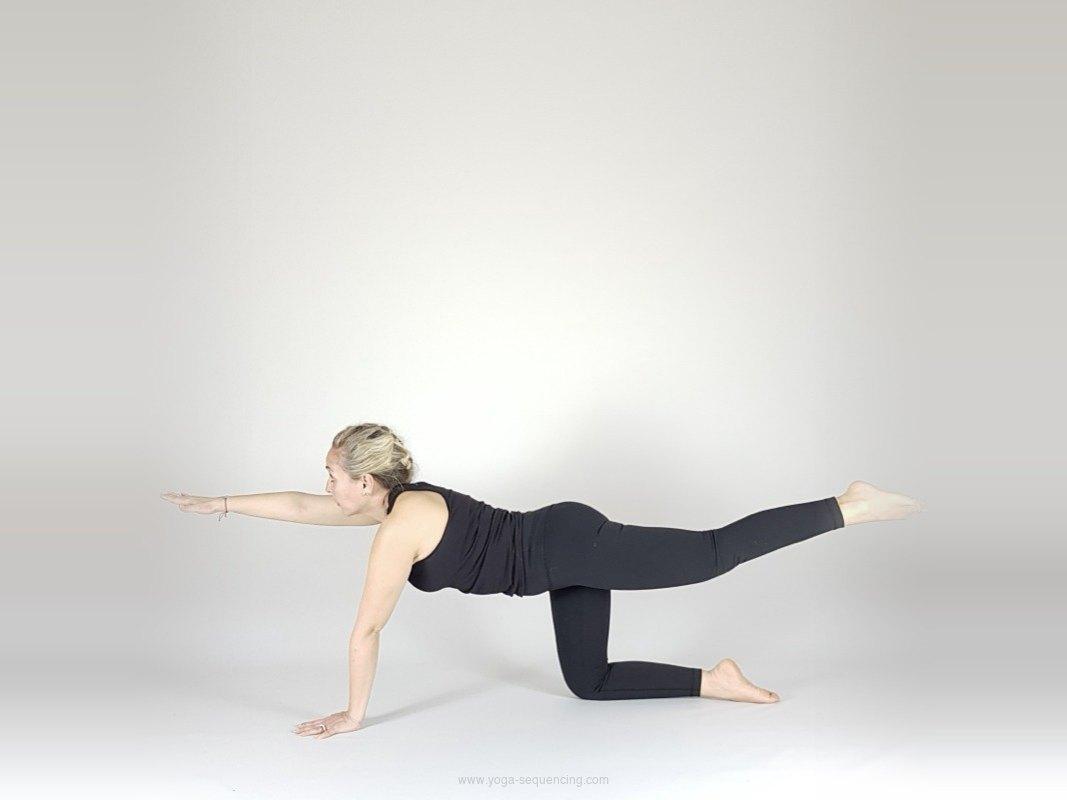
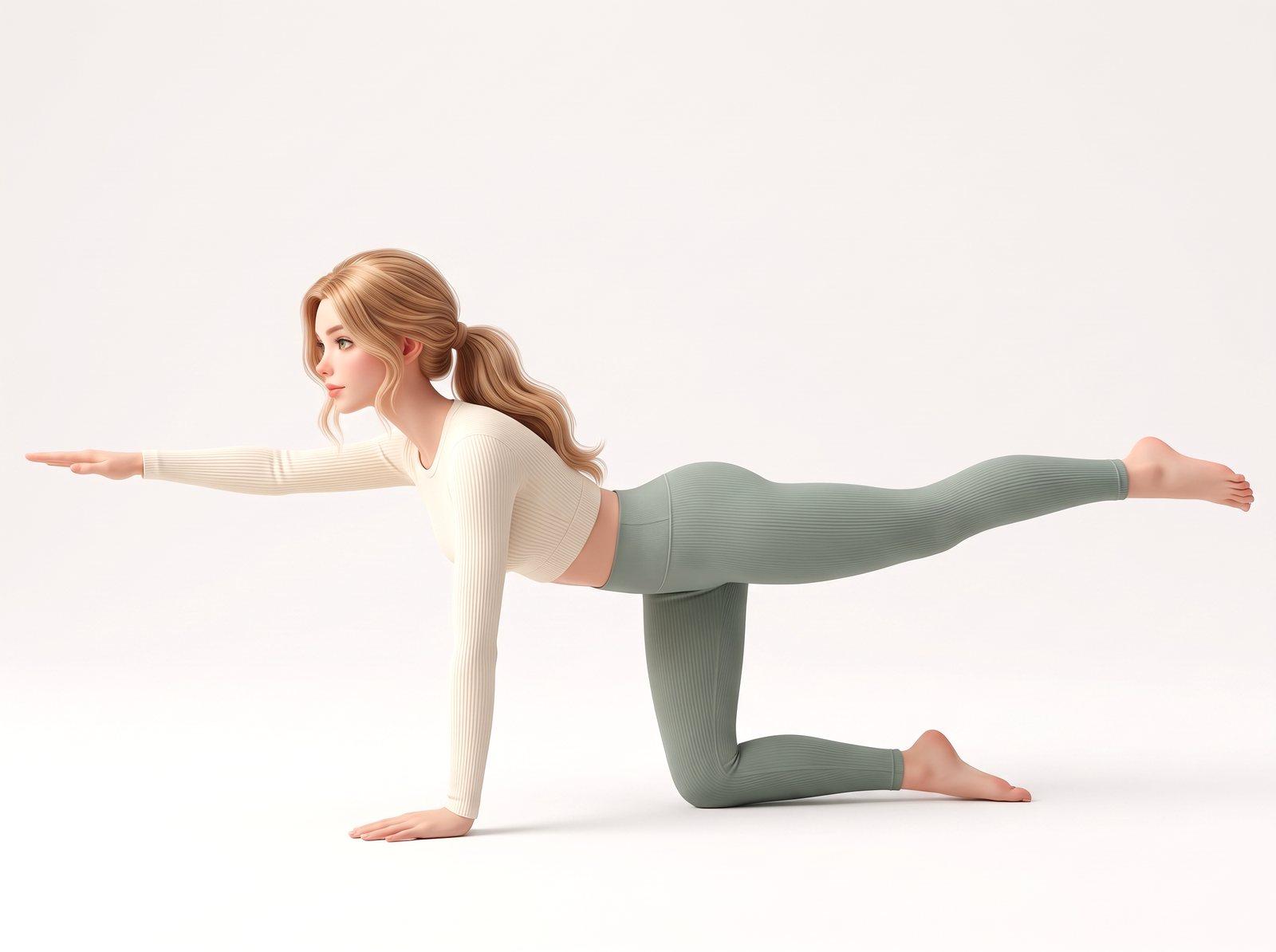
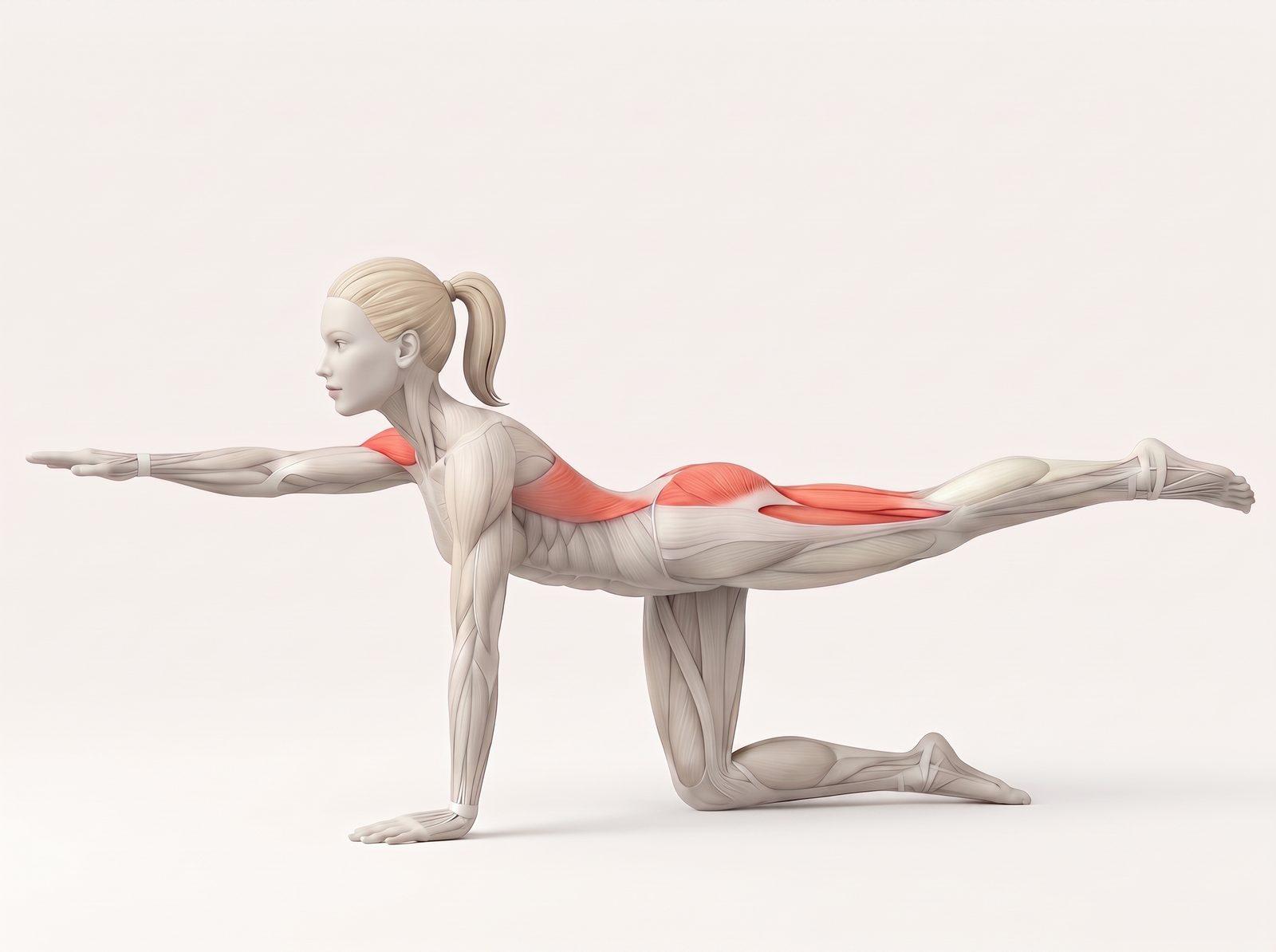
Working: Lifted-leg glutes, Lifted-leg hamstrings, Back muscles, Lifted-arm shoulder
Full muscle breakdown ↓About This Pose
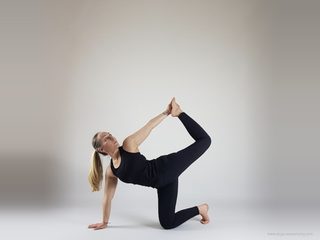
Extended Bird Dog takes the traditional Bird Dog to its fullest expression with maximum reach in both the extended arm and leg. This pose challenges core stability while simultaneously building strength and coordination. The opposite limb extension creates cross-body neural connections that improve overall body awareness and functional movement patterns.
Muscles Worked in Extended Bird Dog
Bird Dog lifts one arm forward and the opposite leg back from hands and knees, both at about torso height. The lifted-leg glutes, the back muscles and the lifted-arm shoulder do the work while the core stops the hips and ribs from rotating.
Working
- Lifted-leg glutes (gluteus maximus)
- Lifted-leg hamstrings (biceps femoris, semitendinosus, semimembranosus)
- Back muscles (erector spinae)
- Lifted-arm shoulder (deltoids)
Stretching
Bird Dog is a stability hold with no major stretch.
Also holding you steady: your core, obliques, which stop the hips and ribs from rotating, supporting-arm serratus anterior, rotator cuff and hip stabilisers (gluteus medius).
Variations and joint actions
- Leg only: Keeping both hands down and lifting only the leg is steadier and a good first step.
- Elbow to knee: Drawing the lifted elbow and knee together under the body between holds adds abdominal work.
- Lifted shoulder full flexion, arm forward at shoulder height
- Supporting shoulder flexion, about 90°, hand under the shoulder
- Lifted hip extension, leg back at hip height
- Lifted knee extension
- Kneeling hip and knee flexion, about 90°
- Spine neutral
Roles are qualitative — this section does not measure how hard any muscle works. References: Leslie Kaminoff & Amy Matthews, Yoga Anatomy (Human Kinetics); Ray Long, The Key Muscles of Yoga (Bandha Yoga).
Step-by-Step Instructions
- 1
Start in Bird Dog position
- 2
Focus on reaching the extended arm as far forward as possible
- 3
Simultaneously reach the lifted leg as far back as possible
- 4
Create the longest line possible through your body
- 5
Keep the core fully engaged
- 6
Hold for 5 breaths
- 7
Release with control and switch sides
Alignment Cues
- Reach in opposite directions
- Keep the belly drawn in
- Maintain slow, steady breathing
- Engage from fingertips to toes
Benefits
- Builds core stability
- Improves balance
- Develops coordination
- Creates cross-body connections
- Strengthens back extensors
- Enhances body awareness
Modifications
- Reduce reach if feeling strain
- Touch toes to ground for stability
Variations
- Add gentle pulses at full extension
Cautions & Contraindications
Cautions
- Maintain neutral spine throughout
- Do not sacrifice form for reach
Avoid this pose if you have:
- Back injury
- Severe balance issues
Quick Facts
Primary Focus
coreSecondary Focus
Suggested Hold
30 seconds
Tags
Equipment