
F
We test our recommendations
Both materials in rotation across years of teaching. Cork blocks bought new in 2019 still in daily use; foam blocks tracked through multi-year compression to call out real-world lifespan.
Cork blocks last forever and grip. Foam blocks are light and cheap. Eight real teaching scenarios, weight + grip + longevity tested, and the honest answer to which one belongs in your kit.
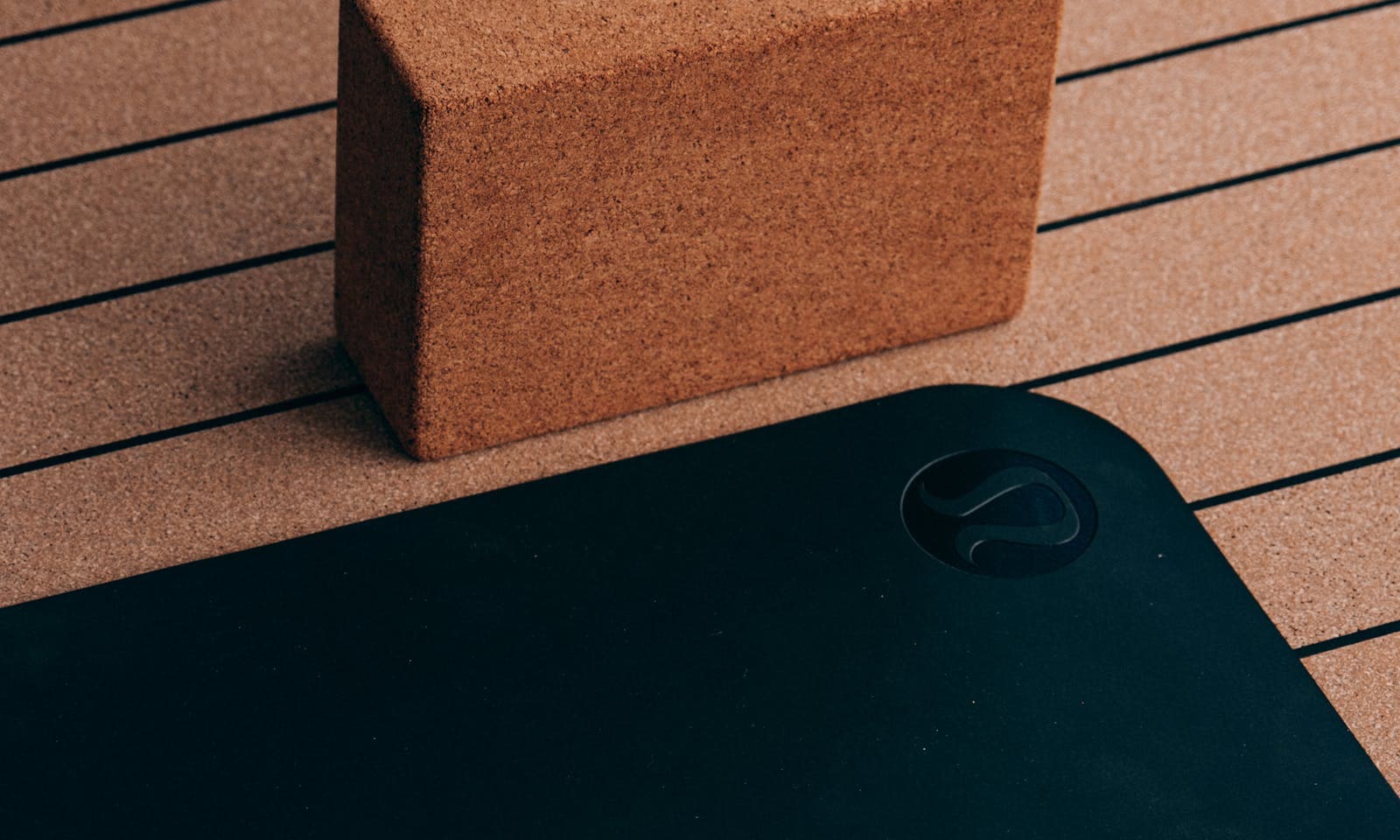
Both materials in rotation across years of teaching. Cork blocks bought new in 2019 still in daily use; foam blocks tracked through multi-year compression to call out real-world lifespan.
FLOW may earn from qualifying purchases. Links use our Amazon Associates tag (flowyoga0f-20). You do not pay more.
Does the block hold its height through a 5-minute restorative hold?
Wet palm on the block, block on a hardwood floor — does it stay put?
Foam compresses; cork does not. Cost-per-year is the honest metric.
Cork is renewable + biodegradable. EVA foam is synthetic, non-bio.
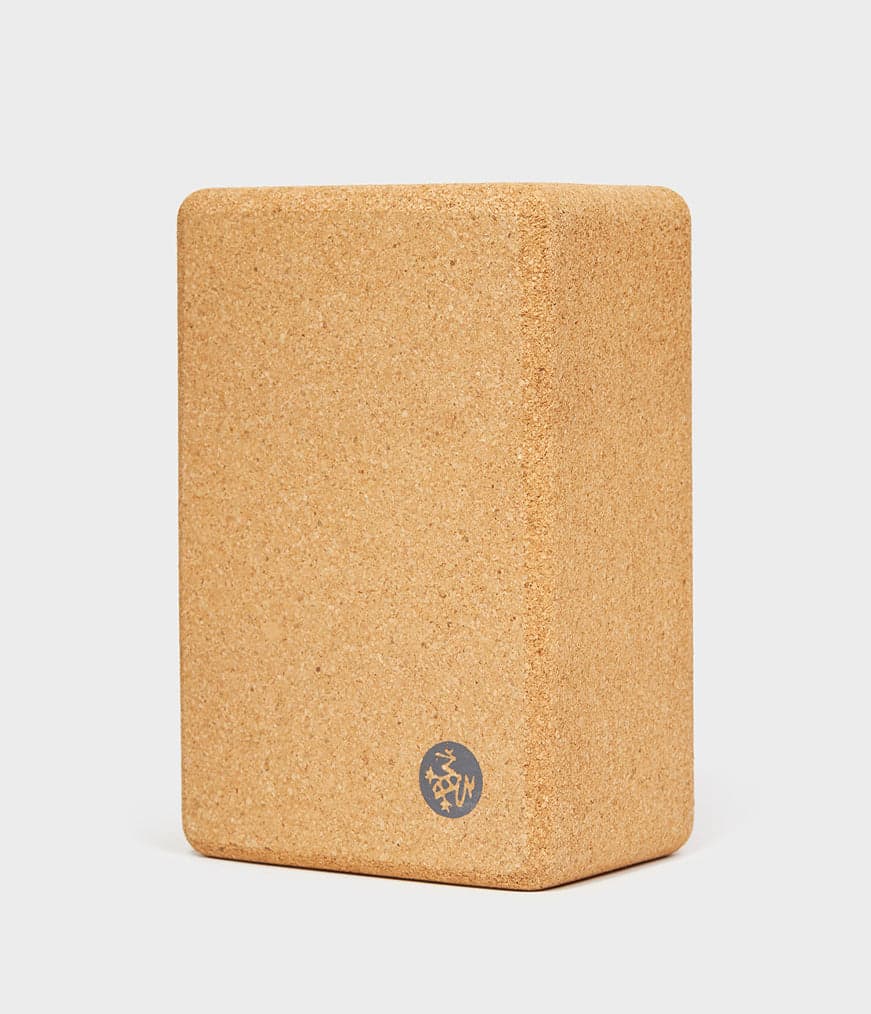 1
1Best for: Restorative, yin, hatha, hot yoga, studio + home
 2
2Best for: Travel kits, workshop student props, beginners, budget builds
Plan the class, not just the kit
FLOW's 420+ pose library and drag-and-drop sequence builder, free on iPhone, iPad and Android.
Honest answer: cork at home, foam in the teaching bag. Two materials, two real use cases, both cheap enough to own both at the same time.
For solo home practice and studio use, yes. The 10-year lifespan plus genuinely better grip means cork blocks pay for themselves within a year of regular use. For occasional / workshop / travel use, foam is the smarter buy.
Less than wood blocks, more than foam blocks. Cork has slight give but is denser than foam. For sit-bones in sukhasana or under a hip in restorative, most students prefer cork over wood and foam over cork — but the grip-and-longevity tradeoff makes cork the better default for daily use.
Foam if the student is buying their very first block — lighter, cheaper, more forgiving. Cork once they have practiced for 6+ months and want a long-term prop. We tell new students: "buy the $15 foam block today; upgrade to cork next year if you stick with the practice."
Daily use: 2-3 years before noticeable compression. Occasional use: 5+ years. The block does not fall apart — it just gets shorter and softer. You will know when it is time when supported fish does not feel supported anymore.
For your own practice, often yes — most poses use a single block. For teaching, get two: under both hips in supta baddha konasana, on either side of you in pyramid, under shoulders in supported fish. Two is the right answer for teachers.
For your own daily practice and any restorative / yin teaching: cork. For workshops, travel, and student props: foam. The smartest small-business move is to own one set of each.
As an Amazon Associate, FLOW may earn from qualifying purchases. Links below use our tracking tag — no cost to you, and it funds reviews like this one.
Yoga blocks are the prop everyone underrates. They're $15–$30, they last for a decade if you buy the right ones, and they unlock half the modifications that make a class accessible. The only real question is cork or foam, and the answer depends almost entirely on what you teach.
We've worn through both materials across years of classes. This is the honest head-to-head.
Best cork pick: Manduka Cork Yoga Block (×2 for full coverage), ~$50–60 the pair.
Best foam pick: Gaiam Essentials Yoga Block (×2), ~$15 the pair.
| Spec | Cork block | Foam block |
|---|---|---|
| Density | Dense, doesn't compress | Compresses under sustained load |
| Grip on floor | Excellent (cork bottom) | Moderate (slides on hardwood) |
| Grip in hand (sweaty) | Excellent (textured) | Moderate (smooth) |
| Lifespan | 10+ years | 2-3 years (compresses) |
| Eco impact | Renewable cork, biodegradable | EVA / polyurethane (synthetic) |
| Price (single) | $25-30 | $7-15 |
| Best for | Studio · yin · restorative | Travel · beginners · workshops |
Cork wins, decisively. A 5-minute supported fish on a foam block ends with you sitting half an inch lower than where you started — the foam has compressed and the block is shorter. Cork doesn't move. The prop you set the class up on at minute zero is the same prop at minute six.
This is the #1 reason cork exists. Buy cork for restorative.
Tie, with caveats. If the block is just for occasional reach in a forward fold, foam is fine — the load is short and the price is right. If you teach students using a block for two-thirds of a class (knees-down chaturanga, supported handstand prep), the cork grip matters.
The grip difference is real. Cork holds your sweaty palm in down dog; foam slides.
Foam wins. A pair of cork blocks weighs 4.4 lb. A pair of foam blocks weighs 1 lb. If you're flying with props or hauling them to a retreat venue, foam is the only answer. Add a travel yoga mat and you've already burned your weight allowance.
Foam wins. $15 × 40 (two per student) = $600. Cork × 40 = $1,000+. For props students will use once and that don't need to last a decade, foam is the correct economic answer. Buy a single set of cork for your own demos.
Cork wins. Foam blocks get clammy when sweaty hands touch them all class. Cork stays dry-feeling and wipes down with a damp cloth in five seconds. Cork also doesn't absorb sweat into the foam pores — which yes, happens with foam blocks, and yes, it's eventually gross.
Foam wins for safety. A foam block under a beginner's hip in supta baddha konasana is forgiving if the block shifts. A cork block under the same hip is harder if it slips. The drop is genuine. For poses where a block is between bone and ground and the student is new, foam is the more forgiving prop.
(For teachers using a block under their OWN hip, cork is fine — your proprioception isn't the worry.)
Cork wins. Cork is harvested from cork-oak bark without killing the tree (the tree regenerates the bark over 9 years and is harvested again). The blocks are biodegradable. Foam blocks are EVA or polyurethane — synthetic, non-biodegradable, and most are imported with high carbon cost.
The most defensible eco position is one set of cork blocks that lasts 10 years.
Foam wins on absolute price ($15 vs $30). On cost-per-year? Foam at 2 years = $7.50/year; cork at 10 years = $3/year. Cork is cheaper per year over the lifetime, but the up-front cost is real if you're a new teacher buying your first kit.
If $30 is a real number for you right now, get foam, teach for a year, and upgrade to cork when you can. This is fine.
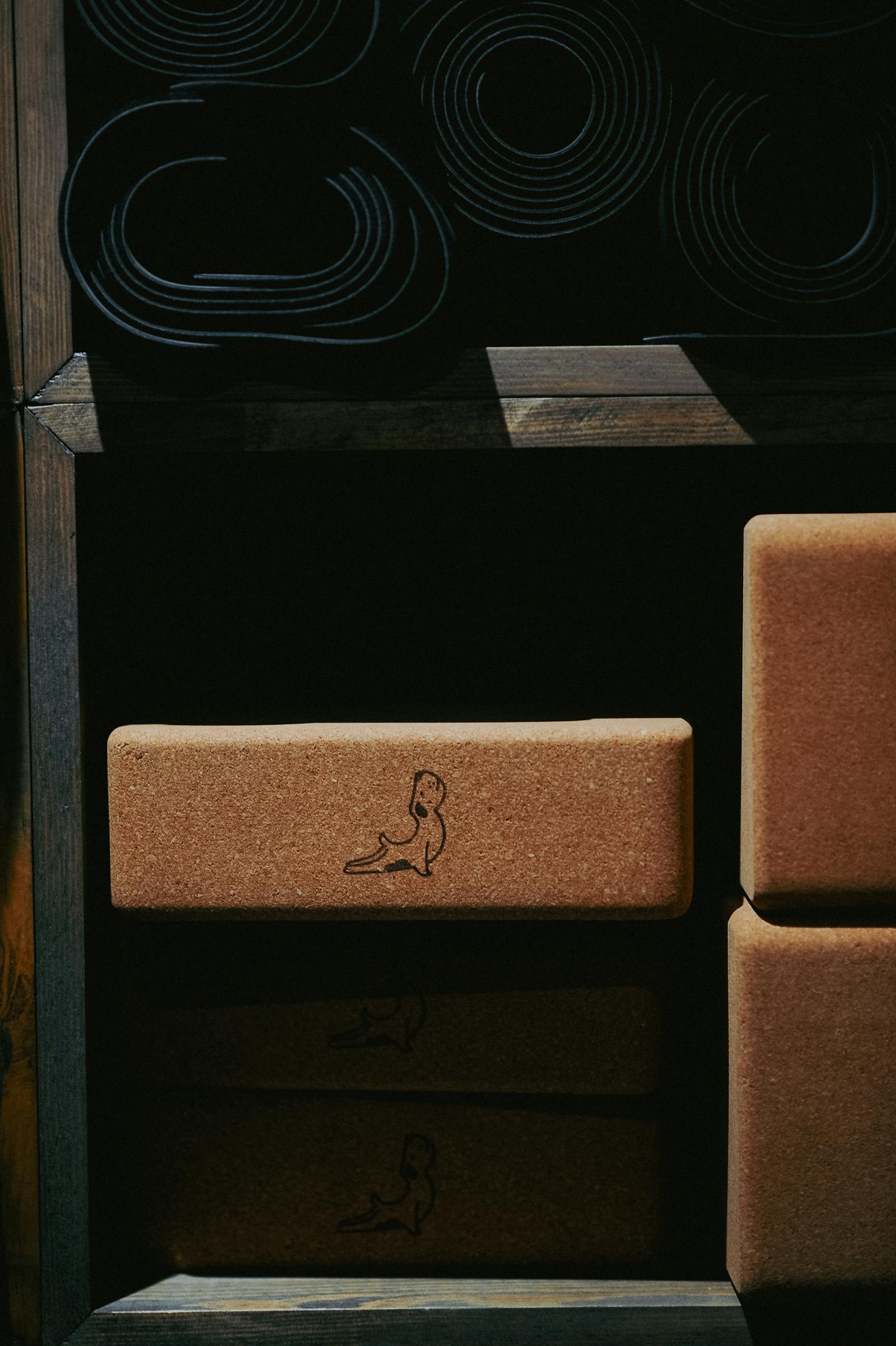
Standard 9"×6"×4" dimensions. Dense, slip-resistant, made in Portugal from Portuguese cork. We've used the same pair for 6 years, taught hundreds of classes on them, and they're indistinguishable from new. The Manduka logo is debossed (no painted ink to wear off). $25-30 single.
About $5 cheaper than the Manduka, very slightly less dense. Acceptable for home practice. For studio use the Manduka is worth the spread.
Standard 9"×6"×4" foam block, beveled edges (which matters for hand comfort in down dog with a block), $7-15 single. The default for workshop / multi-student use.
Two foam blocks + a 10-foot strap for ~$25. Decent quality, fine for travel kits. The strap is the same quality as a budget hardware-store strap — replace it with a D-ring strap eventually.
Home / personal studio: 2 × Manduka Cork blocks. One set. Done. $50.
Teaching bag (for retreats / travel / cover classes): 2 × Gaiam Essentials foam blocks. Light, cheap, easy to replace if lost. $15.
Studio with 20 student spots: 40 × foam student blocks + 4 × cork teacher demo blocks. ~$700 total. Replace foam blocks as they compress (every 2-3 years for active use).
For solo home practice and studio use, yes. The 10-year lifespan plus genuinely better grip means cork blocks pay for themselves within a year of regular use. For occasional / workshop / travel use, foam is the smarter buy.
Less than wood blocks, more than foam blocks. Cork has slight give but is denser than foam. For sit-bones in sukhasana or under a hip in restorative, most students prefer cork over wood and foam over cork — but the grip-and-longevity tradeoff makes cork the better default for daily use.
EVA foam blocks are essentially compressed packaging foam in a brick shape. Manufacturing is high-volume, low-cost. Cork blocks require harvesting and shaping a renewable material with much lower throughput. Both serve real use cases — the cheapness of foam is not a sign of bad quality, it's a sign of different economics.
For your own practice, often yes — most poses use a single block. For teaching, get two: under both hips in supta baddha konasana, on either side of you in pyramid, under shoulders in supported fish. Two is the right answer for teachers.
Foam if the student is buying their very first block — lighter, cheaper, more forgiving. Cork once they've practiced for 6+ months and want a long-term prop. We tell new students "buy the $15 foam block today; upgrade to cork next year if you stick with the practice."
Mostly no. "Eco-EVA" is still EVA (ethylene-vinyl acetate, a synthetic polymer). It's slightly less petroleum-intensive than virgin EVA, but it's not biodegradable and the marketing-vs-reality gap is large. If eco matters, get cork.
Daily use: 2-3 years before noticeable compression. Occasional use: 5+ years. The block doesn't fall apart — it just gets shorter and softer. You'll know when it's time when supported fish doesn't feel supported anymore.
Planning a class that uses blocks heavily? The FLOW Sequence Builder marks props per pose so you can tell at a glance how much prop-setup time a class needs.
Cover photography from Pexels (free commercial-use license). Picks based on first-hand teaching use across the FLOW team. Pricing approximate and may shift on Amazon. Last refresh: May 2026.*
Bolsters, blocks, blankets, straps, and eye pillows that make yin yoga actually feel like yin. The props we keep buying, what to skip, and how to set up a yin home practice for under $200.
A gentle, restorative yoga sequence for period cramps — soothing poses that ease menstrual pain and lower-back tension, which poses to avoid on heavy days, and a calming 15-minute flow you can do in bed.
A complete guide to restorative yoga for sleep — including the science behind why it works, 8 poses with full prop setup, a 45-minute bedtime sequence, and breathing techniques to calm the nervous system. Perfect for yoga teachers and personal practice.
Join thousands of yoga teachers using FLOW to create professional sequences in minutes. Start free today—no credit card required.
Also on iPhone, iPad & Android