As an Amazon Associate, FLOW may earn from qualifying purchases. Every link below uses our tracking tag — you don't pay a cent more, but it helps us keep writing reviews like this one.
Yin yoga is the rare yoga style where the prop choice can change the practice. Hold a 5-minute supported pigeon on a soft, undersized bolster and you'll spend the hold managing the prop instead of dropping into the pose. Hold the same shape on a firm, rectangular bolster and you'll forget the prop is there — which is the entire point.
After teaching yin (and restorative) for the better part of a decade, this is the kit we'd build again. Six prop categories, what works, what to skip, and a complete home-studio setup at the bottom for under $200.
The kit at a glance
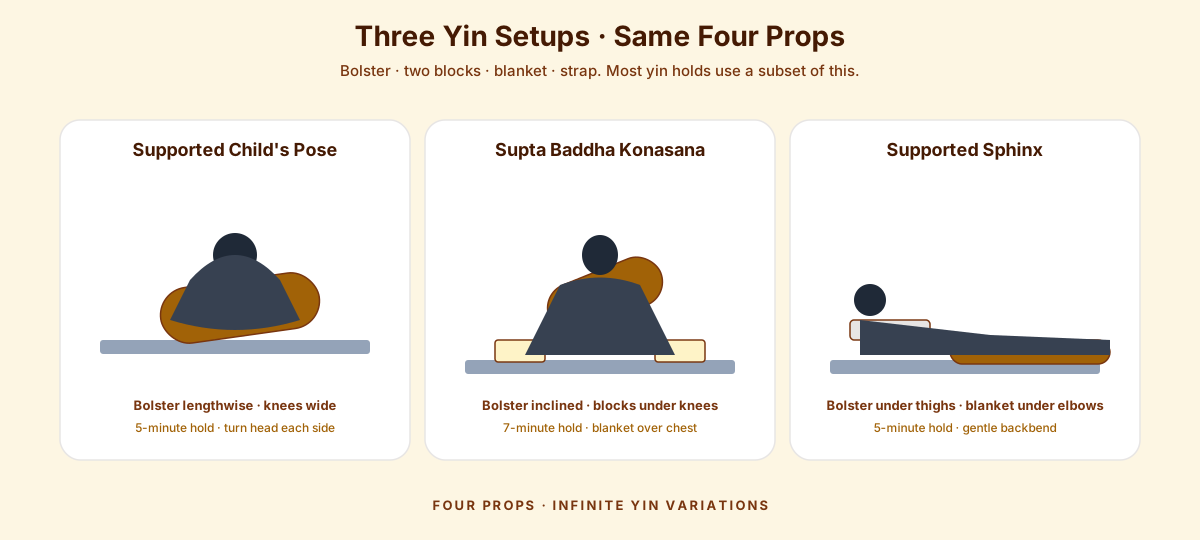
Yin doesn't need anything more exotic than that. Below: what each one does, and why these specific picks.
Bolster — the most important prop
If you buy ONE yin yoga prop, buy a real bolster. A pillow off the couch will not hold weight through a 5-minute pose. A small "round" bolster will compress under your spine and leave you flat by minute two. You want rectangular, firm, and at least 24" long.
Our pick: Hugger Mugger Standard Rectangular Bolster→. 25"L × 12"W × 6"H, cotton cover, kapok fill (cotton-blend on some). The fill is firm enough that it doesn't bottom out under a heart-opener; the cotton cover is removable for washing (which you will need to do).
Why not a round bolster? Round bolsters are great for some poses (supta baddha konasana, supported fish) but bad for the supported pigeon / supported saddle / supported child's pose that fill most yin classes. A rectangular bolster does everything a round one does plus the long-spine support. Round bolsters are a "second bolster" purchase, not the first.
Cheaper option: Gaiam standard bolster→ at ~$45 is acceptable for home practice. It's softer than the Hugger Mugger and you'll feel the difference at minute four, but for occasional yin it's fine.
Yoga blocks — get two, get cork
For yin you want blocks under your sit bones (supported sukhasana), under your shoulders (supported fish), under your knees (supta baddha konasana), and under your forearms (when bolsters aren't enough in pigeon). One block is never enough — get two.
Material matters. Foam blocks compress under sustained weight. After ten minutes of half-saddle on a foam block, the block is shorter than it was. Cork blocks are dense, don't compress, and grip the floor — they're our default.
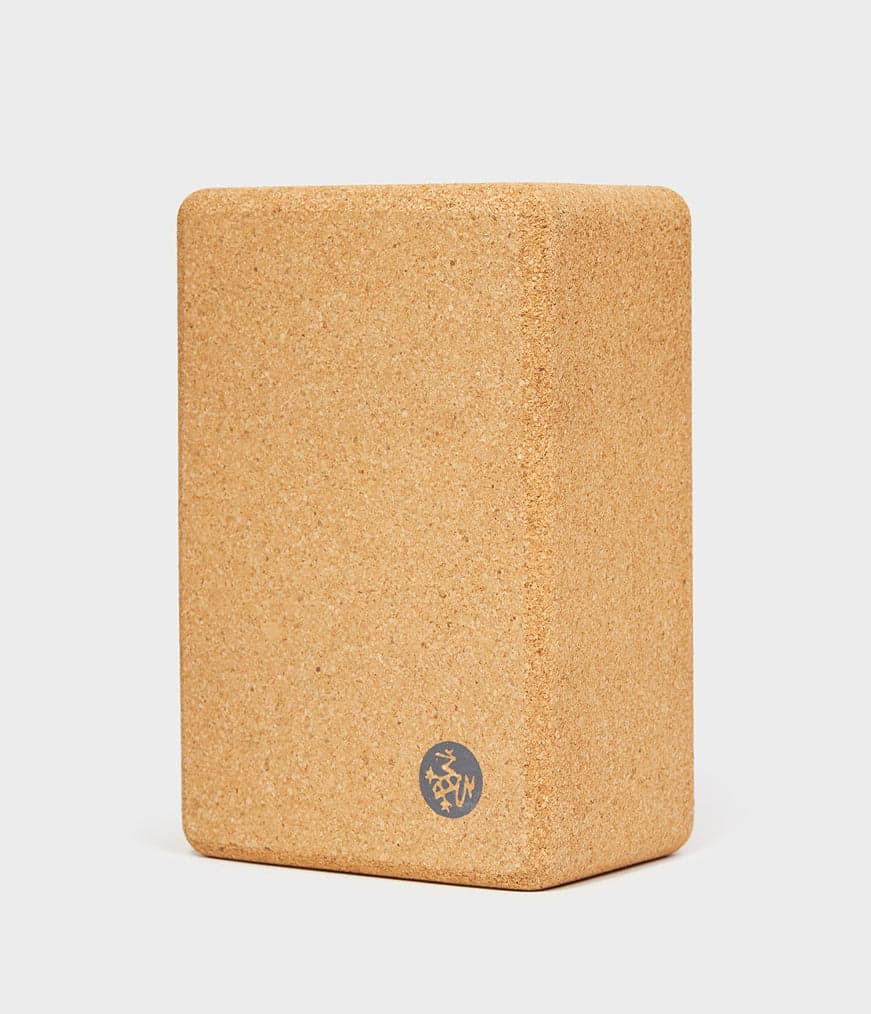
Our pick: Manduka Cork Yoga Block→, two of them. Standard 9"×6"×4" dimensions, dense, slip-resistant on both ends. They're heavier than foam (which is a feature — they don't slide), and they last forever.
Skip: wooden blocks (too hard for support poses), bamboo blocks (splinters over time on the corners), foam blocks for yin specifically (compress under sustained load).
Wool blanket — the underrated workhorse
A folded wool blanket does what a half-dozen other props can't: under your sit bones in sukhasana, around your shoulders in supported fish, draped over your hips in savasana, supporting your head in half-saddle. We use blankets in every yin class.
Our pick: Mexican-style yoga blanket→ — woven cotton/acrylic blend, about 76"×52", $25-30 on Amazon. They're the studio standard for a reason: they fold flat (so the height under your hips is predictable), they grip the floor, and they wash on cold.
Skip: the polar-fleece "yoga blankets" sold at big-box stores. They're warm-blankets pretending to be yoga props. They don't hold a fold, they slide, and they pill on the corners after three washes.
Real wool option: if you can stretch to it, a Pendleton Yakima Camp blanket→ at ~$80 is the most beautiful version of this prop. Same function, much nicer in your studio.
Yoga strap — buy it once
Yin doesn't use a strap as often as a typical hatha class, but when you need one (paschimottanasana with limited hamstrings, reclined hand-to-big-toe variation), nothing else substitutes.
Our pick: Hugger Mugger 10ft D-ring strap→. 10 feet is the right length (8' feels short for taller students); D-ring is the right buckle (cinches under tension, doesn't slip like quick-release does).
Skip: any "cinch buckle" strap. They release under load. Once you've had a strap pop in a forward fold you understand why D-ring is the correct answer.
Eye pillow — actually optional, but really good
Eye pillows do two things: light blocking and acupressure (gentle weight on the eyelids triggers parasympathetic response). For longer savasanas (yin closes most classes with 7-10 minutes), they meaningfully deepen the rest.
Our pick: DreamTime silk lavender eye pillow→. Silk over flaxseed + dried lavender. The lavender is a "love it or skip it" feature — some students are scent-sensitive, so we always announce it before passing them out.
For class teachers: buy six. You'll lose two, students will keep one. Studio eye pillows are like spoons.
Cork yoga wheel — the bonus prop
Not strictly necessary for yin, but if you teach restorative-adjacent yin (the soft, props-heavy version), a wheel under the upper back for supported fish is a genuinely different prop than a block-and-bolster stack. It's also great for the supported supta padangusthasana and for self-myofascial release after class.
Our pick: Yoga Design Lab cork yoga wheel→. 13" diameter, cork outer (grippy), 350-lb capacity. The cork is dense and doesn't dent under shoulder weight; the price is right.
Skip: plastic wheels with foam pads. They squeak, the foam dents, and the diameter tolerance is loose.
The complete setup, by use case
Home solo practice (you only) — under $200
1× Hugger Mugger rectangular bolster ($75)
2× Manduka cork blocks ($50)
1× Mexican-style blanket ($25)
1× Hugger Mugger D-ring strap ($15)
1× DreamTime eye pillow ($18)Total: ~$183. Lasts a decade. This is the kit we'd recommend for anyone serious about a home yin practice.
Yin teacher's class kit — about $700-900
For a 12-student class:
12× bolsters (rectangular, firm) — buy in bulk from a wholesaler like Yoga Direct or Hugger Mugger pro
24× cork blocks (2 per student)
12× wool blankets
12× straps
12× eye pillowsThis is a real investment. Most teachers borrow studio props. If you're building a home studio for teaching, buy six sets minimum and expand from there.
Restorative-leaning yin (props-heavy)
Add to the home setup:
1× yoga wheel ($40)
1× second rectangular bolster (the prop stack for supported child's pose really benefits from two)
1× extra wool blanketTotal add: ~$140.
Care + washing
Bolsters — most have removable cotton covers. Wash cold, line dry. Inner kapok fill should NEVER be washed; it absorbs water and stays wet for weeks. If the inner gets soiled, replace the bolster.
Blocks (cork) — wipe with a damp cloth. Don't soak. Cork can stay damp inside the cell structure and develop mildew. If a block smells, leave it in sun for a day.
Blankets — wash cold, tumble dry low, fold flat for storage. Mexican-style blankets soften beautifully with washes; they get better in year three.
Strap — machine wash cold in a delicates bag, line dry. The cotton webbing on the Hugger Mugger holds up for a decade.
Eye pillow — silk shell is hand-wash only. The flaxseed fill never gets washed; if the pillow gets soiled, replace it. Some pillows have removable shells — those are nicer.
FAQs
Do I really need a bolster for yin yoga?
For most yin poses, yes. Supported pigeon, supported saddle, supported fish — these require a long, firm support that towels and pillows don't replicate. The bolster is the single highest-leverage prop in yin. If you're going to skip one piece, skip the eye pillow before the bolster.
Can I substitute pillows and blankets for a real bolster?
For one or two classes, sure. Long-term, no. Stacked pillows compress and slide; blankets unfold; you end up managing the prop instead of practicing. A real bolster makes yin feel like yin.
Are foam blocks okay for yin?
For brief use, yes. For sustained weight (5-minute holds), they compress and lose height halfway through the pose. Cork is the better long-term spend.
How many blocks do I need?
Two. Always two. Yin uses blocks in pairs more often than singles (under both sit bones, under both shoulders, etc.).
What's the best beginner yin yoga prop set?
The home solo practice setup above — bolster, two cork blocks, blanket, strap, eye pillow — covers 95% of yin poses. You can add the wheel later if you find yourself reaching for more spinal support.
Where do you actually buy bolsters?
Amazon for solo / home use (linked above). For a studio, the wholesale pricing at Hugger Mugger Pro, YogaDirect, or Manduka B2B is significantly better than retail — worth setting up an account if you're buying 6+.
What's next
Browse the full Yoga Gear hub for mats, meditation, and teacher essentials. Or get our Best Yoga Mats for Teachers in 2026 roundup if you're still on the mat search.
If you teach yin and have a prop you can't live without that we missed, let us know — we update this article quarterly based on real teaching reports.
Cover photography from Pexels (free commercial-use license). Reviews based on first-hand teaching use across the FLOW team. Pricing approximate and may shift on Amazon. Last refresh: May 2026.*