Tripod Headstand Hold
Tripod Sirsasana
Working: Shoulders, Triceps, Upper back, Abdominals
Stretching: Back-leg hip flexors
Full muscle breakdown ↓About This Pose
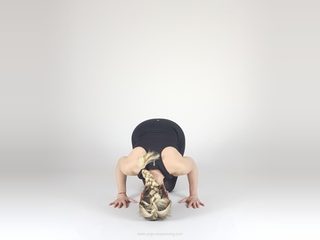
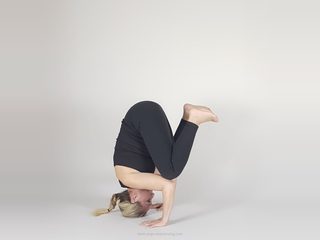
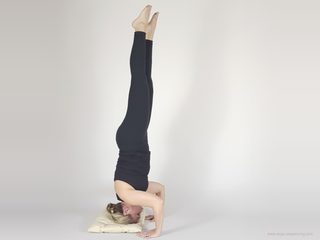
Full Tripod Headstand Hold (Mukta Hasta Sirsasana) is the complete expression of the tripod inversion with legs extended straight up. The hands are placed flat on the floor like a tripod with the head, creating a stable base. This hold builds tremendous shoulder, arm, and core strength while developing the confidence and control needed for advanced inversions.
Muscles Worked in Tripod Headstand Hold
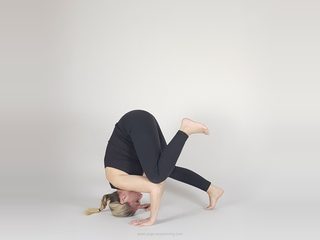
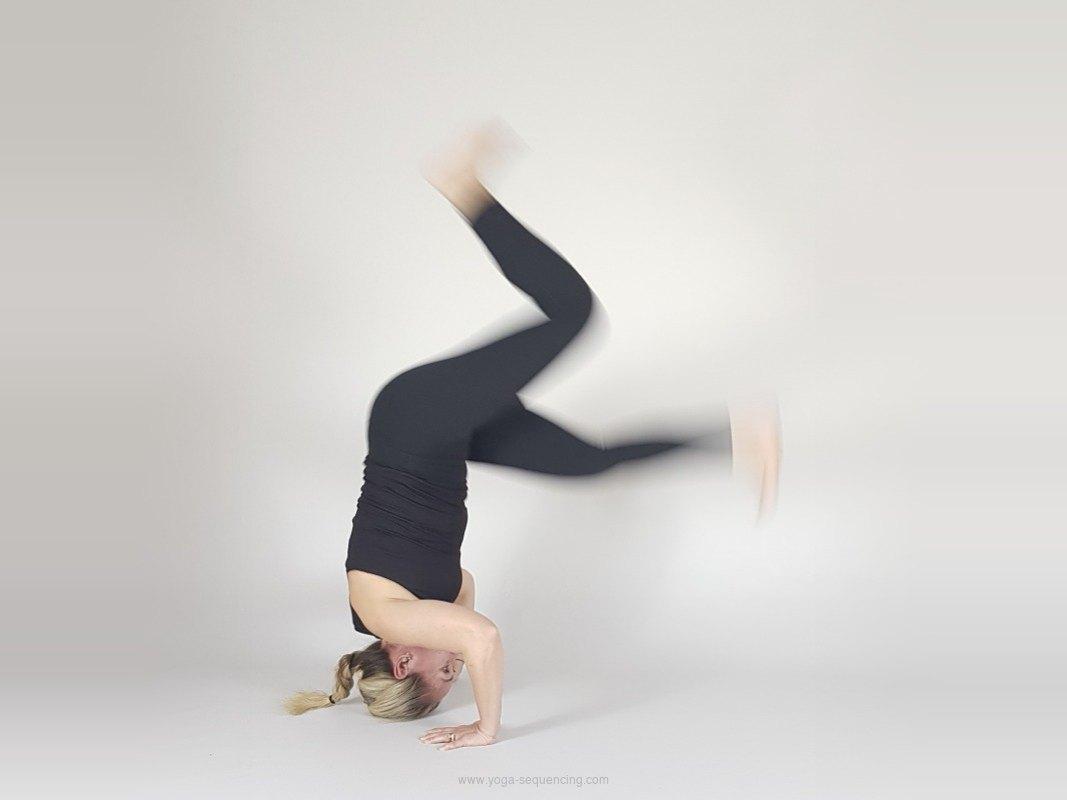
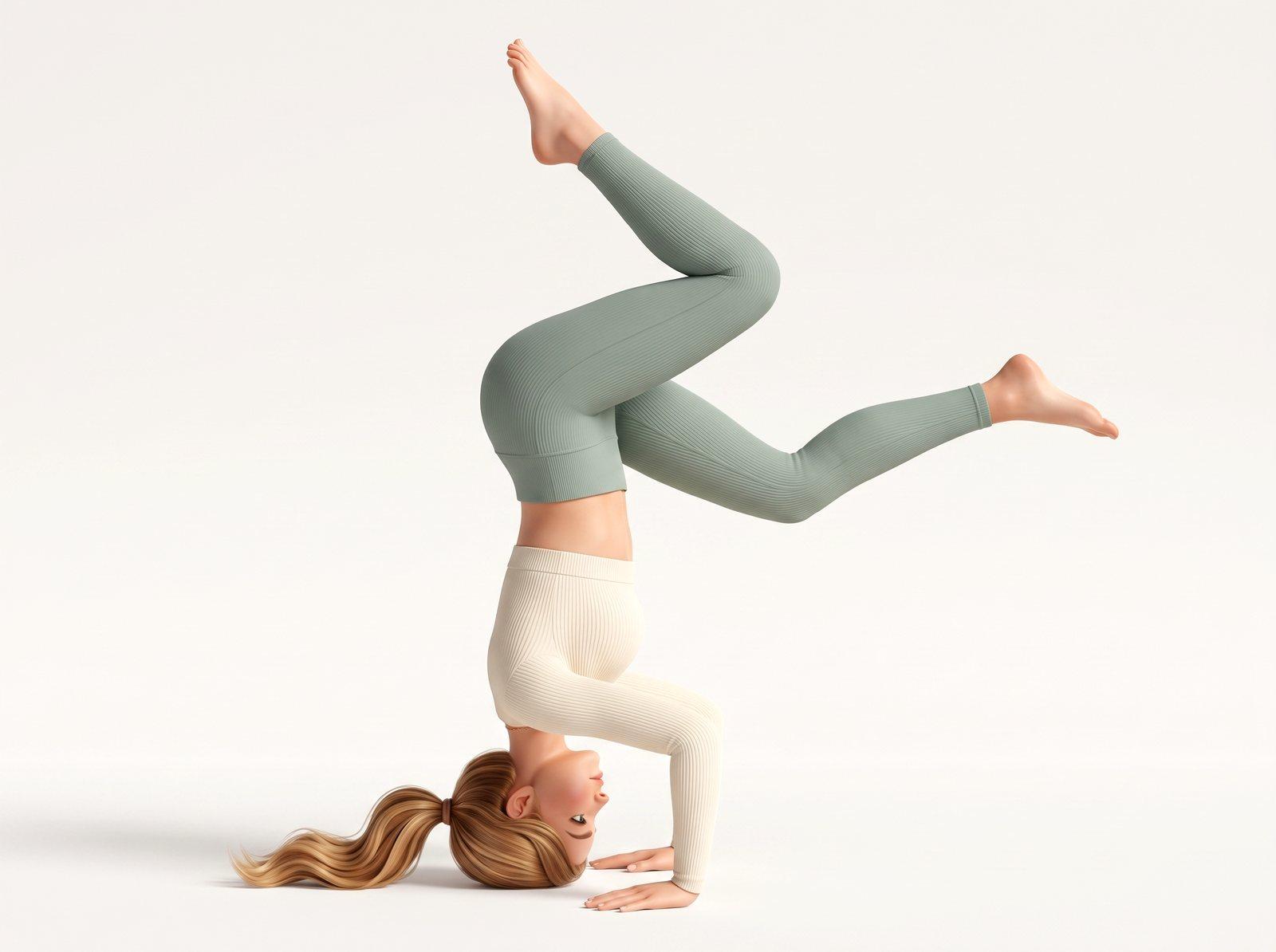
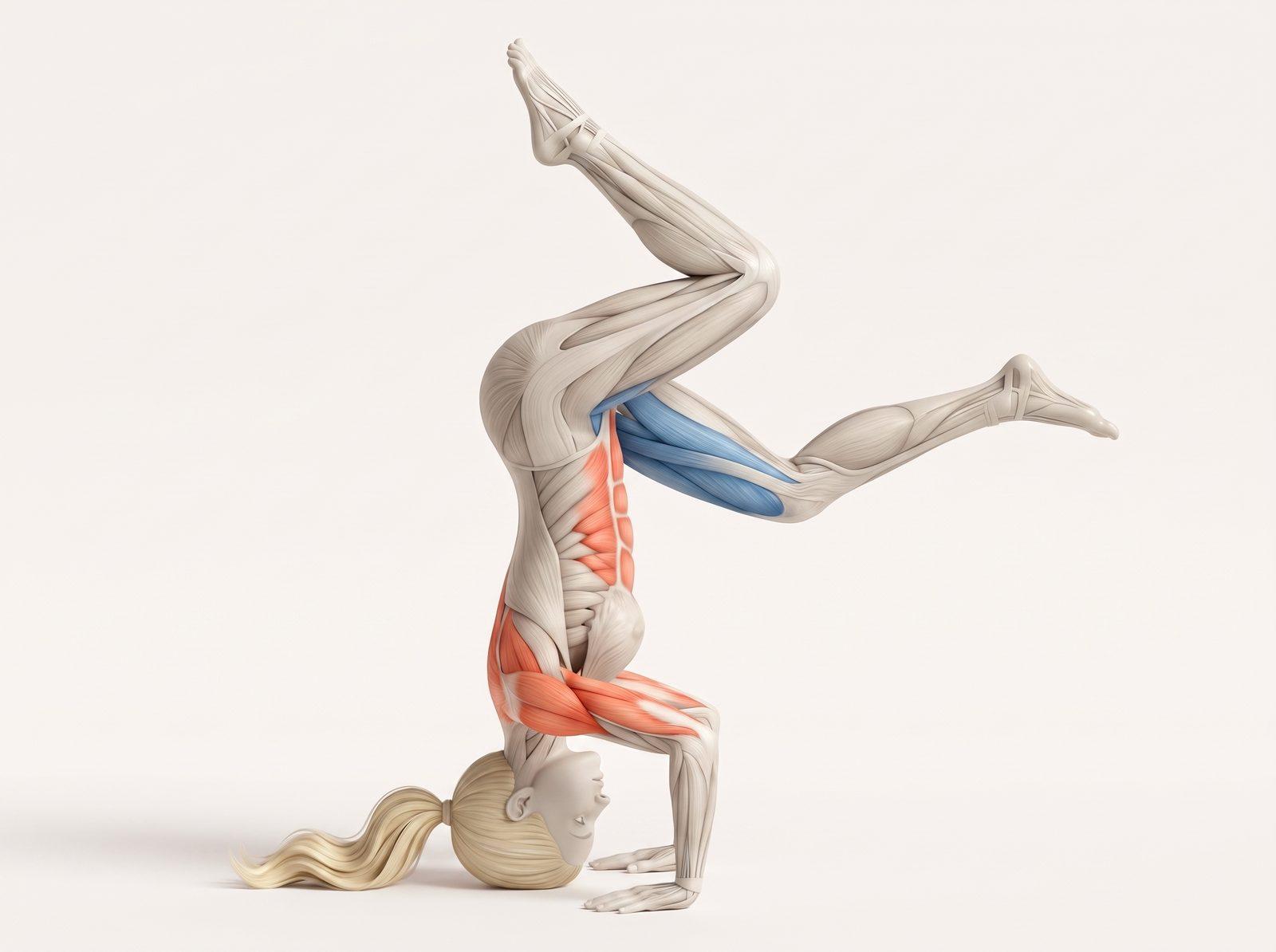
The photo shows Tripod Headstand (Sirsasana II) with the legs in a bent-knee scissor: crown of the head and both hands on the floor in a tripod, hips stacked over the shoulders, one knee bent forward and the other leg reaching back. The shoulders, triceps and core hold the inversion while the legs balance.
Working
- Shoulders (deltoids)
- Triceps (triceps brachii)
- Upper back (trapezius, lifting the shoulders away from the floor)
- Abdominals (rectus abdominis, transversus abdominis)
Stretching
- Back-leg hip flexors (iliopsoas, rectus femoris)
Also holding you steady: your rotator cuff, Serratus anterior, the muscles along your spine and neck muscles, which keep the neck neutral.
Variations and joint actions
- Legs straight up: Extending both legs to vertical is the full Tripod Headstand.
- At a wall: Practising with the back near a wall gives a safe stop while finding balance.
- Shoulders flexion, elbows over the wrists
- Elbows flexion, about 90°
- Hips one flexed, one extended, scissor shape
- Knees flexion
- Neck neutral, crown on the floor
Roles are qualitative — this section does not measure how hard any muscle works. References: Leslie Kaminoff & Amy Matthews, Yoga Anatomy (Human Kinetics); Ray Long, The Key Muscles of Yoga (Bandha Yoga).
Step-by-Step Instructions
- 1
Set tripod base firmly
- 2
Lift through tuck position
- 3
Extend legs toward ceiling
- 4
Stack body vertically
- 5
Hold with steady breath
- 6
Exit with control
Alignment Cues
- Stabilize shoulders actively
- Press hands down firmly
- Engage core throughout
- Breathe calmly and steadily
Benefits
- Builds shoulder strength
- Develops inversion confidence
- Strengthens arms powerfully
- Creates stable foundation
- Improves core control
- Prepares for arm balances
Modifications
- Use mat cushioning
- Practice near wall
Variations
- Split legs
- Lotus legs
Cautions & Contraindications
Cautions
- Align spine carefully
- Avoid collapsing
Avoid this pose if you have:
- Neck injury
- Wrist pain
Quick Facts
Primary Focus
shouldersSecondary Focus
Suggested Hold
30 seconds
Tags
Equipment