
Sphinx Pose
Salamba Bhujangasana
About This Pose
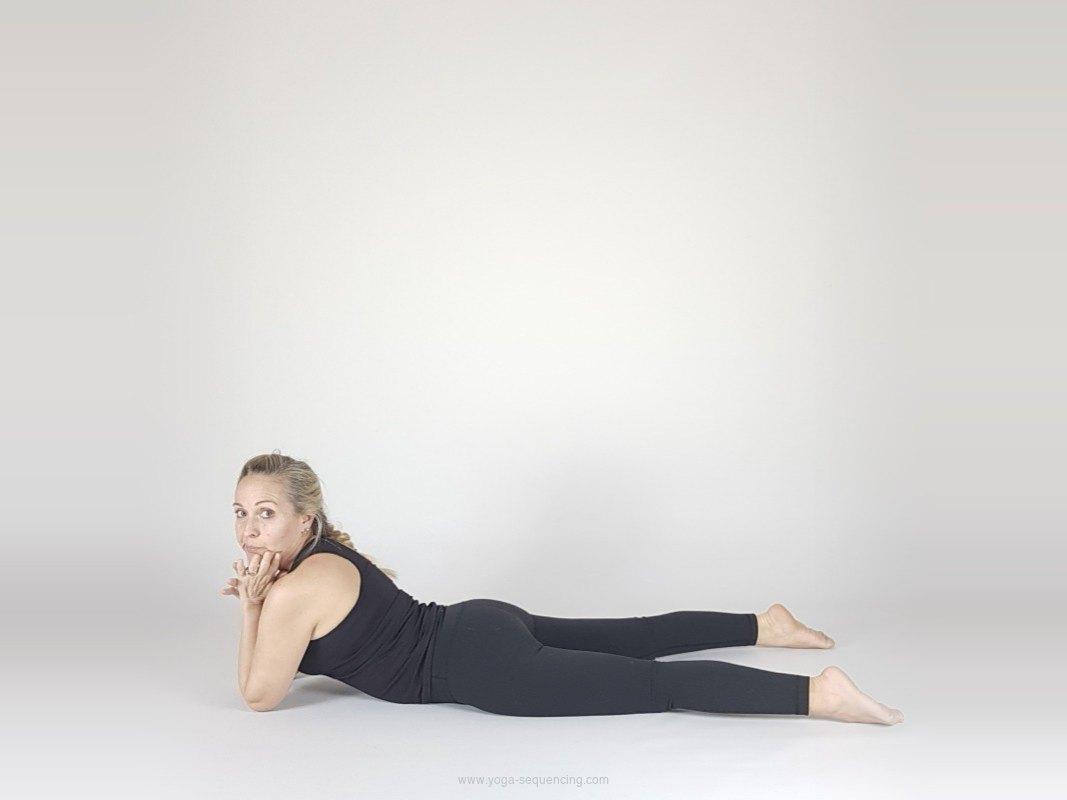
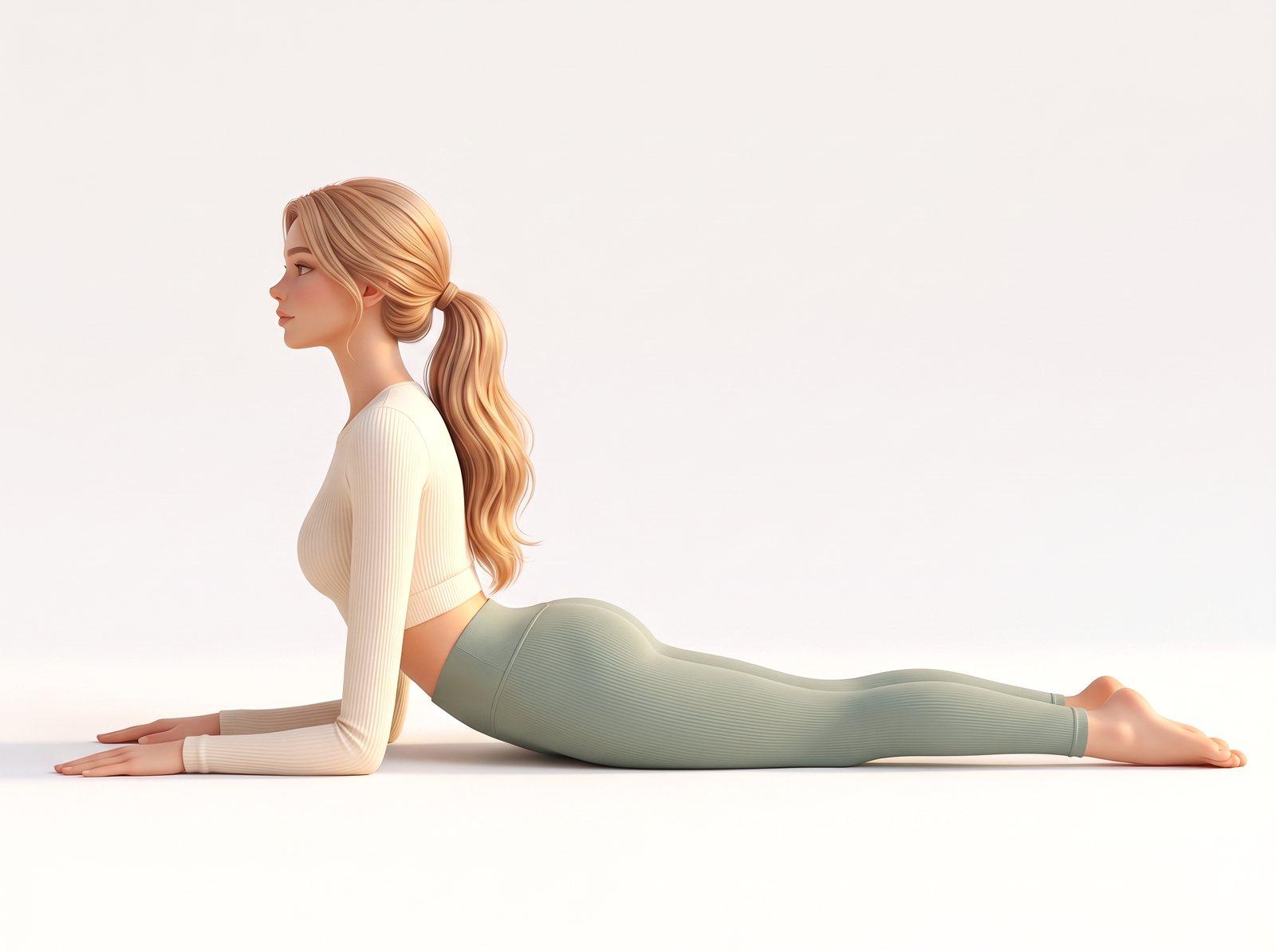
Sphinx Pose (Salamba Bhujangasana) is a gentle, accessible backbend performed prone with the forearms supporting the chest lift. The pose creates a mild arc in the spine that is therapeutic for the lower back, opens the chest and lungs, and strengthens the back muscles. Its supported nature makes it ideal for beginners or those with back sensitivity.
Muscles Worked in Sphinx Pose
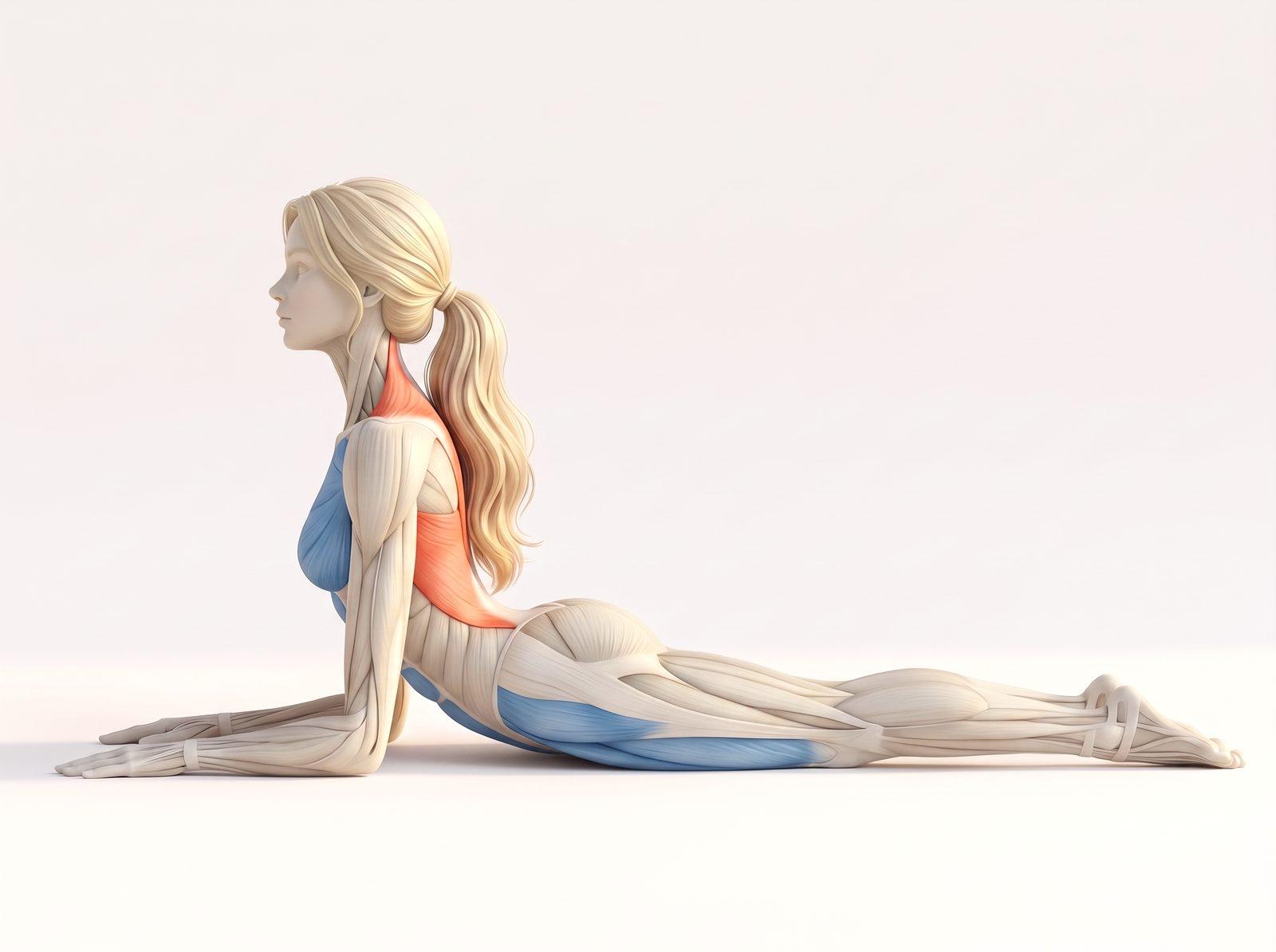
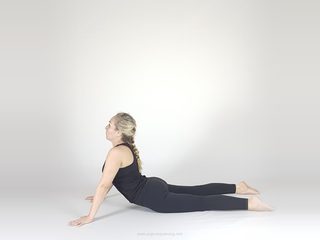
The photo shows Sphinx Pose (Salamba Bhujangasana): lying on the belly with the legs long, the forearms on the floor with the elbows under or just ahead of the shoulders, and the chest lifted into a gentle backbend. The abdominals and the front of the hips lengthen while the back muscles and upper back lift the chest.
Working
- Back muscles (erector spinae)
- Upper back (rhomboids, trapezius)
Stretching
- Abdominals (rectus abdominis)
- Hip flexors (iliopsoas, rectus femoris)
- Chest (pectoralis major)
Also holding you steady: your rotator cuff, Serratus anterior and Glutes.
Variations and joint actions
- Elbows farther forward: Walking the elbows forward lowers the chest and softens the lower back.
- Blanket under the hips: Padding under the pelvis eases pressure on the hip bones.
- Spine gentle extension
- Shoulders flexion, elbows under the shoulders
- Elbows flexion, about 90°
- Hips extension, front of the pelvis on the floor
- Neck neutral, gaze forward
Roles are qualitative — this section does not measure how hard any muscle works. References: Leslie Kaminoff & Amy Matthews, Yoga Anatomy (Human Kinetics); Ray Long, The Key Muscles of Yoga (Bandha Yoga).
Step-by-Step Instructions
- 1
Lie face down
- 2
Prop onto forearms
- 3
Align elbows under shoulders
- 4
Press forearms down
- 5
Lift chest gently
- 6
Hold with relaxed breath
Alignment Cues
- Broaden chest forward
- Relax glutes
- Keep shoulders away from ears
- Breathe into chest
Benefits
- Gentle on lower back
- Opens chest accessibly
- Strengthens back gradually
- Therapeutic for spine
- Suitable for beginners
- Improves breathing
Modifications
- Use blanket under pelvis
- Lower chest slightly
Variations
- With leg lift
- With head turns
Cautions & Contraindications
Cautions
- Avoid shoulder collapse
- Keep lift gentle
Avoid this pose if you have:
- Back injury
- Pregnancy late term
Quick Facts
Primary Focus
spineSecondary Focus
Suggested Hold
30 seconds
Tags
Equipment
Sequences with this pose
Teacher-written sequences that use Sphinx Pose.
A Yoga Sequence for Lower Back Relief You Can Trust to Teach
40 min · 12 poses · beginner
A Yoga Sequence for Shoulder Tension That Reaches the Real Knots
35 min · 12 poses · all-levels
Release a Stiff Neck and Upper Back Without Wrecking Your Cervical Spine
25 min · 10 poses · all-levels
A Heart-Opening Sequence That Actually Opens the Chest (Not the Lower Back)
30 min · 12 poses · intermediate