
Supported Shoulderstand
Salamba Sarvangasana
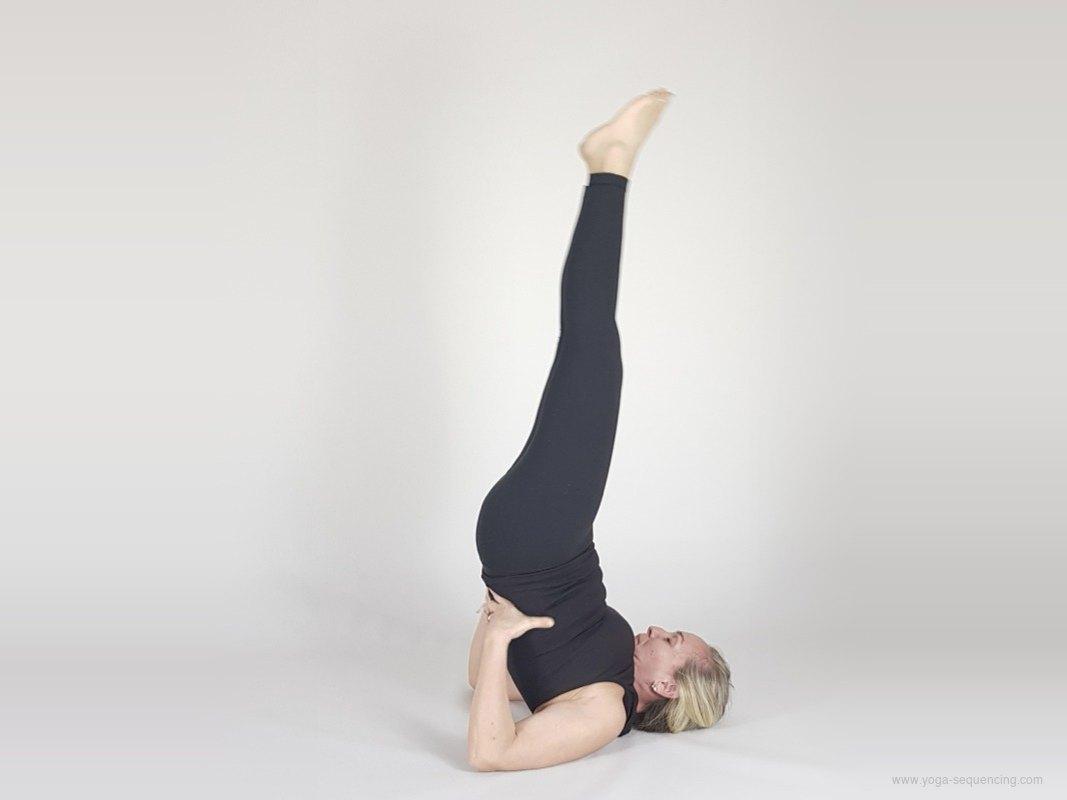
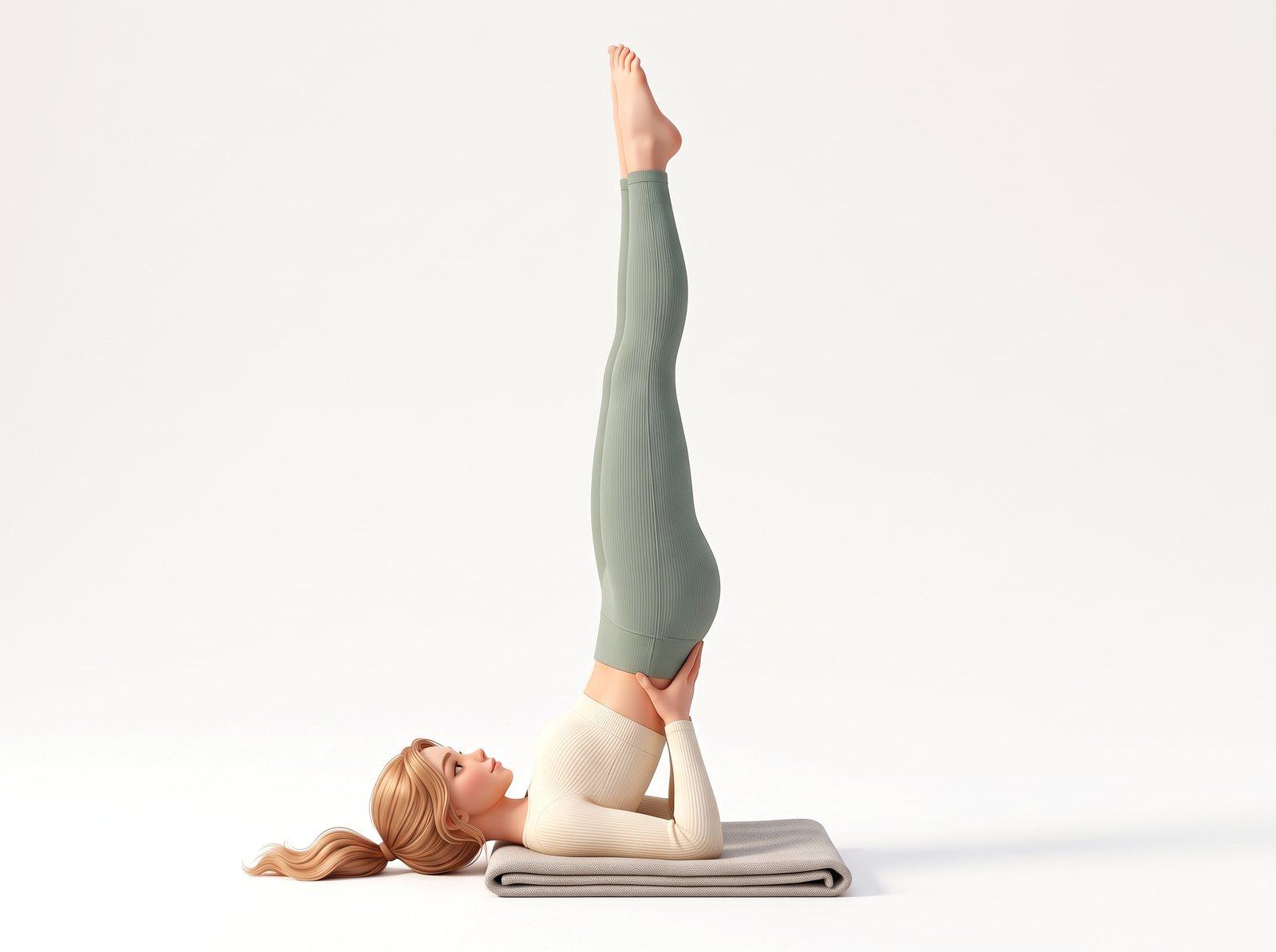
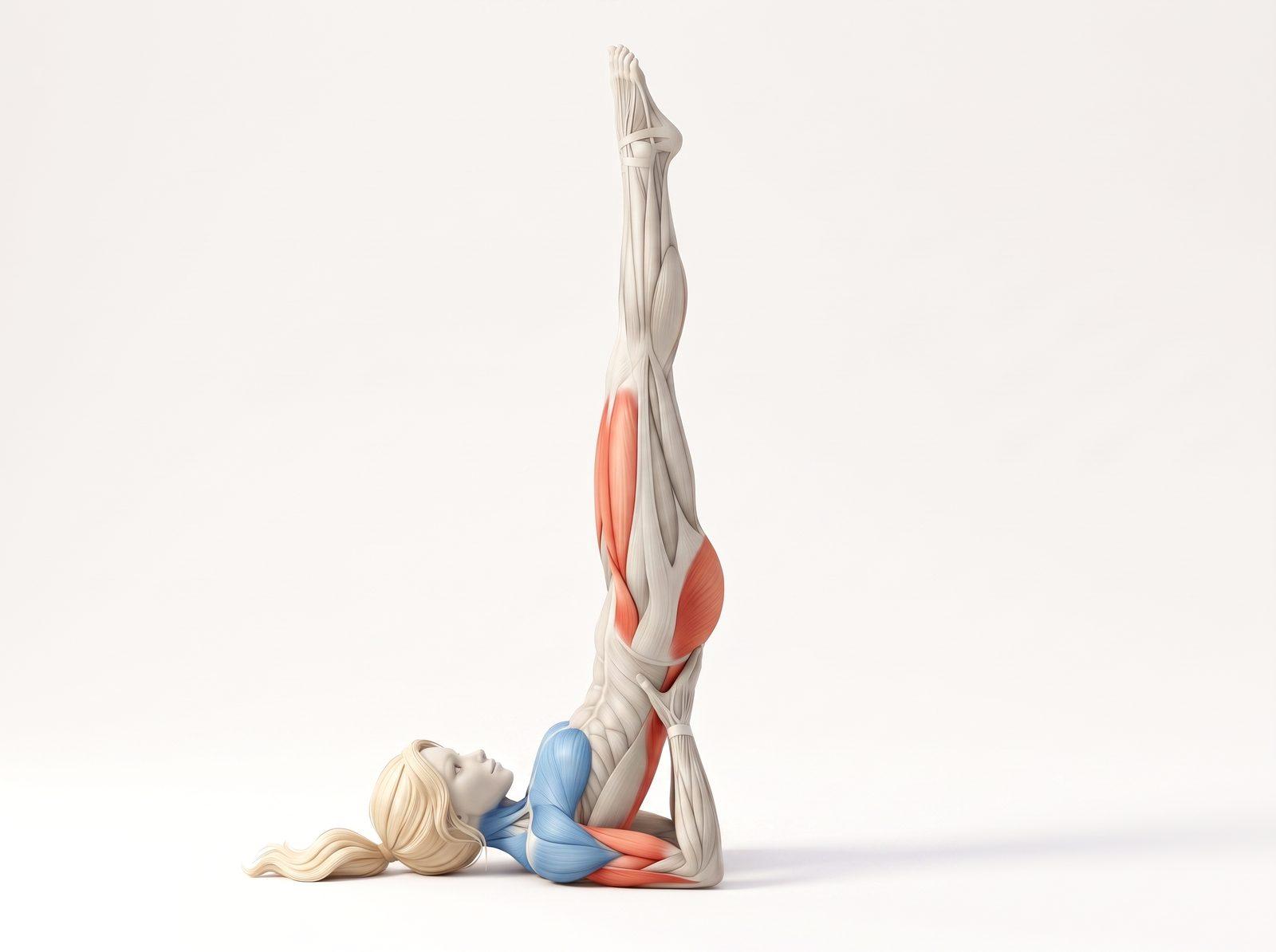
Working: Glutes, Back muscles, Quadriceps, Triceps
Stretching: Back of the neck, Chest and front of the shoulders
Full muscle breakdown ↓About This Pose
This classic inversion promotes circulation and spinal alignment. Known as the queen of yoga poses, Shoulderstand calms the nervous system while supporting the spine with the hands.
Muscles Worked in Supported Shoulderstand
Supported Shoulderstand balances the body vertically on the shoulders with the hands supporting the back. The glutes, back muscles and quadriceps lift the body straight up, while the neck and upper back are flexed and stretched under the load.
Working
- Glutes (gluteus maximus)
- Back muscles (erector spinae)
- Quadriceps (quadriceps femoris)
- Triceps (triceps brachii)
Stretching
- Back of the neck (upper trapezius, neck extensors)
- Chest and front of the shoulders (pectoralis major, anterior deltoids)
Also holding you steady: your core, rotator cuff, inner thighs, which keep the legs together and Hamstrings.
Variations and joint actions
- Blankets under the shoulders: Two or three folded blankets under the shoulders, head on the mat, keep the neck curve and are standard practice. Never turn the head while up.
- Half Shoulderstand: Hips lower and legs angled over the face (Viparita Karani shape) puts far less load on the neck.
- Legs Up the Wall: For neck injury, high blood pressure, glaucoma or pregnancy, use Legs Up the Wall instead.
- Neck strong flexion, chin toward the chest
- Shoulders extension, upper arms on the mat
- Elbows flexion, hands supporting the back
- Spine vertical, close to neutral
- Hips and knees extension, legs straight up
- Ankles plantar flexion
Roles are qualitative — this section does not measure how hard any muscle works. References: Leslie Kaminoff & Amy Matthews, Yoga Anatomy (Human Kinetics); Ray Long, The Key Muscles of Yoga (Bandha Yoga).
Step-by-Step Instructions
- 1
Lie on back with arms by sides
- 2
Lift legs and hips overhead
- 3
Support lower back with hands
- 4
Extend legs toward ceiling
- 5
Align body vertically
- 6
Hold with steady breath
Alignment Cues
- Lengthen legs actively
- Breathe deeply and evenly
- Support back with hands
- Keep neck relaxed
Benefits
- Improves circulation
- Supports spinal alignment
- Calms nervous system
- Stimulates thyroid
- Relieves fatigue
Modifications
- Use blanket under shoulders
- Use wall support
Variations
- One leg lowered
- Lotus legs
Cautions & Contraindications
Cautions
- Avoid neck pressure
- Support back firmly
Avoid this pose if you have:
- Neck injury
- Glaucoma
- High blood pressure
Quick Facts
Primary Focus
spineSecondary Focus
Suggested Hold
30 seconds
Tags
Equipment
Related Poses
Sequences with this pose
Teacher-written sequences that use Supported Shoulderstand.
Ashtanga Yoga Primary Series Sequence
90 min · 16 poses · advanced
Advanced Yoga Sequence
75 min · 16 poses · advanced