
Seated Spinal Twist
Ardha Matsyendrasana
Working: Sides of the waist, Back muscles
Stretching: Crossed-leg outer hip, Waist
Full muscle breakdown ↓About This Pose
Seated Spinal Twist (Ardha Matsyendrasana) is a fundamental twisting pose that improves spinal mobility while massaging the abdominal organs. This grounding twist detoxifies the body, aids digestion, and releases tension stored in the back muscles. The seated position provides a stable base for safe rotation while the twist stimulates the spine and internal organs. Regular practice maintains spinal health and supports overall digestive wellness.
Muscles Worked in Seated Spinal Twist
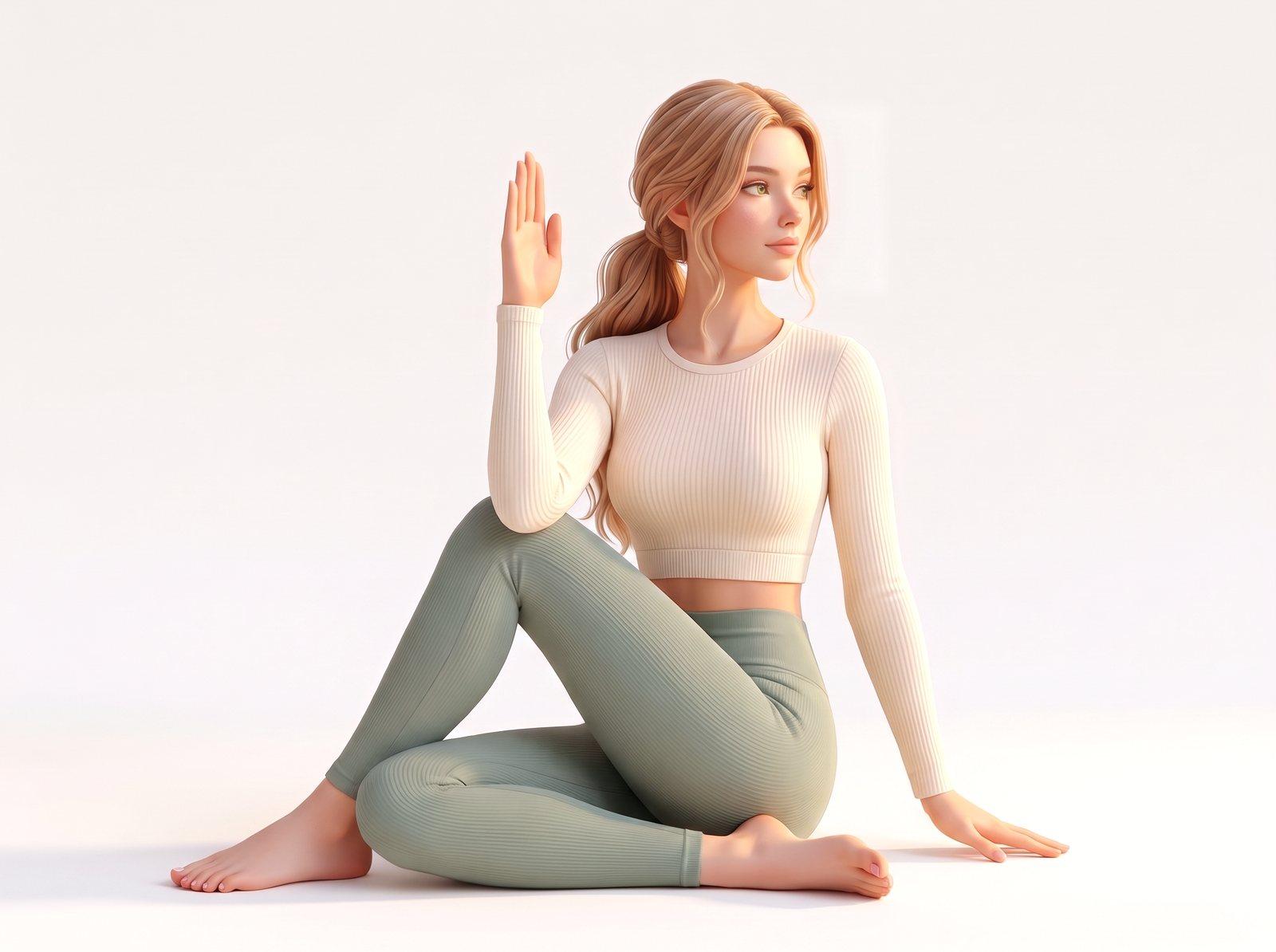
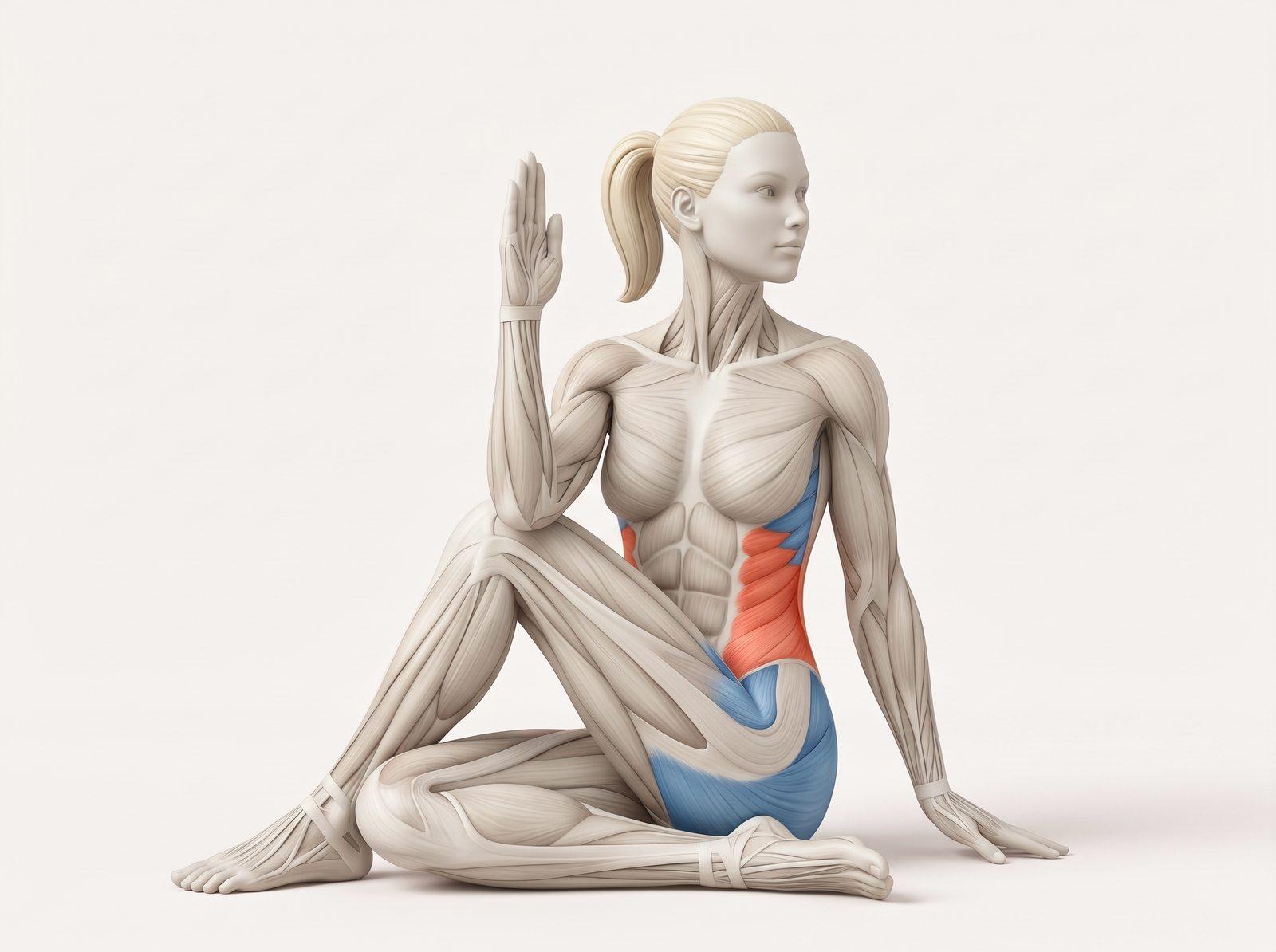
The photo shows the leg shape of Half Lord of the Fishes (Ardha Matsyendrasana): one leg folded on the floor and the other knee up with the foot crossed over to the outside of the folded thigh. The same-side arm rests on the raised knee with the hand lifted, the other hand is on the floor behind, and the torso turns only slightly while the head looks away from the raised knee. The outer hip of the raised leg stretches, and the obliques and back muscles hold a mild rotation.
Working
- Sides of the waist (obliques)
- Back muscles (erector spinae)
Stretching
- Crossed-leg outer hip (piriformis, gluteus medius, gluteus maximus)
- Waist (obliques, lengthening as you turn)
Also holding you steady: your core, back arm, which props you upright and rotator cuff.
Variations and joint actions
- Hug the knee and turn toward it: The classic twist hugs the raised knee with the opposite arm and turns toward it for a deeper rotation.
- Bottom leg straight: Keeping the lower leg long is easier for tight knees and hips.
- Crossed-leg hip deep flexion and adduction, foot outside the opposite thigh
- Folded-leg hip flexion and external rotation, shin on the floor
- Knees deep flexion
- Spine long, mild rotation
- Neck rotation, head turned to the side
Roles are qualitative — this section does not measure how hard any muscle works. References: Leslie Kaminoff & Amy Matthews, Yoga Anatomy (Human Kinetics); Ray Long, The Key Muscles of Yoga (Bandha Yoga).
Step-by-Step Instructions
- 1
Sit tall with legs extended forward
- 2
Bend one knee and place foot outside opposite thigh
- 3
Inhale and lengthen the spine upward
- 4
Exhale and twist toward the bent knee
- 5
Place opposite elbow outside the bent knee
- 6
Keep both sitting bones grounded as you breathe
Alignment Cues
- Rotate from navel up through spine
- Keep both sitting bones grounded
- Lengthen spine before twisting
- Turn head last to complete twist
Benefits
- Improves spinal rotation and mobility
- Massages and stimulates digestive organs
- Releases tension in back muscles
- Detoxifies through gentle compression
- Enhances posture awareness
- Calms the nervous system
Modifications
- Use a strap for support
- Twist less deeply
Variations
- Simple seated twist
Cautions & Contraindications
Cautions
- Avoid forcing the twist
- Lengthen spine first
Avoid this pose if you have:
- Severe spinal issues
- Recent surgery
Quick Facts
Primary Focus
spineSecondary Focus
Suggested Hold
30 seconds
Tags
Equipment
Related Poses
Sequences with this pose
Teacher-written sequences that use Seated Spinal Twist.
A hatha sequence built around the holds, not the transitions
75 min · 18 poses · all-levels
Ashtanga Yoga Primary Series Sequence
90 min · 16 poses · advanced
Gentle Yoga Sequence
45 min · 17 poses · beginner