Seal Pose
Bhujangasana Variation
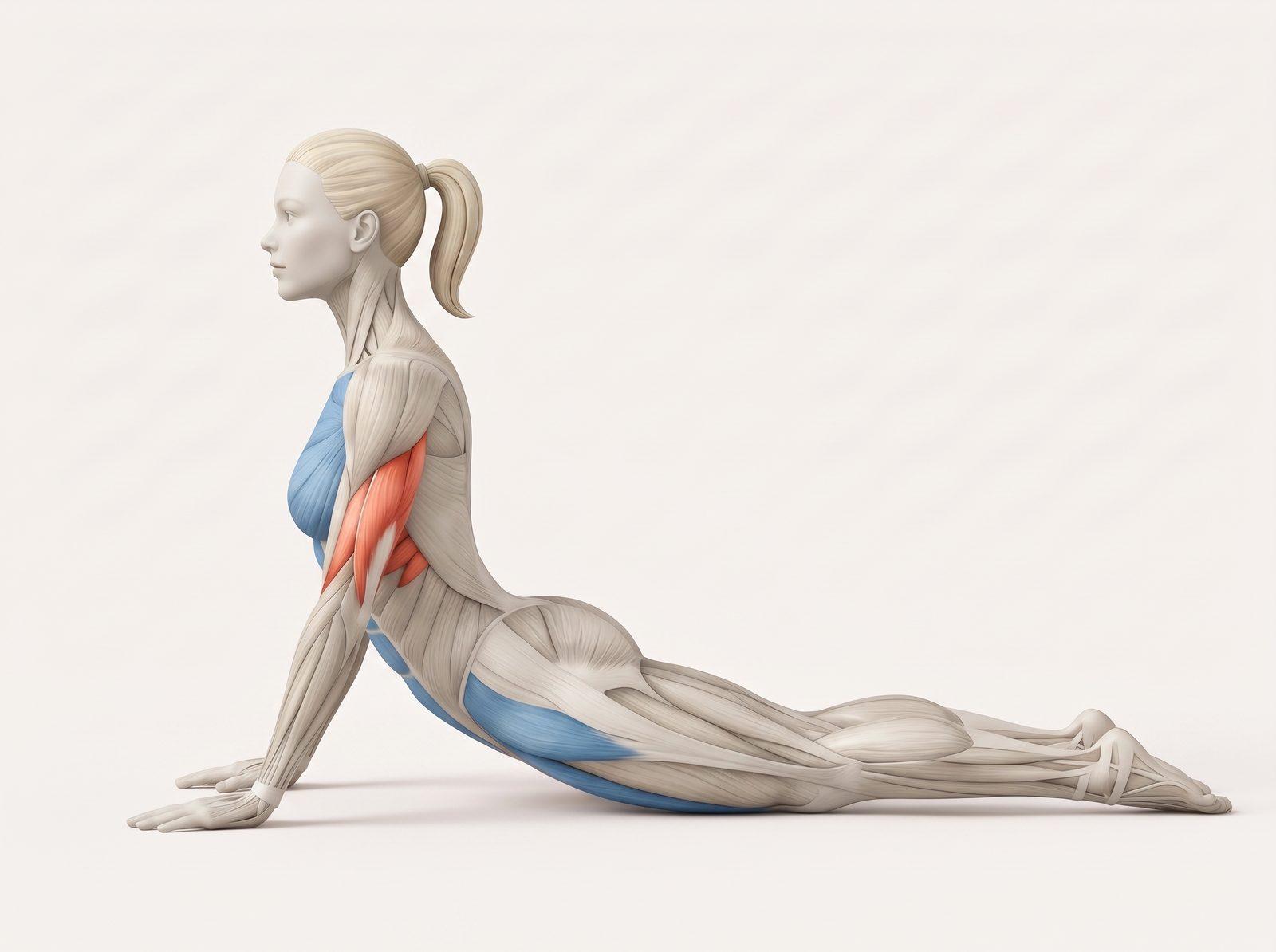
Working: Triceps, Serratus anterior
Stretching: Abdominals, Hip flexors, Chest
Full muscle breakdown ↓About This Pose
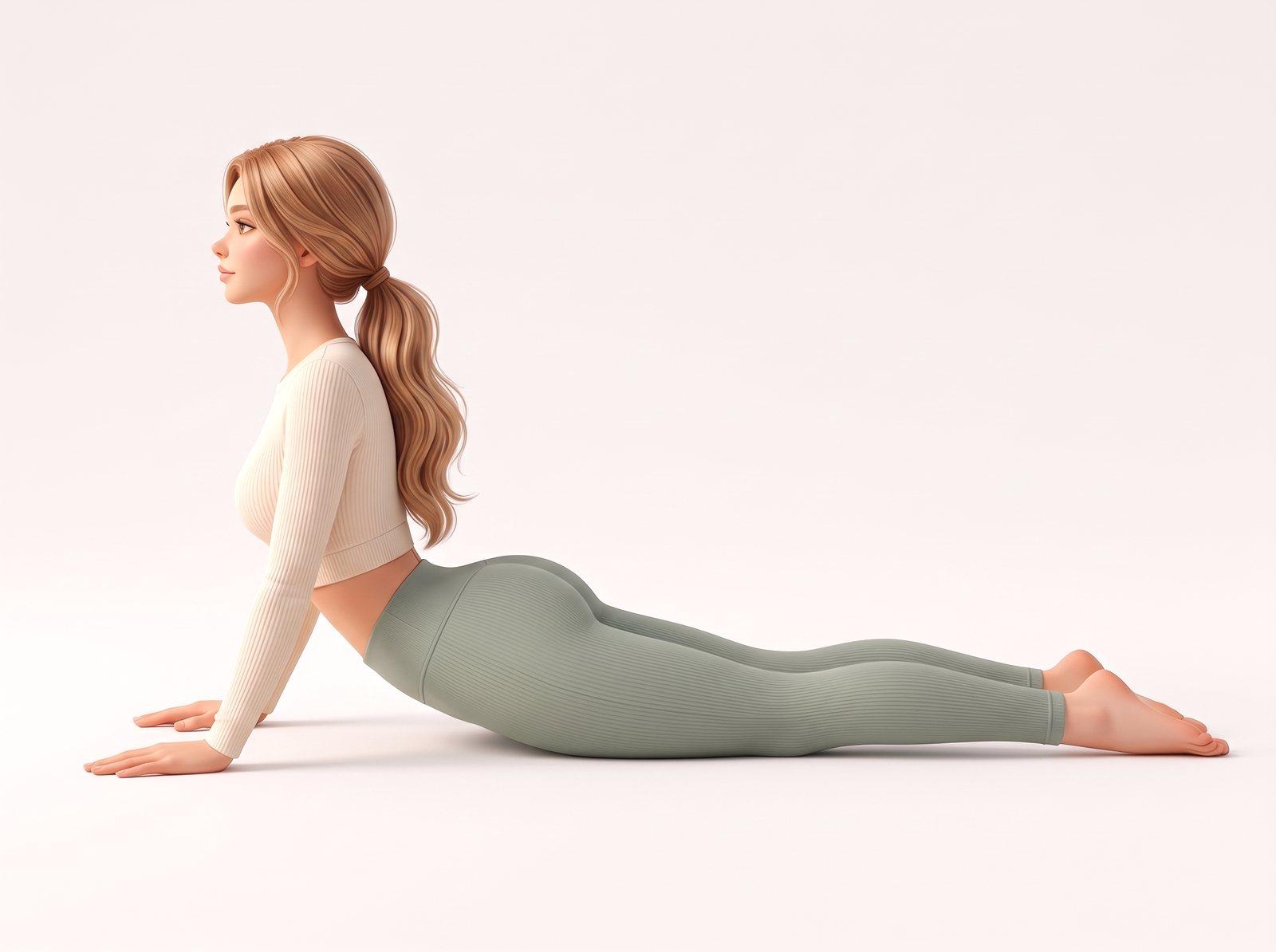
Seal Pose (Bhujangasana variation) extends Sphinx by straightening the arms, creating a deeper backbend while maintaining passive relaxation in the legs and glutes. Unlike Cobra, which engages the back muscles actively, Seal allows gravity to create the extension. This yin-style approach is excellent for increasing spinal flexibility over extended holds.
Muscles Worked in Seal Pose
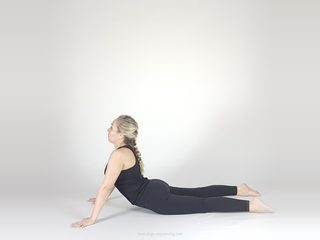
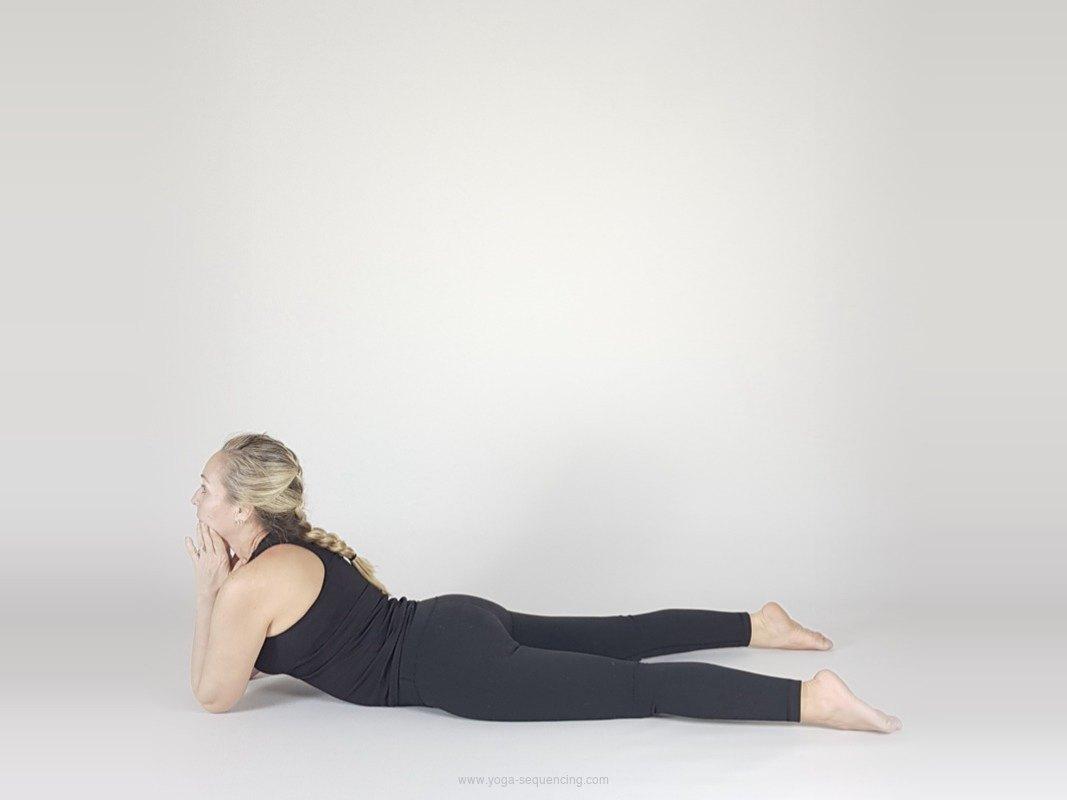
The photo shows Seal Pose: lying on the belly with the legs long and the arms straight, the hands placed forward of the shoulders and turned out, lifting the chest into a supported backbend. It is a yin-style backbend: the lower back is compressed while the abdominals and hip flexors lengthen.
Working
- Triceps (triceps brachii)
- Serratus anterior
Stretching
- Abdominals (rectus abdominis)
- Hip flexors (iliopsoas, rectus femoris)
- Chest (pectoralis major)
Also holding you steady: your rotator cuff and forearm muscles, which steady the wrists.
Variations and joint actions
- Sphinx: Coming down onto the forearms makes the backbend much milder.
- Hands farther forward: Walking the hands forward lowers the chest and eases the lower back.
- Spine deep extension, mostly in the lower back
- Elbows extension, arms straight
- Shoulders flexion, hands ahead of the shoulders
- Wrists extension, fingers turned out
- Hips extension, front of the pelvis on the floor
Roles are qualitative — this section does not measure how hard any muscle works. References: Leslie Kaminoff & Amy Matthews, Yoga Anatomy (Human Kinetics); Ray Long, The Key Muscles of Yoga (Bandha Yoga).
Step-by-Step Instructions
- 1
Begin in Sphinx Pose
- 2
Walk hands slightly forward
- 3
Straighten arms more
- 4
Lift chest higher
- 5
Keep pelvis grounded
- 6
Hold with steady breath
Alignment Cues
- Soften shoulders down
- Steady breath throughout
- Keep arms slightly bent
- Relax lower back
Benefits
- Deepens spinal extension
- Opens chest intensely
- Allows passive relaxation
- Increases flexibility
- Suitable for long holds
- Yin-style backbend
Modifications
- Reduce arm extension
- Stay in Sphinx
Variations
- With bent elbows
- With head tilted back
Cautions & Contraindications
Cautions
- Do not lock elbows
- Listen to your body
Avoid this pose if you have:
- Back injury
- Wrist pain
Quick Facts
Primary Focus
spineSecondary Focus
Suggested Hold
30 seconds
Tags
Equipment