One-Leg Wheel Pose
Eka Pada Urdhva Dhanurasana
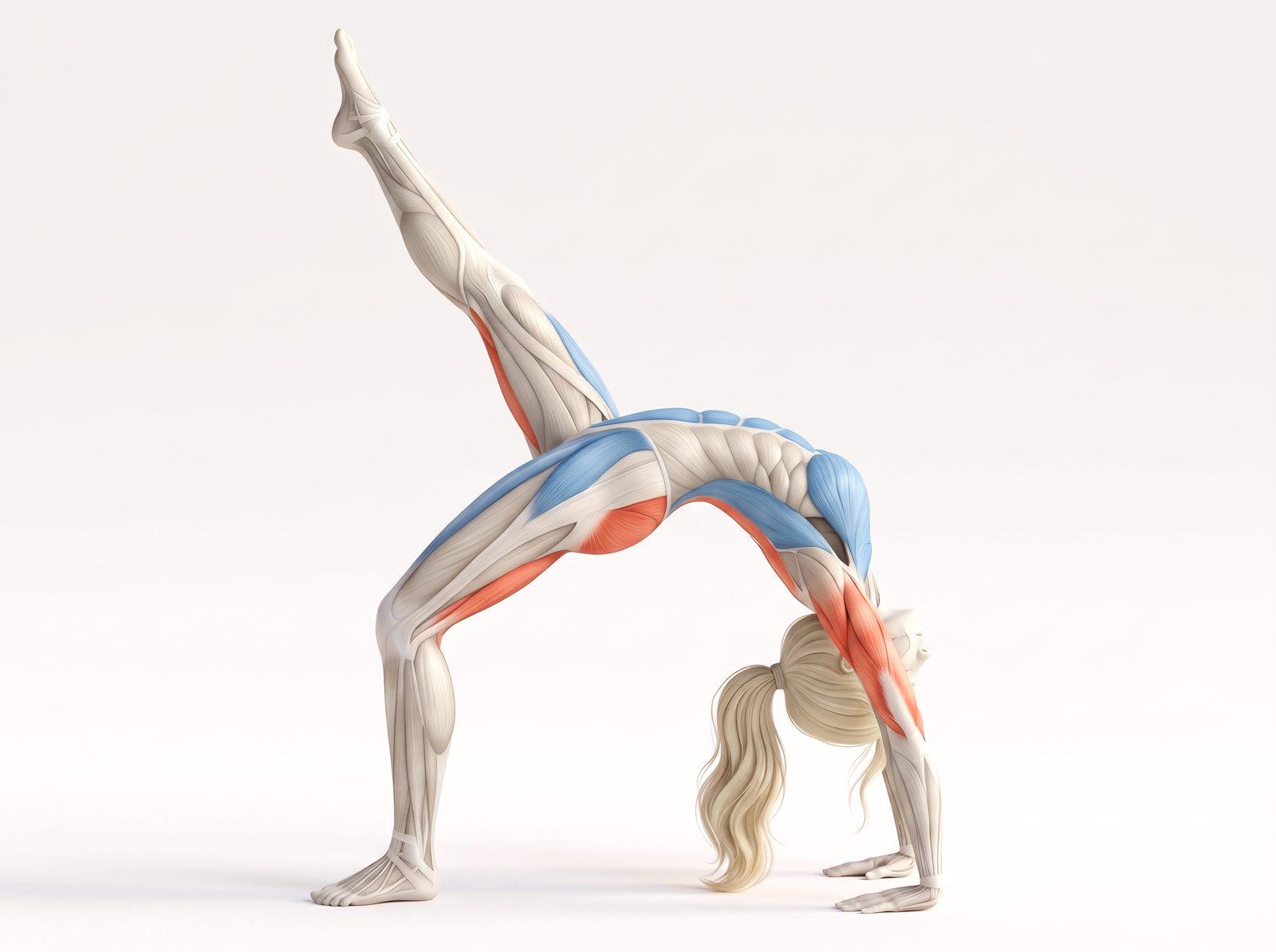
Working: Glutes, Back muscles, Triceps, Standing-leg hamstrings
Stretching: Hip flexors, Abdominals, Chest, Lats
Full muscle breakdown ↓About This Pose
One-Leg Wheel Pose extends the already challenging Urdhva Dhanurasana by lifting one leg toward the ceiling. This variation dramatically increases the balance challenge while deepening the hip flexor stretch on the standing leg. It requires significant back flexibility, arm strength, and proprioceptive awareness to maintain stability.
Muscles Worked in One-Leg Wheel Pose
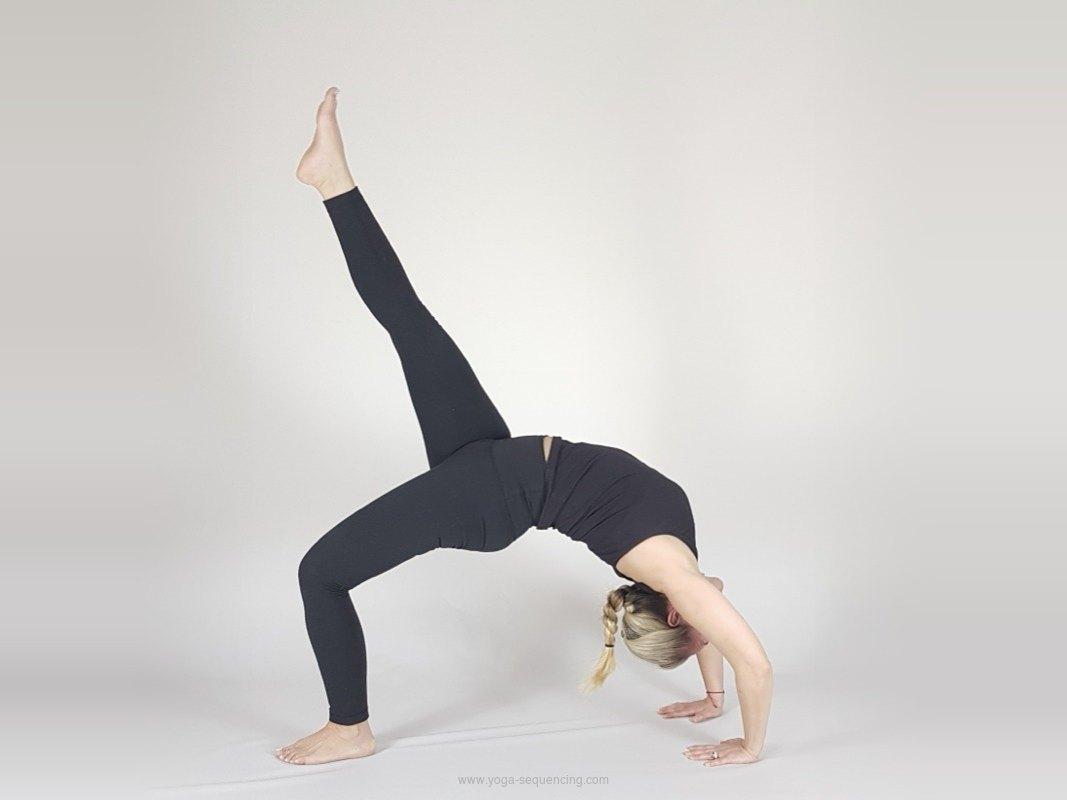
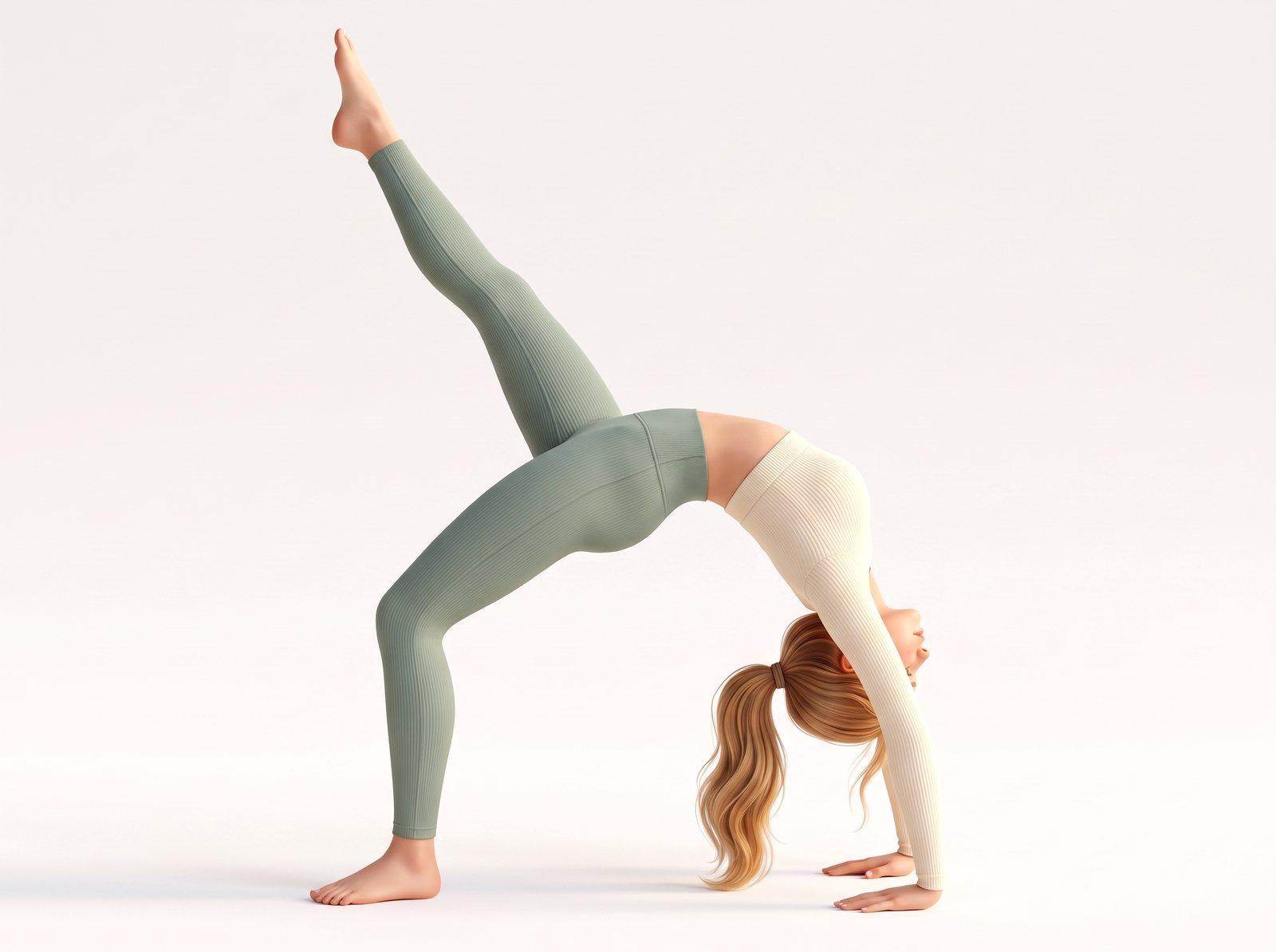
The photo shows One-Legged Wheel (Eka Pada Urdhva Dhanurasana): a full backbend on the hands and one foot, with the other leg extended straight up toward the ceiling and the head hanging between the arms. The glutes, back muscles and triceps lift the arch while the hip flexors, abdominals and chest are strongly stretched.
Working
- Glutes (gluteus maximus)
- Back muscles (erector spinae)
- Triceps (triceps brachii)
- Standing-leg hamstrings (biceps femoris, semitendinosus, semimembranosus)
Stretching
- Hip flexors (iliopsoas, rectus femoris)
- Abdominals (rectus abdominis, transversus abdominis)
- Chest (pectoralis major)
- Lats (latissimus dorsi)
Also holding you steady: your rotator cuff, Serratus anterior, hip stabilisers (gluteus medius) and the muscles of your feet and ankles.
Variations and joint actions
- Both feet down: Staying in two-footed Wheel is the step before lifting a leg.
- Bent lifted knee: Drawing the lifted knee in before straightening the leg keeps the balance easier.
- Spine full extension
- Shoulders full flexion, arms overhead
- Elbows extension
- Standing hip extension, knee bent over the foot
- Lifted hip flexion, leg toward vertical
Roles are qualitative — this section does not measure how hard any muscle works. References: Leslie Kaminoff & Amy Matthews, Yoga Anatomy (Human Kinetics); Ray Long, The Key Muscles of Yoga (Bandha Yoga).
Step-by-Step Instructions
- 1
Establish a strong Full Wheel Pose
- 2
Shift weight evenly to both hands
- 3
Transfer weight to the right foot
- 4
Slowly lift the left leg toward the ceiling
- 5
Keep hips level and parallel
- 6
Point or flex the lifted foot
- 7
Hold for 3-5 breaths, then switch sides
Alignment Cues
- Press evenly through both hands
- Keep standing leg strong
- Engage core for stability
- Maintain level hips
Benefits
- Deepens hip flexor stretch
- Challenges balance intensely
- Requires full body integration
- Demonstrates advanced control
- Increases backbend depth
- Tests proprioception
Modifications
- Keep lifted foot lower
- Use a wall for support
Variations
- Bend the lifted knee
Cautions & Contraindications
Cautions
- Keep hips level when lifting leg
- Avoid neck compression
Avoid this pose if you have:
- Back injury
- Hip instability
- Shoulder injury
Quick Facts
Primary Focus
hipsSecondary Focus
Suggested Hold
20 seconds
Tags
Equipment