Eagle Pose Forward Fold
Garudasana Uttanasana
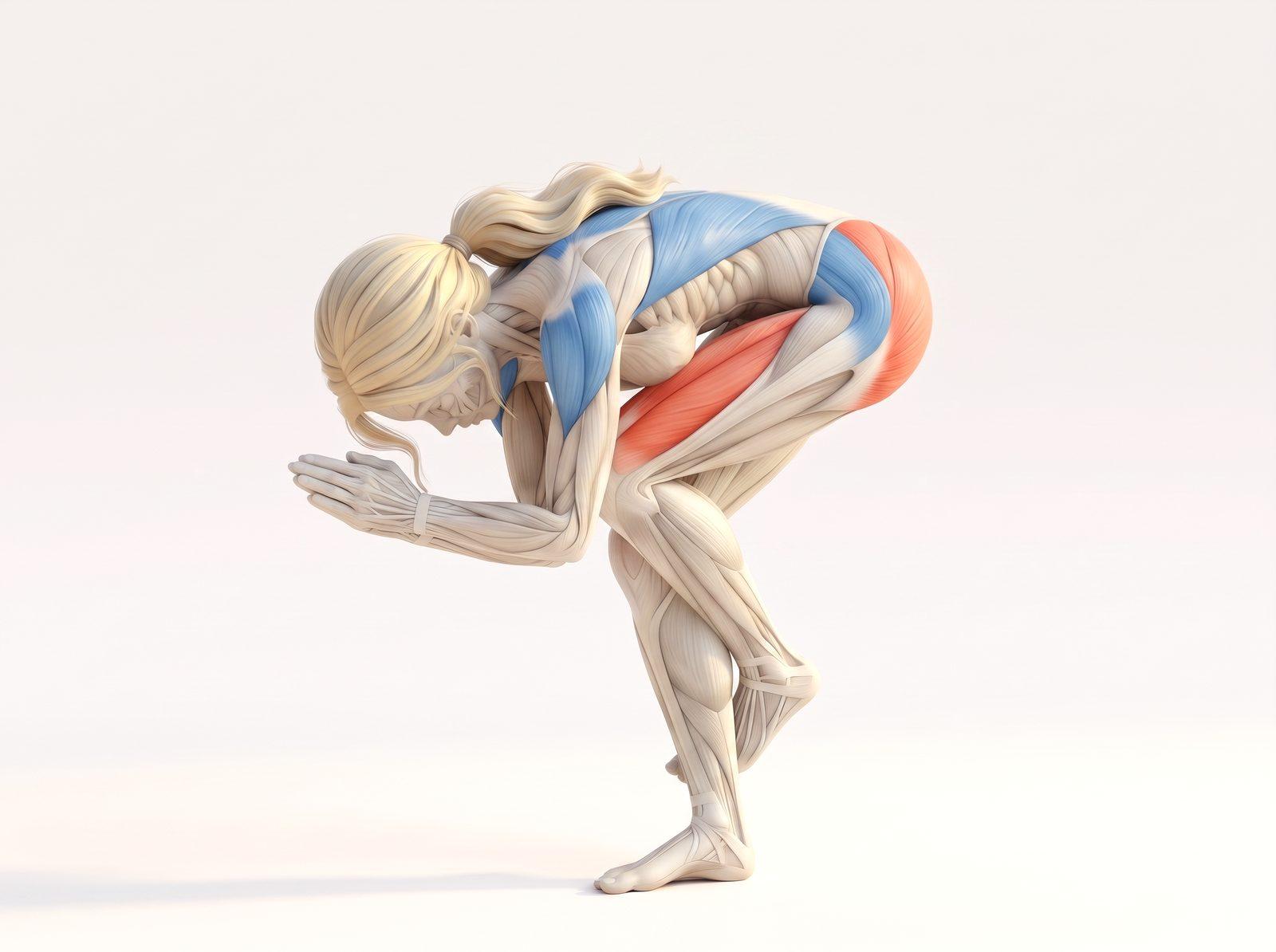
Working: Standing-leg quadriceps, Standing-leg glutes, Standing-leg calf, Inner thighs
Stretching: Top-leg outer hip, Back muscles
Full muscle breakdown ↓About This Pose
Eagle Pose Forward Fold (Garudasana Uttanasana) combines the wrapping complexity of Eagle Pose with the deep release of a standing forward fold. This advanced variation intensifies the stretch in the outer hips, IT band, and upper back while adding a balance challenge as the torso tips forward. The pose requires maintaining the integrity of both the arm and leg wraps while folding, which demands concentration and body awareness. The forward fold component encourages surrender and introspection, while the Eagle wraps create compression that releases when unwinding. This pose is particularly beneficial for those with tight outer hips and shoulders, offering a multi-dimensional stretch that addresses common areas of tension.
Muscles Worked in Eagle Pose Forward Fold
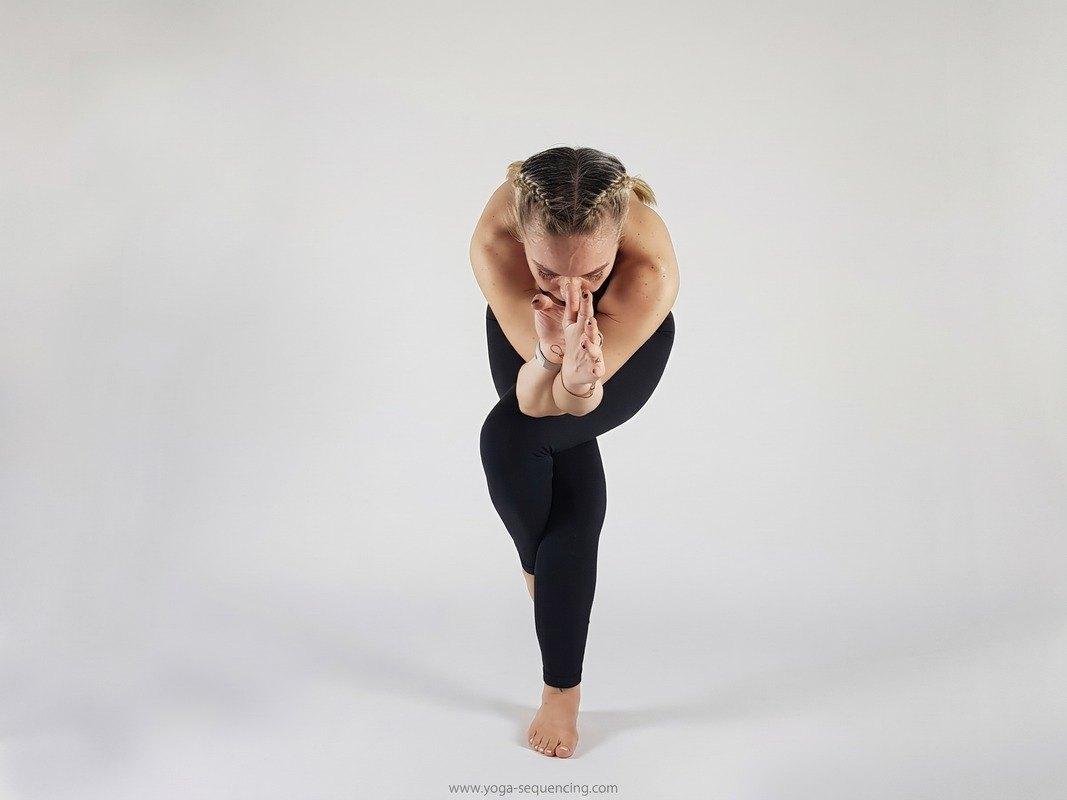
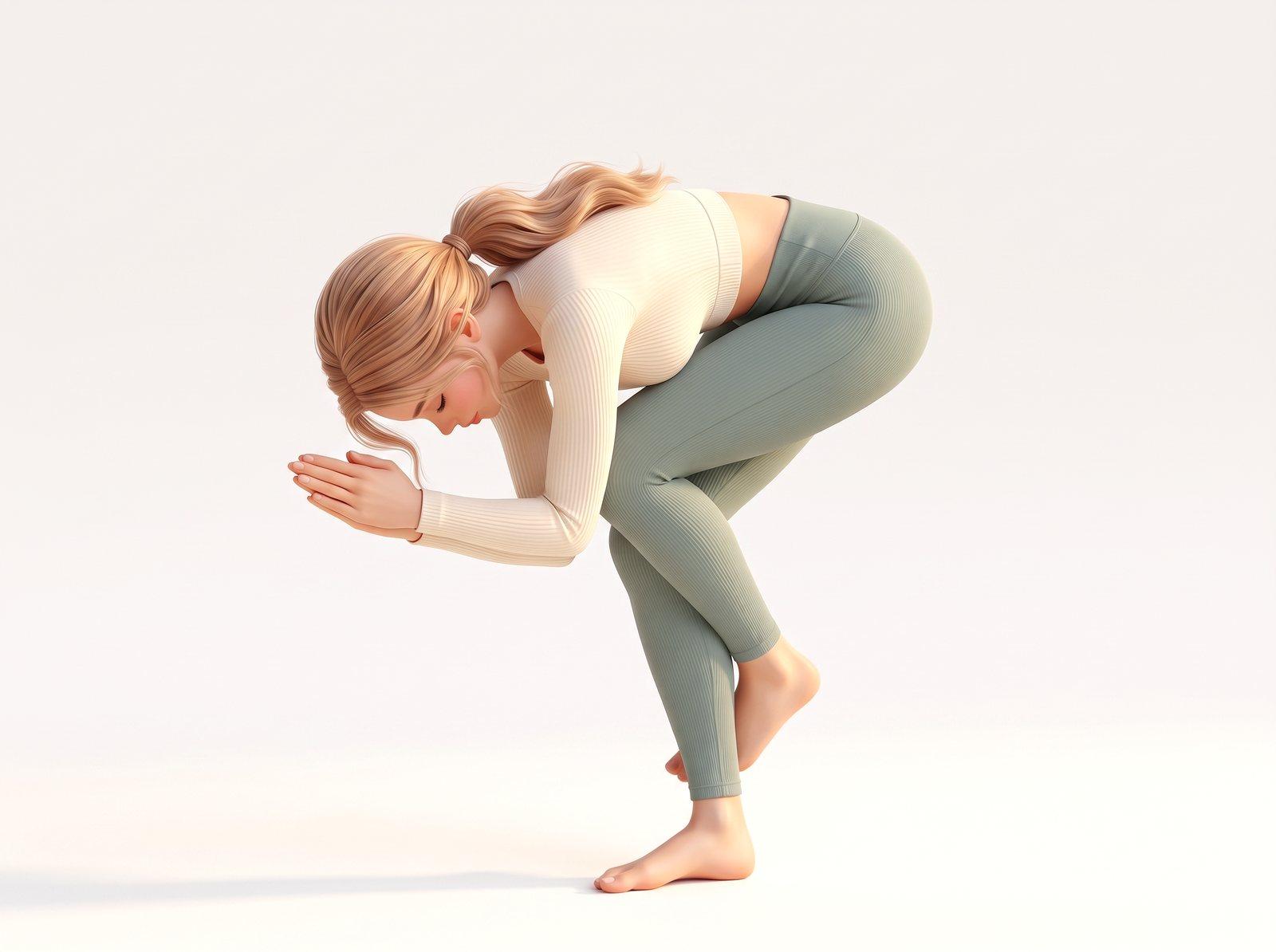
Eagle Pose Forward Fold in the photo balances on one bent leg with the other leg crossed over the standing thigh and its foot tucked behind the standing calf, the torso folding forward over the thighs with the palms together and the head bowed. The standing-leg quadriceps, glutes and calf work and the inner thighs squeeze, while the top-leg outer hip and the back muscles stretch.
Working
- Standing-leg quadriceps (quadriceps femoris)
- Standing-leg glutes (gluteus maximus)
- Standing-leg calf (gastrocnemius, soleus)
- Inner thighs (adductors, squeezing the legs together)
Stretching
- Top-leg outer hip (piriformis, deep hip rotators, gluteus medius)
- Back muscles (erector spinae)
Also holding you steady: your standing-leg hip stabilisers (gluteus medius), the muscles of the standing foot and ankle and core.
Variations and joint actions
- Eagle arms: Wrapping the arms one under the other adds a stretch across the upper back and rear shoulders.
- Toes on the floor: Resting the top-leg toes on the floor instead of hooking the calf makes the balance easier.
- Standing hip deep flexion
- Standing knee flexion
- Standing ankle dorsiflexion
- Top hip flexion, adduction and internal rotation, thigh crossed over
- Top knee flexion, foot hooked behind the standing calf
- Spine flexion
- Shoulders flexion, arms reaching forward, palms together
- Elbows slight flexion
Roles are qualitative — this section does not measure how hard any muscle works. References: Leslie Kaminoff & Amy Matthews, Yoga Anatomy (Human Kinetics); Ray Long, The Key Muscles of Yoga (Bandha Yoga).
Step-by-Step Instructions
- 1
Begin in Mountain Pose with feet together
- 2
Shift weight onto the left foot and bend both knees
- 3
Cross the right thigh over the left, hooking the foot if possible
- 4
Cross the left arm over the right at the elbows
- 5
Wrap the forearms and bring palms together
- 6
Lift elbows to shoulder height momentarily
- 7
On an exhale, begin to fold forward at the hips
- 8
Bring the wrapped elbows toward or past the wrapped knee
- 9
Keep the spine long as you fold—avoid rounding excessively
- 10
Hold for 5-8 breaths, breathing into the outer hip stretch
- 11
Inhale to slowly rise back up
- 12
Unwind and repeat on the second side
Alignment Cues
- Maintain the wraps tightly throughout the fold
- Keep the standing knee bent and tracking over the ankle
- Hinge at the hips rather than rounding the spine
- Squeeze thighs and arms together for stability
- Keep weight centered over the standing foot
- Relax the neck and let the head hang naturally
Benefits
- Deeply stretches the outer hips, IT band, and glutes
- Intensifies the shoulder and upper back stretch
- Improves balance and proprioception
- Releases tension in the neck and shoulders
- Calms the nervous system through forward folding
- Strengthens the standing leg and ankle
- Improves hip and shoulder mobility simultaneously
- Builds mental focus and body awareness
Modifications
- Keep the fold shallow if balance is challenging
- Touch fingertips to the floor or a block for support
- Skip the foot hook and keep toes on the floor
- Practice near a wall for balance assistance
- Wrap arms only if leg wrap is too challenging
Variations
- Flying Eagle: Extend the wrapped arms forward while folding
- Eagle Twist: Add a rotation toward the wrapped legs
- Pulsing Eagle Fold: Move in and out of the fold with breath
- Bound Eagle Fold: Release arm wrap and bind hands behind the back
Cautions & Contraindications
Cautions
- Master basic Eagle Pose before adding the fold
- Keep the standing knee soft—avoid locking
- Fold only as deep as balance allows
- Exit slowly to avoid dizziness
- Keep breathing steady throughout
Avoid this pose if you have:
- Knee injuries or instability
- Acute shoulder or rotator cuff injury
- Low blood pressure (forward fold may cause dizziness)
- Severe hip or IT band injuries
- Pregnancy
- Recent eye surgery or glaucoma
- Uncontrolled high blood pressure
Quick Facts
Primary Focus
hipsSecondary Focus
Suggested Hold
30 seconds
Tags
Equipment