Intense Forward Fold
Uttanasana
Stretching: Hamstrings, Calves, Back muscles
Full muscle breakdown ↓About This Pose
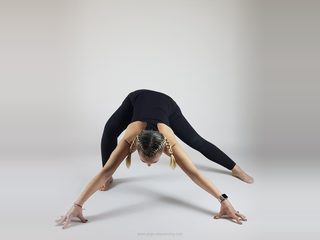
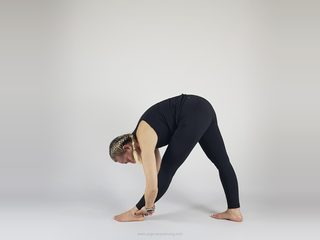
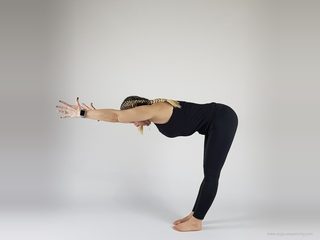
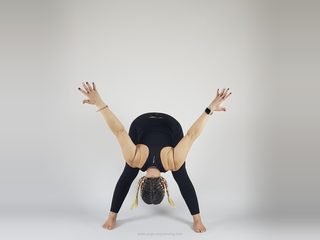
Intense Forward Fold represents the fullest, most advanced expression of Uttanasana, requiring exceptional hamstring flexibility and posterior chain openness. In this version, the torso folds completely onto the legs with minimal space between chest and thighs, legs are straight, and the practitioner may hold the backs of the ankles or calves. This level of flexibility develops over years of consistent practice and represents significant dedication to the craft. The pose demonstrates what's possible with patient, persistent effort while honoring that not all bodies will achieve this expression—and that's perfectly valid. The intense version offers profound release and stillness for those who can access it safely.
Muscles Worked in Intense Forward Fold
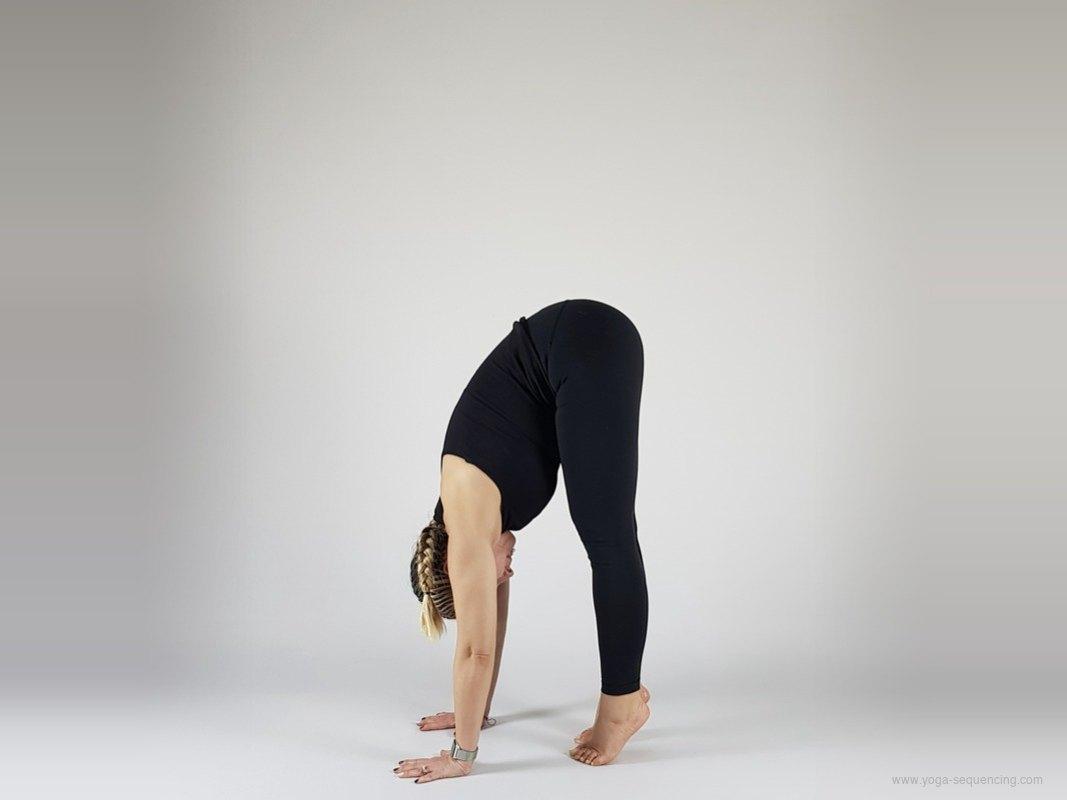
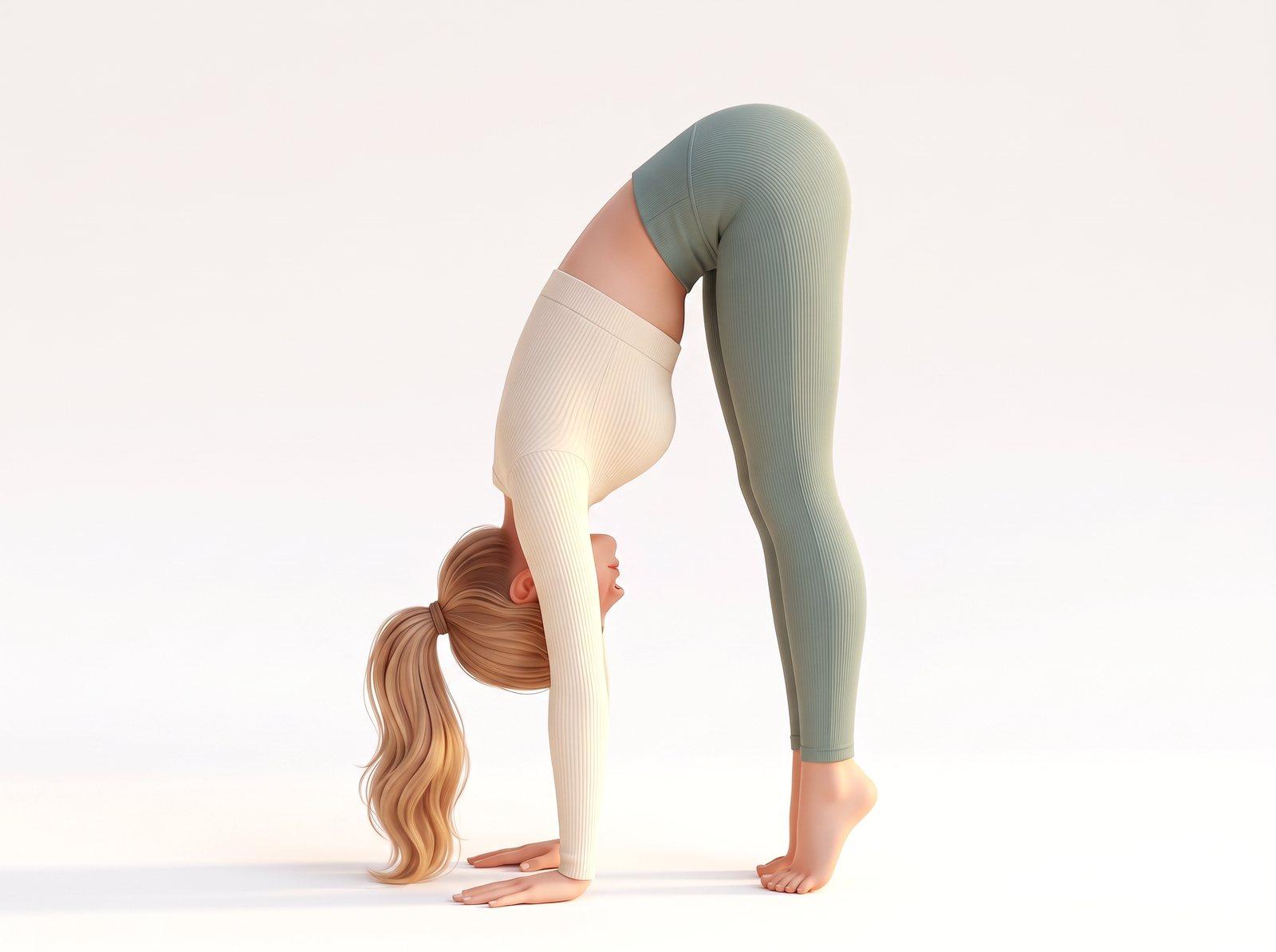
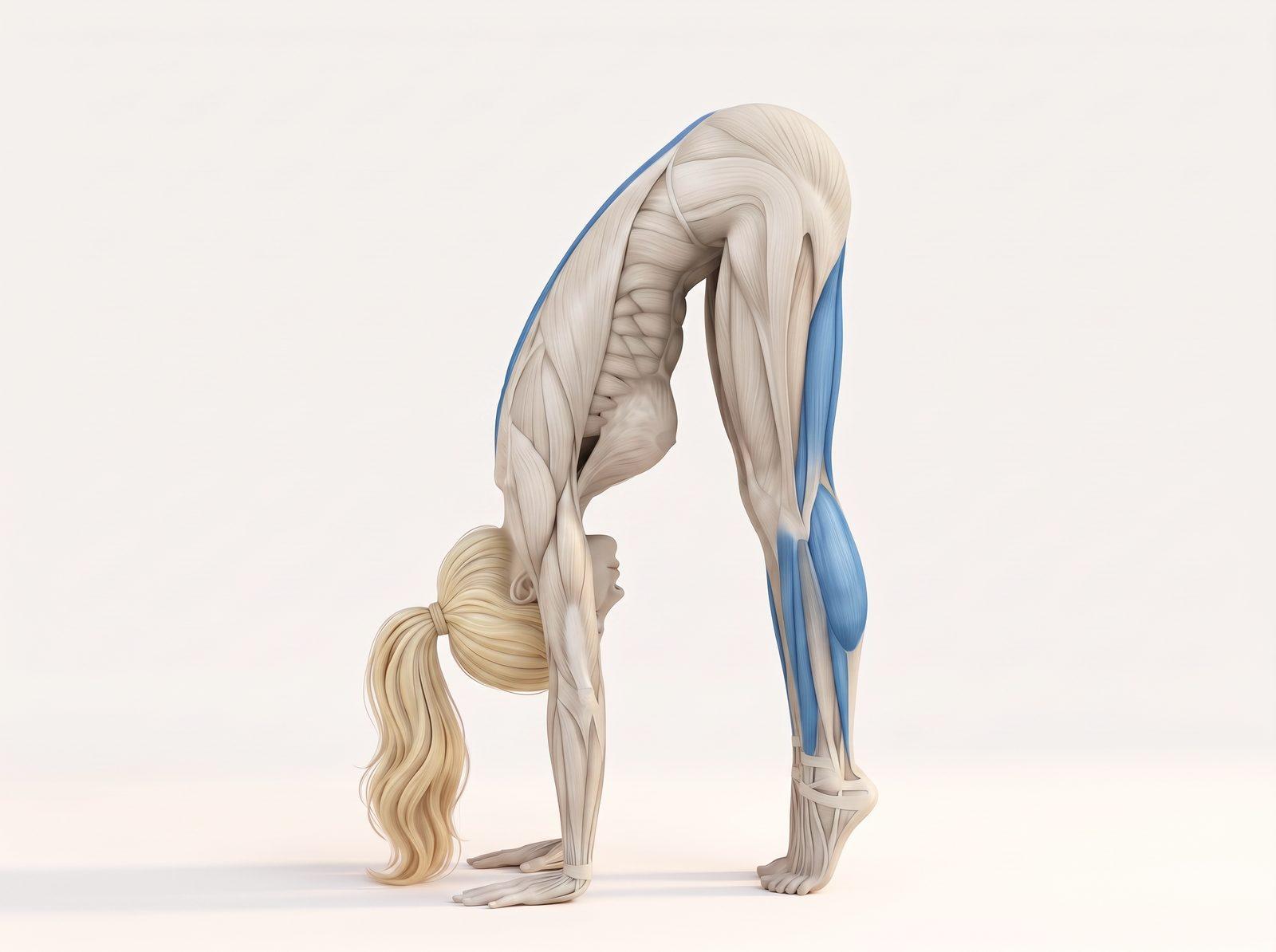
Standing Forward Fold (Uttanasana) with the feet hip-width, legs straight and the fingertips on the floor, head hanging. The hamstrings and calves stretch and the back muscles lengthen.
Working
Gravity does the folding; the quadriceps only work lightly to keep the knees straight.
Stretching
- Hamstrings (biceps femoris, semitendinosus, semimembranosus)
- Calves (gastrocnemius, soleus)
- Back muscles (erector spinae)
Also holding you steady: your quadriceps, keeping the knees straight and the muscles of your feet and ankles.
Variations and joint actions
- Bent knees: Bending the knees takes strain off the hamstrings and lower back.
- Hands on blocks: Blocks bring the floor closer when the hamstrings are tight.
- Hips deep flexion
- Knees extension
- Ankles dorsiflexion
- Spine flexion, head hanging
Roles are qualitative — this section does not measure how hard any muscle works. References: Leslie Kaminoff & Amy Matthews, Yoga Anatomy (Human Kinetics); Ray Long, The Key Muscles of Yoga (Bandha Yoga).
Step-by-Step Instructions
- 1
Warm up thoroughly before attempting
- 2
Begin in standard Forward Fold
- 3
Gradually deepen over many breaths
- 4
Straighten legs fully while maintaining fold
- 5
Draw torso completely onto thighs
- 6
Head rests against shins
- 7
Hands wrap around backs of ankles or calves
- 8
Use hands to gently draw deeper
- 9
Breathe steadily and slowly
- 10
Hold for desired duration
- 11
Rise very slowly, pausing at halfway
Alignment Cues
- Torso lies flat on thighs
- Legs are straight
- Head rests on shins
- Hands hold ankles or calves
- No strain—only ease in position
- Breath flows freely
- Complete surrender to gravity
Benefits
- Maximum posterior chain flexibility
- Deep nervous system calming
- Complete spinal decompression
- Intense hamstring lengthening
- Profound introspective state
- Full release of back tension
- Demonstrates years of practice
- Deep organ massage through compression
Modifications
- Practice deep fold with bent knees
- Use standard fold as preparation
- Work at your current edge
- Accept where your body is today
Variations
- Hands holding opposite elbows behind legs
- Fingers interlaced behind calves
- Padahastasana: hands under feet
- Feet together or hip-width
Cautions & Contraindications
Cautions
- Reserved for very flexible practitioners
- Never force this depth
- Requires extensive warm-up
- Exit extremely slowly
- Maintain steady breathing
Avoid this pose if you have:
- Any hamstring issues
- Back injuries
- Low blood pressure
- Pregnancy
- Eye conditions
- Vertigo
Quick Facts
Primary Focus
hamstringsSecondary Focus
Suggested Hold
60 seconds
Tags