Standing Front Leg Raise (Hands-Free)
Utthita Hasta Padangusthasana Variation
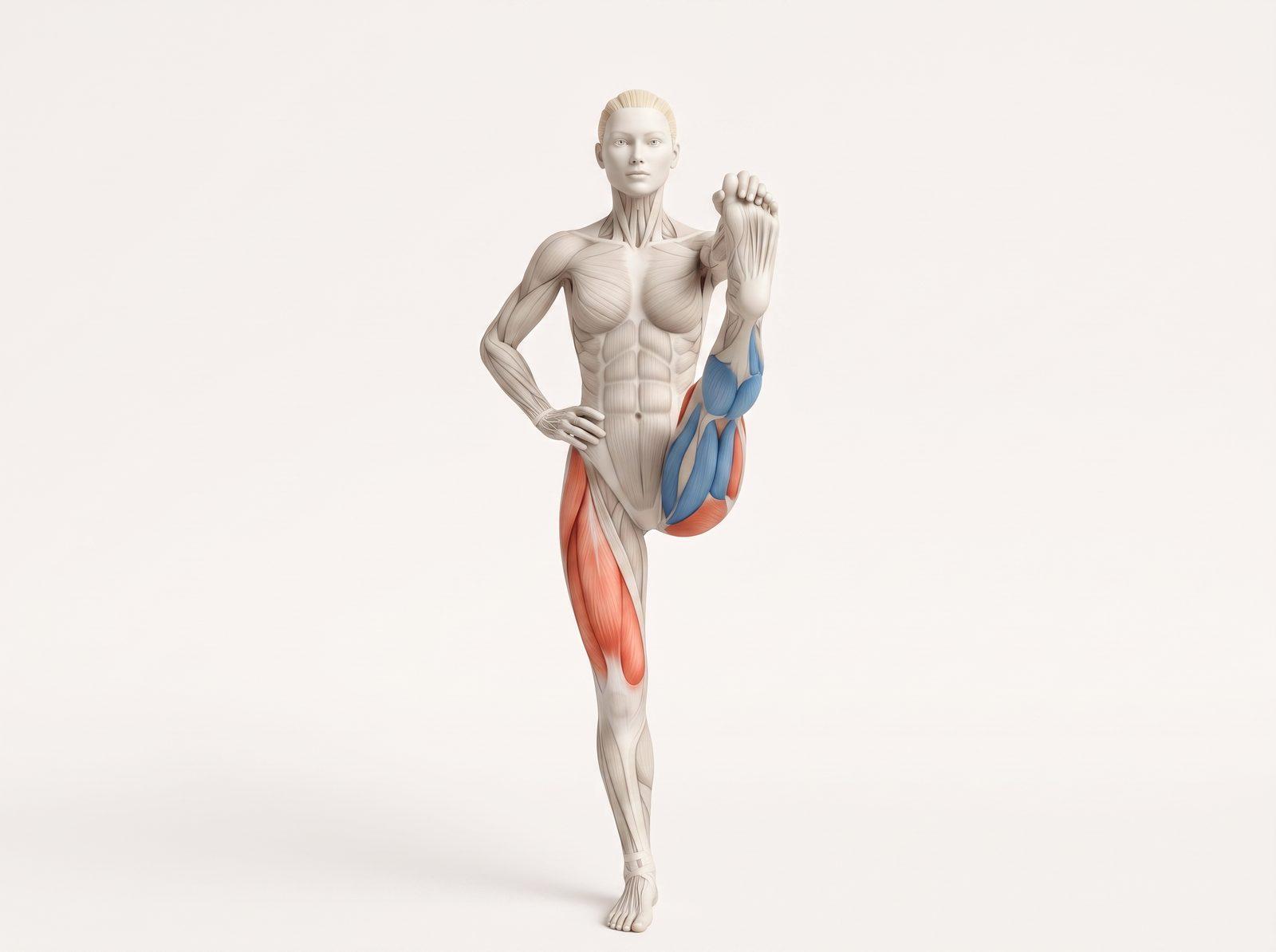
Working: Lifted-leg hip flexors, Lifted-leg quadriceps, Standing-leg hip stabilisers, Standing-leg quadriceps
Stretching: Lifted-leg hamstrings, Lifted-leg calf
Full muscle breakdown ↓About This Pose
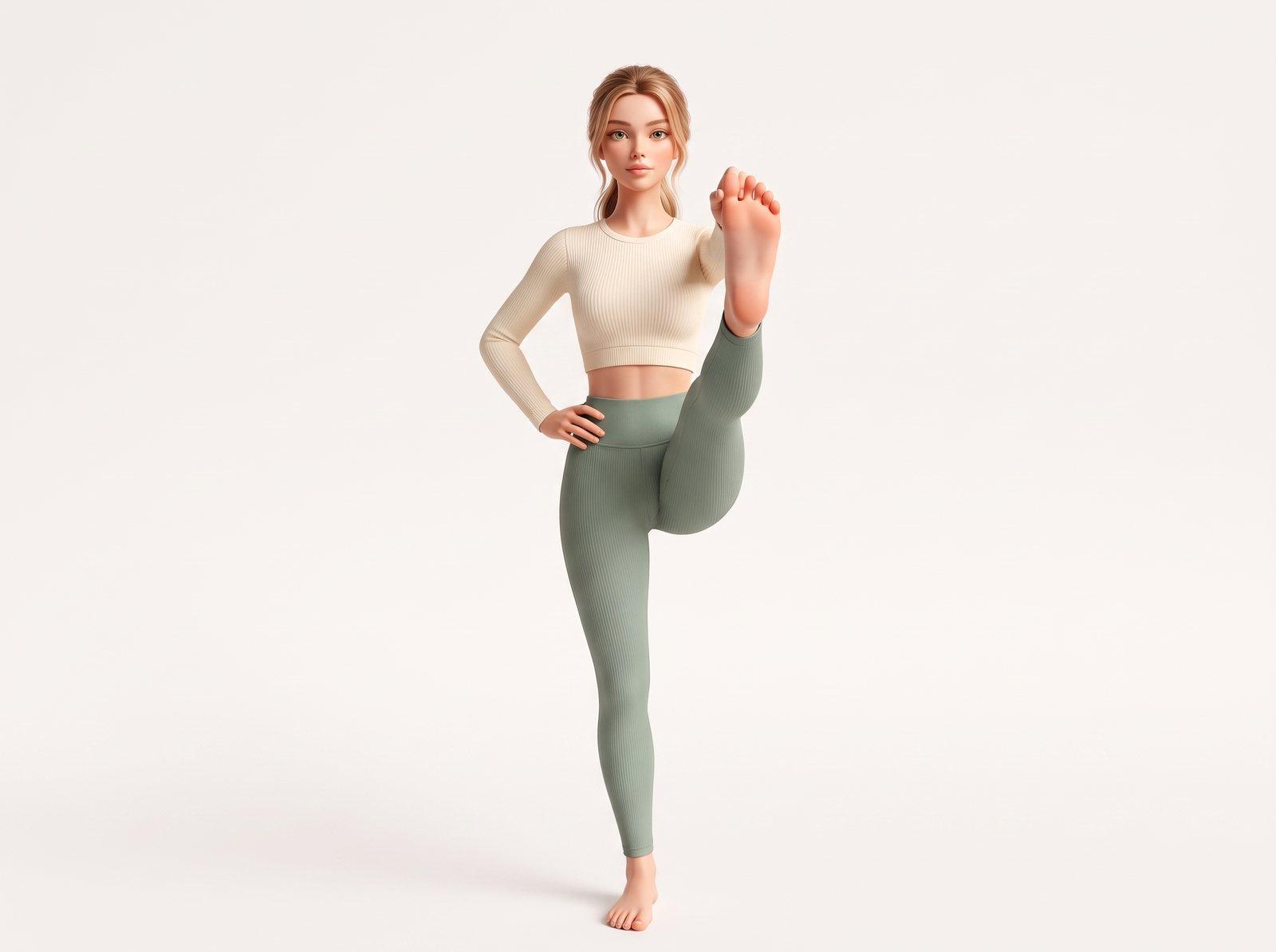
Standing Front Leg Raise lifts one straight leg high in front of the body without holding the foot. Because the hands do not help, the hip flexors and quadriceps of the lifted leg hold it up while the standing leg and deep core keep the body stable. Only very flexible hamstrings let the leg come close to vertical; for most students a lower leg is the right and safe height. It builds active flexibility, the strength to hold range rather than just reach it.
Muscles Worked in Standing Front Leg Raise (Hands-Free)
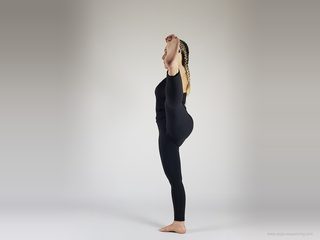
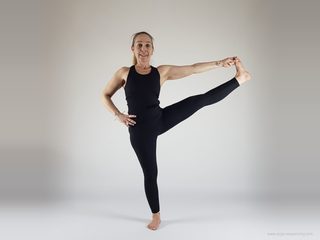
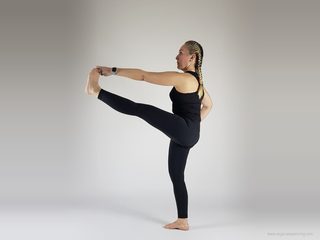
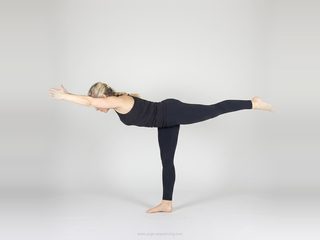
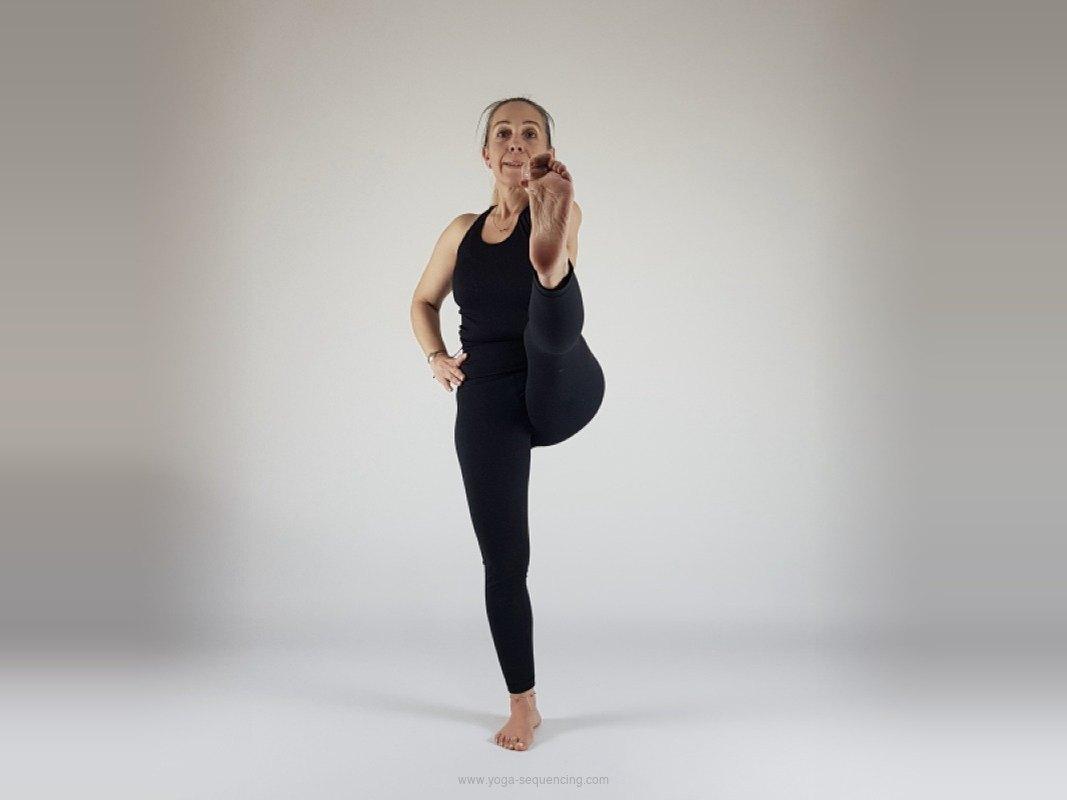
The photo shows a Standing Front Leg Raise seen from the front: standing on one leg with the hands on the hips while the other leg lifts high in front, the foot close to shoulder height, without holding it. The hip flexors and quadriceps of the lifted leg hold it up; the standing leg and core keep the balance.
Working
- Lifted-leg hip flexors (iliopsoas, rectus femoris)
- Lifted-leg quadriceps (quadriceps femoris, keeping the knee straight)
- Standing-leg hip stabilisers (gluteus medius)
- Standing-leg quadriceps (quadriceps femoris)
Stretching
- Lifted-leg hamstrings (biceps femoris, semitendinosus, semimembranosus)
- Lifted-leg calf (gastrocnemius)
Also holding you steady: your core, the muscles along your spine and the muscles of your feet and ankles.
Variations and joint actions
- Lower leg: Holding the leg at hip height or lower keeps the pelvis level and the back tall.
- Hand on a wall: One hand on a wall takes the balance away so you can focus on lifting the leg.
- Lifted hip deep flexion, leg raised in front
- Lifted knee extension, as far as the hamstrings allow
- Standing hip and knee neutral and extension
- Spine upright and long
- Elbows flexion, hands on the hips
Roles are qualitative — this section does not measure how hard any muscle works. References: Leslie Kaminoff & Amy Matthews, Yoga Anatomy (Human Kinetics); Ray Long, The Key Muscles of Yoga (Bandha Yoga).
Step-by-Step Instructions
- 1
Stand in Mountain Pose with the hands on the hips
- 2
Shift the weight into the left foot
- 3
Draw the right knee up toward the chest
- 4
Straighten the right leg forward at a height you can hold
- 5
Lift the leg higher with control as flexibility allows
- 6
Keep the hips level and the spine tall
- 7
Hold for 3-5 breaths, lower slowly and switch sides
Alignment Cues
- Standing foot rooted, kneecap lifted
- Hips level and square
- Torso upright, not leaning back
- Lifted leg active, toes pointing up
Benefits
- Builds active hamstring flexibility
- Strengthens the hip flexors and quadriceps
- Improves standing balance and ankle stability
- Strengthens the core
- Sharpens focus
Modifications
- Keep the lifted knee bent
- Hold the leg with a strap or hand
- Stand beside a wall for balance
Variations
- Extended Hand-to-Big-Toe Pose with toe hold
- Standing knee hug
- Leg lifted to the side
Cautions & Contraindications
Cautions
- Keep the standing leg straight but not locked
- Lift only as high as you can keep the spine upright
- Do not swing or kick the leg up
Avoid this pose if you have:
- Hamstring tear or recent hamstring injury
- Acute hip or lower back pain
- Ankle injury on the standing leg
- Severe balance problems
Quick Facts
Breath Cue
Inhale to grow tall through the standing leg; exhale to lift the leg from the core.
Primary Focus
hamstringsSecondary Focus
Suggested Hold
30 seconds
Tags
Equipment