Headstand Parallel Legs
Sirsasana Variation
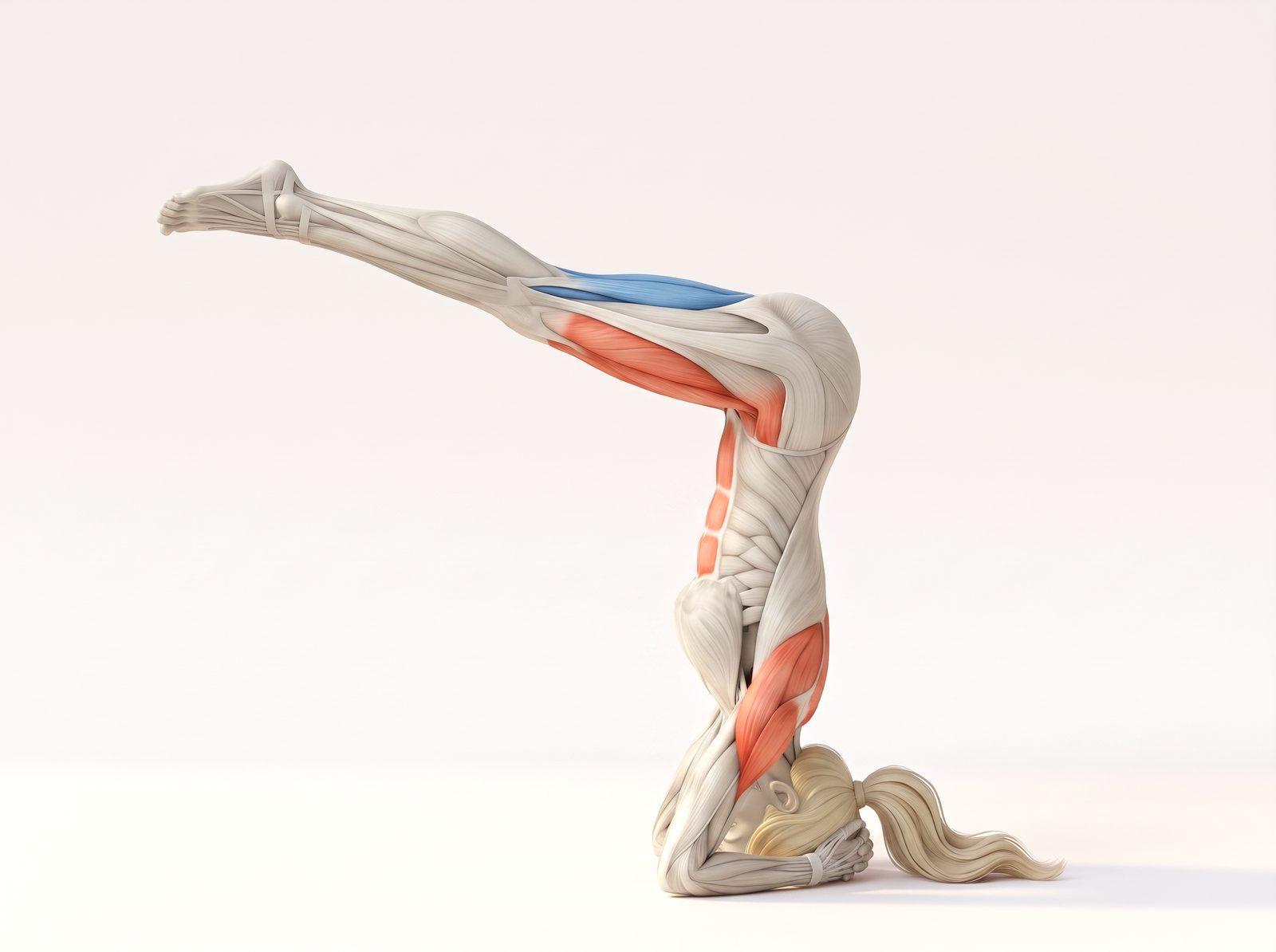
Working: Shoulders, Upper back, Abdominals, Hip flexors
Stretching: Hamstrings
Full muscle breakdown ↓About This Pose
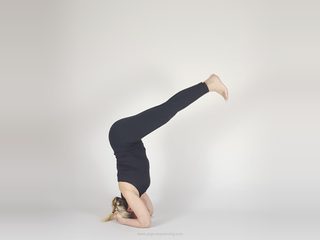
Headstand with Parallel Legs (also called Pike Headstand) holds the legs horizontal, parallel to the floor, rather than extending them vertically. This variation dramatically increases the core demand and challenges balance differently than the vertical position. It's an excellent way to build the control and strength needed for more advanced inversion variations.
Muscles Worked in Headstand Parallel Legs
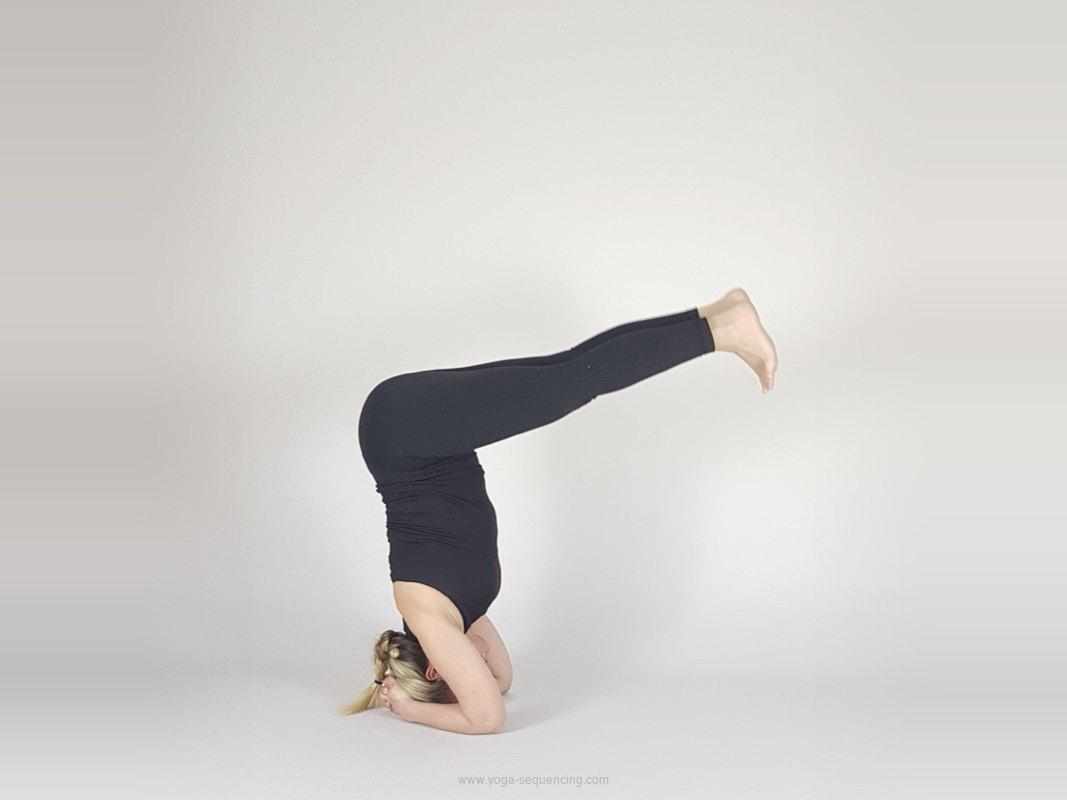
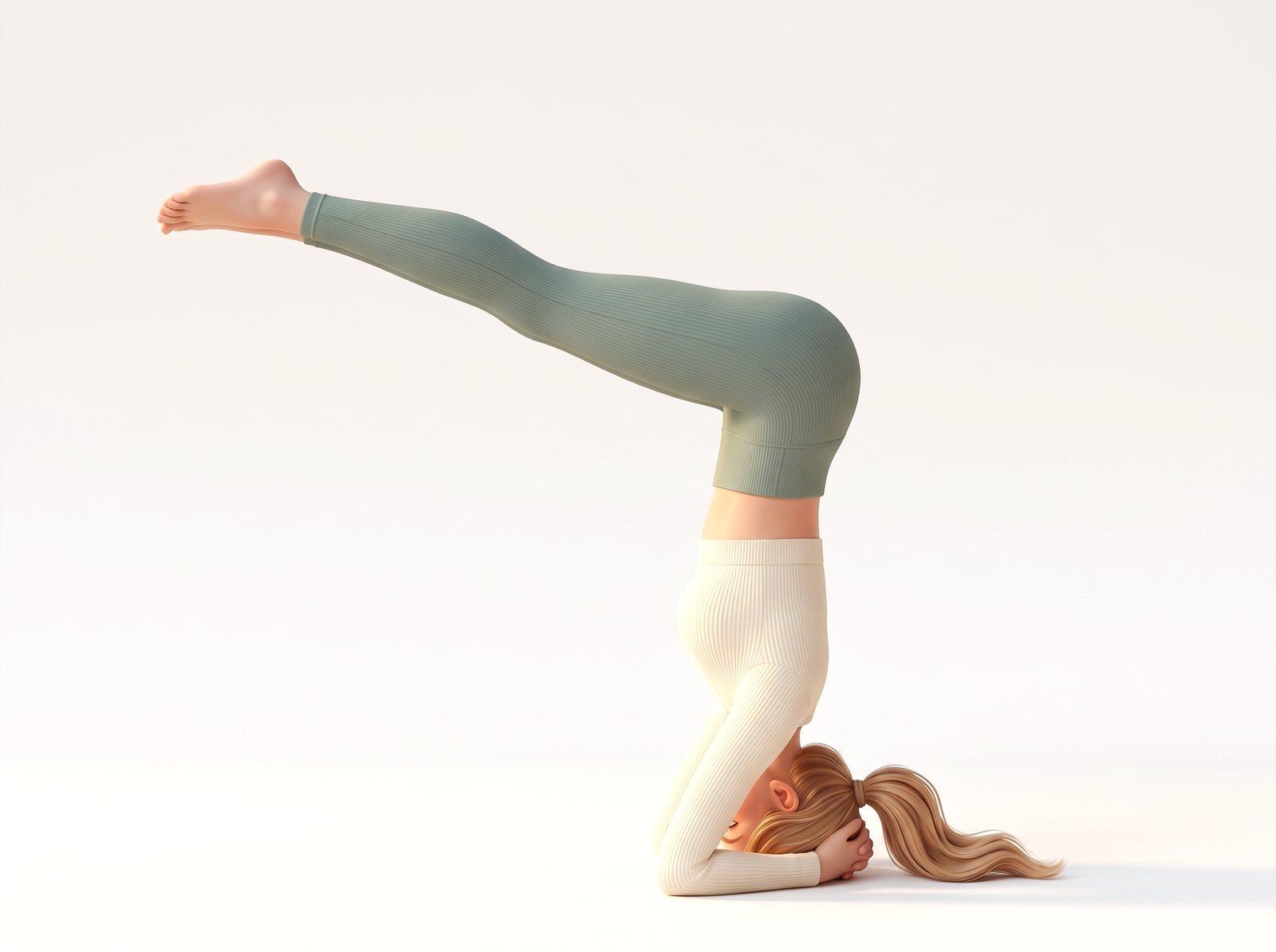
The photo shows Half Headstand (Ardha Sirsasana) with the hips stacked over the shoulders and both straight legs held together, angled slightly above horizontal. The shoulders, upper back and core hold the inversion and the hip flexors hold the legs out.
Working
- Shoulders (deltoids)
- Upper back (rhomboids, trapezius)
- Abdominals (rectus abdominis, transversus abdominis)
- Hip flexors (iliopsoas, rectus femoris)
Stretching
- Hamstrings (biceps femoris, semitendinosus, semimembranosus)
Also holding you steady: your rotator cuff, the muscles along your spine and inner thighs.
Variations and joint actions
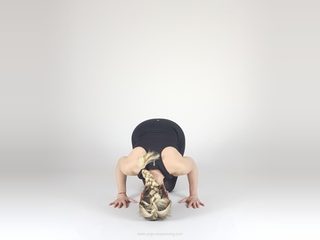
- Toes on the floor: Walking the feet in with the toes down is the first stage before lifting.
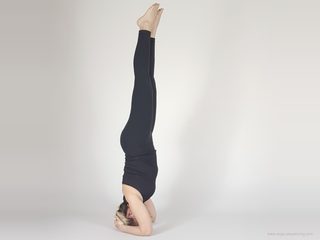
- Raise to full Headstand: Lifting both legs to vertical takes the hip flexor load away.
- Shoulders full flexion, forearms on the floor with fingers interlaced around the head
- Elbows flexion, forearms pressing down
- Spine vertical and long, torso upside down
- Hips flexion, legs held out in front of the body
- Knees extension
Roles are qualitative — this section does not measure how hard any muscle works. References: Leslie Kaminoff & Amy Matthews, Yoga Anatomy (Human Kinetics); Ray Long, The Key Muscles of Yoga (Bandha Yoga).
Step-by-Step Instructions
- 1
Enter full headstand
- 2
Engage core strongly
- 3
Lower legs slowly
- 4
Stop when parallel to floor
- 5
Hold with control
- 6
Return to full headstand
Alignment Cues
- Engage abdomen deeply
- Press forearms firmly
- Keep legs active and reaching
- Maintain steady breath
Benefits
- Intensifies core work
- Challenges balance uniquely
- Builds advanced control
- Develops shoulder stability
- Strengthens hip flexors
- Demonstrates control
Modifications
- Practice near wall
- Lower only partially
Variations
- Split legs
- Bent knees
Cautions & Contraindications
Cautions
- Keep neck neutral
- Control descent carefully
Avoid this pose if you have:
- Neck injury
- Vertigo
Quick Facts
Primary Focus
coreSecondary Focus
Suggested Hold
30 seconds
Tags
Equipment