
Extended Child's Pose
Utthita Balasana
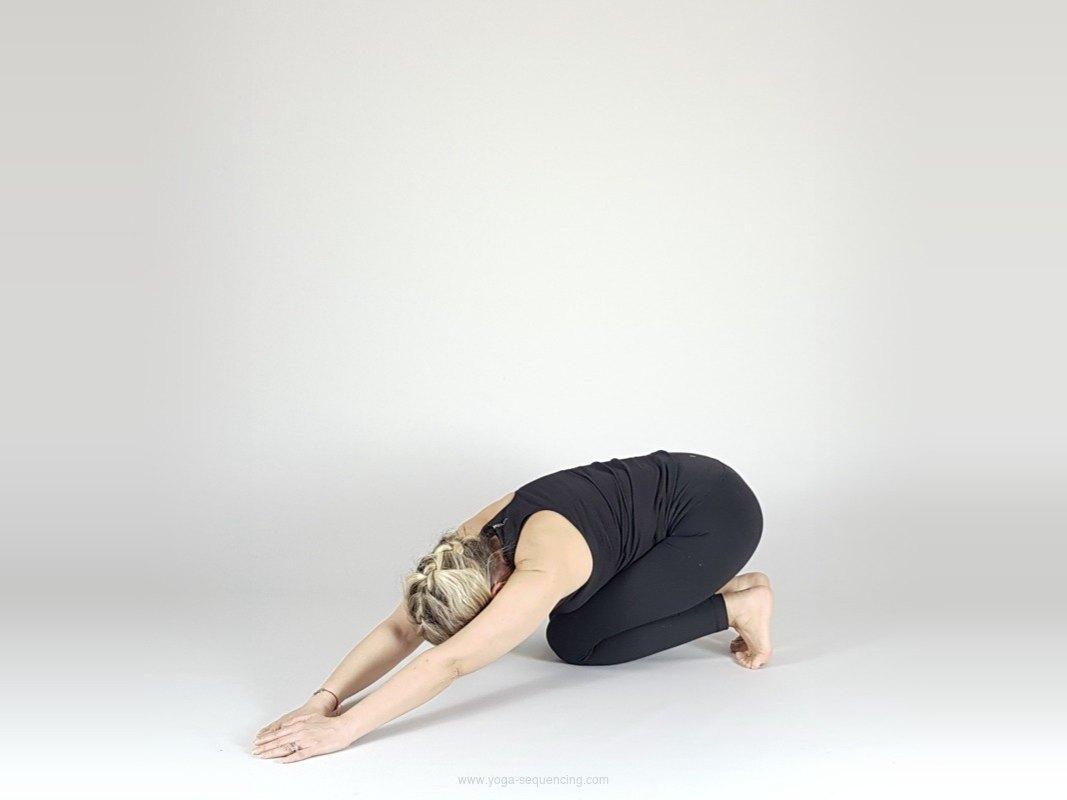
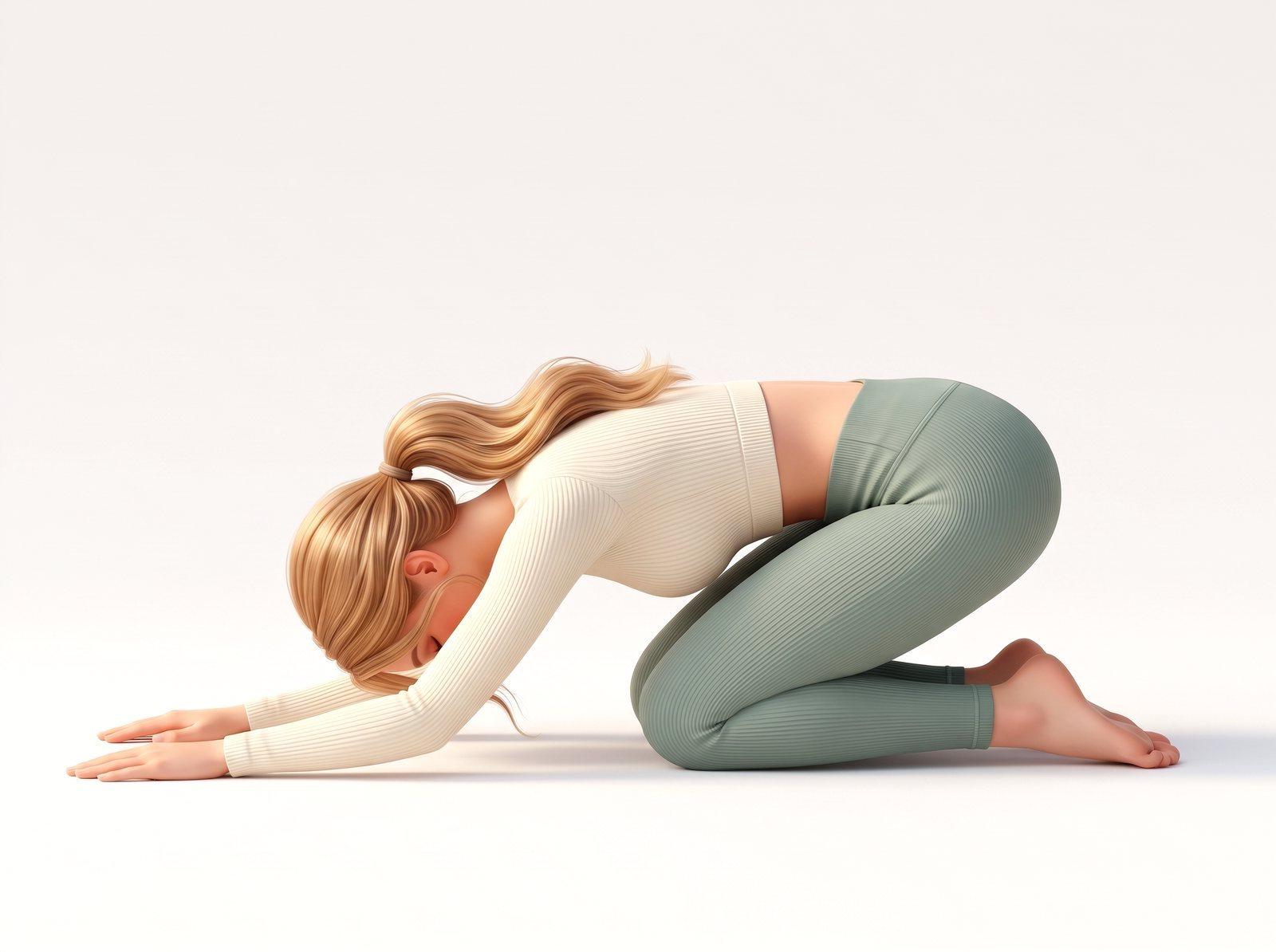
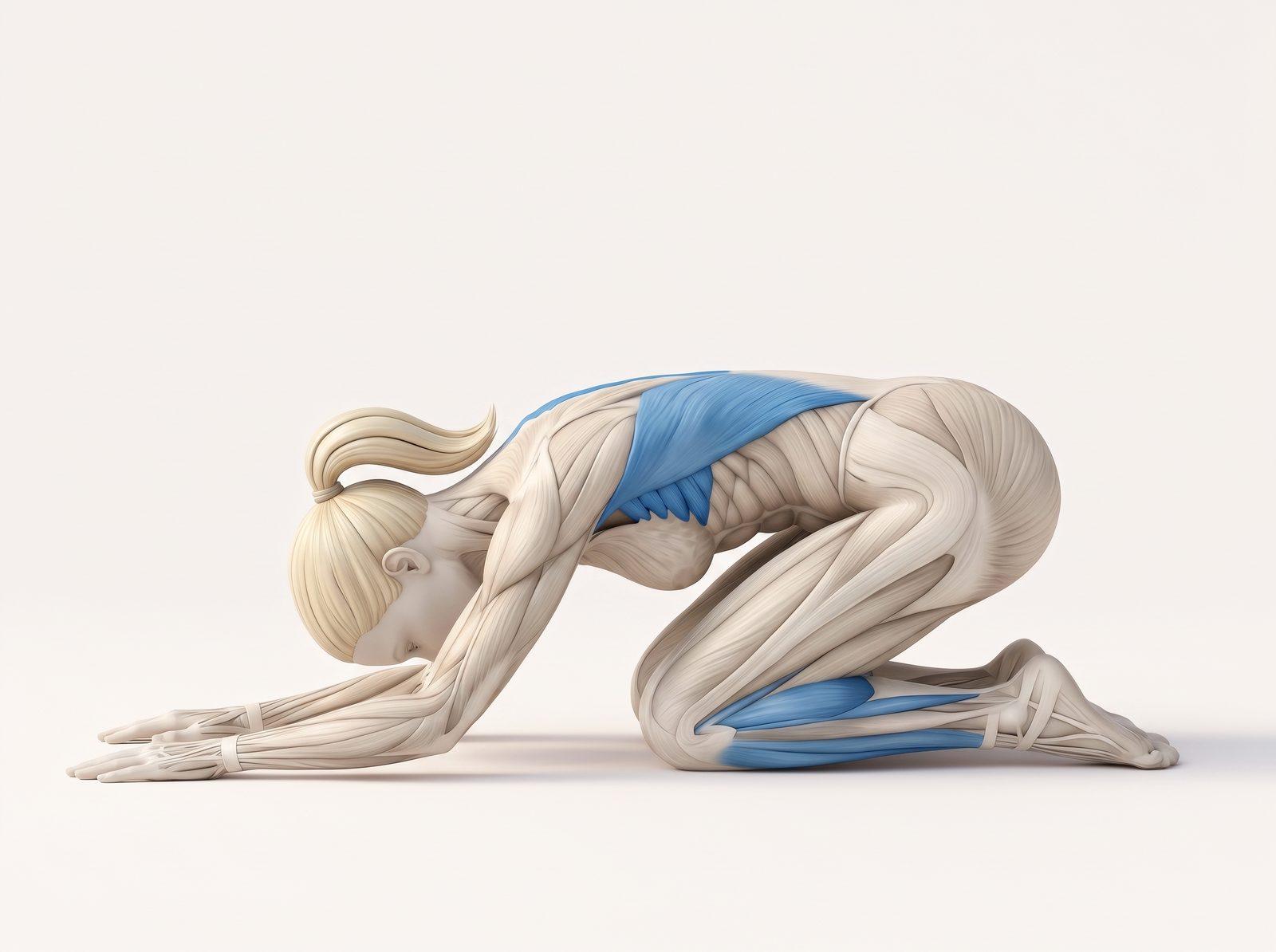
Stretching: Lats, Back muscles, Front of the shins
Full muscle breakdown ↓About This Pose
This variation of Extended Child's Pose emphasizes the full-body stretch from fingertips to tailbone, creating space between each vertebra. The extended arm position actively engages the upper body while the lower body remains relaxed and grounded. This pose is excellent for counterbalancing time spent sitting or hunching over devices, and provides a wonderful reset for both body and mind during practice.
Muscles Worked in Extended Child's Pose
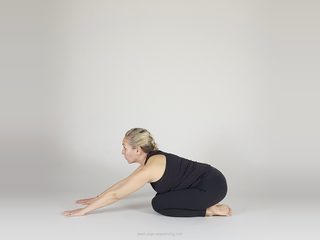
Extended Child's Pose (Utthita Balasana) kneels with the knees together and the hips lifted above the heels rather than resting on them, the forehead down and both arms reaching long in front, palms on the floor. It is a resting shape that stretches the lats and back muscles.
Working
Child's Pose is a resting shape; no muscle has to work to hold it.
Stretching
- Lats (latissimus dorsi)
- Back muscles (erector spinae)
- Front of the shins (tibialis anterior)
Variations and joint actions
- Knees wide: Opening the knees makes room for the belly and adds an inner-thigh stretch.
- Blanket behind the knees: A rolled blanket in the knee crease eases tight knees and lifts the hips.
- Hips flexion, hips held above the heels
- Knees deep flexion, knees together
- Ankles plantarflexion, tops of the feet down
- Spine gentle flexion
- Shoulders flexion, arms reaching forward
Roles are qualitative — this section does not measure how hard any muscle works. References: Leslie Kaminoff & Amy Matthews, Yoga Anatomy (Human Kinetics); Ray Long, The Key Muscles of Yoga (Bandha Yoga).
Step-by-Step Instructions
- 1
From all fours, bring your big toes to touch behind you
- 2
Separate your knees wide, creating space for your torso
- 3
Walk your hands forward until your arms are fully extended
- 4
Lower your chest and forehead toward the mat
- 5
Actively press through your palms while drawing your hips back
- 6
Feel the stretch radiating from your fingertips through your spine to your tailbone
- 7
Maintain steady breathing for 8-12 breaths
Alignment Cues
- Distribute weight evenly between both arms
- Keep the neck in neutral alignment with the spine
- Soften the ribcage toward the floor
- Breathe into the back body, expanding the ribs
Benefits
- Creates space between vertebrae for spinal decompression
- Stretches the entire posterior chain from shoulders to hips
- Relieves lower back compression and discomfort
- Opens the shoulders and chest for improved posture
- Provides mental clarity and emotional grounding
Modifications
- Use bolster
Variations
- Extended child
Cautions & Contraindications
Cautions
- Avoid forcing hips
- Support knees
Avoid this pose if you have:
- Knee injury
- Shoulder pain
Quick Facts
Primary Focus
spineSecondary Focus
Suggested Hold
30 seconds
Tags
Equipment
Related Poses
Sequences with this pose
Teacher-written sequences that use Extended Child's Pose.
A Yoga Sequence for Shoulder Tension That Reaches the Real Knots
35 min · 12 poses · all-levels
Release a Stiff Neck and Upper Back Without Wrecking Your Cervical Spine
25 min · 10 poses · all-levels
A Heart-Opening Sequence That Actually Opens the Chest (Not the Lower Back)
30 min · 12 poses · intermediate