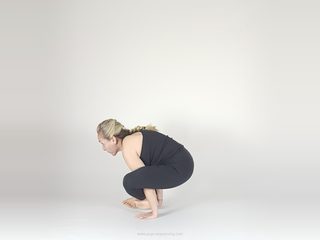
Side Crow Extended Leg
Parsva Bakasana
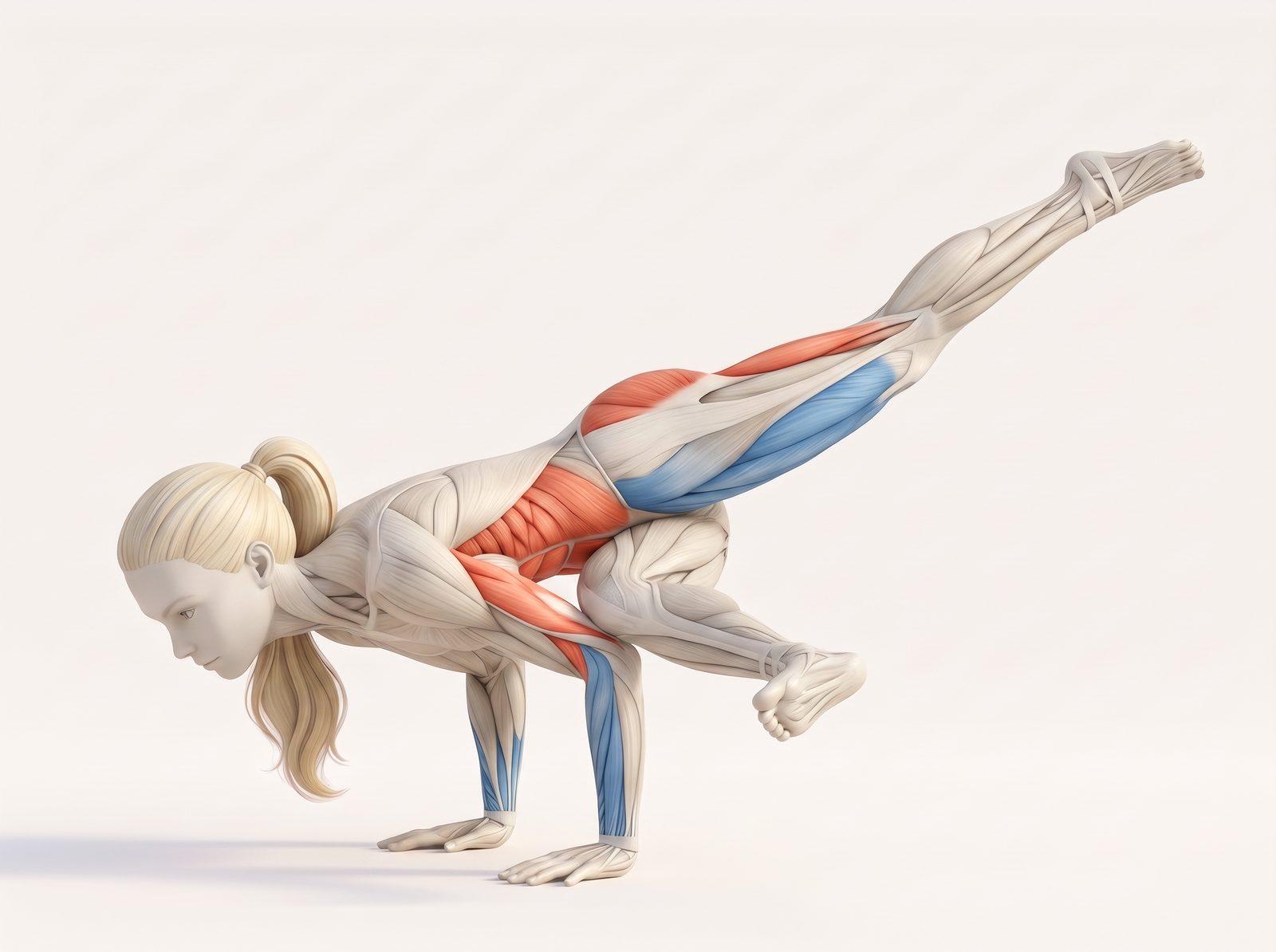
Working: Abdominals, Serratus anterior, Triceps, Extended-leg glutes and hamstrings
Stretching: Extended-leg hip flexors, Wrist flexors
Full muscle breakdown ↓About This Pose
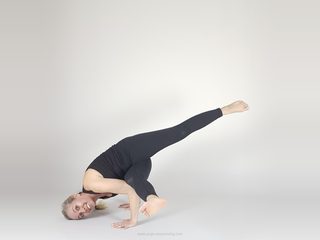
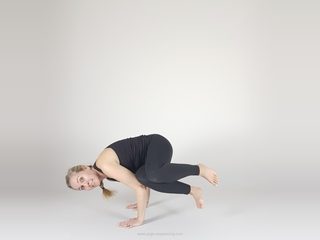
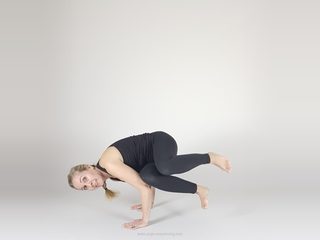
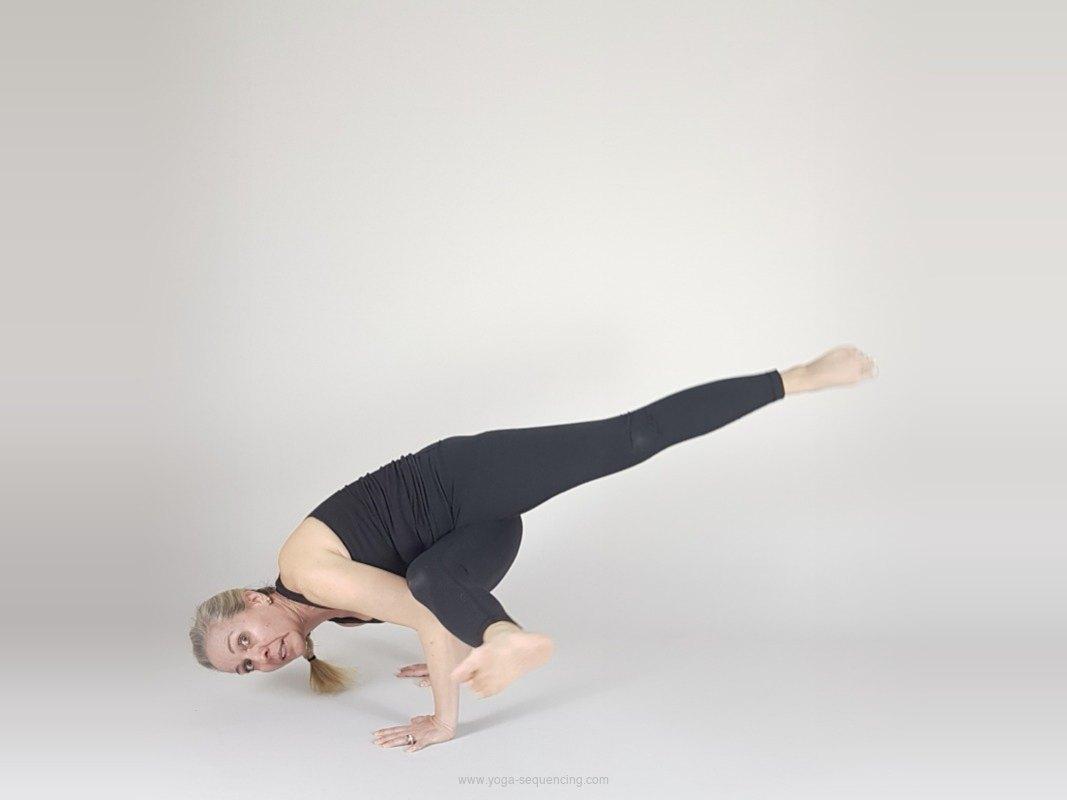
Side Crow with Extended Leg takes the already challenging Parsva Bakasana further by extending one leg straight out to the side. This variation requires exceptional rotational strength, balance, and control. The extended leg changes the center of gravity, making this one of the more demanding arm balance variations.
Muscles Worked in Side Crow Extended Leg
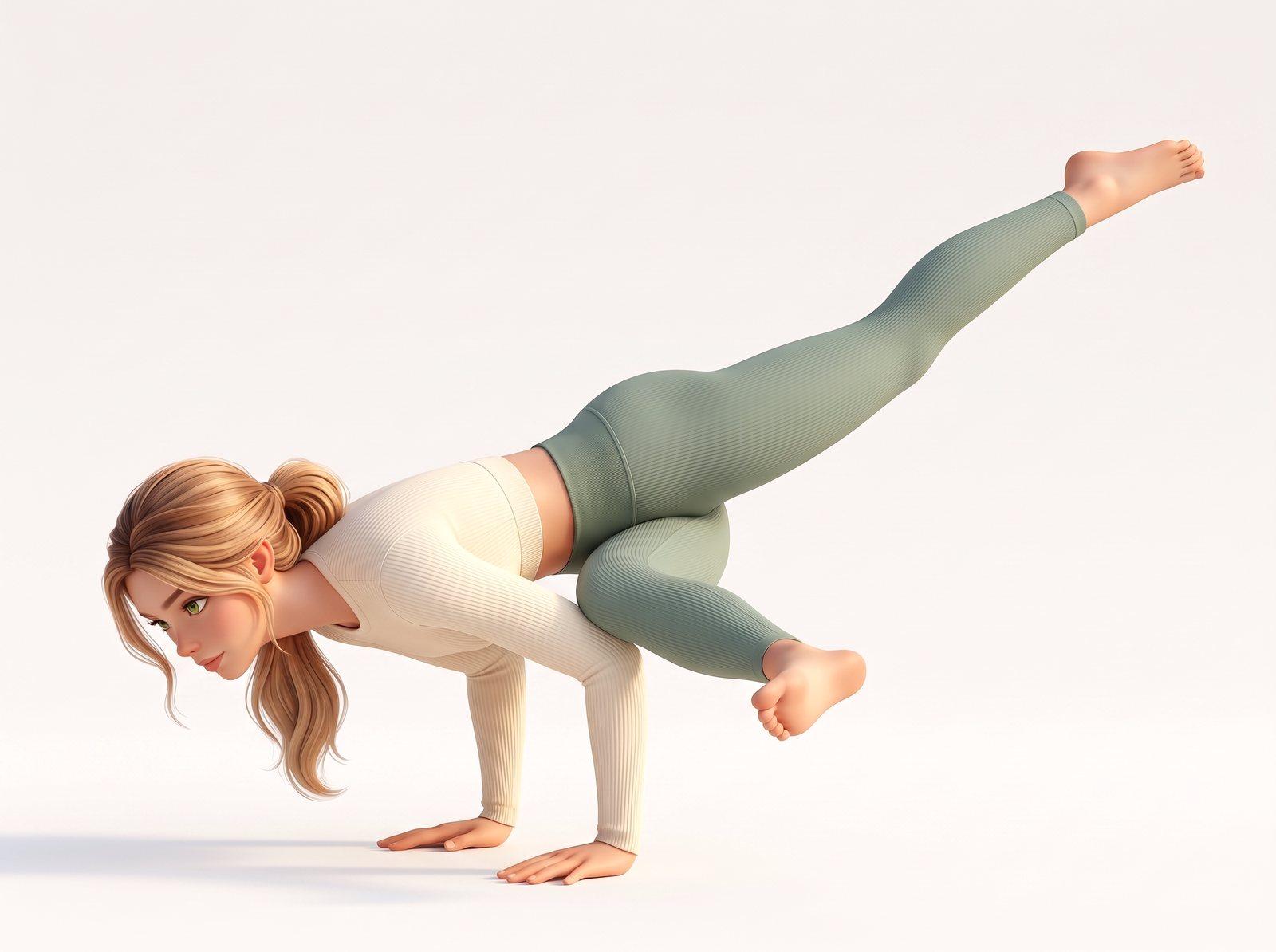
The photo shows a Crow Pose variation (Eka Pada Bakasana): balancing on the hands with one knee on the back of the upper arm and the other leg extended straight back and up. The core and arms hold the balance while the glutes and hamstrings of the extended leg lift it.
Working
- Abdominals (rectus abdominis, transversus abdominis)
- Serratus anterior
- Triceps (triceps brachii)
- Extended-leg glutes and hamstrings (gluteus maximus, hamstrings)
Stretching
- Extended-leg hip flexors (iliopsoas, rectus femoris)
- Wrist flexors (forearm flexors)
Also holding you steady: your rotator cuff, Chest and extended-leg quadriceps, keeping the knee straight.
Variations and joint actions
- Two-legged Crow first: Holding classic Crow steadily comes before sending one leg back.
- Bent extended leg: Keeping the back knee bent shortens the lever and is easier to balance.
- Wrists deep extension
- Elbows slight flexion
- Tucked hip and knee deep flexion, knee on the upper arm
- Extended hip extension, leg reaching back and up
- Extended knee extension
Roles are qualitative — this section does not measure how hard any muscle works. References: Leslie Kaminoff & Amy Matthews, Yoga Anatomy (Human Kinetics); Ray Long, The Key Muscles of Yoga (Bandha Yoga).
Step-by-Step Instructions
- 1
Enter Side Crow Pose
- 2
Stabilize your balance
- 3
Slowly extend the top leg
- 4
Keep the leg parallel to floor
- 5
Engage core for stability
- 6
Hold with focused breath
Alignment Cues
- Press hands firmly
- Stay focused on breath
- Keep extended leg active
Benefits
- Maximum arm balance challenge
- Combines twist and extension
- Exceptional control needed
- Changes center of gravity
- Advanced demonstration
- Peak arm balance skill
Modifications
- Use block for support
- Partial leg extension
Variations
- Both legs extended
- Leg lifted higher
Cautions & Contraindications
Cautions
- Move slowly into position
- Protect shoulders
Avoid this pose if you have:
- Wrist injury
- Shoulder pain
Quick Facts
Primary Focus
shouldersSecondary Focus
Suggested Hold
30 seconds
Tags
Equipment