Camel Pose (Toes Tucked)
Ustrasana Variation
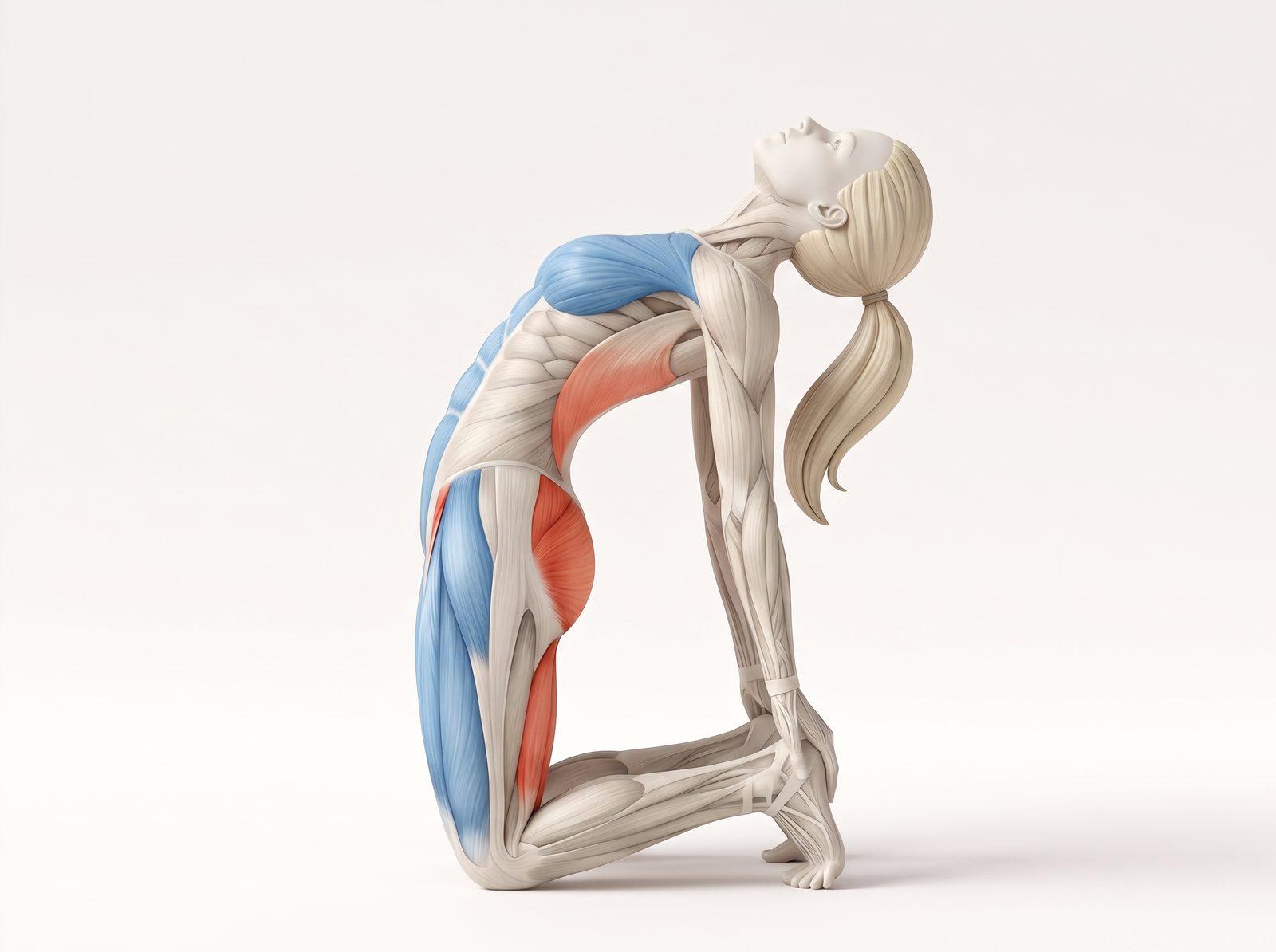
Working: Glutes, Hamstrings, Back muscles
Stretching: Hip flexors, Quadriceps, Abdominals, Chest
Full muscle breakdown ↓About This Pose
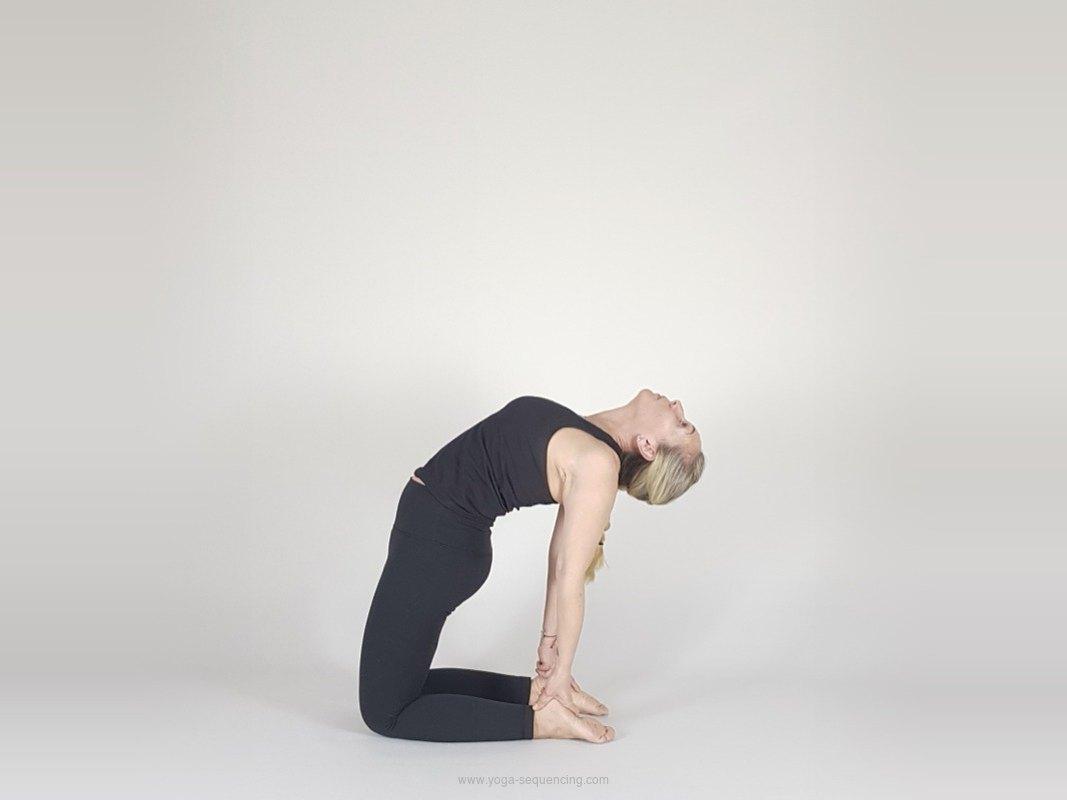
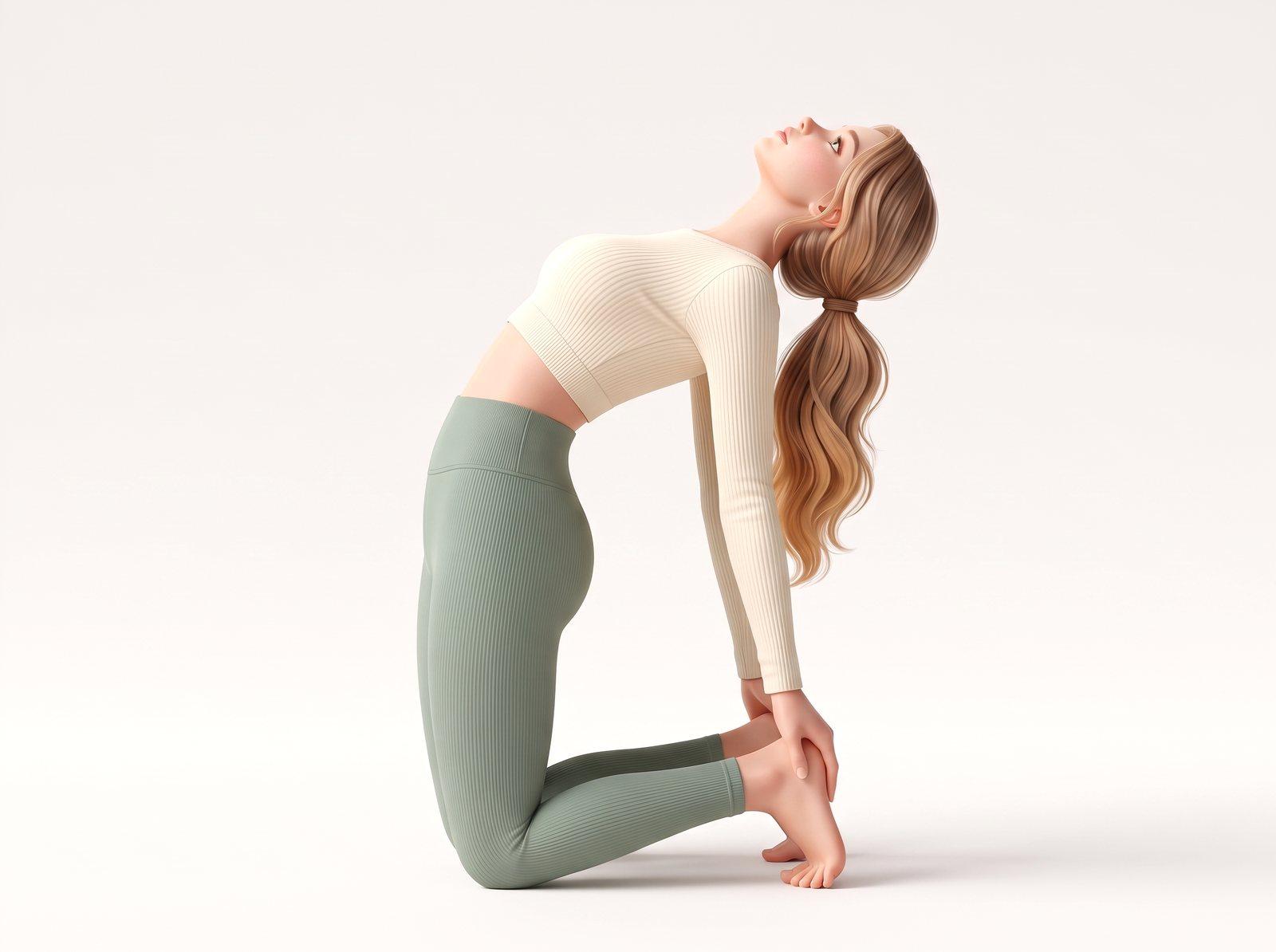
Camel Pose with Toes Tucked is the classic accessible version of Ustrasana. Tucking the toes lifts the heels a few inches, so the hands reach them without dropping the hips back. The hips stay over the knees, the front of the thighs and hip flexors lengthen, and the chest lifts and opens. The upper back does most of the bending; the lower back should feel long, not compressed.
Muscles Worked in Camel Pose (Toes Tucked)
The photo shows Camel Pose (Ustrasana) with the toes tucked: kneeling with the thighs upright, the heels lifted on tucked toes and the hands on the heels, the chest lifted and the head dropped back. The glutes and hamstrings hold the hips forward while the front of the hips, thighs, abdomen and chest stretch; the dropped head puts real load on the neck.
Working
- Glutes (gluteus maximus)
- Hamstrings (biceps femoris, semitendinosus, semimembranosus)
- Back muscles (erector spinae)
Stretching
- Hip flexors (iliopsoas, rectus femoris)
- Quadriceps (quadriceps femoris)
- Abdominals (rectus abdominis)
- Chest (pectoralis major)
Also holding you steady: your core, Upper back and inner thighs, which keep the knees hip-width.
Variations and joint actions
- Chin toward the chest: Keeping the head neutral instead of dropping it back takes the load off the front of the neck. Do this with any neck problem, dizziness or high blood pressure.
- Tops of the feet down: Untucking the toes lowers the heels, so the hands travel further and the backbend deepens.
- Blocks beside the heels: Hands on tall blocks beside the feet support the shape when the heels feel far away.
- Knees flexion, about 90°, thighs upright
- Ankles dorsiflexion, heels lifted on tucked toes
- Hips extension, hips close to over the knees
- Spine extension, most of it in the upper back
- Shoulders extension, hands on the heels
- Neck extension, head dropped back
Roles are qualitative — this section does not measure how hard any muscle works. References: Leslie Kaminoff & Amy Matthews, Yoga Anatomy (Human Kinetics); Ray Long, The Key Muscles of Yoga (Bandha Yoga).
Step-by-Step Instructions
- 1
Kneel with knees hip-width apart and thighs vertical
- 2
Tuck the toes under
- 3
Place hands on the back of the pelvis, fingers pointing down
- 4
Inhale and lift the chest, drawing the shoulder blades together
- 5
Exhale and lean back, reaching one hand and then the other to the heels
- 6
Keep the hips pressing forward over the knees
- 7
Hold for 3-5 breaths, then return hands to the hips and rise
Alignment Cues
- Hips stacked over knees
- Lift the chest before you bend back
- Thighs vertical, knees hip-width
- Long lower back, avoid crunching
Benefits
- Stretches the hip flexors, quadriceps and front body
- Opens the chest and shoulders
- Strengthens the back extensors
- Improves thoracic spine extension
- Counters long hours of sitting
Modifications
- Keep hands on the lower back
- Place blocks beside the heels
- Pad the knees with a blanket
Variations
- Untuck the toes for full Ustrasana
- One arm reaching overhead
Cautions & Contraindications
Cautions
- Keep the hips over the knees
- Bring the head back only if the neck feels supported; otherwise keep the chin slightly tucked
- Come up slowly, leading with the chest
Avoid this pose if you have:
- Acute low back or neck injury
- Knee injury
- Uncontrolled high or low blood pressure
Quick Facts
Breath Cue
Inhale to lift the chest toward the ceiling; exhale to keep the hips moving forward over the knees.
Primary Focus
spineSecondary Focus
Suggested Hold
45 seconds
Tags
Equipment