
TwistIntermediate
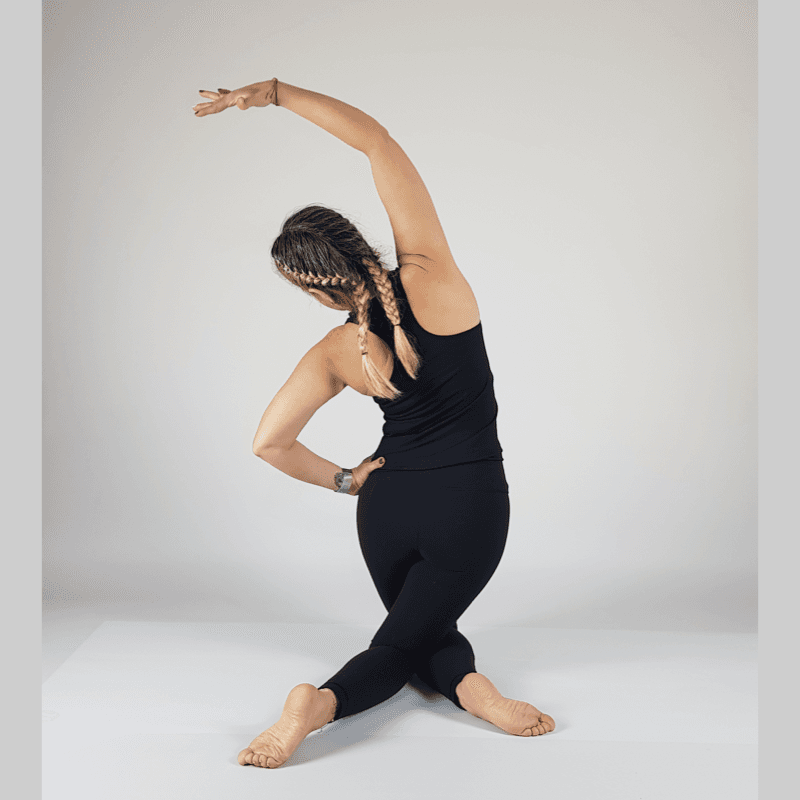
Kneeling Side Bend Twist
Parivrtta Parighasana
www.yoga-sequencing.com
About This Pose
Kneeling Side Bend Twist combines the lateral stretch of Parighasana with a gentle spinal rotation. This variation increases the stretch through the obliques and intercostal muscles while improving thoracic spine mobility. The twist adds a detoxifying element and challenges balance and coordination.
Step-by-Step Instructions
- 1
Begin in Kneeling Side Stretch position
- 2
Establish your lateral bend first
- 3
Begin to rotate your chest toward the ceiling
- 4
Reach your top arm overhead and back
- 5
Keep the bottom hand grounded for stability
- 6
Breathe into the twist
- 7
Hold for 5 breaths, then switch sides
Alignment Cues
- Lengthen before twisting
- Keep hips grounded and stable
- Rotate from the thoracic spine
- Keep the neck in line with the spine
Benefits
- Improves spinal rotation and mobility
- Stretches obliques and side body deeply
- Enhances coordination and balance
- Stimulates digestion through twisting
- Opens the chest and shoulders
Modifications
- Reduce the depth of the twist
- Support the knee with padding
Variations
- Flow between side bend and twist
- Hold the twist longer
Cautions & Contraindications
Cautions
- Move with the breath
- Avoid forcing the twist
Avoid this pose if you have:
- Spinal disc issues
- Recent surgery
Quick Facts
Primary Focus
spineSecondary Focus
coreshoulders
Suggested Hold
30 seconds
Tags
kneelingtwistside bodyspine
Equipment
yoga mat
Related Poses

Sequences with this pose
Teacher-written sequences that use Kneeling Side Bend Twist.
Browse all sequences →