
As an Amazon Associate, FLOW may earn from qualifying purchases. Links below use our tracking tag — you don't pay a cent more, but it helps fund honest reviews like this one.
There's a moment in every new teacher's career where the class is going well — and then the Bluetooth disconnects mid-savasana, or the timer goes off three minutes late, or your voice gives out in the second class of the day. The fix is rarely talent. It's the kit.
This is the gear we'd put in the hands of a friend graduating from teacher training tomorrow. Eight categories. Real classes, real failures, real picks.
The kit at a glance
| Category | Pick | Approx price | Why this one |
|---|---|---|---|
| Budget mic | FIFINE wireless headset | $69 | Solid 80% solution for new teachers |
| Portable speaker | JBL Flip 6 | $130 | Pairs fast, 12-hr battery, IP67 |
| Studio speaker | Bose SoundLink Flex | $149 | Cleaner mids for music-led classes |
| Class timer | Insight Timer (app, free) + GymBoss interval | $25 (hardware) | Silent vibration option for yin |
| Teaching bag | Manduka Go Steady mat carrier | $80 | Holds mat + props + laptop |
| Planner | FLOW Sequence Builder (yoga-sequencing.com) | Free / $7.99 mo | Source of truth between studios |
| Online-class kit | Logitech C920 + ring light | $130 | Treats clarity, looks professional |
1. Wireless headset microphone
If you teach in a studio bigger than 20 people, this is the single piece of gear that changes the most. Handhelds are for podcasts; headsets are for yoga. You need both hands free for hands-on adjustments, demos, and cueing.
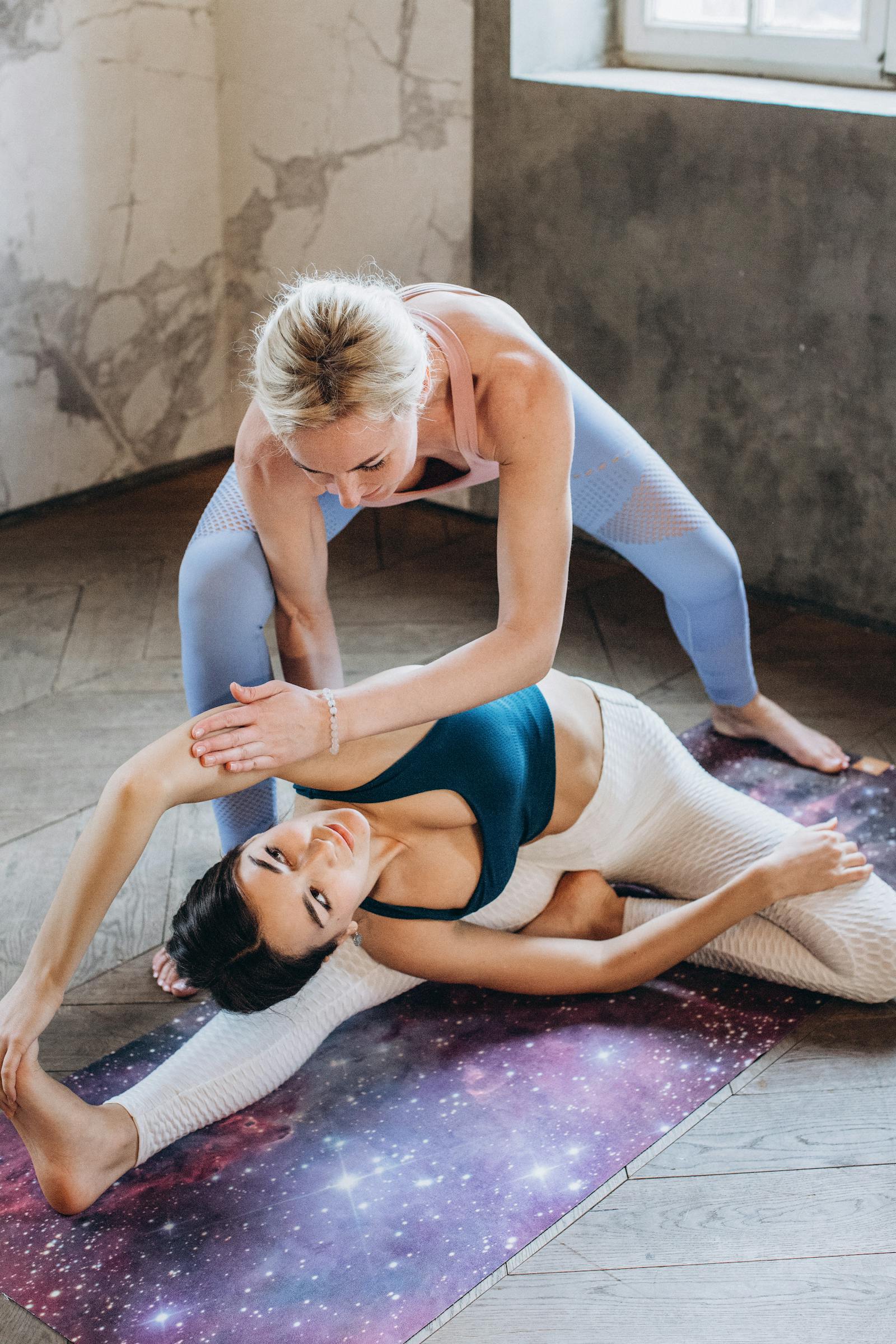
Best — Shure BLX14/SM31 Wireless Headset System
The gold standard. It's what most studios stock when they're serious. Range is genuinely studio-wide (around 90 m line-of-sight), battery is 14 hours on two AAs, and the SM31 cardioid pattern rejects the speaker bleeding back into your headset. You can teach a 90-minute heated class and not think about it once.
Caveat: $499. It's a real spend. Worth it if you teach 5+ classes/week.
Budget — FIFINE Wireless Headset Microphone System
The 80% solution at 14% of the price. UHF band (less crowded than the 2.4 GHz Bluetooth headsets), ~6-hour battery, decent audio for a non-recording room. Battery and build quality won't match the Shure, but for a teacher doing 2-3 classes a week, it's plenty.
Caveat: charging is via micro-USB and the headband is plastic. Treat it kindly.
Skip
2. Portable speaker
Music in yoga is half the cue. If you can't reliably get sound in the room you teach in, you'll always be improvising playlists for whatever's plugged in.
Best for vinyasa / power — JBL Flip 6
12-hour battery. IP67 (sweat-proof — matters more than you'd think). Pairs in under three seconds, which is the actual UX battle when you're walking into a studio with 30 seconds to start. The mids and highs are slightly forward, which works for upbeat vinyasa playlists.
Caveat: stereo pairing is fiddly. Just buy one — you don't need two unless you teach in a hangar.
Best for restorative / yin — Bose SoundLink Flex
Cleaner mids, warmer presentation. Restorative and yin playlists rely on textured ambient music; the Flex doesn't flatten them. Battery is similar to the JBL, build quality slightly better.
Caveat: $149 vs JBL's $130. Pick by sound profile, not price.
Skip
3. Class timer
The least sexy item on this list. Also the one teachers forget to think about until they're three minutes over on a workshop.
Best app — Insight Timer (free)
The default for a reason. Free, multiple chimes, interval bells, you can set transitions for yin holds without unlocking your phone. The premium version ($60/year) adds custom interval sequences which are genuinely useful if you teach the same yin sequence weekly.
Best hardware — GymBoss Interval Timer
A $25 black plastic puck that vibrates silently. Why hardware? Two reasons:
Caveat: the GymBoss UI is from 2010 and it shows. The four buttons take a class to learn. Once learned, never forgotten.
Build this sequence on your phone
The same 420+ pose library and drag-and-drop builder, free on iPhone, iPad and Android.
4. Teaching bag
If you commute between two studios you carry: mat, two blocks, a strap or two, a bolster (sometimes), props for hands-on adjustments, laptop or planner, water, change of clothes. A standard yoga sling isn't going to do it.
Best — Manduka Go Steady 3.0 Mat Carrier
It's a soft-sided backpack with a dedicated mat sleeve underneath. Holds a 6mm PRO and most laptops up to 15". Side compartments for water + a planner. Looks more like a Patagonia daypack than a yoga bag, which matters at any studio that isn't purely yoga.
Budget — Lululemon Command the Day Duffel
Same idea, classic duffel cut, holds a mat across the top. Less back-friendly if you're walking long distances between studios.
5. Planner / sequence library
This is the unsexy backbone of teaching consistently. You're not going to remember the eight workshops you taught last year, the modifications you made for the prenatal student two months ago, or the music you used for the candlelight class. You need a system.
Best — FLOW Sequence Builder
Yes, this is our app, and yes, we're biased. But the function is real and you should set up something — ours or anyone else's. Drag-and-drop sequences from a 420-pose library, save flows, share with subs, export to PDF for hard-copy reference. Free for the first five poses; $7.99/month unlimited.
Free tier is enough for a working teacher who plans 2-3 classes a week. Pro pays off if you teach 5+ or want to share flows with subs/cover teachers.
Start in the free Sequence Builder →
Paper alternative
A Moleskine ruled notebook + a class-per-page format. Works fine for one studio. Falls apart once you teach at three.
6. Online-class kit (Zoom / YouTube / IG Live)
If you teach online — and most modern teachers do — your video and audio say everything about how seriously to take you. The default MacBook camera is a dealbreaker.
Camera — Logitech C920s HD Pro Webcam
1080p, autofocus, sharp enough to show alignment cues clearly. Plug-and-play with Zoom/YouTube/Riverside.
Lighting — Neewer 18" Ring Light
Eliminates the "lit from below by a laptop" demon face. Adjustable color temperature so you can warm up the light for evening classes.
Audio for online — same headset mic as in-person, USB option
Some studios prefer the Rode NT-USB Mini for online-only work — it's a desk-mounted condenser. Better sound than any wireless headset, but tethered. Use for prerecorded sequences; switch to the headset for live classes.
7. Props for hands-on demos
You teach modifications from the front of the room. You need a block, a strap, and a blanket within arm's reach at all times. Studio props are fine — but the demo props you keep next to your mat should be yours.
See our Yin Yoga Props guide for the picks. The short version: Manduka cork blocks + a Hugger Mugger 8-foot D-ring strap.
8. The "yoga teacher who's also a small business owner" kit
Often forgotten, never optional:
What to skip (genuinely)
Budget tiers
Starting out ($150 total): FIFINE mic + free Insight Timer + a borrowed studio speaker + an existing backpack + free FLOW Sequence Builder. Class still feels professional.
Working teacher ($800 total): Shure BLX14 + JBL Flip 6 + GymBoss + Manduka Go Steady + FLOW Pro. This is the kit that pays for itself in 2-3 months of teaching.
Full studio kit ($1,500+): above + Logitech C920 + ring light + Rode NT-USB for online work, plus backup props of your own.
FAQs
Do I really need a wireless mic for a 20-person yoga class?
For a small heated room, no. For anything bigger or any spoken-word style class (Kundalini, Bhakti, workshops), yes. Your voice will not survive teaching 5 days a week without one — vocal cord nodules are real and underdiagnosed in yoga teachers.
What's the best yoga teacher bag for commuting between studios?
Manduka Go Steady 3.0 for back-friendly carrying with a laptop. Lululemon Command the Day for shorter commutes / when you also need gym clothes.
How do I learn to use a wireless mic without sounding like a flight attendant?
Two things: 1) mic placement is just above the corner of your mouth, not in front of it — eliminates plosives. 2) Practice cueing into your headset at home before your first class with it. You'll be 50% quieter than you think; nudge volume up at the speaker, not by talking louder.
Is the Shure BLX14 worth it over the FIFINE?
If you teach 5+ classes/week, yes — the Shure will outlive the FIFINE by years, and the audio quality is genuinely studio-grade. For 1-3 classes/week, FIFINE is more than enough.
What yoga apps do teachers actually use?
For sequence planning: FLOW Sequence Builder (yes, ours — free tier works for most). For meditation timing in class: Insight Timer. For pose reference: pocket photo guides + bookmarked pose pages.
Is a portable speaker tax-deductible for a yoga teacher?
In the US, yes — if you teach for income, gear used in classes is a business expense. Save receipts. Talk to an actual accountant though, not a yoga teacher article.
What's next
Open the FLOW Sequence Builder to start planning your next class — free tier is enough for most teachers, no card required.
Cover photography from Pexels (free commercial-use license). Picks based on first-hand classroom use across the FLOW team. Pricing approximate and may shift on Amazon. Last refresh: May 2026.*