As an Amazon Associate, FLOW may earn from qualifying purchases. Links below use our tracking tag — no cost to you, and it funds reviews like this one.
Yoga teachers' bodies log more pose-hours in a month than most students' will in a year. Hip flexors that demo lunges six times a class, shoulders that hold chaturangas through a 5-class week, thoracic spine that opens twenty times before lunch. The cost shows up eventually — usually as a tight spot you've stopped noticing until you're trying to teach through it.
Recovery isn't optional for a working teacher. It's the difference between teaching at 50 and not. Here's the kit that actually keeps a teaching body in the game.
The 30-second verdict
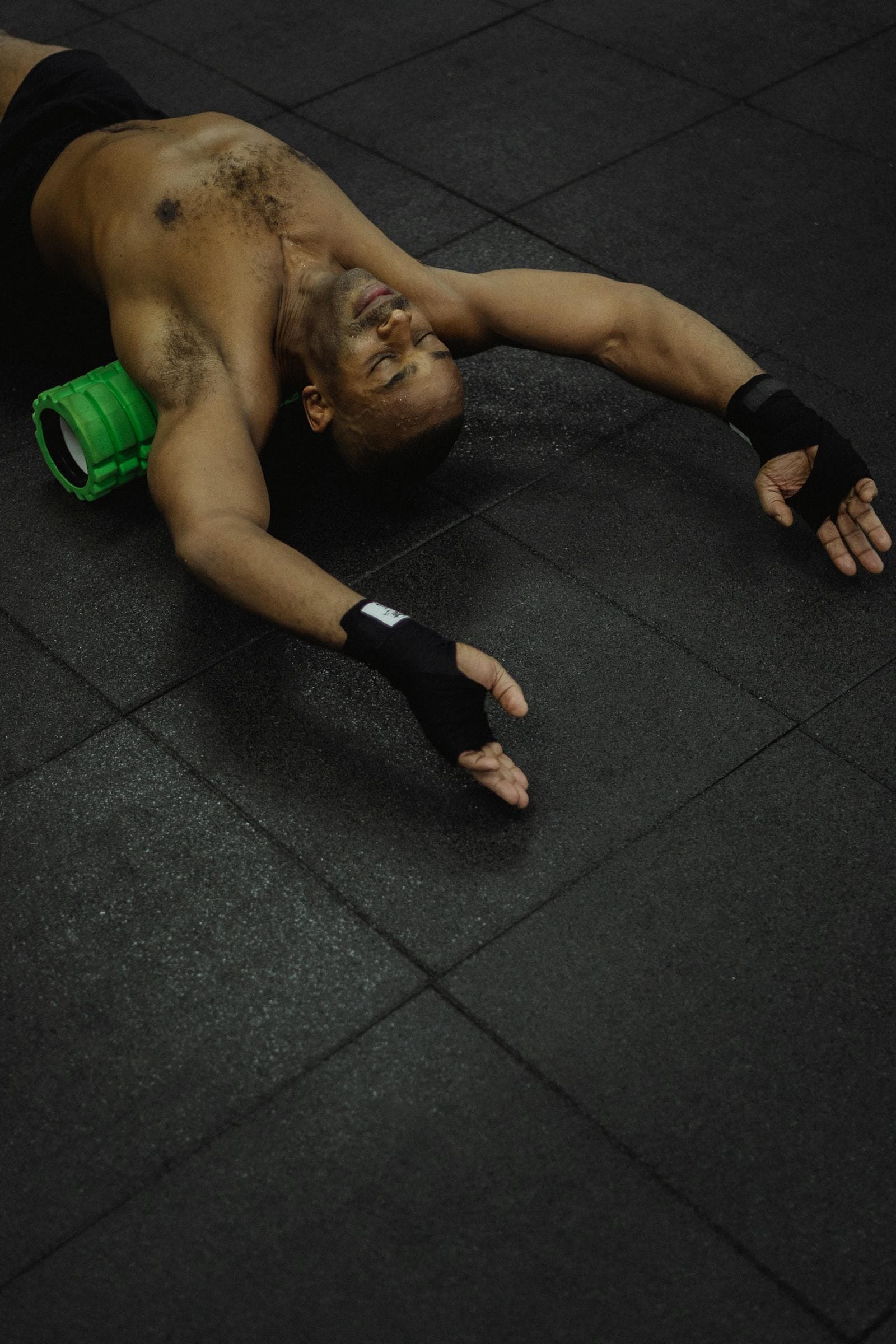
Best general foam roller — TriggerPoint GRID 13-inch→. Medium density, hollow core, $35. The default pick for nearly everyone.
Best for deep release / heavy users — Rumble Roller Original→. Studded surface, firm density. Aggressive. Not for first-timers.
Best therapy balls — Yoga Tune Up Therapy Balls (Original)→. Two grippy rubber balls in a tote. The single most-used recovery tool in our kit.
Best percussion massager — Theragun Mini (2nd gen)→. $200. Specific use cases (hamstrings, glutes pre-class). Not a replacement for the rest of the kit.
Skip — vibrating foam rollers and "ridged" rollers under $20. Marketing, not function.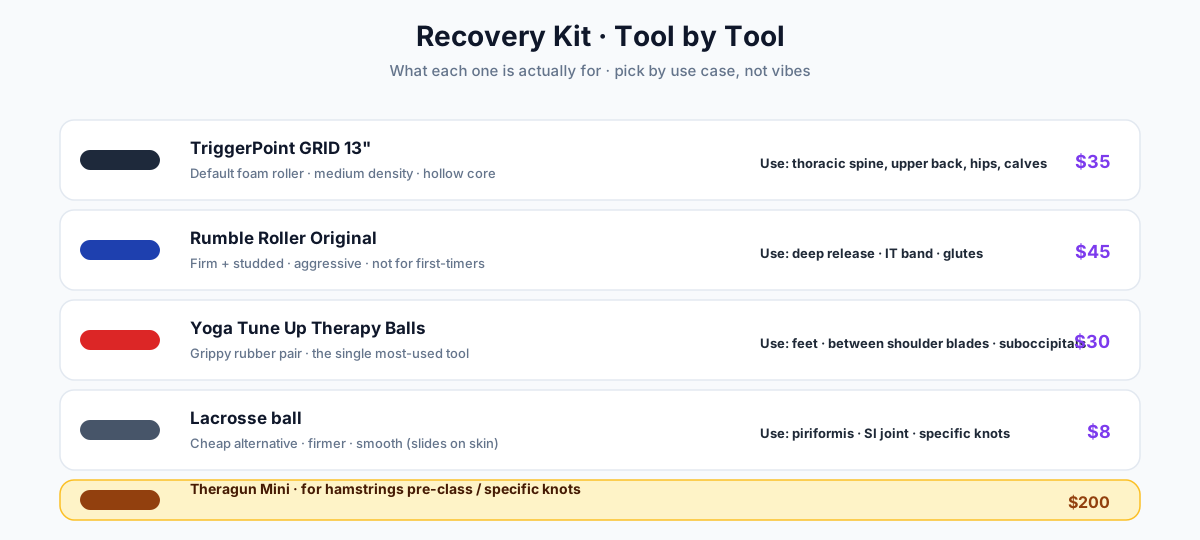
What foam-rolling actually does (and doesn't)
Quick honesty: foam-rolling does not "break up fascia," "release toxins," or "lengthen muscle." The current science is more modest — sustained pressure on a muscle group triggers a neuromuscular relaxation response, temporarily improving range of motion and reducing perceived stiffness for 10–20 minutes. That window is when you teach or practice.
In other words: foam-rolling is a warmup tool and a between-class reset, not a fix. Used that way it's worth its weight; used as a "treatment" replacement for an actual issue, it's a placebo.
Foam rollers
The GRID is the foam roller we put under most teachers we've coached. The pattern alternates dense ridges and soft hollows so you can target tight spots without grinding into bone. Hollow core means it doesn't compress over time — most cheap rollers go soft within a year; the GRID has been the same density for the four years we've owned ours.
13" is the right length for most uses (upper back, hips, calves). The full-length 26" version exists but is unwieldy for everything except spine work.
Caveat: medium density only. If you're a 200-lb power-yoga teacher with iron quads, you may want firmer (see Rumble below).
The Rumble's studded surface gets into spots a smooth roller can't — IT band, attachment points around the hip, the meaty part of the glute. Firm density. Aggressive on first use.
Don't start here. First-timers should use the GRID for 4–6 weeks before considering the Rumble.
Caveat: the studded surface picks up dust. Wipe down weekly with a damp cloth.
A solid foam cylinder. $15. Lasts a year before noticeable compression. Surprisingly fine for spine extension over the top (the most-used yoga teacher use). If you're not sure you'll use a roller regularly, start here.
Collapses flat to ~1.5" thick. Yes, really — it expands by twisting open. Density is good. $75. The roller you take to retreats and on the road.
Caveat: the collapse mechanism is plastic and is the weak point. Treat it kindly.
Skip
Vibrating foam rollers. The vibration is for novelty; the actual pressure-distribution physics aren't different from a non-vibrating roller. $40 markup for nothing.
Smooth rollers under $20. Compress to soft within 2-3 months. False economy.
Long ridged rollers with massive spikes. Designed to look intense in marketing photos; in practice they bruise rather than release.Therapy balls — the bigger win
Honestly: if we could only own one recovery tool, it would be the Yoga Tune Up Therapy Balls→, not any of the foam rollers above.
Why: foam rollers do broad work on big muscle groups. The areas yoga teachers actually need to release — between the shoulder blades, the small muscles of the hip, the suboccipital muscles at the base of the skull — are too small and too articulated for a roller.
Yoga Tune Up Original (pair, in a tote)
Two grippy rubber balls, about 2.5" in diameter, slightly soft. Designed by Jill Miller. The grippy surface is the point: it holds your skin and shifts the fascia underneath rather than sliding past it. Standard tennis balls and lacrosse balls slide; YTU balls work the actual tissue.
We use them every day — between the shoulder blades against a wall, under the soles of the feet, under the glutes on a hard floor. The pair-in-a-tote sits in the teaching bag forever.
Check the Yoga Tune Up Therapy Balls on Amazon →→
Yoga Tune Up Plus (firmer, larger)
For the same areas at higher intensity, or for larger sitters. We default to Original for most teachers; Plus for power-yoga teachers with very dense tissue.
Lacrosse ball — the cheap alternative
A solid rubber lacrosse ball is $8 and works on the glutes and along the spine. The downside vs the YTU balls: too firm (lacrosse balls don't compress), and the smooth surface slides on skin. For specific spots (piriformis, around the SI joint) it's fine; for general work, the YTU pair is the better investment.
Lacrosse ball on Amazon →→
Percussion massagers
The category most over-marketed in recovery. Most teachers don't need one. If you do, get the smallest battery-powered option you can.
$200. Small enough to pack. Three speeds. The actual use cases: warming up hamstrings before teaching at 6am, working out a specific glute knot pre-class, or post-teaching dump on the quads after a long class.
It is not a substitute for a foam roller (it's spot-targeted, not broad), and it's not a substitute for therapy balls (it doesn't do fascial shifting). It's the tool for "I have a specific knot in a specific muscle and I have 4 minutes to dump it."
Skip
$50 Amazon-brand percussion massagers. Build quality is uniformly bad. Battery dies in 6 months. The motor stalls under real pressure.
Full-size Theragun Pro. $600 for use cases that 95% of teachers don't have. The Mini does the job.
What to use, and when
Pre-class warmup
2 min: foam roll the thoracic spine over the top of a TriggerPoint GRID→
2 min: Yoga Tune Up balls→ under the feet, between the shoulder blades against the wall
1 min: hip flexor release on the floorThat's it. 5 minutes. You'll feel the difference in your demos in the first 10 minutes of class.
Between back-to-back classes
Therapy balls under the feet for 90 seconds. Stand. The whole posture chain resets. This is the single highest-leverage recovery move on the list.Post-teaching dump (the long-class day)
10 min foam roll: thoracic, glutes, IT band (gently — IT band foam rolling is mostly tibial fascia, the actual band doesn't change length)
5 min therapy balls on whatever's tight
Hot showerAfter workshops or 4+ class days
Add the Theragun Mini→ for spot-targeting the worst knots
Sleep more than you want toCare + longevity
Foam rollers last 2-5 years depending on density. Hollow-core rollers last longest. Wipe with damp cloth + mild soap monthly.
Therapy balls last forever if you store them in the tote. Direct sunlight degrades the rubber over years.
Percussion massagers need their battery recharged every 2-3 weeks even if you don't use them — battery degrades faster from disuse than use.FAQs
What's the best foam roller for yoga teachers?
TriggerPoint GRID 13"→ for nearly everyone. The 13" is the right length, the medium density is right for first-timers and experienced users, and it doesn't compress over time.
Are foam rollers actually effective?
For short-term (~20 min) range-of-motion gains and perceived-stiffness reduction: yes, the research is solid. As a long-term "treatment" for tight muscles: no. Use them as warmup tools and short-term resets, not as a fix.
Yoga Tune Up balls vs lacrosse ball — what's the difference?
The YTU balls have a grippy rubber surface that grabs the skin and shifts the fascia underneath. Lacrosse balls are smooth and slide on the skin. For most yoga recovery work, the YTU balls do the actual job.
Should I get a foam roller or therapy balls first?
Therapy balls. Specifically the Yoga Tune Up Original pair→. They cover more of what yoga teachers actually need to release than a foam roller does.
Is a Theragun worth it?
For most teachers, no — a foam roller and therapy balls cover the use cases. The Theragun Mini→ is worth it if you specifically pre-warm hamstrings before early-morning classes or want a portable spot-targeting tool. The full-size Pro is overkill.
How often should I foam-roll?
Daily, if you're teaching daily. 5 minutes pre-class for warmup, 10 minutes post-class for dump. Less than that on rest days. More doesn't add value — the neuromuscular response saturates quickly.
Can I use a foam roller during a yoga class?
For specific therapeutic classes (myofascial release as a 60-min class, restorative classes with rolling as a component), yes. In a standard vinyasa or hatha class, no — keep the recovery work separate from the practice.
What's next
Pair with the props that protect your knees and shoulders during teaching — Best Yoga Props for Yin Yoga.
For the mat that's under all of this — Best Yoga Mats for Teachers in 2026.
Browse the rest of the Yoga Gear hub.If you build classes that integrate myofascial release work, sequence them with the FLOW Sequence Builder — works alongside our 420-pose library so you can drop in roller-work blocks between asana sections.
Cover photography from Pexels (free commercial-use license). Picks based on first-hand teaching + recovery use across the FLOW team. Pricing approximate and may shift on Amazon. Last refresh: May 2026.*