Yogi Squat Twist Variation
Parivrtta Malasana Variation
Working: Quadriceps, Glutes, Back muscles, Obliques
Full muscle breakdown ↓About This Pose
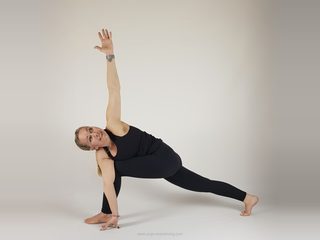
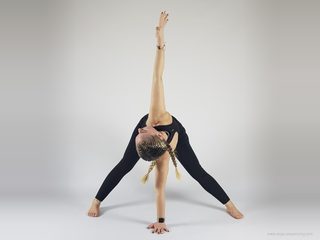
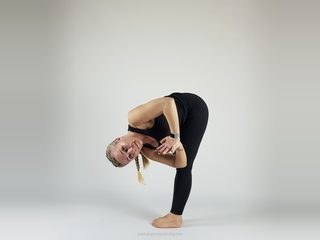
Yogi Squat Twist Variation takes the revolved Malasana and adds an open arm reach toward the ceiling, creating a more expansive twist with greater shoulder and chest opening. While the base Yogi Squat Twist might use prayer hands or an elbow hook, this variation extends the top arm fully, creating a larger rotation through the thoracic spine and a greater stretch across the chest. The open arm position also helps draw the shoulder back, preventing the collapsing that can occur in twisted squats. This variation is excellent for those who want to work on thoracic mobility and shoulder opening while maintaining the hip benefits of the squat.
Muscles Worked in Yogi Squat Twist Variation
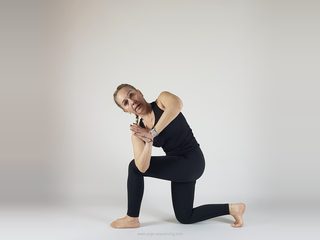
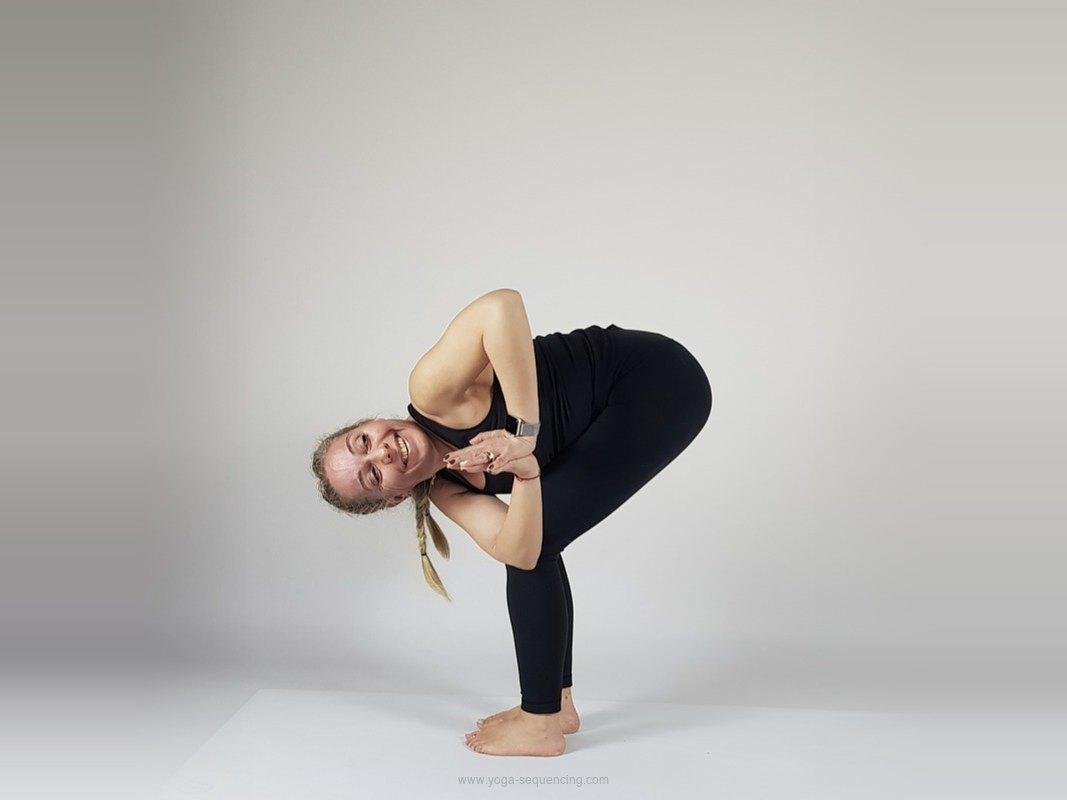
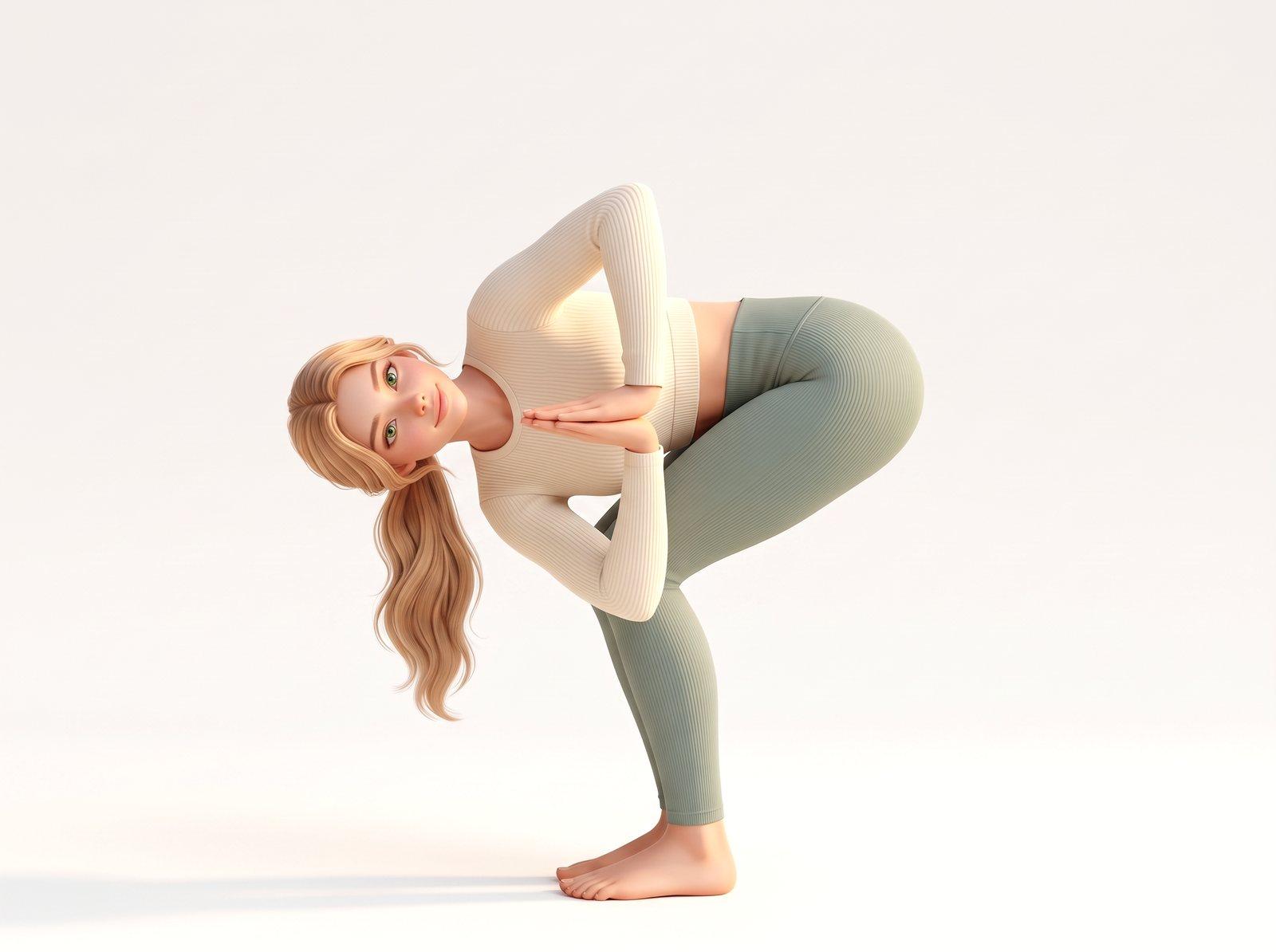
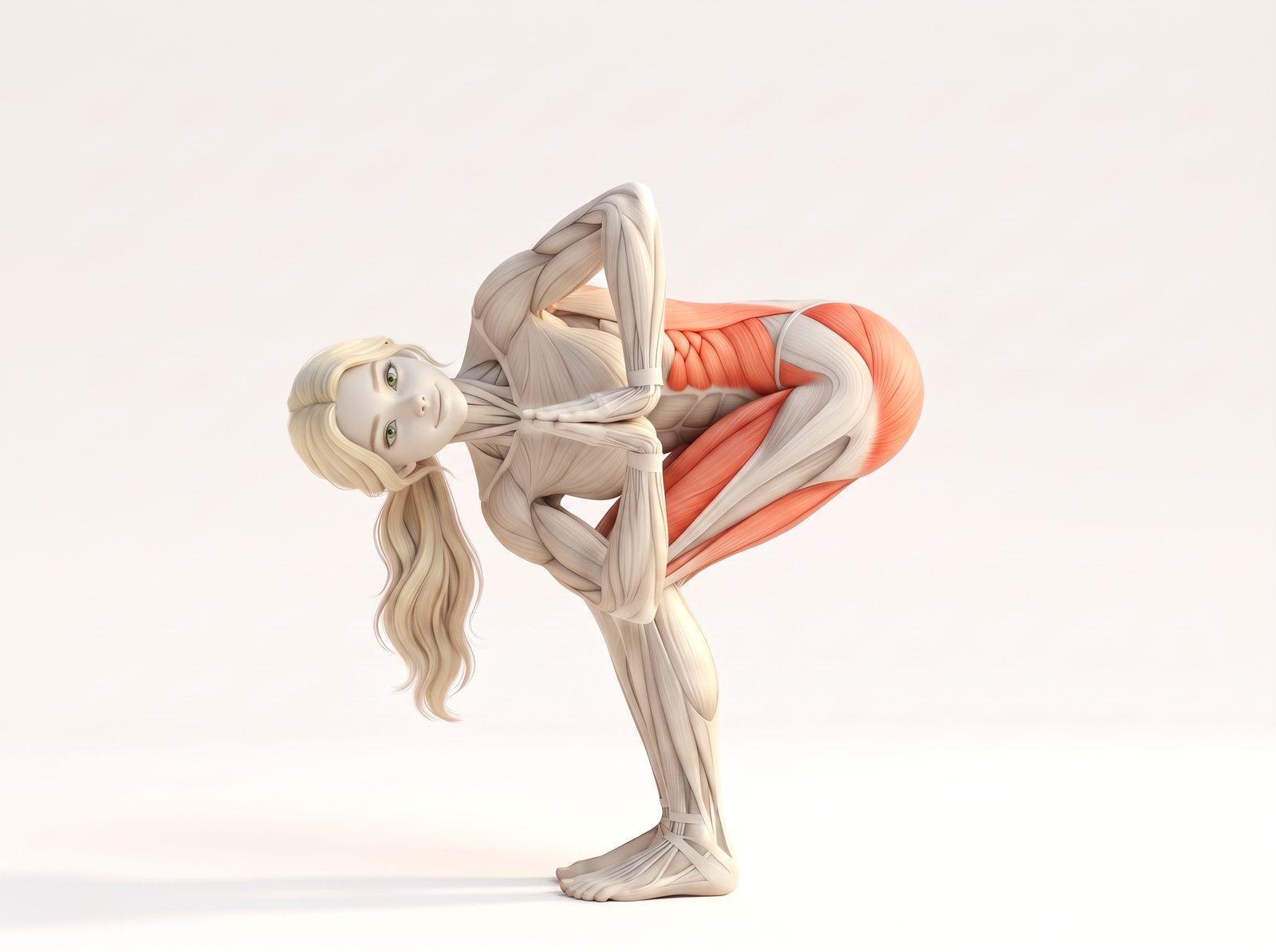
The photo shows Revolved Chair: feet together, knees bent, palms pressed in prayer and one upper arm hooked across the opposite thigh. The quadriceps and glutes hold the squat, the back muscles keep the spine long and the obliques turn the ribcage.
Working
- Quadriceps (quadriceps femoris)
- Glutes (gluteus maximus)
- Back muscles (erector spinae)
- Obliques (external and internal obliques, turning the ribcage)
Stretching
The twist lengthens the small rotators along the spine, but no large muscle group is put on a clear stretch.
Also holding you steady: your inner thighs, which keep the knees together, the muscles of your feet and ankles and chest, pressing the palms together.
Variations and joint actions
- Hands on the thigh: Without the arm hook the twist is shallower and the obliques do less.
- Higher seat: Bending the knees less lightens the load on the quadriceps.
- Hips flexion, torso leaning forward
- Knees flexion, legs together
- Ankles dorsiflexion
- Spine rotation toward the top elbow
- Shoulders bottom arm across the body, top elbow pointing up
- Elbows flexion, palms together at the chest
Roles are qualitative — this section does not measure how hard any muscle works. References: Leslie Kaminoff & Amy Matthews, Yoga Anatomy (Human Kinetics); Ray Long, The Key Muscles of Yoga (Bandha Yoga).
Step-by-Step Instructions
- 1
Come into Yogi Squat with feet slightly wider than hips
- 2
Sink the hips toward the floor
- 3
Place the left hand on the floor inside the left foot
- 4
Or use a block under the left hand
- 5
Inhale to lengthen the spine
- 6
Exhale and rotate the torso to the right
- 7
Extend the right arm toward the ceiling
- 8
Stack the shoulders vertically if possible
- 9
Open the chest fully toward the right
- 10
Gaze follows the top hand or stays neutral
- 11
Hold for 5-8 breaths
- 12
Switch sides
Alignment Cues
- Both feet stay grounded, heels down if possible
- Hips remain low in the squat
- Bottom hand grounds for stability
- Top arm reaches straight up
- Shoulders stack when possible
- Chest opens fully toward the top arm
- Spine stays long throughout
Benefits
- Creates greater chest and shoulder opening
- Maximizes thoracic rotation
- Opens hips in the deep squat
- Extends the stretch through the reaching arm
- Improves shoulder mobility
- Strengthens the grounded arm
- Creates more expansive feeling
- Combines hip and shoulder opening
Modifications
- Place blocks under heels and/or bottom hand
- Keep the top hand on the hip
- Practice against a wall
- Use a blanket under the seat
Variations
- Bind the top arm behind the back
- Take the gaze upward
- Extend both arms in line
- Flow between sides dynamically
Cautions & Contraindications
Cautions
- Ensure shoulder allows for full reach
- Keep both feet grounded
- Don't collapse into the twist
- Maintain squat depth while reaching
- Keep the base stable
Avoid this pose if you have:
- Shoulder injuries
- Knee injuries
- Ankle injuries
- Lower back pain
- Hip injuries
Quick Facts
Primary Focus
hipsSecondary Focus
Suggested Hold
30 seconds
Tags
Equipment