Wide-Legged Forward Fold Deep
Prasarita Padottanasana
About This Pose
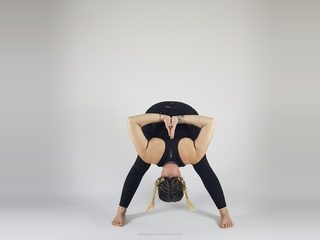
Wide-Legged Forward Fold Deep represents the fuller expression where the crown of the head approaches or rests on the floor between the feet. This depth requires significant hamstring and inner thigh flexibility combined with hip mobility. When the head reaches the floor, the pose becomes grounding and introspective, creating an almost tripod-like stability. This depth transforms the pose from primarily a stretch into a meditative, restorative posture. Working toward this depth over time develops patience and teaches practitioners to trust the process of gradual opening. The deep version offers profound release and stillness.
Muscles Worked in Wide-Legged Forward Fold Deep
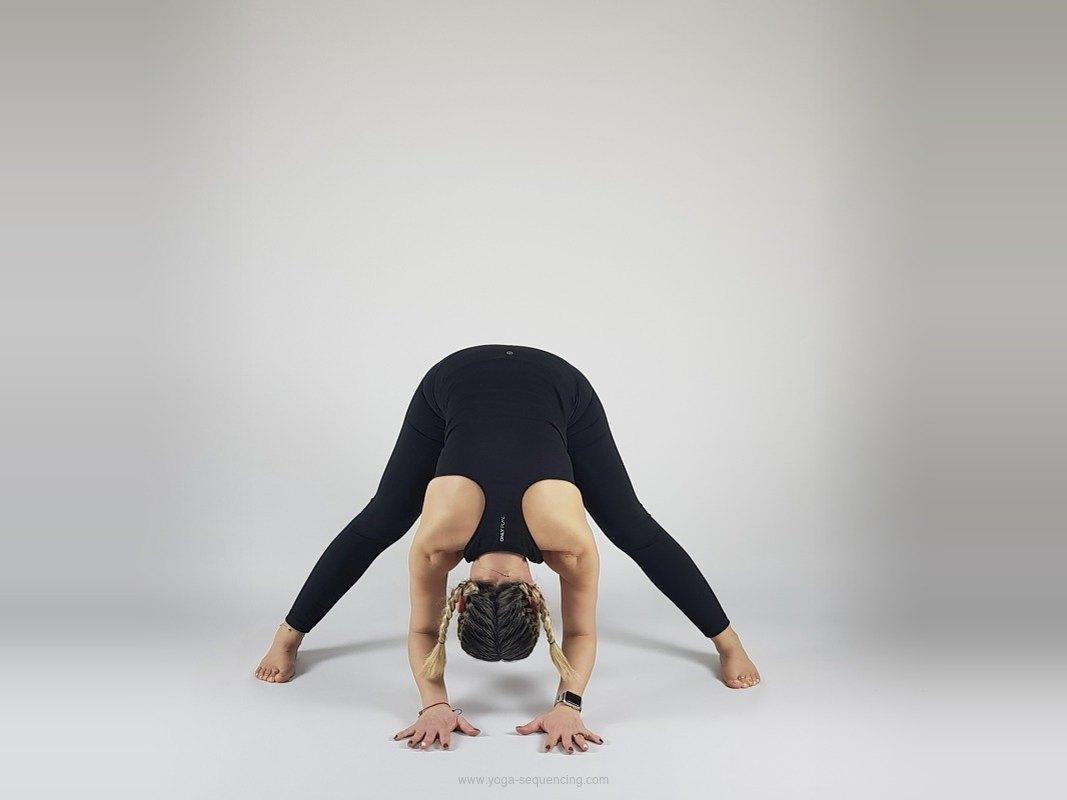
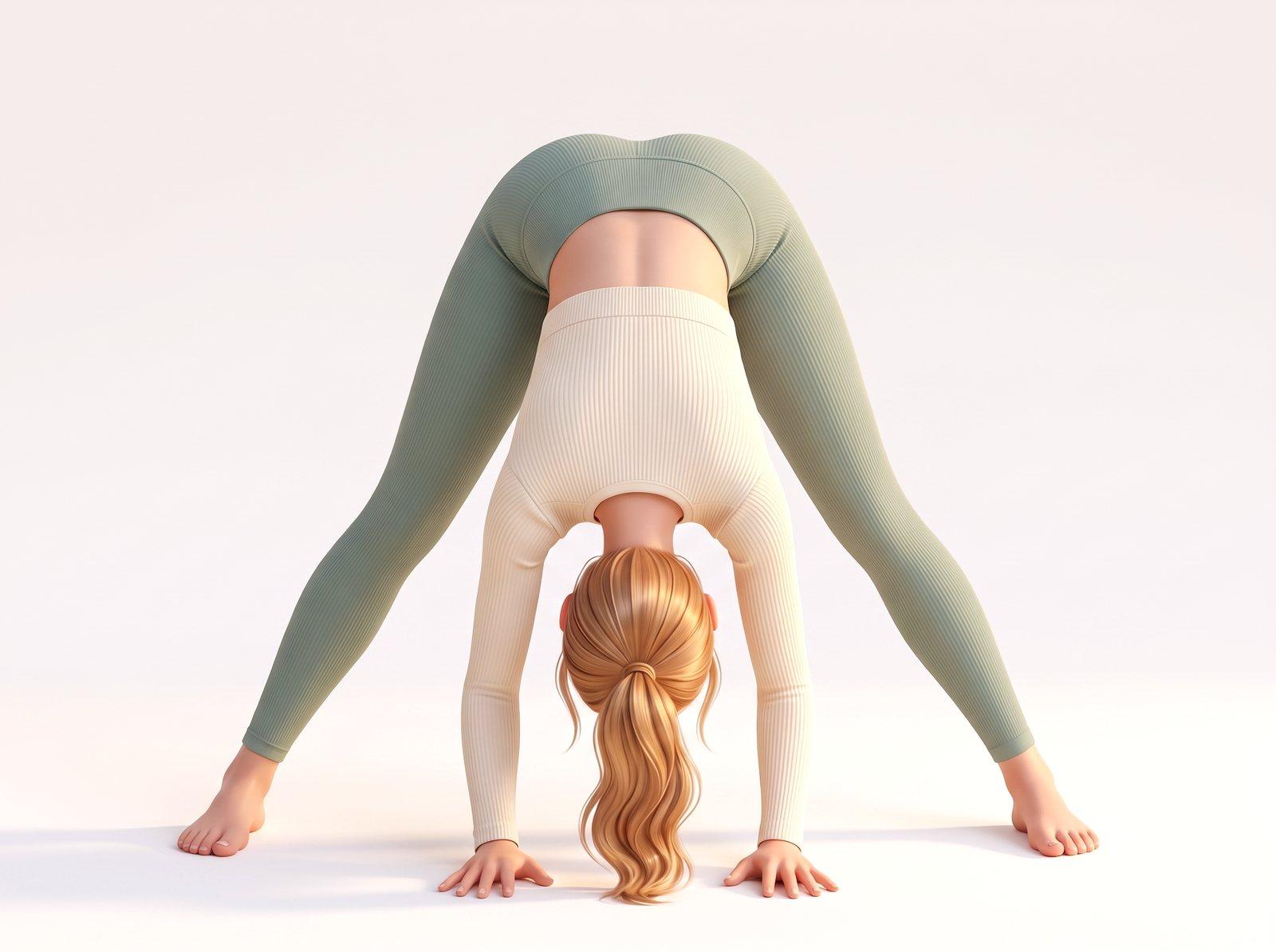
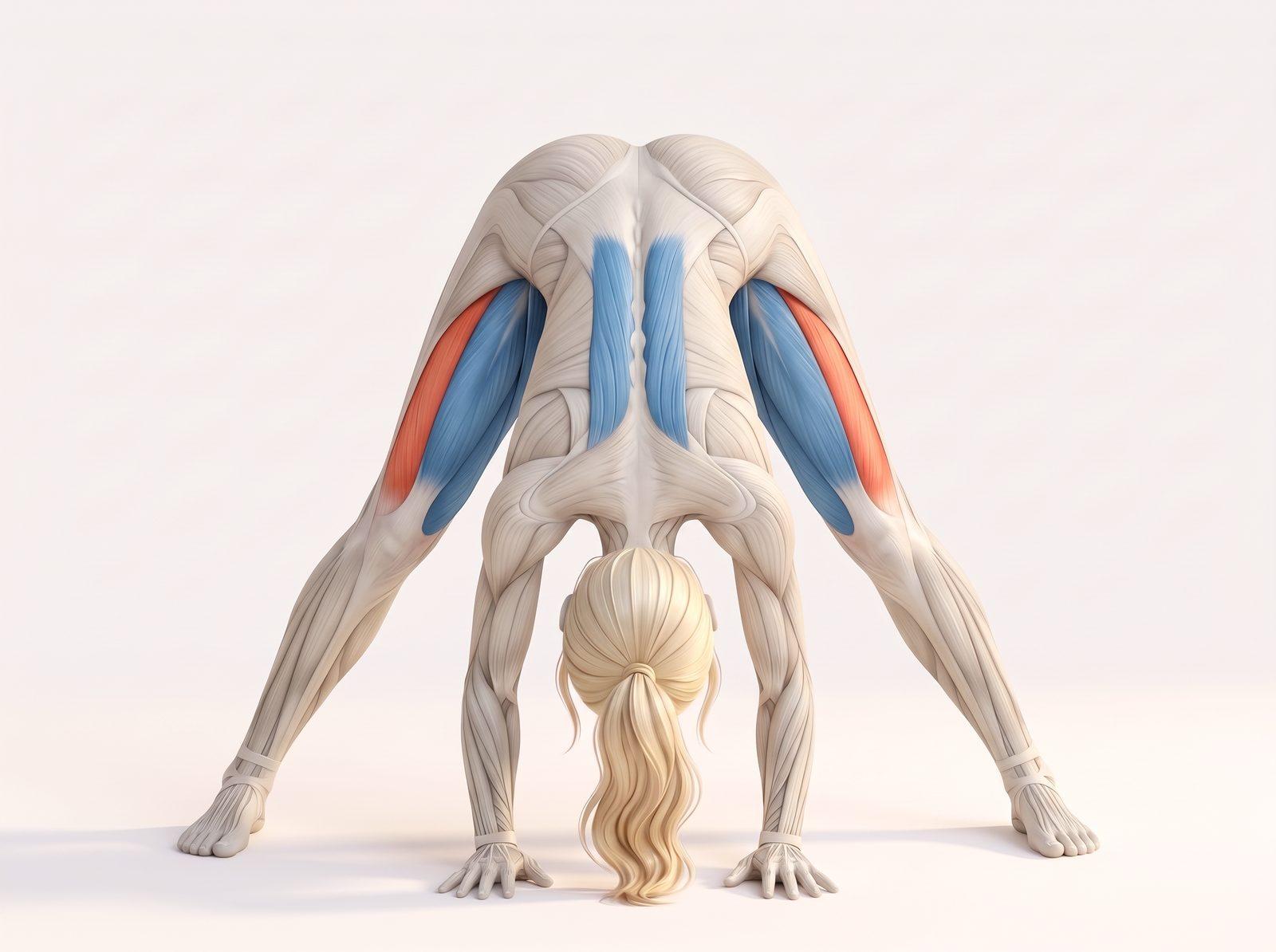
The photo shows Wide-Legged Forward Fold A (Prasarita Padottanasana A) seen from behind: feet wide, legs straight, hands flat on the floor between the feet and the head hanging toward the floor. The hamstrings and inner thighs stretch deeply.
Working
- Quadriceps (quadriceps femoris, keeping the knees straight)
Stretching
- Hamstrings (biceps femoris, semitendinosus, semimembranosus)
- Inner thighs (adductors)
- Back muscles (erector spinae)
Also holding you steady: your the muscles of your feet and ankles and rotator cuff.
Variations and joint actions
- Block under the head: A block under the crown lets the head rest without straining.
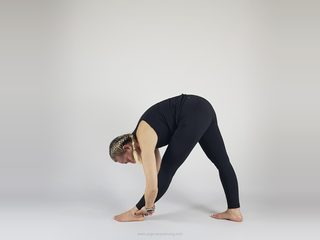
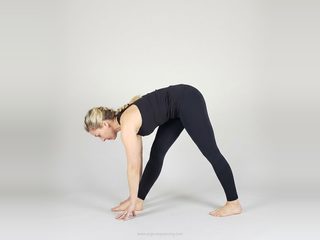
- Hands forward: Hands in line with the shoulders and a long flat back is the gentler halfway version.
- Hips deep flexion and abduction, feet wide apart
- Knees extension
- Spine long, hanging toward the floor
- Shoulders flexion, hands on the floor
- Elbows extension to slight flexion
Roles are qualitative — this section does not measure how hard any muscle works. References: Leslie Kaminoff & Amy Matthews, Yoga Anatomy (Human Kinetics); Ray Long, The Key Muscles of Yoga (Bandha Yoga).
Step-by-Step Instructions
- 1
Ensure body is thoroughly warmed up
- 2
Come into wide-legged forward fold
- 3
Walk hands back between feet
- 4
Gradually lower head toward floor
- 5
If head reaches, rest crown lightly
- 6
Adjust stance width if needed
- 7
Let weight distribute into tripod shape
- 8
Breathe deeply and evenly
- 9
Hold for 5-10 breaths
- 10
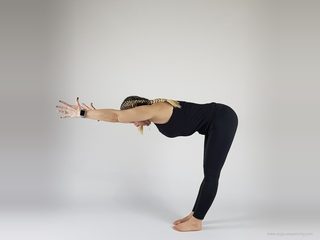
Walk hands forward to exit
- 11
Rise very slowly
Alignment Cues
- Head aims toward floor between feet
- Crown touches lightly, not heavily
- Weight distributes between head and feet
- Spine lengthens toward floor
- Legs stay engaged
- No strain in neck
- Breath flows freely
Benefits
- Maximum inner thigh and hamstring stretch
- Head on floor creates grounding effect
- Deeply calming and meditative
- Demonstrates significant flexibility
- Creates tripod-like stability
- Profound nervous system calming
- Complete release of head and neck
- Transformative when accessible
Modifications
- Use blocks under hands
- Place block under head
- Keep head lifted off floor
- Adjust stance width
Variations
- Different arm positions
- Legs wider or narrower
- Adding gentle sway
- Extended holds
Cautions & Contraindications
Cautions
- Only practice if flexibility allows
- Never force head to floor
- Keep neck safe and comfortable
- Rise very slowly
- Requires adequate warm-up
Avoid this pose if you have:
- Neck injuries
- Low blood pressure
- Groin or hamstring injuries
- Vertigo
- Late pregnancy
Quick Facts
Primary Focus
hamstringsSecondary Focus
Suggested Hold
60 seconds
Tags
Equipment