Three-Legged Plank
Eka Pada Phalakasana
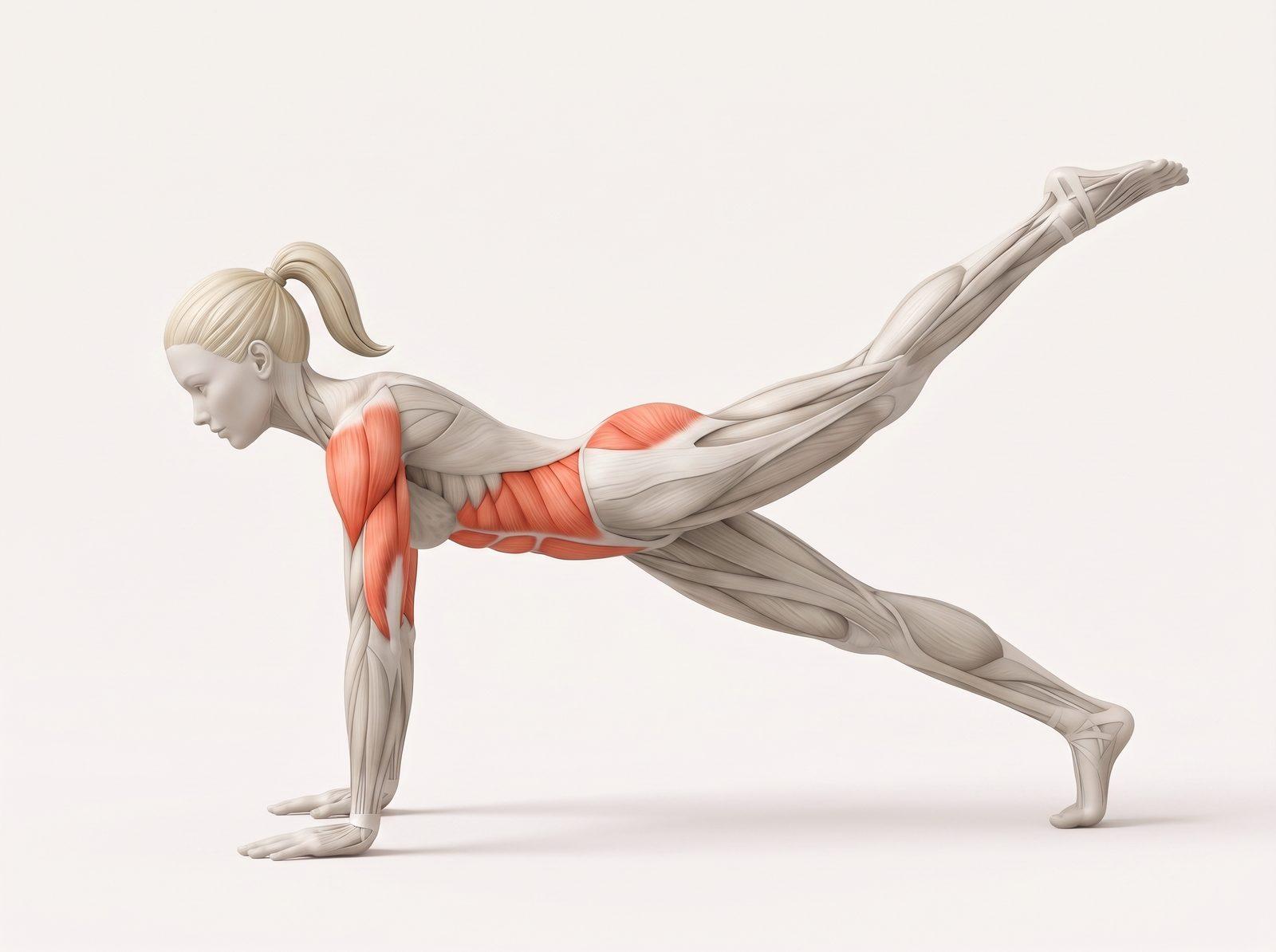
Working: Abdominals, Shoulders, Triceps, Lifted-leg glutes
Full muscle breakdown ↓About This Pose
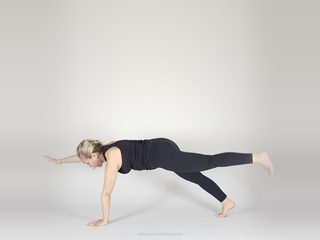
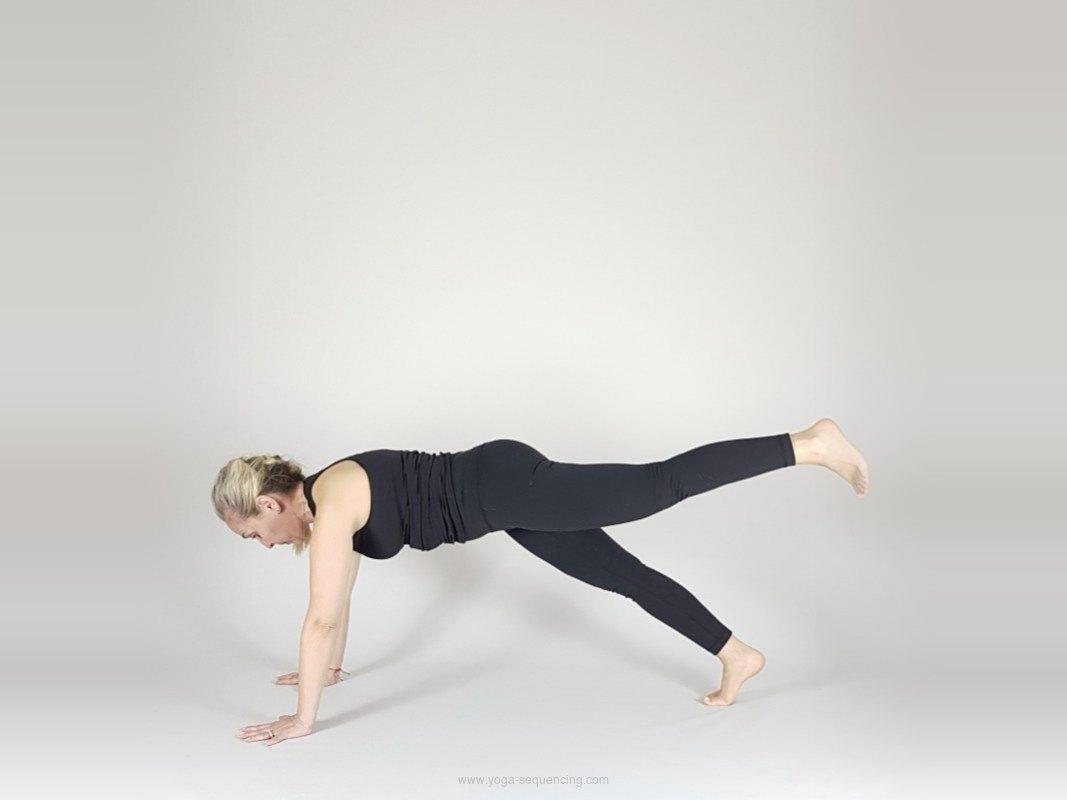
Three-Legged Plank removes one point of contact by lifting a leg behind you, dramatically increasing the core demand and balance challenge. This variation requires the body to stabilize against rotation while maintaining perfect plank alignment. It builds the anti-rotation strength essential for functional movement and advanced arm balances.
Muscles Worked in Three-Legged Plank
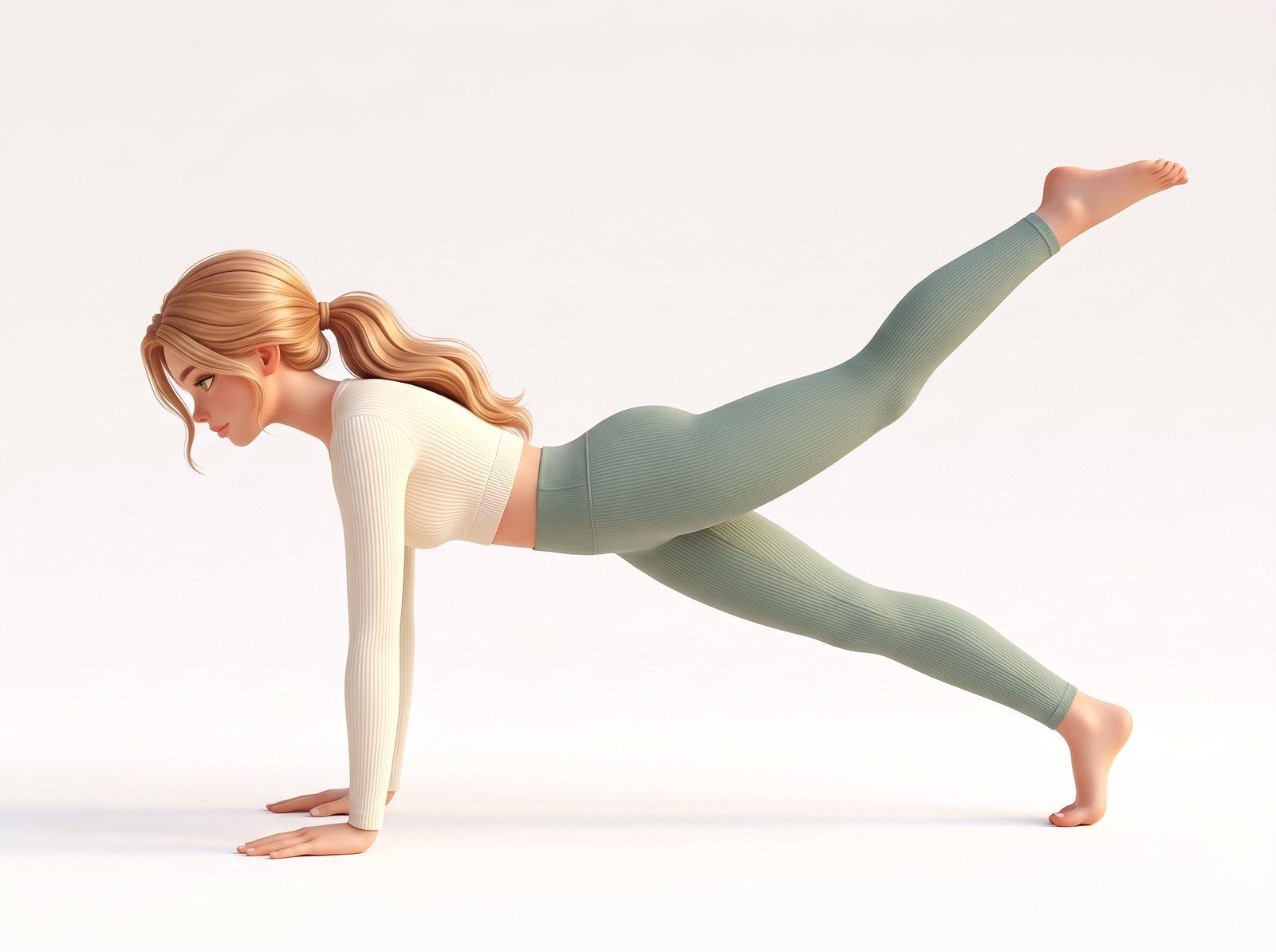
High Plank with one straight leg lifted behind, hips slightly higher than in a flat plank. The core, shoulders and triceps carry the body and the lifted-leg glutes raise the leg.
Working
- Abdominals (rectus abdominis, transversus abdominis)
- Shoulders (deltoids)
- Triceps (triceps brachii)
- Lifted-leg glutes (gluteus maximus)
Stretching
This is a strength hold with no major stretch.
Also holding you steady: your Serratus anterior, rotator cuff, obliques, which stop the hips from rotating and standing-leg quadriceps.
Variations and joint actions
- Both feet down: Plain High Plank first; lift the leg once the hips stay level.
- Knee to chest: Drawing the lifted knee toward the nose between holds adds abdominal work.
- Shoulders flexion, about 90°, hands under the shoulders
- Elbows extension
- Lifted hip extension, leg raised behind
- Standing hip slight flexion
- Knees extension
- Spine neutral
Roles are qualitative — this section does not measure how hard any muscle works. References: Leslie Kaminoff & Amy Matthews, Yoga Anatomy (Human Kinetics); Ray Long, The Key Muscles of Yoga (Bandha Yoga).
Step-by-Step Instructions
- 1
Begin in Plank Pose
- 2
Shift weight slightly to the left hand
- 3
Lift the right leg straight back
- 4
Keep the leg at hip height or higher
- 5
Maintain square hips
- 6
Hold for 5 breaths
- 7
Lower and switch sides
Alignment Cues
- Keep hips square
- Engage the glute of the lifted leg
- Stabilize through the shoulders
- Don't let the hips twist
Benefits
- Intensifies core engagement
- Challenges balance
- Builds anti-rotation strength
- Prepares for arm balances
- Tests stability
- Develops unilateral strength
Modifications
- Lower the lifted leg slightly
- Keep the toe touching the floor
Variations
- Bend the lifted knee for quad stretch
Cautions & Contraindications
Cautions
- Avoid hip rotation
- Keep shoulders steady
Avoid this pose if you have:
- Lower back pain
- Wrist injury
Quick Facts
Primary Focus
coreSecondary Focus
Suggested Hold
30 seconds
Tags
Equipment