Bound Seated Side Stretch
Parivrtta Janu Sirsasana
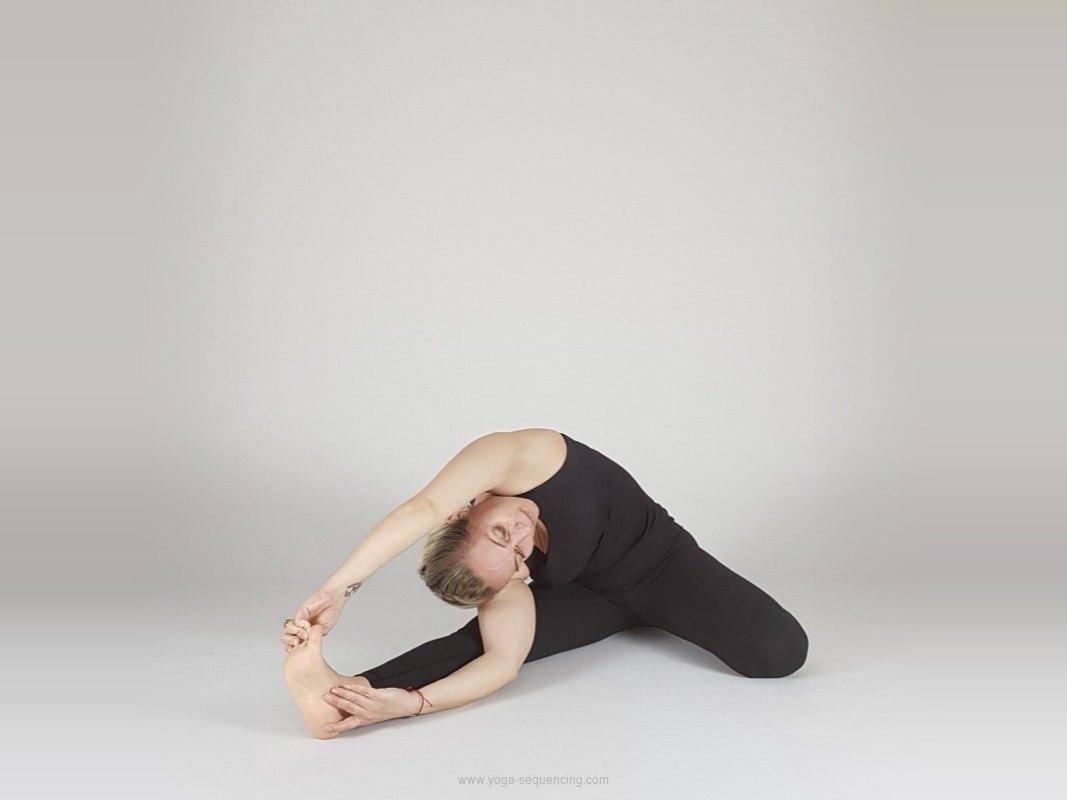
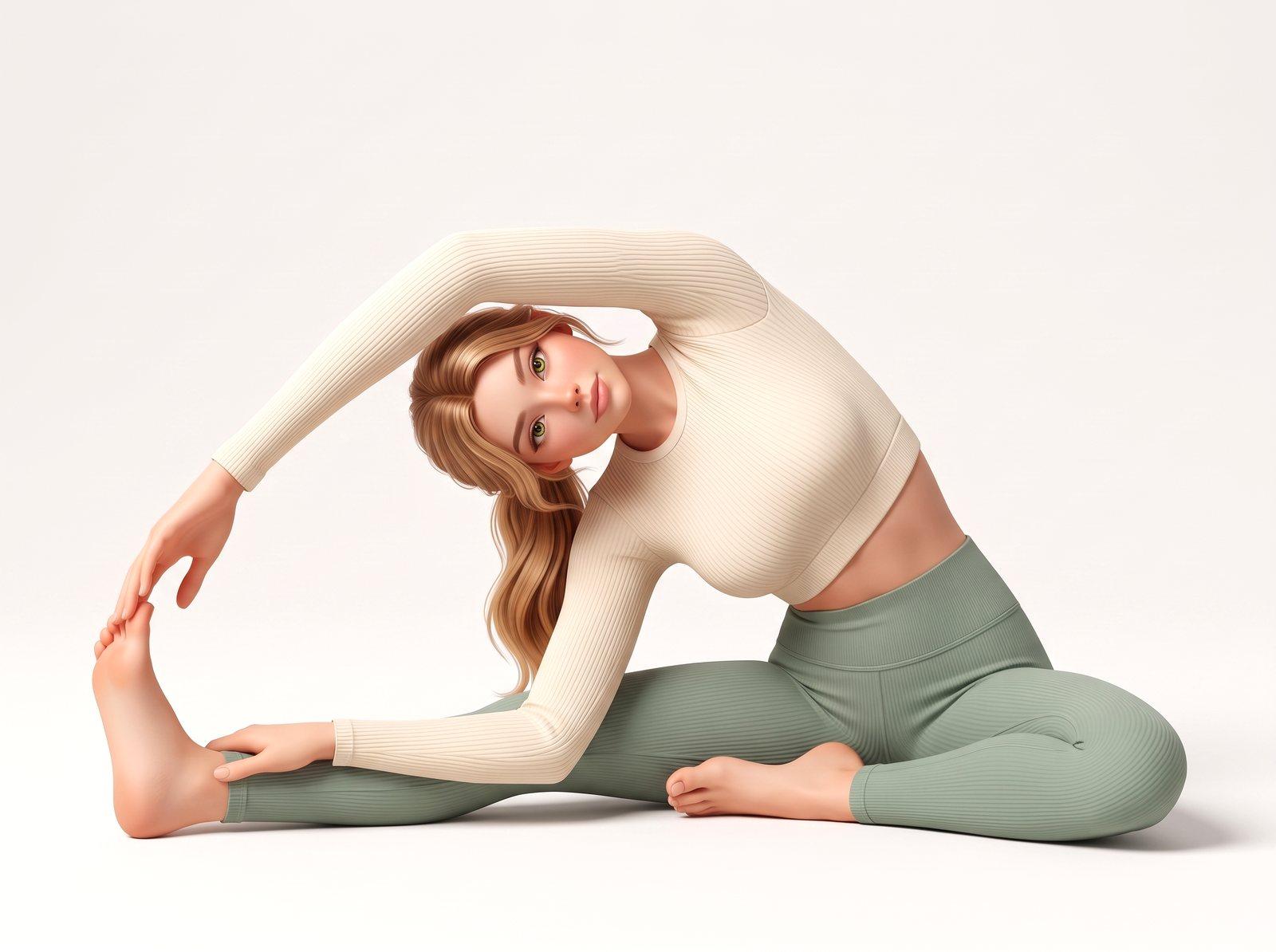
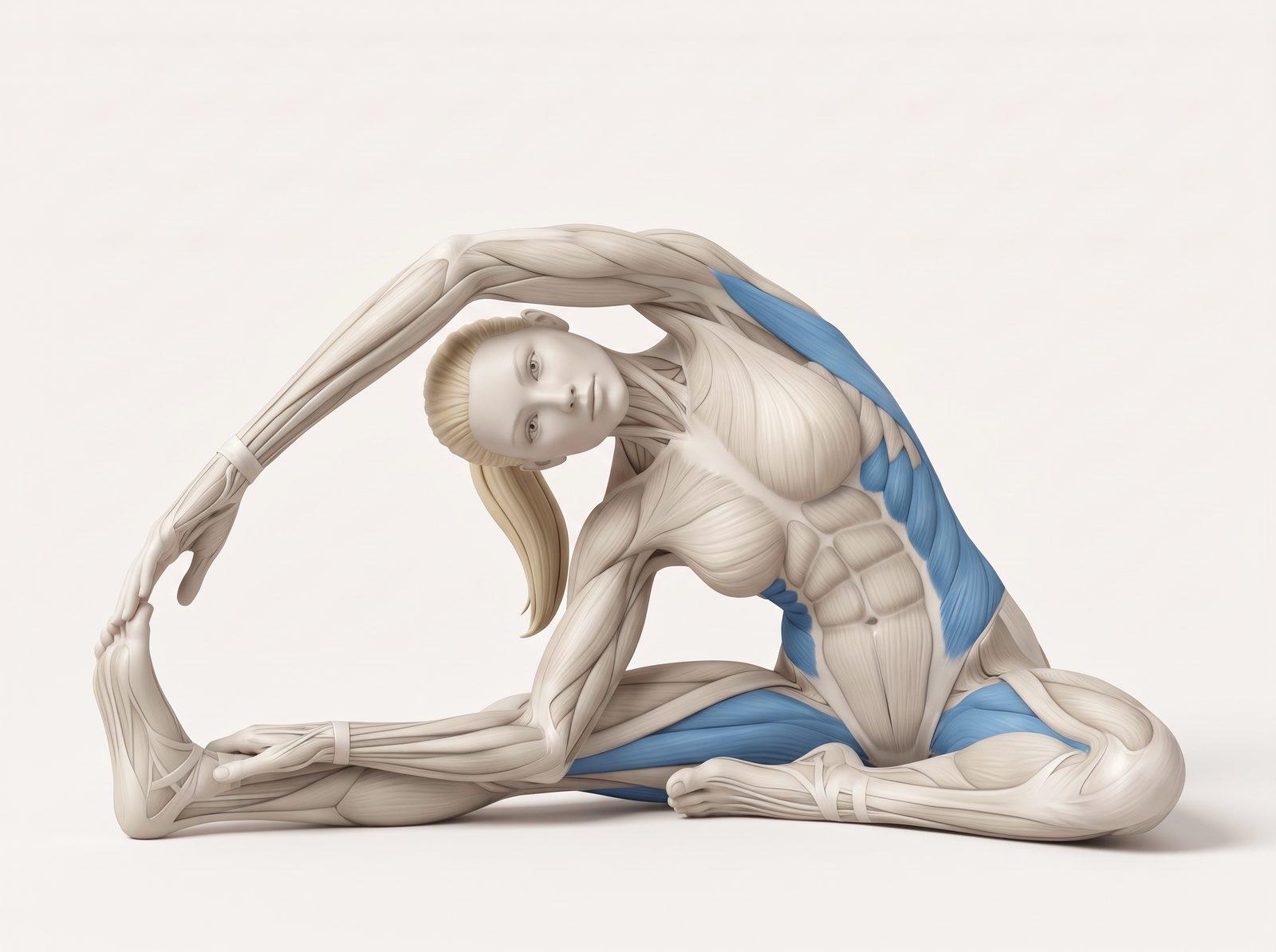
Stretching: Top-side lats, Top-side obliques, Straight-leg hamstrings, Bent-leg inner thigh
Full muscle breakdown ↓About This Pose
Bound Seated Side Stretch combines lateral flexion with an arm bind to create a deep opening along the side body and shoulders. This intermediate variation intensifies the stretch in the intercostal muscles while adding a shoulder and chest opening component. The bind requires and develops flexibility in the shoulders while maintaining the side body benefits. Regular practice improves spinal mobility, shoulder flexibility, and breathing capacity.
Muscles Worked in Bound Seated Side Stretch
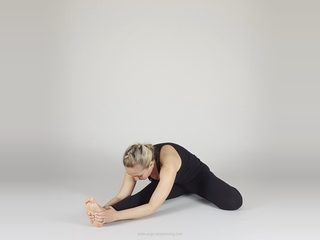
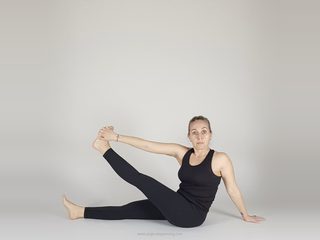
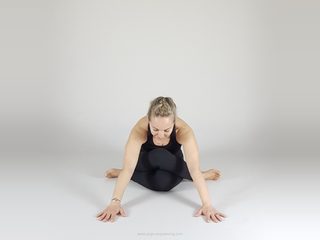
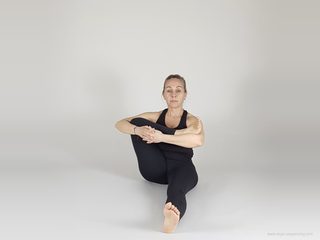
The photo shows Revolved Head-to-Knee Pose (Parivrtta Janu Sirsasana): one leg straight, the other knee bent out to the side, and the torso bending sideways over the straight leg with both hands holding its foot. It stretches the top-side lats and obliques, the straight-leg hamstrings and the bent-leg inner thigh.
Working
A passive stretch — the hands on the foot hold the side bend, with only light work to turn the chest upward.
Stretching
- Top-side lats (latissimus dorsi)
- Top-side obliques (external and internal obliques, quadratus lumborum)
- Straight-leg hamstrings (biceps femoris, semitendinosus, semimembranosus)
- Bent-leg inner thigh (adductors)
Variations and joint actions
- Bottom forearm on the floor: Resting the bottom forearm inside the straight leg and reaching only the top arm keeps the side stretch with far less hamstring demand.
- Bend the straight knee: A soft knee takes the hamstrings out of it so the side body can be the focus.
- Spine lateral flexion toward the straight leg, chest turning upward
- Straight-leg hip flexion and abduction
- Straight-leg knee extension
- Bent-leg hip flexion, abduction and external rotation
- Bent-leg knee deep flexion
- Shoulders top arm in full flexion overhead, both hands holding the foot
Roles are qualitative — this section does not measure how hard any muscle works. References: Leslie Kaminoff & Amy Matthews, Yoga Anatomy (Human Kinetics); Ray Long, The Key Muscles of Yoga (Bandha Yoga).
Step-by-Step Instructions
- 1
Begin in seated side stretch position
- 2
Reach top arm to bind around foot
- 3
Rotate chest upward toward ceiling
- 4
Use a strap if full bind unavailable
- 5
Maintain length through both sides
- 6
Breathe deeply into the expansion
Alignment Cues
- Bind arms if accessible
- Lengthen side body
- Keep hips grounded
- Breathe into stretch
Benefits
- Deeply opens side body muscles
- Stretches shoulders and chest
- Improves spinal lateral mobility
- Enhances breathing capacity
- Builds shoulder flexibility
- Creates full torso opening
Modifications
- Use strap
Variations
- Side stretch without bind
Cautions & Contraindications
Cautions
- Avoid collapsing chest
Avoid this pose if you have:
- Lower back pain
Quick Facts
Primary Focus
spineSecondary Focus
Suggested Hold
40 seconds
Tags
Equipment