Pyramid Pose
Parsvottanasana
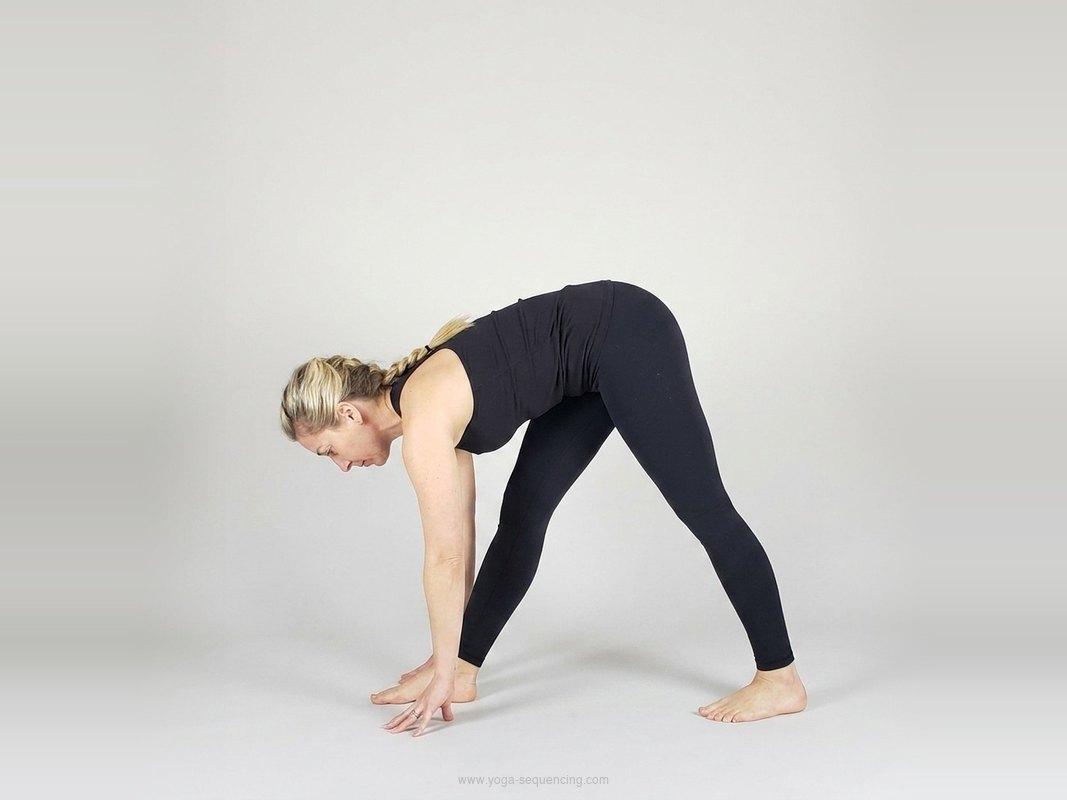
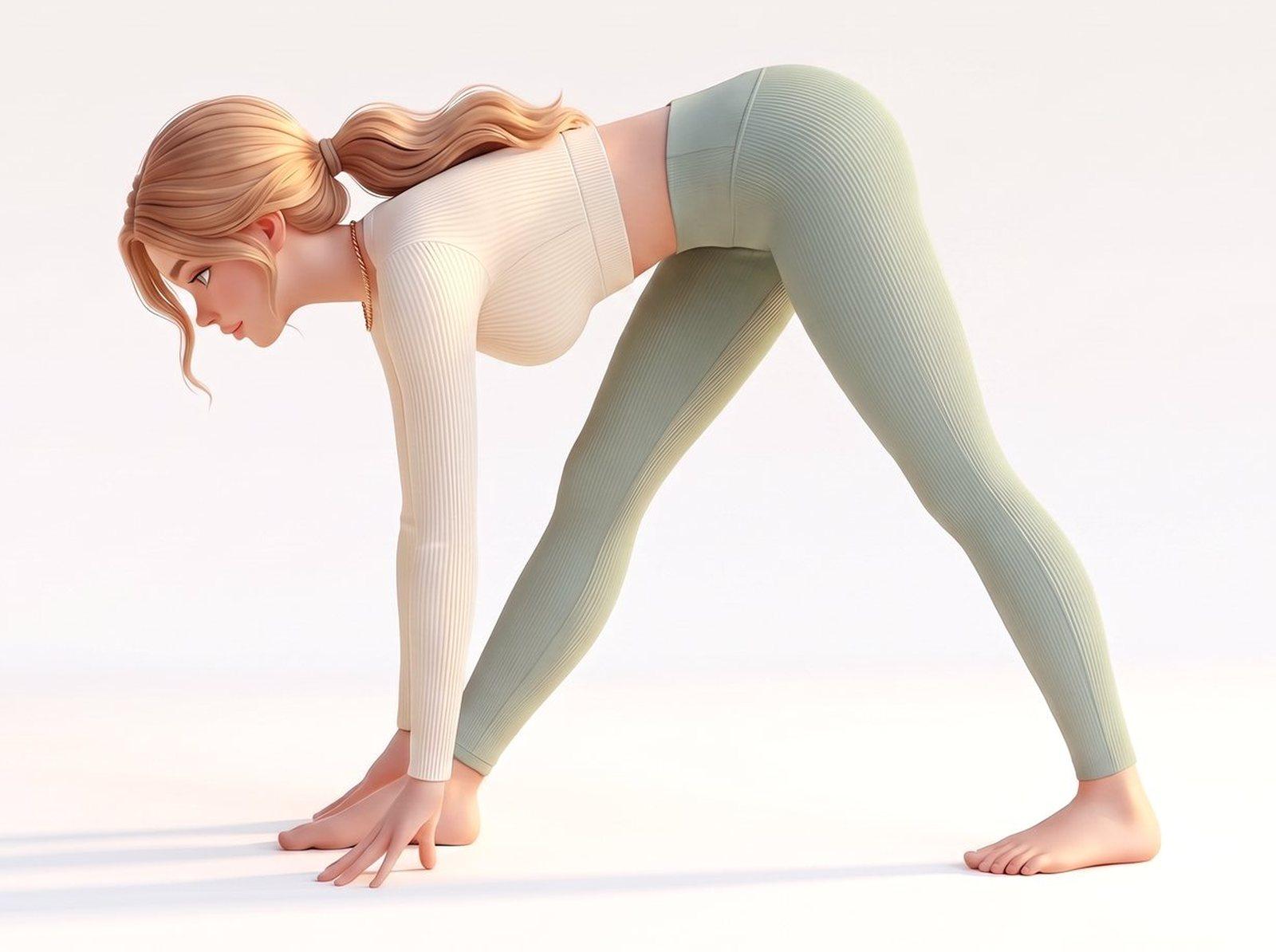
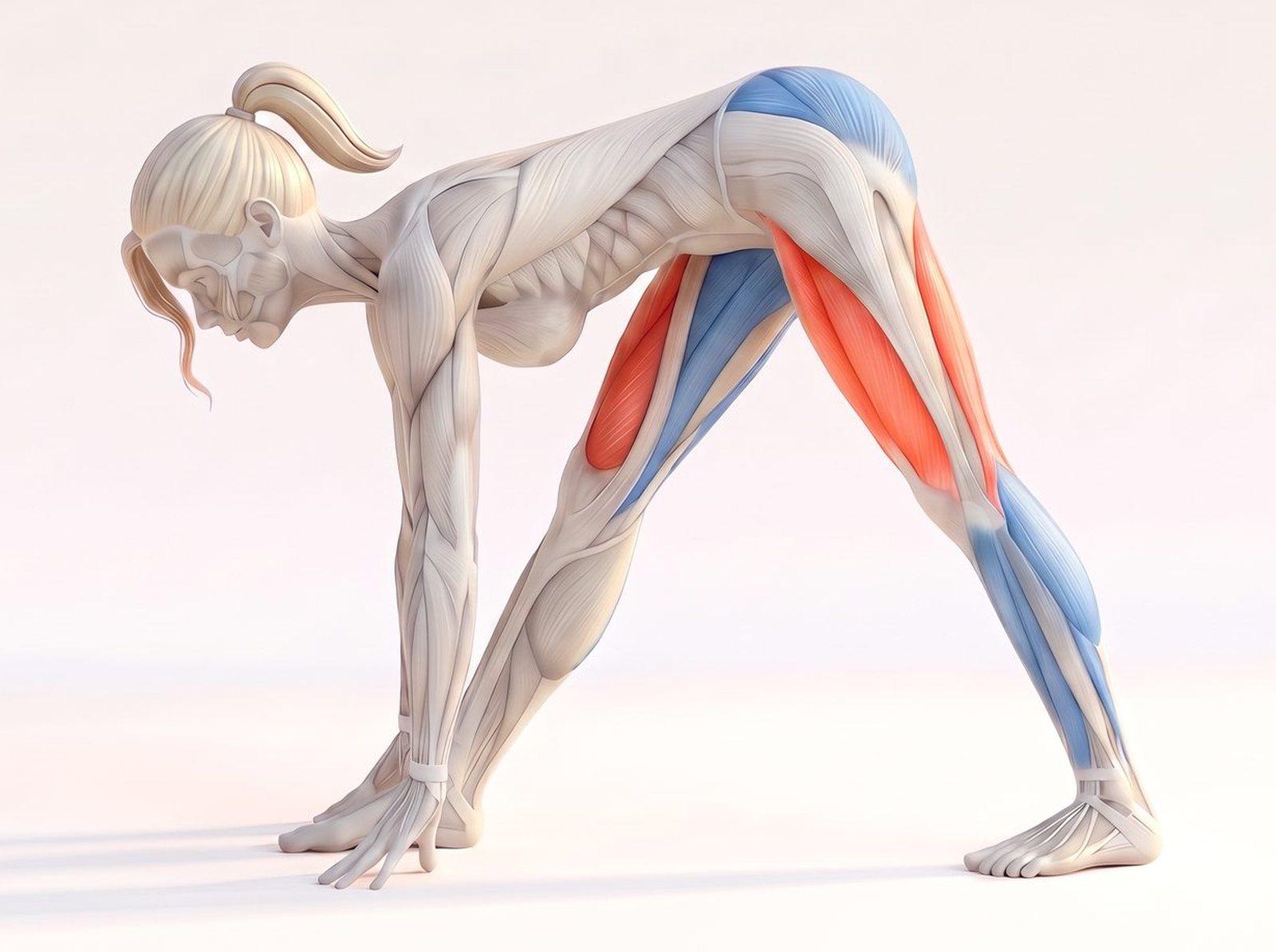
Working: Quadriceps (both legs)
Stretching: Front-leg hamstrings, Front-leg glutes, Back-leg calf
Full muscle breakdown ↓About This Pose
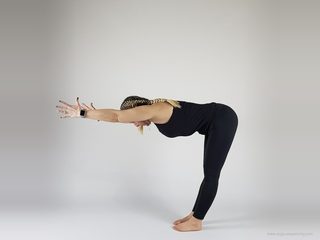
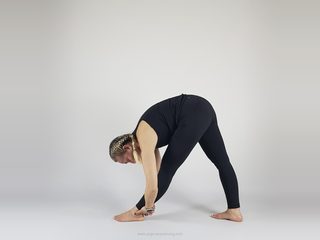
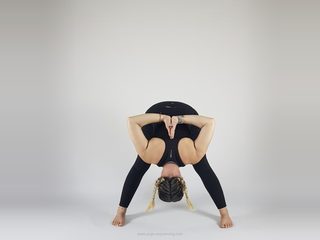
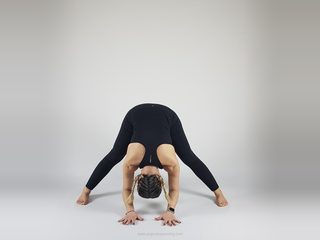
Pyramid Pose (Parsvottanasana) is a standing forward fold that deeply stretches the hamstrings while building balance and calm focus. With the feet in a shorter stance and the hips squared to the front, the torso folds over a straight front leg, the hands framing the foot, resting on blocks, or bound behind the back in reverse prayer. Pyramid lengthens the entire back line of the front leg, stretches the spine, and teaches steadiness through an asymmetrical base. It is an excellent preparation for Standing Splits, Revolved Triangle, and other balancing forward folds.
Muscles Worked in Pyramid Pose
Pyramid Pose stretches the hamstrings and glutes of the straight front leg and the calf of the back leg, while the quadriceps of both legs work to keep the knees straight.
Working
- Quadriceps (both legs) (quadriceps femoris)
Stretching
- Front-leg hamstrings (biceps femoris, semitendinosus, semimembranosus)
- Front-leg glutes (gluteus maximus)
- Back-leg calf (gastrocnemius, soleus)
Also holding you steady: your hip stabilisers (gluteus medius), the muscles of your feet and ankles and core.
Variations and joint actions
- Hands on blocks: A smaller fold, so a gentler hamstring stretch and an easier time keeping the spine long.
- Hands in reverse prayer: Adds a stretch across the chest and front shoulders, and makes balance harder.
- Front hip deep flexion
- Back hip flexion, squared forward
- Knees extension
- Back ankle dorsiflexion
- Spine long, folding forward
Roles are qualitative — this section does not measure how hard any muscle works. References: Leslie Kaminoff & Amy Matthews, Yoga Anatomy (Human Kinetics); Ray Long, The Key Muscles of Yoga (Bandha Yoga).
Step-by-Step Instructions
- 1
Step the feet about 3 feet apart
- 2
Turn both feet to face the front of the mat
- 3
Square the hips forward evenly
- 4
Lengthen the spine on an inhale
- 5
Hinge forward over the front leg
- 6
Place the hands on blocks or the floor
- 7
Draw the front hip back to stay square
- 8
Keep the front leg straight but not locked
- 9
Relax the head toward the shin
- 10
Hold 5 to 8 breaths, then switch sides
Alignment Cues
- Hips squared to the front
- Front leg straight with a soft knee
- Spine long, folding from the hips
- Weight balanced between both feet
- Shoulders relaxed away from the ears
Benefits
- Deeply stretches the hamstrings and calves
- Lengthens the spine
- Squares and stabilizes the hips
- Improves balance and posture
- Calms the mind
- Opens the shoulders in reverse prayer
Modifications
- Use blocks under the hands
- Shorten the stance for balance
- Keep the spine long and halfway lifted
Variations
- Reverse prayer arms behind the back
- Enter into Standing Splits
- Add a twist for Revolved variation
Cautions & Contraindications
Cautions
- Keep a micro-bend in the front knee
- Fold from the hips, not the low back
- Keep both hips level and squared
Avoid this pose if you have:
- Hamstring tears
- Low back injury
- Balance issues (use blocks)
Quick Facts
Primary Focus
hamstringsSecondary Focus
Suggested Hold
40 seconds
Tags
Equipment