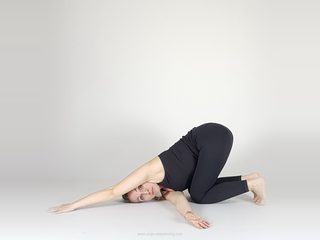
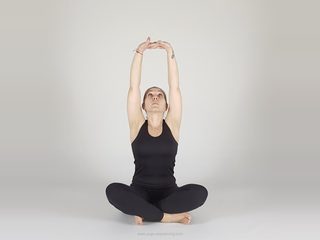
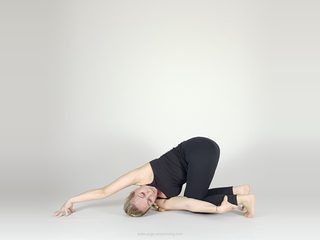
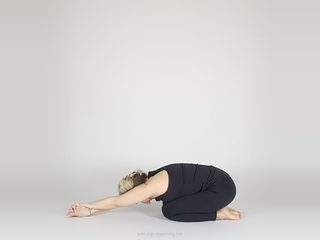
Lotus Shoulder Stretch
Padmasana Shoulder Stretch
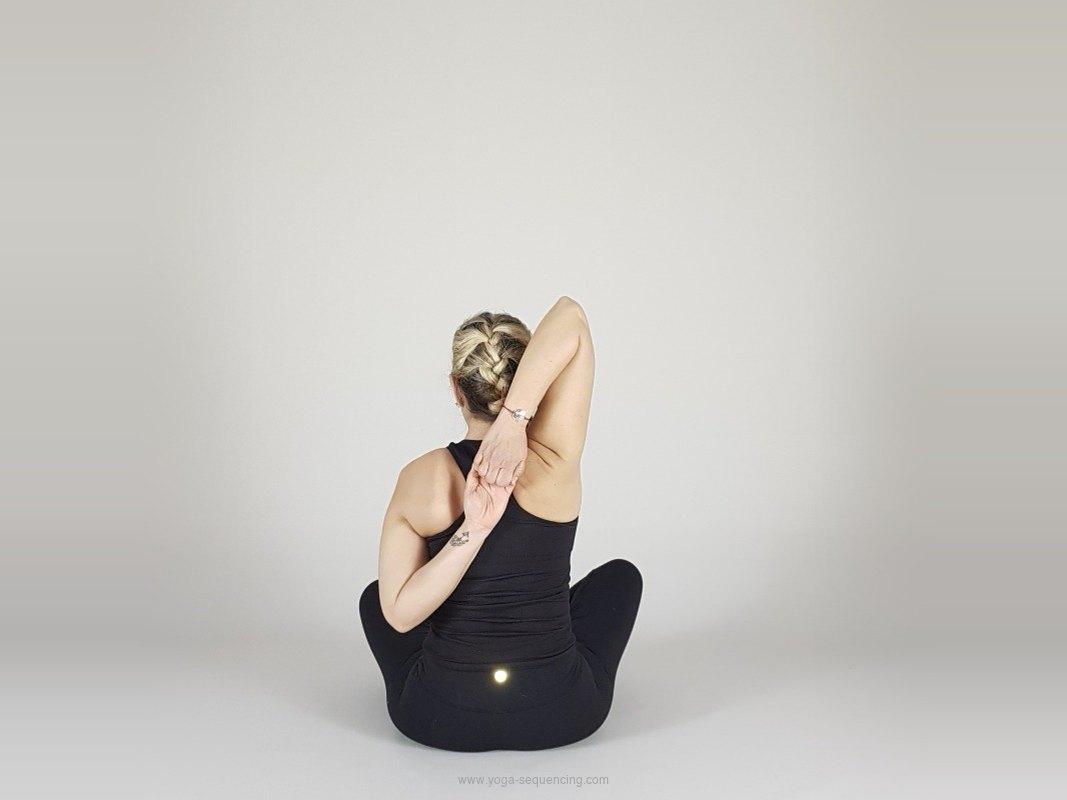
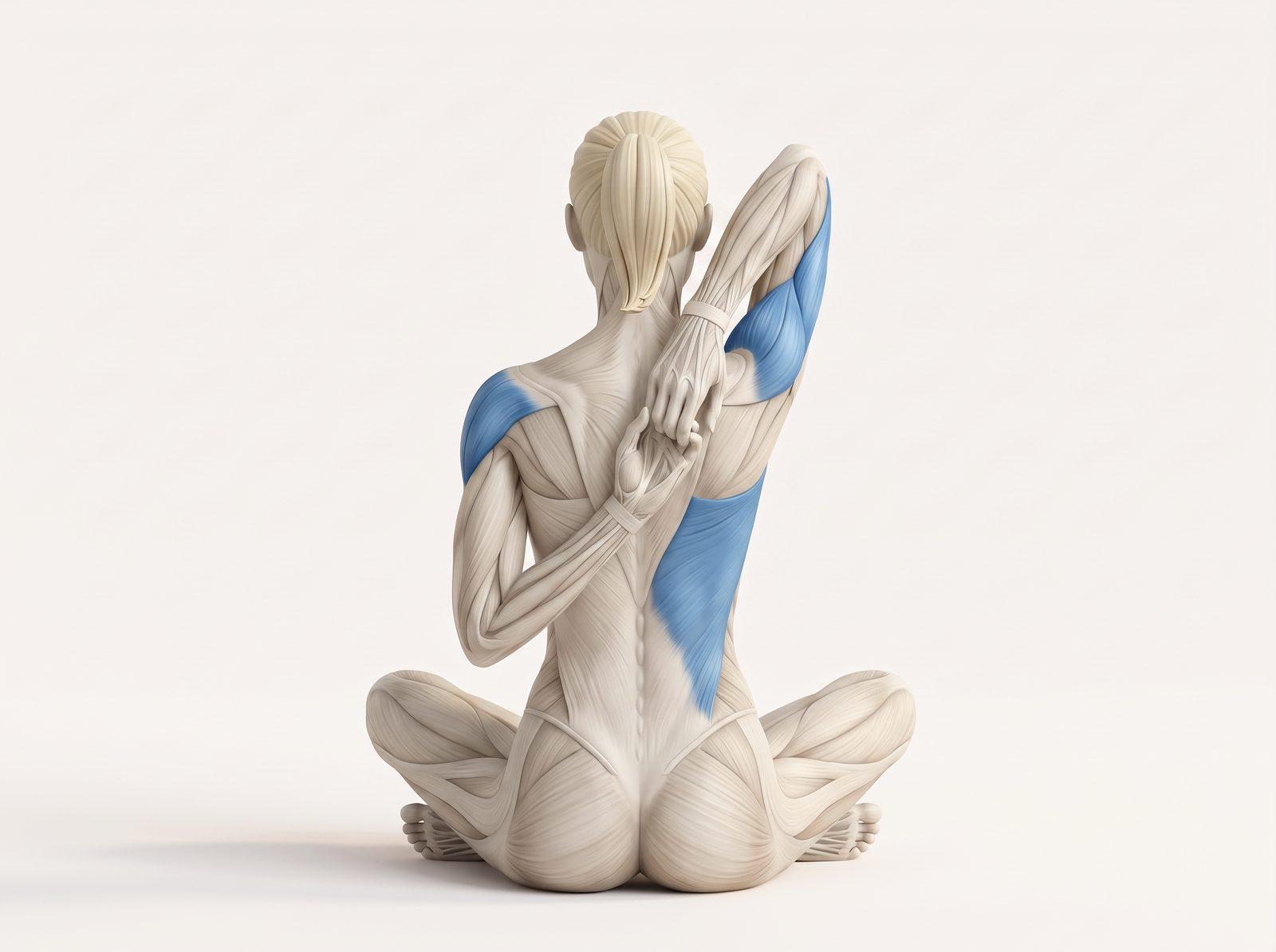
Stretching: Raised-arm triceps, Raised-arm lats, Lower-arm shoulder
Full muscle breakdown ↓About This Pose
Lotus Shoulder Stretch combines the grounding stability of Lotus pose with an overhead shoulder stretch that opens the entire upper body. This pose creates length through the sides of the torso while stretching the shoulders, chest, and arms. The Lotus base provides stability for deeper upper body opening. Regular practice improves shoulder flexibility, expands breathing capacity, and creates a sense of openness and freedom in the upper body.
Muscles Worked in Lotus Shoulder Stretch
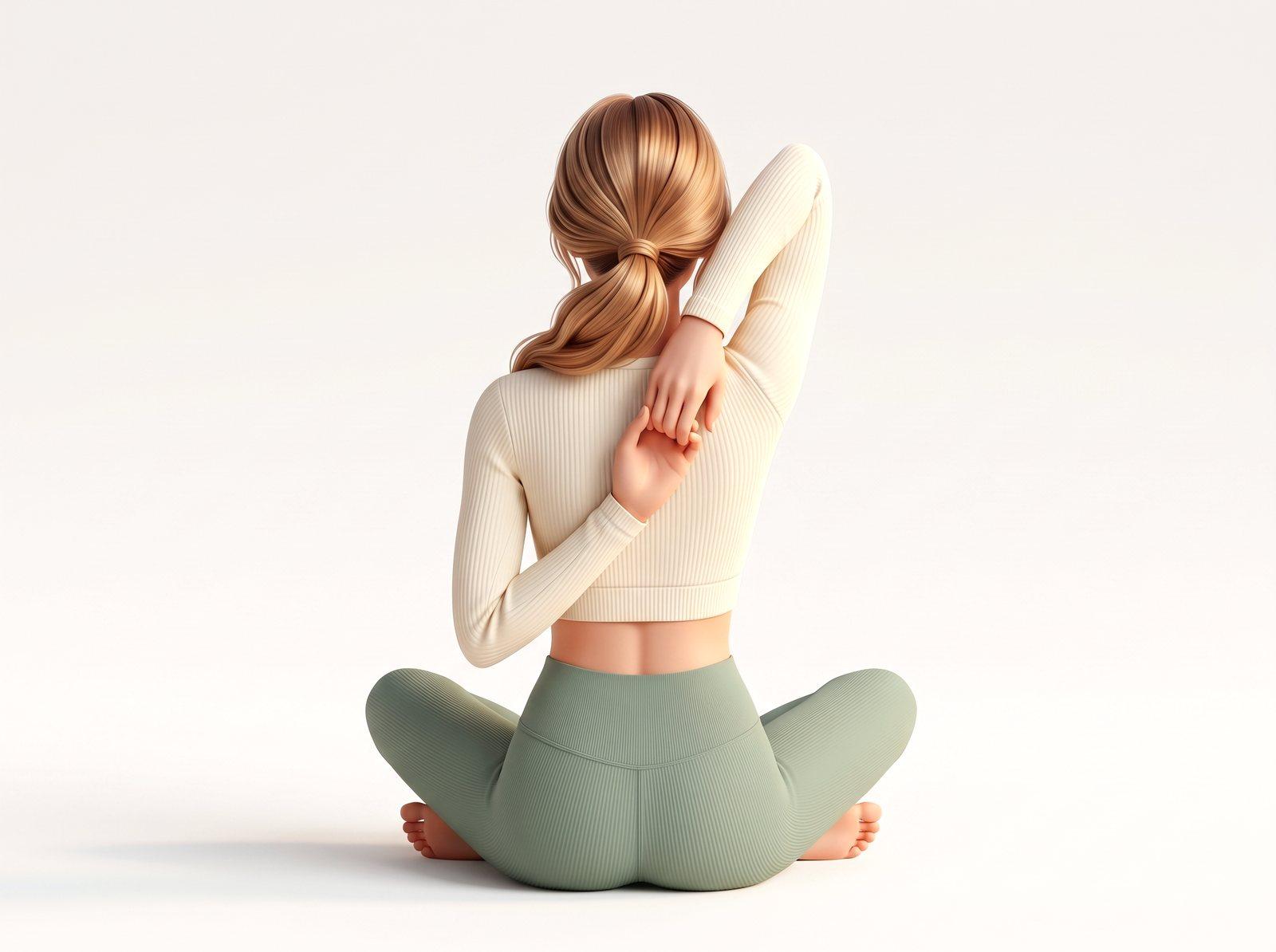
Seen from behind, the photo shows a cross-legged seat with Cow Face (Gomukhasana) arms: one elbow points up behind the head and the hands clasp between the shoulder blades. It stretches the raised-arm triceps and lats and the lower-arm shoulder.
Working
A held stretch — the upper back and spine muscles keep you upright with light effort.
Stretching
- Raised-arm triceps (triceps brachii)
- Raised-arm lats (latissimus dorsi)
- Lower-arm shoulder (infraspinatus, teres minor, anterior deltoid)
Also holding you steady: your the muscles along your spine and rotator cuff.
Variations and joint actions
- Strap between the hands: If the hands do not meet, hold a strap between them.
- Sit on a block: Raising the hips makes it easier to keep the spine upright.
- Hips flexion and external rotation, legs crossed
- Raised shoulder full flexion and external rotation
- Lower shoulder extension and internal rotation
- Elbows flexion, hands clasped behind the back
- Spine upright, neutral
Roles are qualitative — this section does not measure how hard any muscle works. References: Leslie Kaminoff & Amy Matthews, Yoga Anatomy (Human Kinetics); Ray Long, The Key Muscles of Yoga (Bandha Yoga).
Step-by-Step Instructions
- 1
Sit in Lotus or comfortable cross-legged pose
- 2
Reach arms overhead
- 3
Hold opposite wrist or interlace fingers
- 4
Lean gently to one side
- 5
Feel stretch along side body
- 6
Return to center and switch sides
Alignment Cues
- Maintain lotus leg position
- Reach one arm behind back
- Keep spine upright and long
- Breathe into shoulder opening
Benefits
- Opens shoulders and chest
- Creates torso length
- Expands breathing capacity
- Provides stable grounding base
- Improves upper body flexibility
- Creates sense of openness
Modifications
- Use half lotus
- Use strap between hands
Variations
- Bound shoulder stretch
Cautions & Contraindications
Cautions
- Avoid forcing arm bind
- Keep neck relaxed
Avoid this pose if you have:
- Shoulder injuries
- Knee pain
Quick Facts
Primary Focus
shouldersSecondary Focus
Suggested Hold
30 seconds
Tags
Equipment