Headstand Prep Bent Knee
Salamba Sirsasana Prep
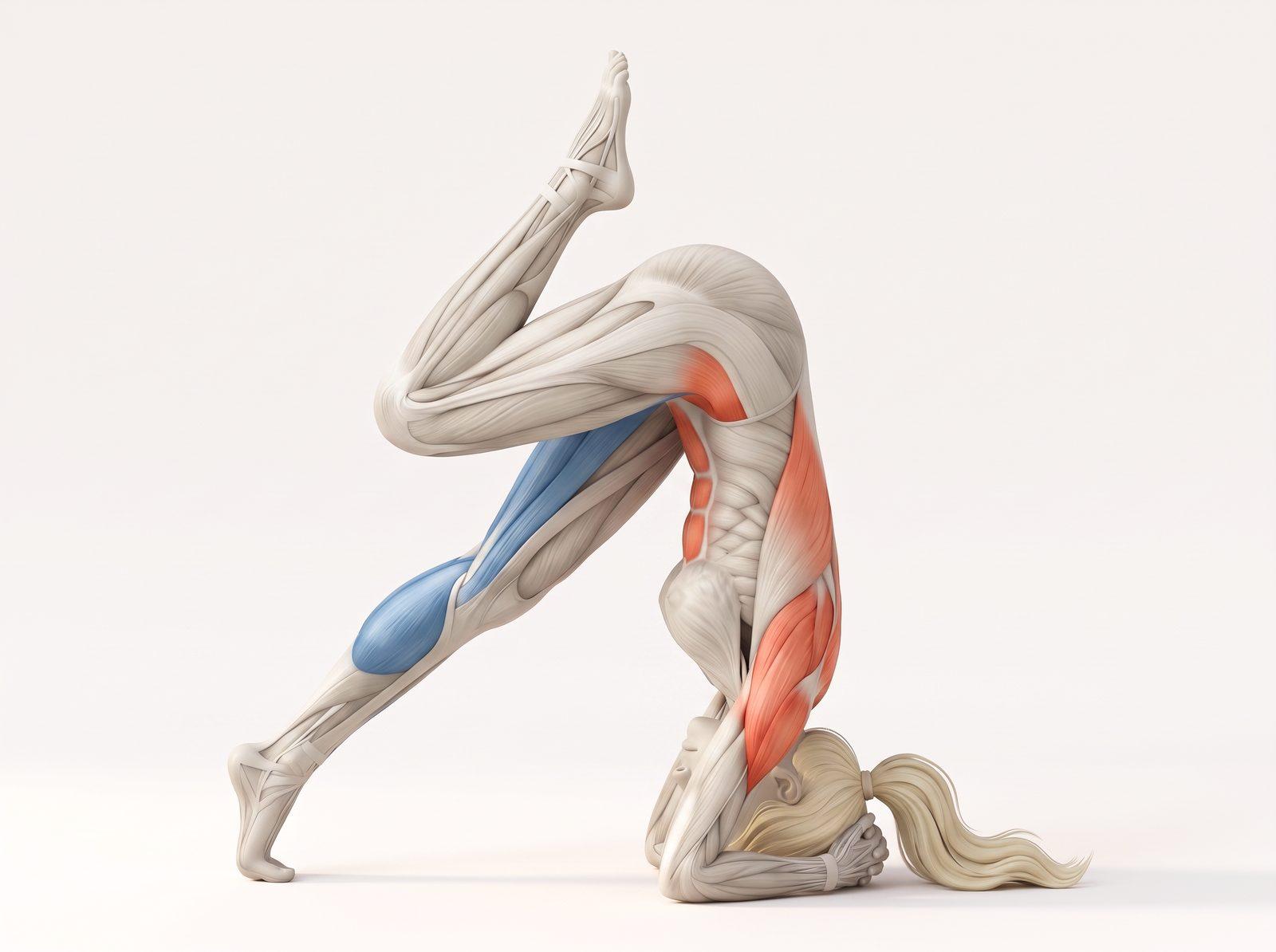
Working: Shoulders, Upper back, Abdominals, Bent-leg hip flexors
Stretching: Standing-leg hamstrings, Standing-leg calf
Full muscle breakdown ↓About This Pose
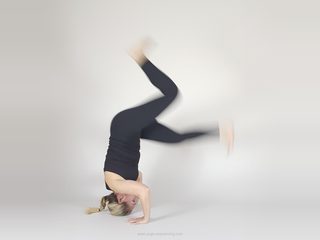
Headstand Prep with Bent Knees teaches the early stages of Sirsasana with one or both knees bent, keeping the center of gravity low while developing the strength and balance needed for full headstand. This preparation allows practitioners to build familiarity with inversion in a controlled, safer position before extending the legs.
Muscles Worked in Headstand Prep Bent Knee
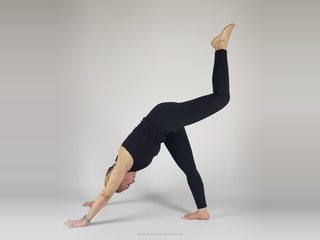
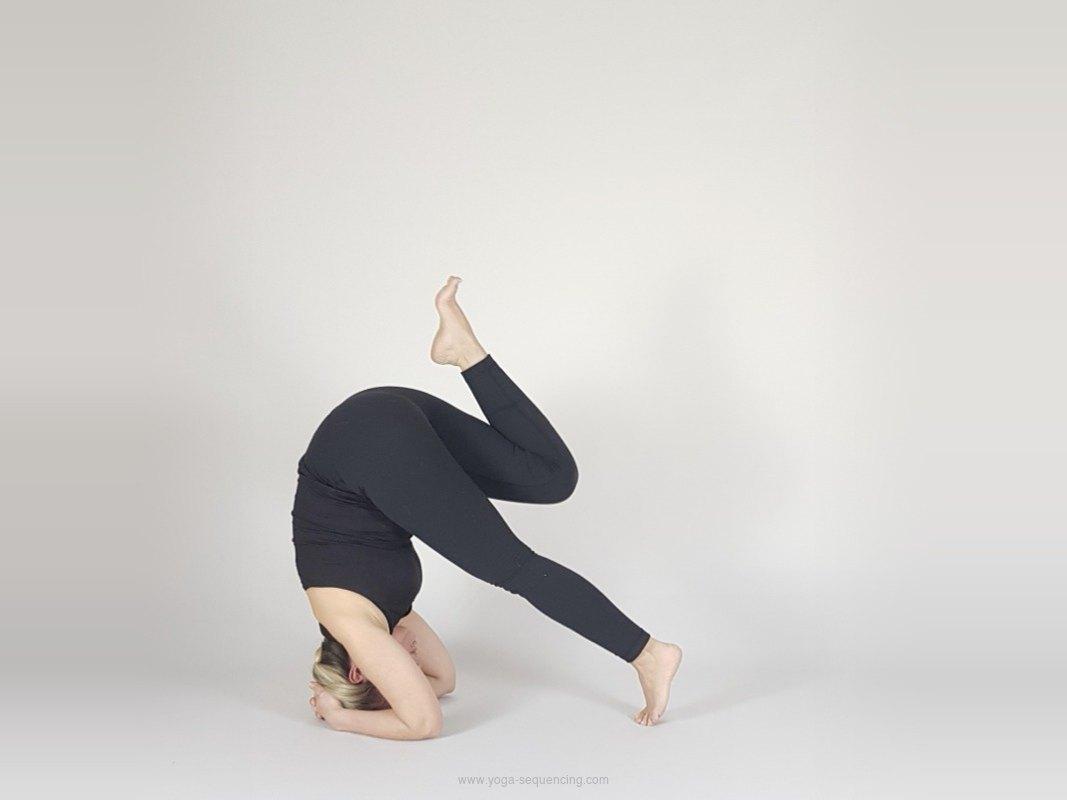
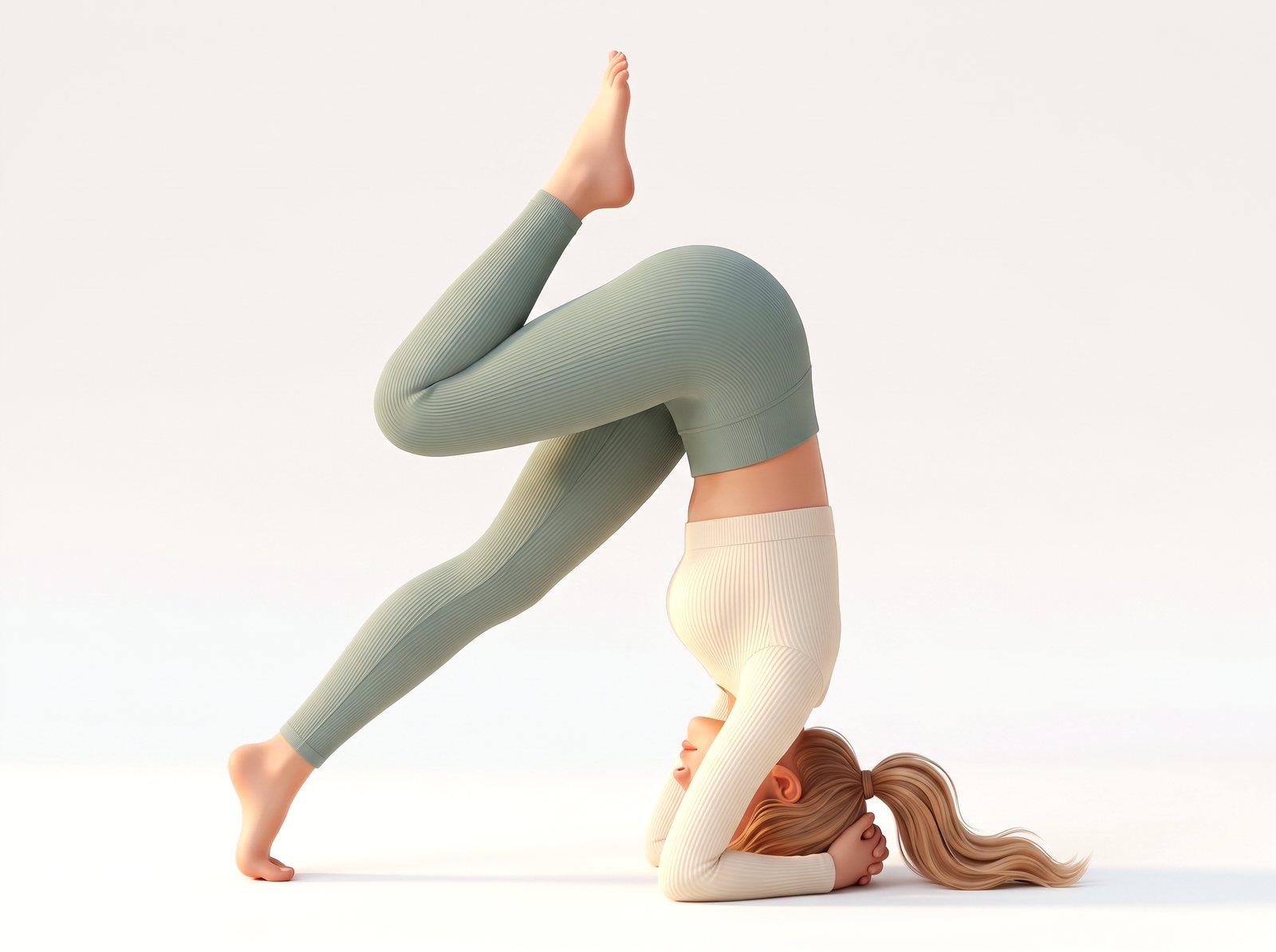
The photo shows a supported headstand prep: forearms on the floor with the hands clasped around the crown of the head, hips stacked high over the shoulders, one leg straight with the toes on the floor and the other knee drawn in toward the chest. The shoulders and upper back carry the weight while the standing-leg hamstrings lengthen.
Working
- Shoulders (deltoids)
- Upper back (rhomboids, trapezius)
- Abdominals (rectus abdominis, transversus abdominis)
- Bent-leg hip flexors (iliopsoas)
Stretching
- Standing-leg hamstrings (biceps femoris, semitendinosus, semimembranosus)
- Standing-leg calf (gastrocnemius, soleus)
Also holding you steady: your rotator cuff, Serratus anterior and neck muscles, which keep the cervical spine neutral.
Variations and joint actions
- Both feet down: Walking both feet in with straight legs (Dolphin walk-in) builds the shoulder strength first.
- Against a wall: Setting up with the back near a wall gives a safe stop if the hips tip over.
- Shoulders flexion, forearms framing the head
- Elbows flexion, forearms on the floor
- Bent hip and knee deep flexion, knee toward the chest
- Standing hip flexion, leg straight with toes down
- Spine inverted, close to neutral
Roles are qualitative — this section does not measure how hard any muscle works. References: Leslie Kaminoff & Amy Matthews, Yoga Anatomy (Human Kinetics); Ray Long, The Key Muscles of Yoga (Bandha Yoga).
Step-by-Step Instructions
- 1
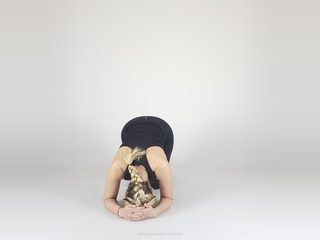
Interlace fingers, forearms on mat
- 2
Place crown of head in hands
- 3
Tuck toes and lift hips
- 4
Walk feet toward head
- 5
Lift one knee to chest, then other
- 6
Stay compact and balanced
Alignment Cues
- Press forearms firmly
- Stay compact
- Engage core
Benefits
- Builds inversion strength
- Keeps center of gravity low
- Develops balance safely
- Controlled position
- Essential preparation
- Builds confidence
Modifications
- Practice near wall
- Use corner for support
Variations
- One leg at a time
- With spotter
Cautions & Contraindications
Cautions
- Avoid pressure on neck
- Engage shoulders actively
Avoid this pose if you have:
- Neck injury
- High blood pressure
Quick Facts
Primary Focus
shouldersSecondary Focus
Suggested Hold
30 seconds
Tags
Equipment