Cow Face Pose
Gomukhasana
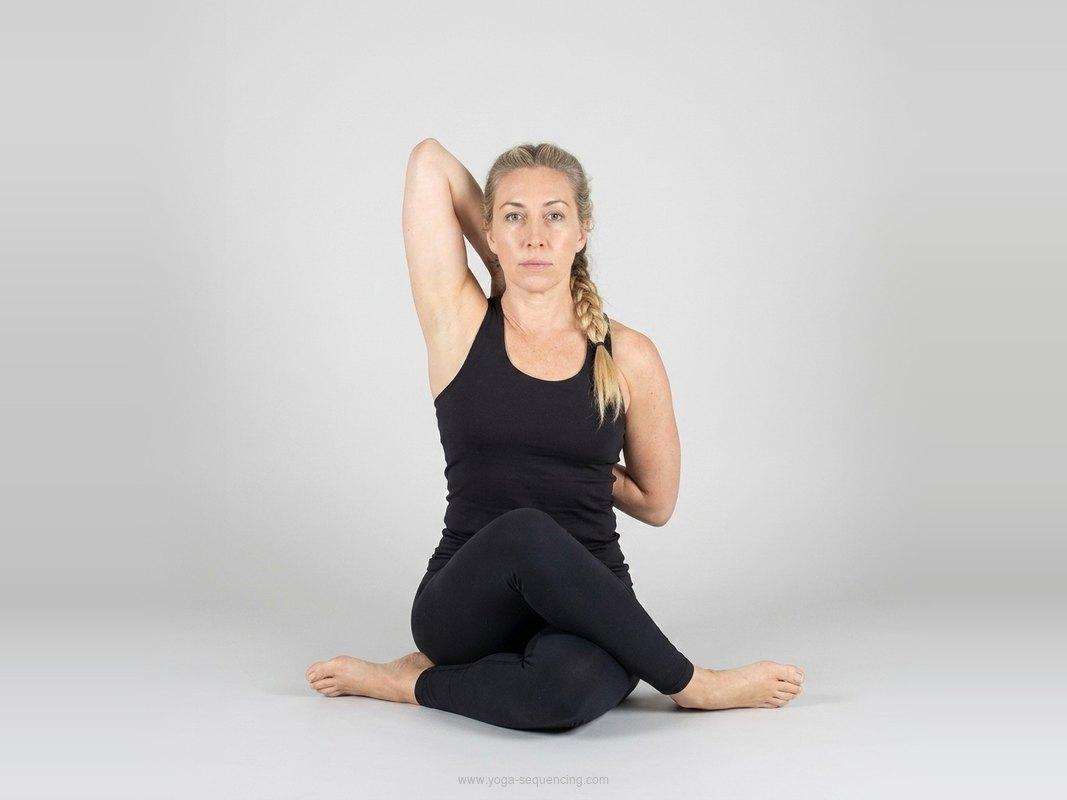
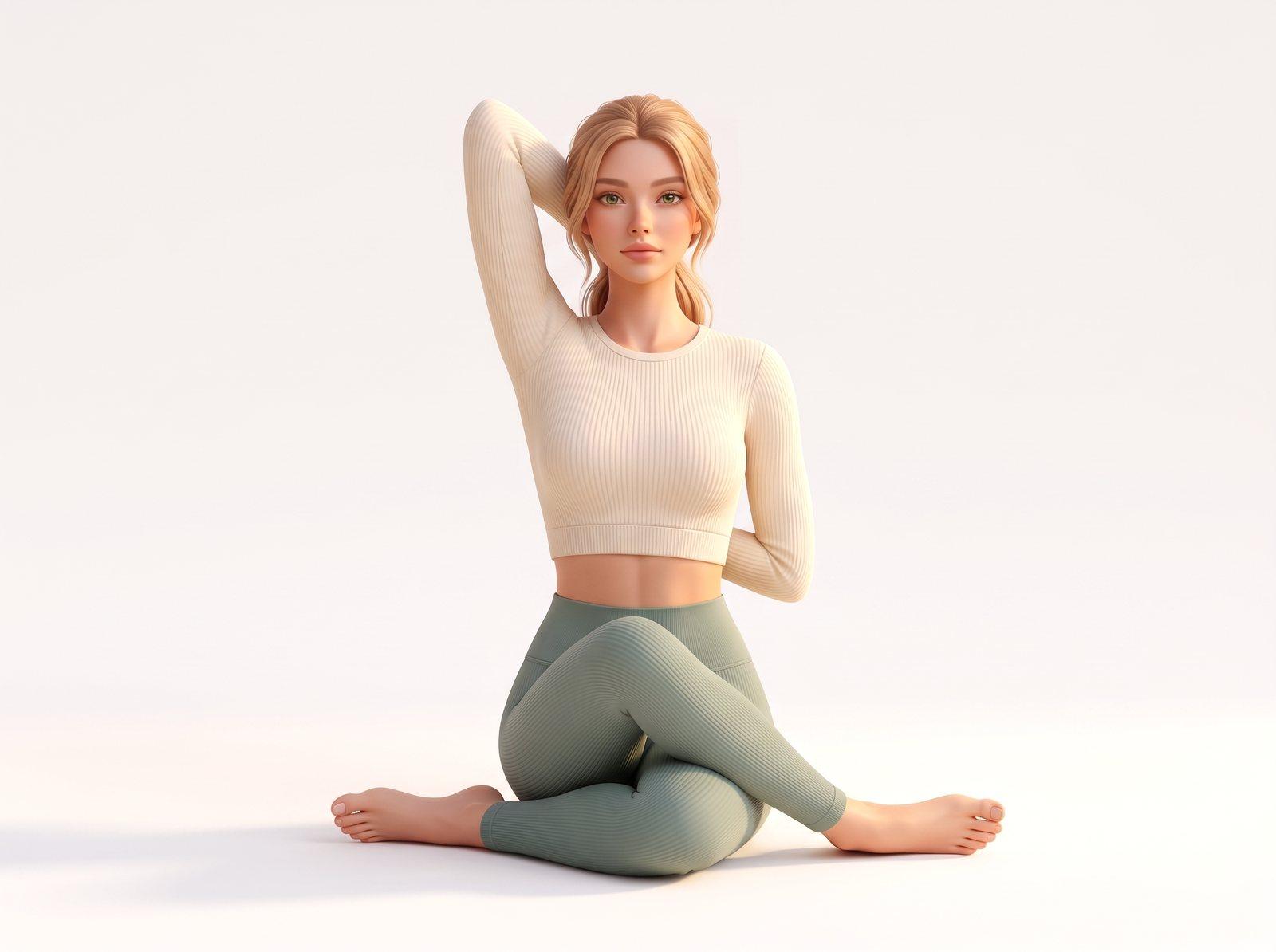
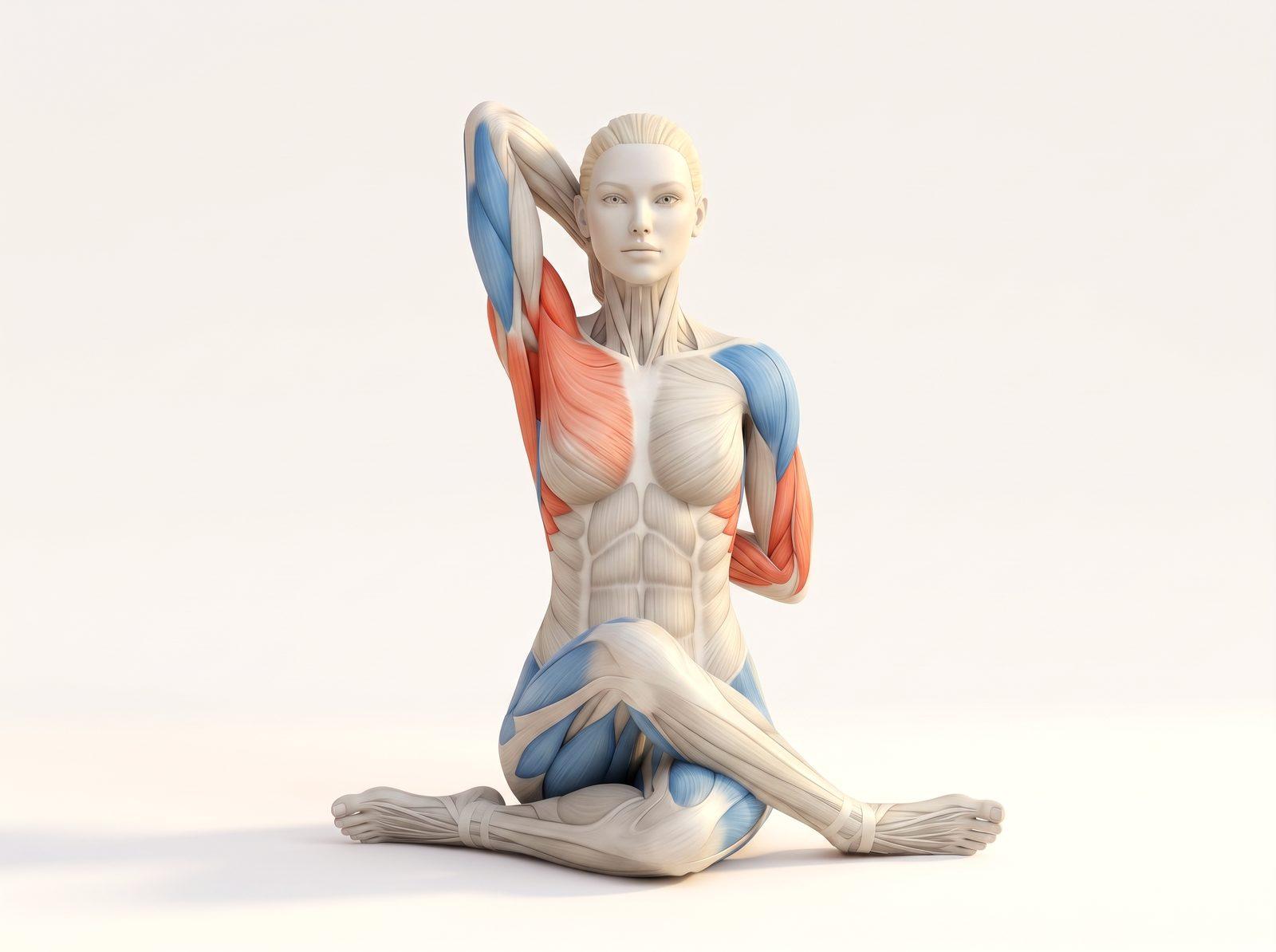
Working: Bottom-arm shoulder rotators, Bottom-arm upper back, Back muscles
Stretching: Top-arm triceps, Top-arm lats, Bottom-arm front of the shoulder, Outer hips, both legs
Full muscle breakdown ↓About This Pose
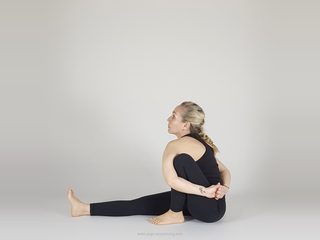
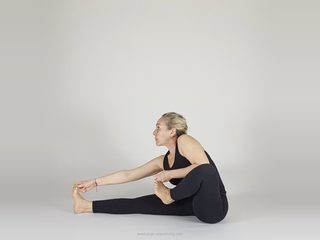
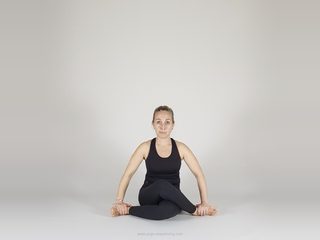
Cow Face Pose (Gomukhasana) is a seated posture that simultaneously opens the outer hips and the shoulders. The knees stack one directly over the other while the arms clasp behind the back, one reaching over the shoulder and the other from below. The shape gets its name from the resemblance to a cow face. Gomukhasana releases deep tension in the outer hips and IT band, stretches the chest and triceps, and encourages an upright, lifted spine. It is a grounding pose often held longer to invite a meditative quality.
Muscles Worked in Cow Face Pose
Cow Face Pose stacks the knees with the feet beside the hips and reaches one arm up and back, the other down and behind. The top-arm shoulder and triceps and the outer hips are stretched, while the bottom-arm shoulder rotators work.
Working
- Bottom-arm shoulder rotators (subscapularis, teres major, rotating the arm in behind the back)
- Bottom-arm upper back (rhomboids, trapezius)
- Back muscles (erector spinae)
Stretching
- Top-arm triceps (triceps brachii)
- Top-arm lats (latissimus dorsi)
- Bottom-arm front of the shoulder (anterior deltoid, pectoralis major)
- Outer hips, both legs (gluteus maximus, gluteus medius, piriformis, tensor fasciae latae)
Also holding you steady: your core and the muscles along your spine.
Variations and joint actions
- Strap between the hands: If the hands do not meet, hold a strap; do not arch the low back or push the head forward to close the gap.
- Sit on a block: A block or blanket under the seat lets the stacked knees relax and protects the knees.
- Legs crossed only: For knee pain, sit cross-legged and do only the arm position. Avoid the arm bind with an acute shoulder injury.
- Top-arm shoulder full flexion and external rotation, elbow pointing up
- Bottom-arm shoulder extension and internal rotation, hand up the back
- Elbows flexion
- Hips flexion, adduction and external rotation, knees stacked
- Knees flexion, feet beside the hips
- Spine upright, neutral
Roles are qualitative — this section does not measure how hard any muscle works. References: Leslie Kaminoff & Amy Matthews, Yoga Anatomy (Human Kinetics); Ray Long, The Key Muscles of Yoga (Bandha Yoga).
Step-by-Step Instructions
- 1
Begin seated with the legs extended
- 2
Bend the knees and stack the right knee over the left
- 3
Draw both feet toward the opposite hips
- 4
Sit evenly on both sitting bones
- 5
Reach the right arm up and bend the elbow
- 6
Bring the right hand down between the shoulder blades
- 7
Sweep the left arm behind the low back
- 8
Clasp the hands or hold a strap
- 9
Lift the chest and lengthen the spine
- 10
Hold 5 to 8 breaths, then switch sides
Alignment Cues
- Knees stacked and centered
- Both sitting bones grounded
- Spine tall, chest lifted
- Top elbow pointing up, bottom elbow down
- Shoulders drawing back, not hunching
Benefits
- Opens the outer hips and IT band
- Stretches the shoulders, chest, and triceps
- Improves posture and spinal length
- Relieves stiffness in the upper back
- Encourages calm and introspection
- Counters desk-bound shoulder tension
Modifications
- Sit on a folded blanket to level the hips
- Use a strap between the hands
- Keep the bottom leg straight if the knee complains
Variations
- Fold forward over the legs
- Practice the arm bind alone
- Add a gentle twist
Cautions & Contraindications
Cautions
- Sit evenly on both sitting bones
- Never force the arm bind
- Use a strap between the hands if needed
Avoid this pose if you have:
- Serious knee injury
- Shoulder injury
- Recent hip issues
Quick Facts
Primary Focus
hipsSecondary Focus
Suggested Hold
45 seconds
Tags
Equipment