Last updated:Written by FLOW Team

The Best Yoga Brands of 2026

Which yoga brands are actually worth the money in 2026 — mats, clothing and props — and which reputations are running on a decade-old product. Checked August 2026.

Teacher TestedUpdated for 2026
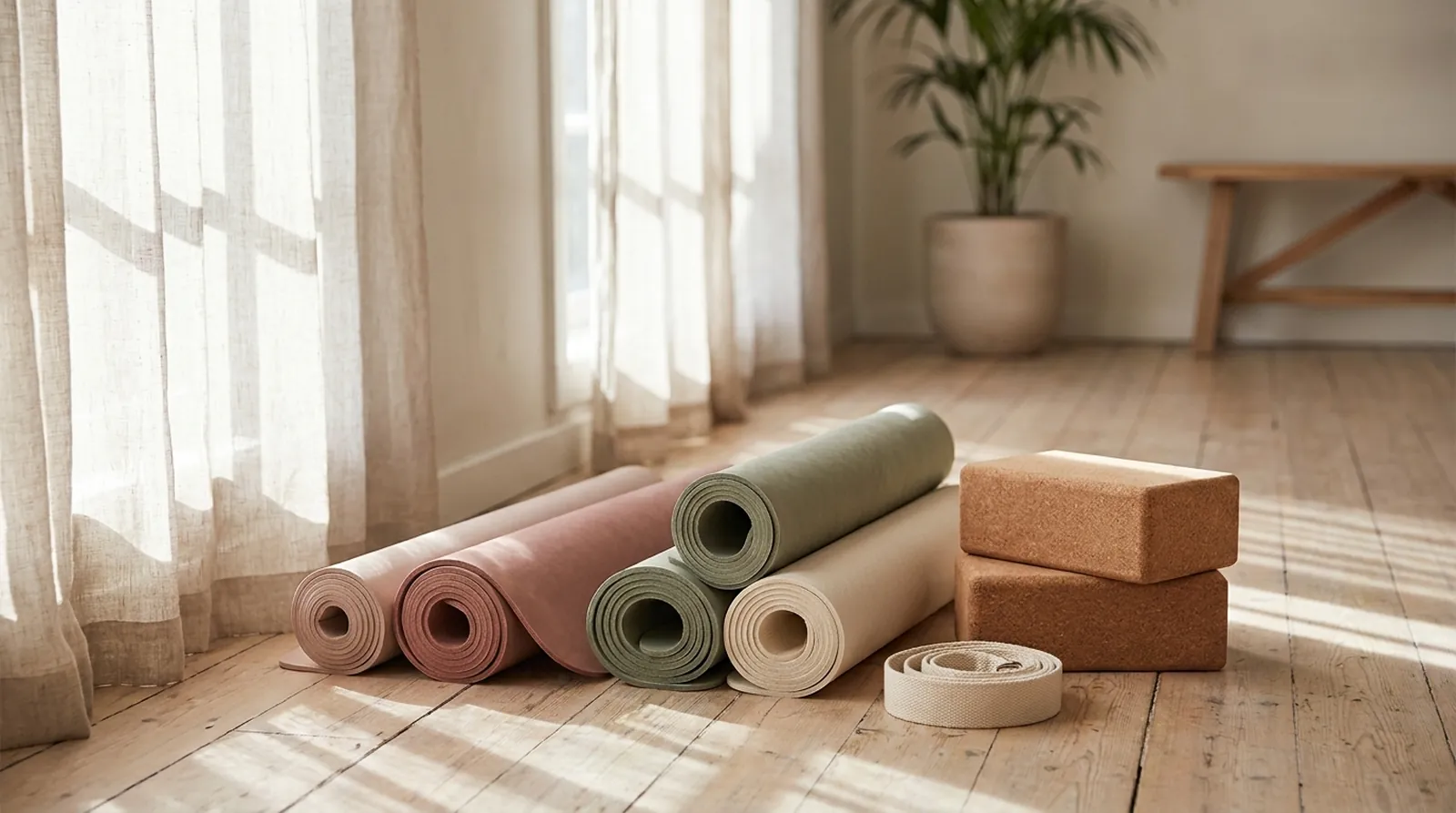
Rolled yoga mats, blocks and a strap arranged on a wooden studio floor
F

We test our recommendations

Every brand site here was loaded on 8 August 2026. We judge brands on what they demonstrably make well rather than on their marketing — a brand with one exceptional mat and a weak clothing line is described that way. Where a claim is a brand's own (recycled content, carbon offsetting) we attribute it rather than repeating it as fact.

Editor's note

This article carries no affiliate links and earns nothing. Our separate mat and prop reviews do use affiliate links and are labelled as such. We publish FLOW, a class-planning app, which is not a product category here.

What actually distinguishes a yoga brand

Grip when you sweat

The single thing that separates a good mat from an expensive one. Dry grip tells you almost nothing.

Years, not seasons

A $140 mat that lasts eight years is cheaper than a $45 mat replaced every eighteen months.

Materials you can verify

Natural rubber and recycled content are checkable. "Eco-friendly" on its own is not a claim.

Whether you will carry it

Studio teachers move between rooms all day. A 3kg mat gets left at home.

Yoga brands compared — sites checked 8 August 2026

Known for
Mats built to outlast you
Price band
Premium
Materials
PVC and natural rubber
Best for
Teachers on the mat daily
Known for
Alignment-marked grip
Price band
Premium
Materials
Natural rubber, eco-polyurethane
Best for
Alignment-focused practice
Known for
Natural rubber grip
Price band
Mid to premium
Materials
Open-cell natural rubber
Best for
Sweaty, grippy practice
Known for
Clothing and brand
Price band
Premium
Materials
Technical synthetics
Best for
Studio wardrobe
Known for
Fit and size range
Price band
Mid to premium
Materials
Soft technical knits
Best for
Comfort and inclusive sizing
Known for
Durable, less branded
Price band
Mid
Materials
Organic cotton, hemp, recycled
Best for
Practical everyday wear
Known for
Affordable entry gear
Price band
Budget
Materials
PVC, TPE, foam
Best for
Beginners and studio spares

Detailed reviews

  1. A dense professional yoga mat unrolled on a studio floor1

    Manduka

    Best Overall
    • The PRO is the reference point for dense, long-life mats
    • Lifetime guarantee on their flagship
    • Props and towels alongside mats
    • Widely available second-hand, which tells you they last

    Best for: Teachers and daily practitioners buying one mat for a decade

    Pros

    • Genuinely lasts years of daily use
    • Cushioning that protects knees and wrists
    • Resale value is real

    Cons

    • Heavy — not a mat you carry across a city
    • Needs breaking in; slippery when new
    • Premium price
  2. A yoga mat printed with alignment guide lines2

    Liforme

    Best for Alignment
    • Printed alignment markers as the core feature
    • Strong grip even when wet
    • Natural rubber base with eco-polyurethane top
    • Longer and wider than standard

    Best for: Practitioners who want the mat to help them square up

    Pros

    • The alignment guide genuinely helps self-practice
    • Grip holds up in hot rooms
    • Comfortable underfoot without feeling spongy

    Cons

    • Softer surface wears faster than Manduka's densest mats
    • The most expensive mainstream mat
    • Markings distract some practitioners
  3. A natural rubber yoga mat with a hand pressing into it3

    Jade Yoga

    Best Grip
    • Open-cell natural rubber — grip comes from the material
    • Tree planted per mat sold, per the brand
    • Made in the United States
    • Several thicknesses

    Best for: Hot yoga and anyone whose hands slide

    Pros

    • Best-in-class grip for sweaty practice
    • Natural rubber rather than PVC
    • Environmental commitments are specific rather than vague

    Cons

    • Open-cell absorbs sweat and eventually odour
    • Shorter life than closed-cell mats
    • Latex — unsuitable for allergies
  4. Folded yoga leggings and top on a bench in a changing room4

    Beyond Yoga

    Best Fit
    • Consistently wide size range
    • Soft knits that hold shape
    • Less logo-forward than rivals
    • Strong maternity range

    Best for: Clothing that fits a real range of bodies

    Pros

    • Inclusive sizing that is not an afterthought
    • Comfort holds up over repeated washing
    • Understated look

    Cons

    • Not cheap
    • Clothing only — no mats or props
  5. Durable yoga clothing folded beside a rolled mat5

    prAna

    Best Value Clothing
    • Organic cotton, hemp and recycled fabrics
    • Fair Trade Certified lines
    • Cut for climbing and travel as well as yoga
    • Mid-market pricing

    Best for: Clothes you wear outside the studio too

    Pros

    • Durable and genuinely everyday
    • Material sourcing is specific and documented
    • Less expensive than the studio-brand tier

    Cons

    • Less technical than performance-focused rivals
    • Style is outdoorsy rather than studio
  6. Contemporary yoga clothing hanging on a rail in a bright studio6

    Alo Yoga

    Best Studio Look
    • Strong design and colour ranges
    • Technical fabrics with a fashion cut
    • Its own class platform alongside apparel
    • Heavy cultural presence

    Best for: People who want the studio wardrobe

    Pros

    • Design is genuinely good
    • Fabric quality matches the price
    • Broad range beyond leggings

    Cons

    • You are paying for the brand as well as the garment
    • Fit runs small in several lines
    • Apparel-led — mats are not the strength
  7. An affordable patterned yoga mat rolled beside foam blocks7

    Gaiam

    Best Budget
    • The widest cheap range in yoga
    • Mats, blocks, straps, bolsters
    • Sold in general retail everywhere
    • Frequently discounted

    Best for: Starting out, or kitting out a studio

    Pros

    • Lowest barrier to starting
    • Fine for props, where material matters less
    • Easy to replace

    Cons

    • Mat grip and lifespan are the weak point
    • Foam blocks compress within a year of studio use
    • You will upgrade the mat
F

Expert tip from FLOW Team

Buy the mat once and the props cheaply. A mat is the only piece where the expensive option is genuinely cheaper over time — you stand on it for years and grip failure ruins practice. Blocks and straps are foam and webbing; the budget ones are fine.

Frequently asked questions

What is the best yoga brand in 2026?

There is no single answer because the categories barely overlap. Manduka is the strongest mat brand for longevity, Jade for grip, Liforme for alignment guidance, Beyond Yoga and prAna for clothing. A brand that is excellent at mats is rarely the one to buy leggings from.

Is an expensive yoga mat worth it?

For a mat, usually yes — it is the one piece where price tracks lifespan. A premium mat used daily commonly lasts five to ten years, while budget mats degrade within one or two. For blocks, straps and bolsters, the cheap versions are genuinely fine.

Which yoga brands are actually sustainable?

Look for specific, checkable claims rather than the word eco. Jade uses open-cell natural rubber and states it plants a tree per mat sold. prAna uses organic cotton, hemp and recycled fibres with Fair Trade Certified lines. Treat any claim without a material or a certification behind it as marketing.

Manduka or Liforme — which should I buy?

Manduka if you want maximum lifespan and cushioning and do not mind the weight or the break-in period. Liforme if you practise alone and want alignment markers, or if you sweat heavily and need grip from the first minute. Liforme wears faster; Manduka lasts longer.

Do I need a branded mat to start yoga?

No. A cheap mat plus a towel will get you through your first months, and you will learn what you actually want from a mat by using one. Upgrade once you know you will keep practising and can name what is annoying you — grip, thickness or weight.

What about Lululemon?

It remains one of the most recognised names in the category, particularly for clothing. Its site blocks automated access, so we could not verify its current range on the date we checked the others and have described it rather than ranking it.

The short version

One mat for a decade: Manduka. Sweaty hands: Jade. Help with alignment: Liforme. Clothes that fit properly: Beyond Yoga. Starting out and unsure: Gaiam, then upgrade the mat when you know you will stay.

Read our full mat comparison

A brand is not a category

Most "best yoga brands" lists rank companies against each other as if they made the same thing. They do not.

Manduka makes mats and props. Its mats are the reference point for longevity; its clothing is beside the point. Alo makes clothing that people wear because it looks good, and also sells mats that nobody would choose on merit. Jade makes one thing — grippy natural rubber — extremely well and does not pretend otherwise.

Ranking those seven brands on a single axis produces a number that means nothing. What follows instead is what each demonstrably does well, and where it stops.

The mat is the one thing worth overpaying for

Yoga gear divides cleanly into one thing where price tracks quality and several where it does not.

The mat is the exception. You stand on it for years, in poses where a slipping hand is a genuine risk, and the failure modes are unpleasant: grip that dies once you sweat, foam that compresses under your knees, a surface that flakes. A premium mat in daily use commonly lasts five to ten years. A budget mat is often finished in eighteen months. The expensive one is usually cheaper per year and considerably nicer to practise on.

Blocks, straps and bolsters are the opposite. A block is a shaped piece of foam or cork; a strap is webbing and a buckle. Beyond a floor of basic quality, spending more buys a logo. Studio teachers who buy props in bulk work this out quickly.

Clothing sits in between, and is largely about fit. The technical differences between mid and premium leggings are real but small; the difference between something that fits your body and something that does not is enormous. That is why Beyond Yoga's size range matters more here than fabric specifications.

Reading sustainability claims

Yoga is a market where nearly every brand claims environmental credentials, and where those claims are unusually hard to check.

A useful filter: does the claim name a material or a certification? "Open-cell natural rubber" is checkable. "Organic cotton" and "Fair Trade Certified" are certifications with auditors behind them. "Recycled polyester" states a material. All of those are claims a brand can be held to.

"Eco-friendly", "sustainably minded" and "conscious" are not claims. They describe intent, name nothing, and carry no obligation.

Where a brand in this article states something specific — Jade planting a tree per mat, prAna's Fair Trade lines — we have attributed it to the brand rather than presenting it as independently verified, because we have not audited it and neither has anyone writing a roundup.

What changes if you teach

Teaching changes the calculation in three ways.

Weight becomes decisive. A studio teacher moving between rooms, or travelling to corporate classes, will quietly stop carrying a 3kg mat. The densest, longest-lasting mats are also the heaviest, and the right answer is often a heavy mat at home and a travel mat in the bag.

Props get bought in quantity. Ten blocks and ten straps at studio prices is a real expense, and it is exactly the category where budget versions are fine. Spend the difference on one good mat.

Durability compounds. A mat used for six classes a day ages roughly six times faster than a home mat. This is where lifetime guarantees stop being marketing and start being arithmetic, and it is why Manduka's resale market exists at all.

None of that requires a different brand from the one a home practitioner would buy. It just moves which trade-off you make first.

Related Articles

Ready to Transform Your Yoga Teaching?

Join thousands of yoga teachers using FLOW to create professional sequences in minutes. Start free today—no credit card required.

Also on iPhone & iPad

Download on theApp Store4.9