
As an Amazon Associate, FLOW may earn from qualifying purchases. Links below use our tracking tag — you don't pay a cent more, but it helps fund honest reviews like this one.
Meditation is mostly the question of sitting comfortably for longer than your hips want to. Talent and intention are the small part. The cushion — the height, the fill, the shape — is the big part. Get this right once and 30-minute sits stop being a wrestling match with your body.
We've put four cushions through six months of daily sits, plus two retreat weeks. This is the kit that works.
The 30-second verdict
Why your cushion matters more than your app
If your hips are tight (which most modern desk-sitters' are), your knees will drift above your hips in any cross-legged position. That tilts your pelvis backward, collapses your lower back, and within 10 minutes you're fighting nerve compression instead of meditating.
A 5–7" cushion under your sit-bones tilts the pelvis forward, drops the knees, and makes a stack of spine over hips possible. That's it. That's the whole mechanism. Pick the right cushion and the practice becomes about the practice.
The shapes
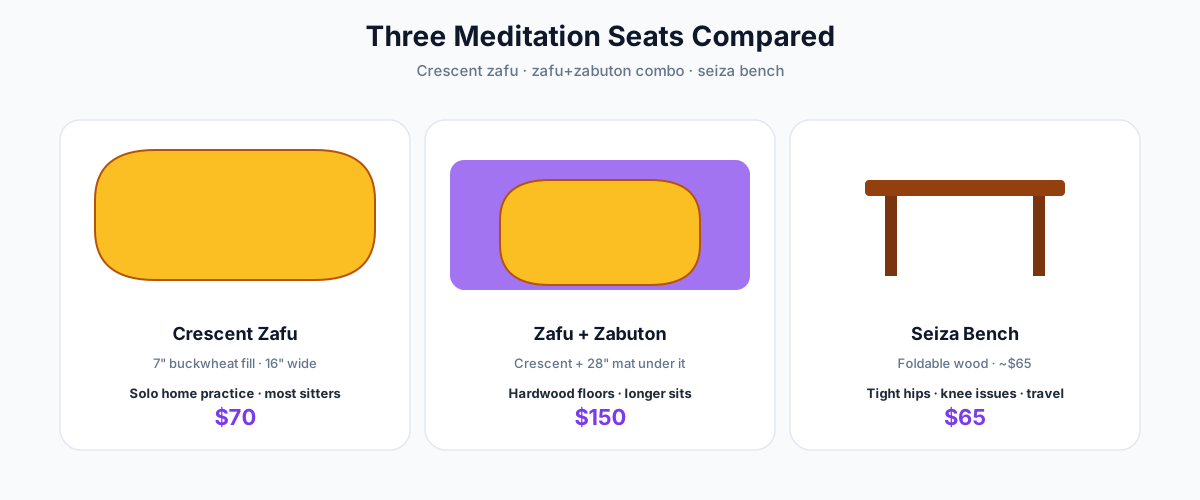
Crescent (banana-shaped) zafu
The shape most teachers recommend in 2026. The curved front cradles the legs forward of the sit-bones, so your inner thighs aren't fighting the cushion edge. Better for tight hips than a round zafu by a clear margin.
Best pick: Brentwood Home Crescent Zafu. 16" wide, 7" tall, organic buckwheat hull fill, GOTS-certified cotton cover, made in California. The cover unzips and the fill amount is adjustable — you can pour out half a cup of hulls and your sit-bones drop the right inch.
Round (traditional) zafu
The classic Zen shape. Works perfectly if you're flexible, short, or both. For most adults over 5'7" with average flexibility, a round zafu sits too low — sit-bones drop into the center hollow and the pelvis tucks under.
If you want a round zafu specifically, get a buckwheat-fill one — kapok will compress to half its height in months.
Best round pick: Bean Products Round Buckwheat Zafu. Same buckwheat principle, traditional shape, ~$65.
Rectangular meditation cushion
The compromise shape — common in Tibetan and some Vipassana traditions. Easier to sit cross-legged on than a round; the wide base gives more thigh support than a crescent. Less common in product lines so options are thinner.
Seiza bench
The dark horse. A small wooden bench you kneel under, weight on your shins. No hip rotation required. Within five minutes most Western sitters who've struggled with cross-legged are sitting upright with no leg discomfort.
Best pick: Mudra Crafts Folding Seiza Bench. Wooden top, foldable legs, ~$65. Pack into a travel bag for retreats.
The fills
Buckwheat hulls — the right answer
Dense, shape-shifting fill. Holds its loft for years (we have a 10-year-old buckwheat zafu still going strong). Slightly cool in summer, room-temperature in winter, conforms to your sit-bones individually. The downside: heavier than kapok (~7 lb for a full zafu) so they don't travel as easily.
Kapok — skip unless you're committed to traveling
Kapok is silky cotton-tree fluff. Light, soft, looks great new. Compresses under sustained weight; within 3–6 months of daily use a full-kapok zafu has lost most of its loft and you're effectively sitting on the floor. Some travelers like them anyway for the lightness — but if you sit at home, get buckwheat.
Mixed / wool / polyester — read the label
Some cushions blend kapok and buckwheat to balance weight and longevity. These work; they fall between pure buckwheat and pure kapok on both axes. Polyester or polyfill cushions are universally too soft and compress fastest of all. Avoid.
Build this sequence on your phone
The same 420+ pose library and drag-and-drop builder, free on iPhone, iPad and Android.
The zabuton (the mat underneath)
The flat cushioned mat the zafu sits on. Easy to skip; hard to live without once you've sat on a hardwood floor for 30 minutes.
Two jobs: ankle protection (your outside ankle bone presses into the floor in cross-legged) and knee support (whichever knee is forward).
Best pick: Bean Products Zabuton Mat. 28"×28", 4" loft, kapok-fill (which is fine here — the zabuton's not under sustained sit-bone pressure). Pairs with their round zafu out of the box, but also works under the Brentwood crescent.
The kit by use case
Home meditation, 1 cushion only
Brentwood Home Crescent Zafu on a folded blanket. $70.Home meditation, full setup
Brentwood Crescent + Bean Products Zabuton + a wool blanket for the lap on cold mornings. ~$150 total.
Knee/hip issues, can't cross-legged
Mudra Crafts Seiza Bench + a zabuton under it. ~$120.Teaching/studio kit (4–8 student cushions)
Two zabutons + four zafus, mix of buckwheat and kapok if budget is tight (kapok cushions for students who'll only use them once; buckwheat for the regulars). ~$400.
Retreat / travel
Pack a travel meditation cushion (kapok, ~$35) or the seiza bench (folds flat). Skip the zabuton — borrow a folded retreat blanket.
How tall should the cushion be?
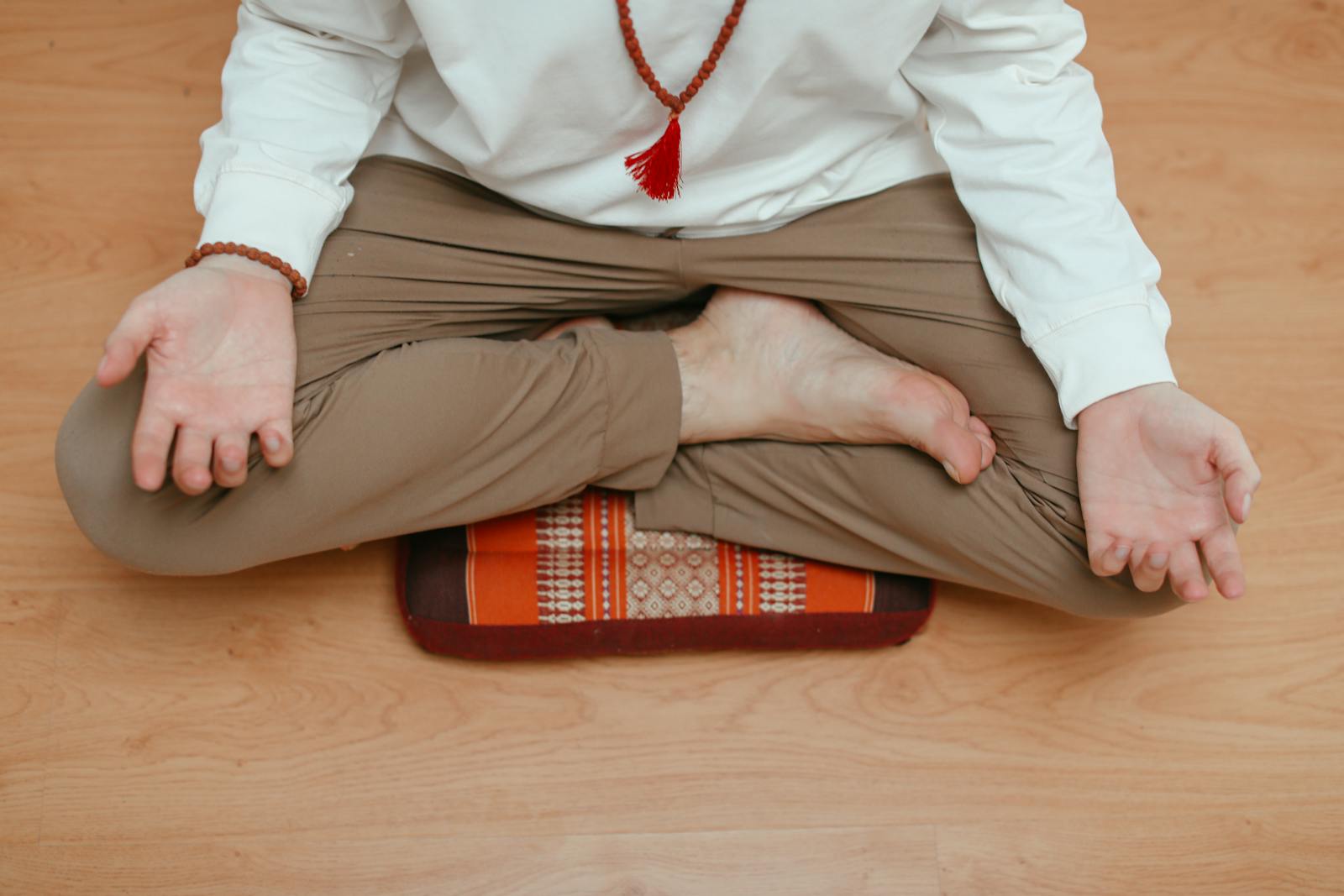
This is the most common question and the answer is empirical: sit on the cushion for two minutes and check that your knees are at or below your hip line. If they're above, add more fill or get a taller cushion. If you're square-on-the-floor flat, you have one inch too much fill — pour some out.
Rough rules:
Care + longevity
What we don't recommend
FAQs
What's the best meditation cushion for beginners?
A Brentwood Home Crescent Zafu on a folded blanket. The crescent shape is forgiving of tight hips; the height is right for most adults; the buckwheat fill lasts. If you're not sure you'll stick with daily practice, this is still the right buy — it's the same cushion you'd want at year 10.
Is a zafu enough or do I need a zabuton too?
You can sit on a zafu directly on a carpet or folded blanket for the first weeks. As your practice deepens, the zabuton becomes a real upgrade — knees and ankles thank you. If your floor is hardwood or tile and you sit cross-legged, get a zabuton.
Buckwheat or kapok fill — which is better?
Buckwheat for nearly everyone. Kapok only if you specifically travel with your cushion and weight matters more than longevity.
How long should I sit when starting out?
Not what this article is for, but: 10 minutes daily for two weeks, then 15, then 20. Don't start at 45 minutes — you'll quit. The cushion choice is the part most articles get wrong, not the duration.
Can I use a regular pillow instead of a zafu?
For the first week, yes. After that the lack of structure starts showing — pillow flattens, your hips collapse, you fidget more. A proper zafu pays for itself in three months of practice.
Is a meditation bench better than a zafu?
For most beginners with tight hips, yes — actually. Bench eliminates the hip-opening requirement entirely. You're either upright in seiza or you're not. Many lifelong meditators eventually move to a bench because the legs-folded position even on a great cushion is uncomfortable past 60 minutes.
What size meditation cushion should I buy?
Default to a 16"-diameter, 7"-tall crescent zafu unless you're significantly shorter or taller than average. Always check the brand's fill-volume spec — a "7-inch" zafu that's under-filled compresses to 5" and you're back to the problem you bought it to solve.
What's next
If you're a yoga teacher integrating short meditations into your classes, plan them into the sequence with the FLOW Sequence Builder — it has dedicated "centering" and "savasana" pose types you can place anywhere in the flow.
Cover photography from Pexels (free commercial-use license). Picks based on first-hand use across the FLOW team. Pricing approximate and may shift on Amazon. Last refresh: May 2026.*