Tabletop Knee Bend
Bharmanasana Knee Bend
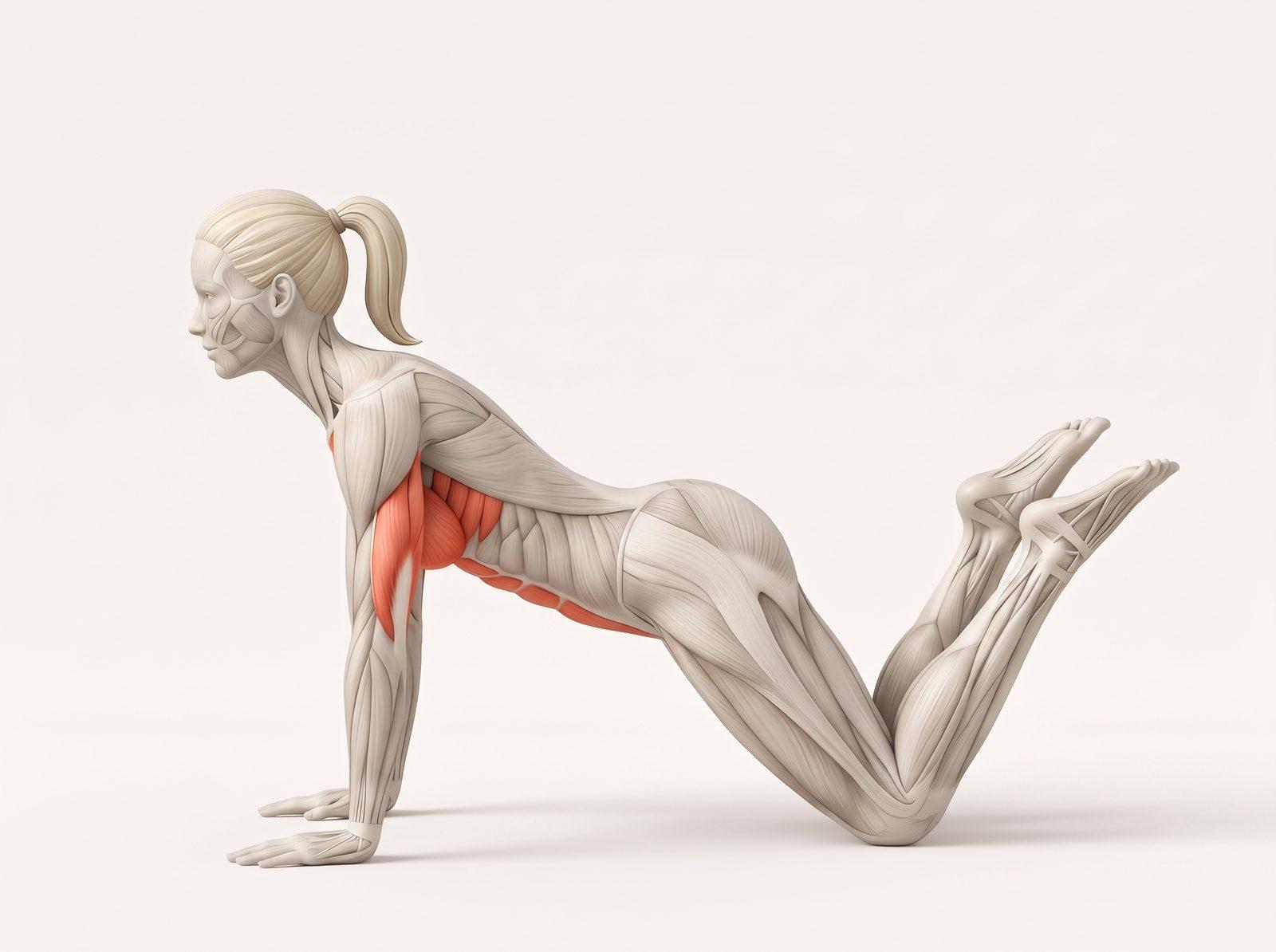
Working: Chest, Triceps, Serratus anterior, Abdominals
Full muscle breakdown ↓About This Pose
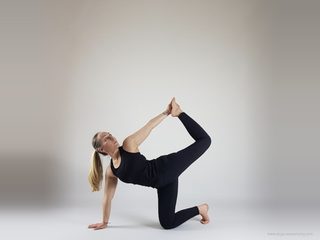
Tabletop Knee Bend adds gentle hip and knee mobility to the tabletop position through controlled bending movements. This warm-up exercise lubricates the joints, increases synovial fluid production, and prepares the lower body for deeper movements. It's particularly valuable for those with stiff hips or knees starting their practice.
Muscles Worked in Tabletop Knee Bend
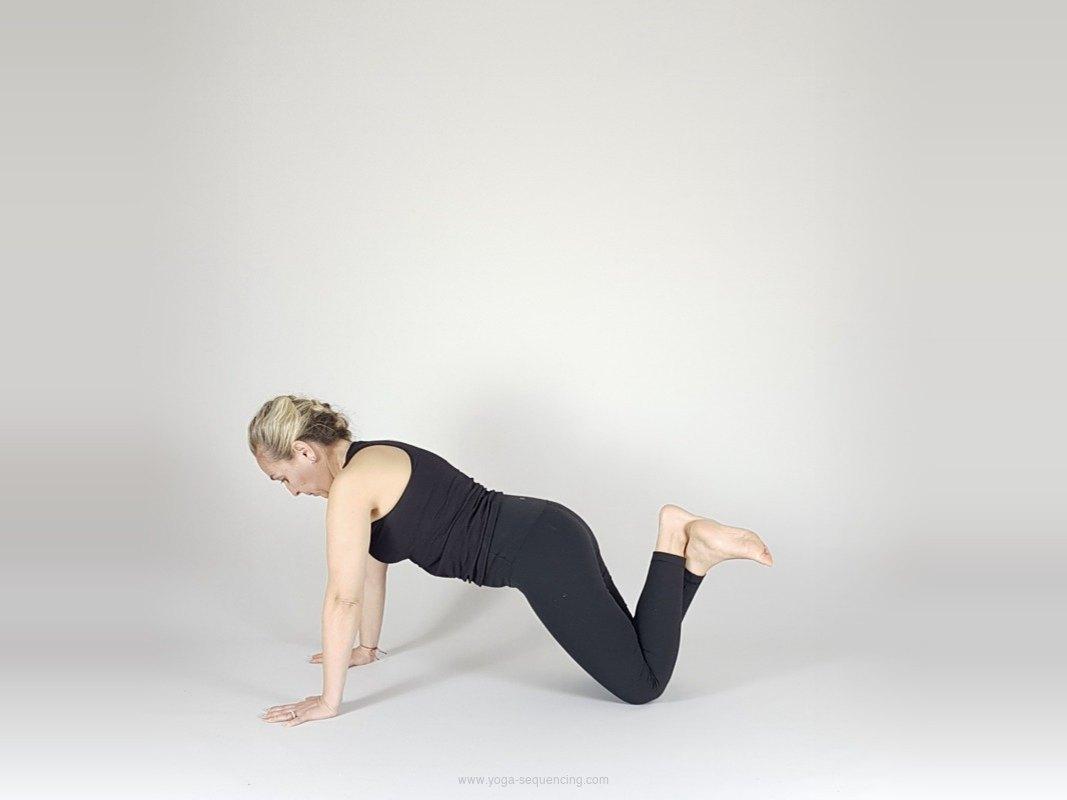
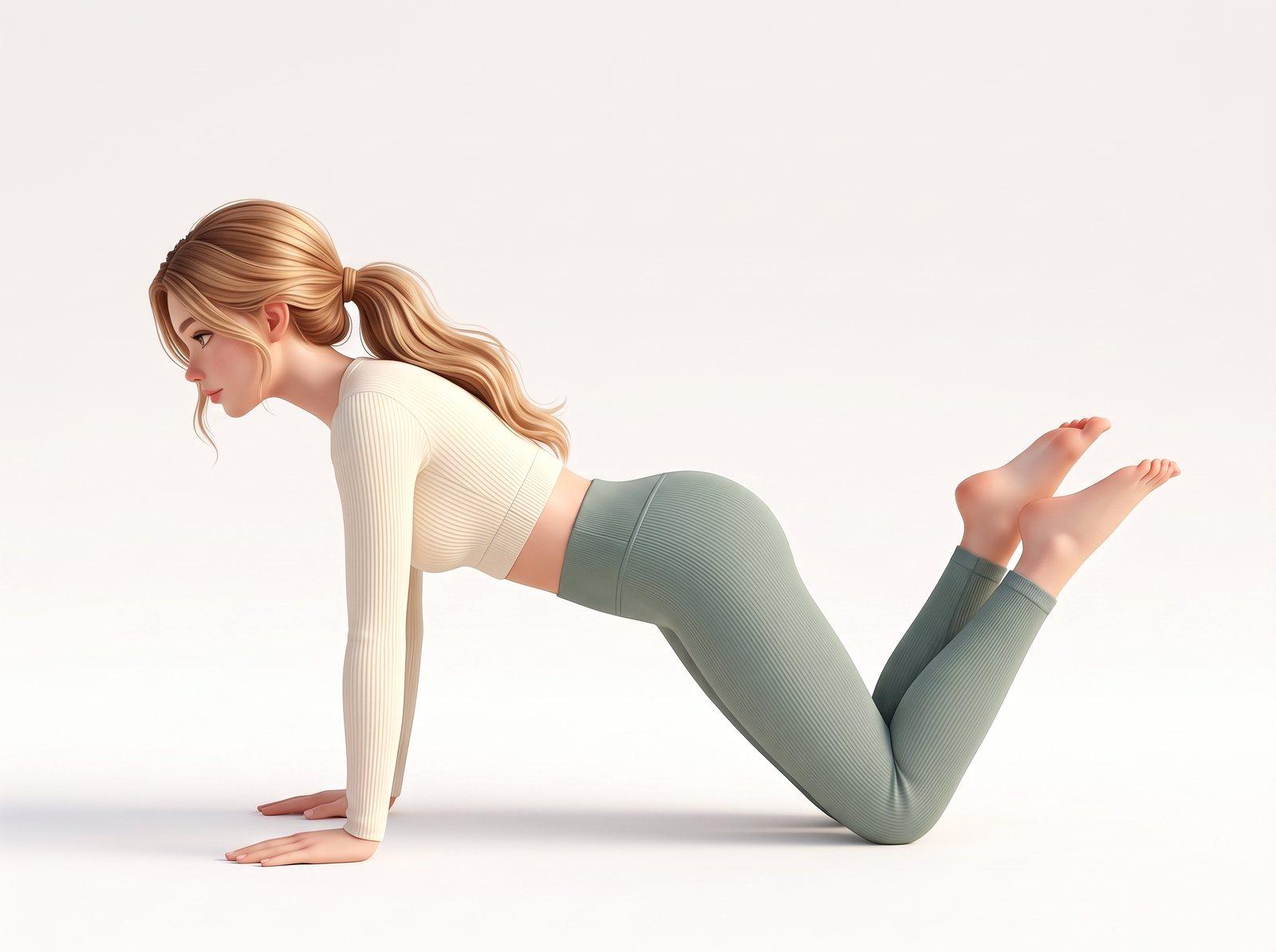
The photo shows a kneeling plank: hands under the shoulders, knees on the floor, feet lifted and the hips pressed forward so the body slopes in one line from head to knees. The chest, triceps and abdominals hold it.
Working
- Chest (pectoralis major)
- Triceps (triceps brachii)
- Serratus anterior
- Abdominals (rectus abdominis, transversus abdominis)
Stretching
This is an upper-body and core strength hold with no major stretch.
Also holding you steady: your rotator cuff, Glutes and forearm muscles, which steady the wrists.
Variations and joint actions
- Knee push-up: Bending the elbows from here is the scaled version of chaturanga.
- Full plank: Straightening the legs onto the toes doubles the load.
- Shoulders flexion, hands under the shoulders
- Elbows extension
- Wrists extension, about 90°
- Hips neutral, in line with the torso
- Knees flexion, shins lifted
Roles are qualitative — this section does not measure how hard any muscle works. References: Leslie Kaminoff & Amy Matthews, Yoga Anatomy (Human Kinetics); Ray Long, The Key Muscles of Yoga (Bandha Yoga).
Step-by-Step Instructions
- 1
Begin in Neutral Tabletop
- 2
Keep the hands firmly planted
- 3
Slowly bend one knee, bringing the thigh toward the calf
- 4
Feel the movement through the knee and ankle
- 5
Return to tabletop
- 6
Repeat on the other side
- 7
Alternate for 5-8 repetitions each side
Alignment Cues
- Keep the hips stable
- Move slowly with control
- Maintain neutral spine
- Breathe naturally
Benefits
- Warms up hip joints
- Lubricates knees
- Increases synovial fluid
- Gentle mobility work
- Prepares for deeper poses
- Good for stiff joints
Modifications
- Use padding under knees
- Reduce range of motion
Variations
- Bend both knees simultaneously
Cautions & Contraindications
Cautions
- Avoid knee pressure
- Move slowly and mindfully
Avoid this pose if you have:
- Knee pain
- Recent knee surgery
Quick Facts
Primary Focus
hipsSecondary Focus
Suggested Hold
30 seconds
Tags
Equipment